Meaning
Industrial test method guidelines published by the Association Connecting Electronics Industries establish standardized procedures for evaluating printed circuit board materials and assemblies. The IPC-TM-650 standard provides a broad library of chemical, mechanical, electrical, and environmental tests. It is used by manufacturers to verify board reliability before system integration.
The guidelines stop applying where specialized automotive or aerospace standards mandate proprietary testing protocols.
Quality Evaluation
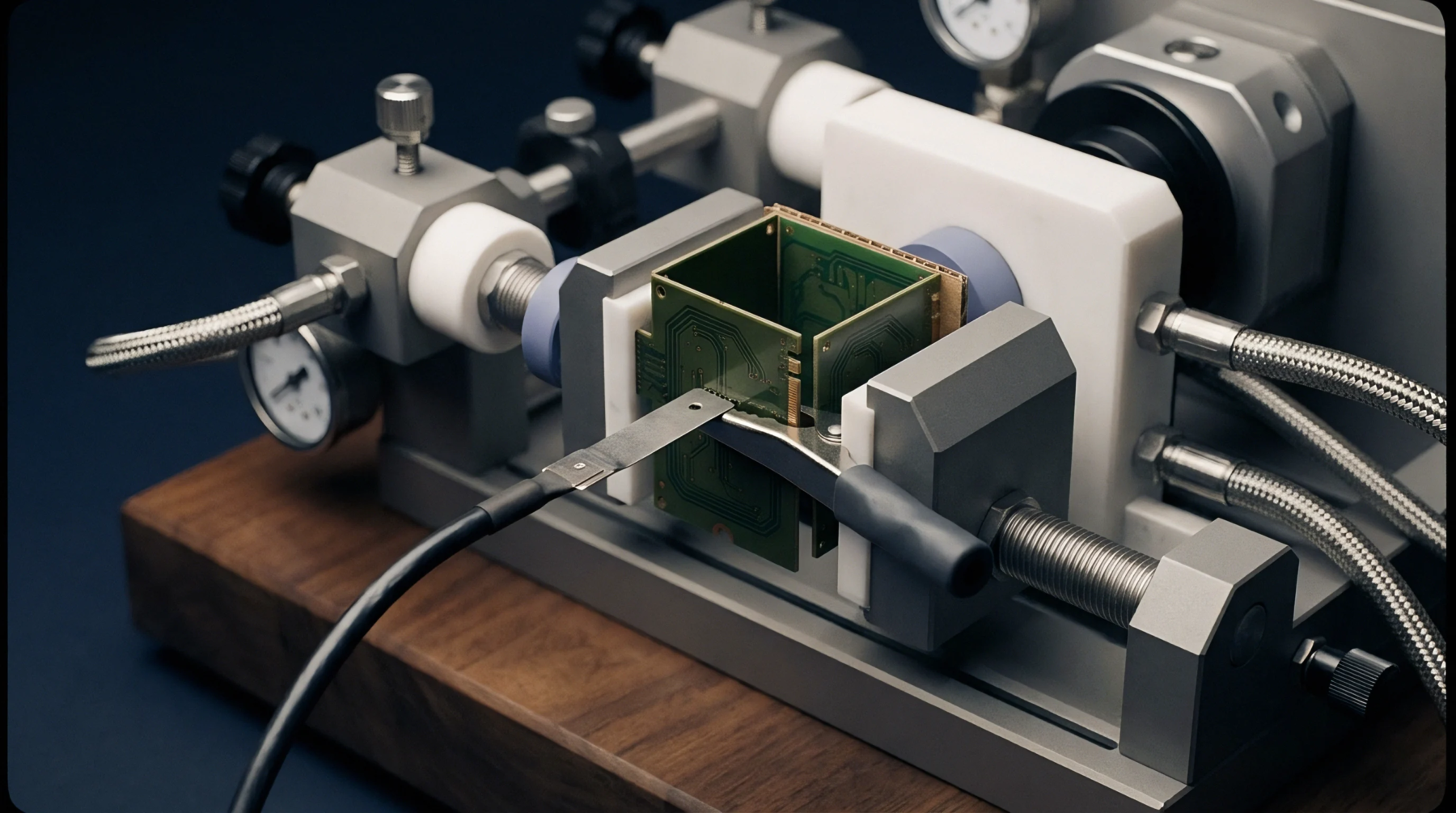
Standardized testing procedures ensure that boards from different suppliers meet the same baseline quality requirements. When a manufacturer certifies a new printed circuit board, the testing laboratory performs electrical and mechanical tests defined in the IPC-TM-650 manual. These tests include moisture resistance, thermal shock, and copper peel strength measurements.
Running these procedures under controlled laboratory conditions allows objective comparisons of board durability. This evaluation represents the primary technical handover document between the bare board supplier and the system integrator before the volume assembly process.
Material Qualification
Determining the electrical properties of the substrate material requires precise test methods at high frequencies. The IPC-TM-650 guidelines outline specific procedures for measuring the dielectric constant and loss tangent of laminates. Using these standard methods ensures that simulated board behavior matches the real-world performance.
Designers rely on these qualified material values to build accurate trace models.
Compliance Documentation
Documenting the results of each test procedure is necessary for trace reliability audits. A compliance report generated under the IPC-TM-650 framework lists the specific test methods used and the corresponding outcomes. This record provides the customer with verifiable proof that the boards can withstand environmental stress.
The report must be signed off by the quality manager before shipping.