Meaning
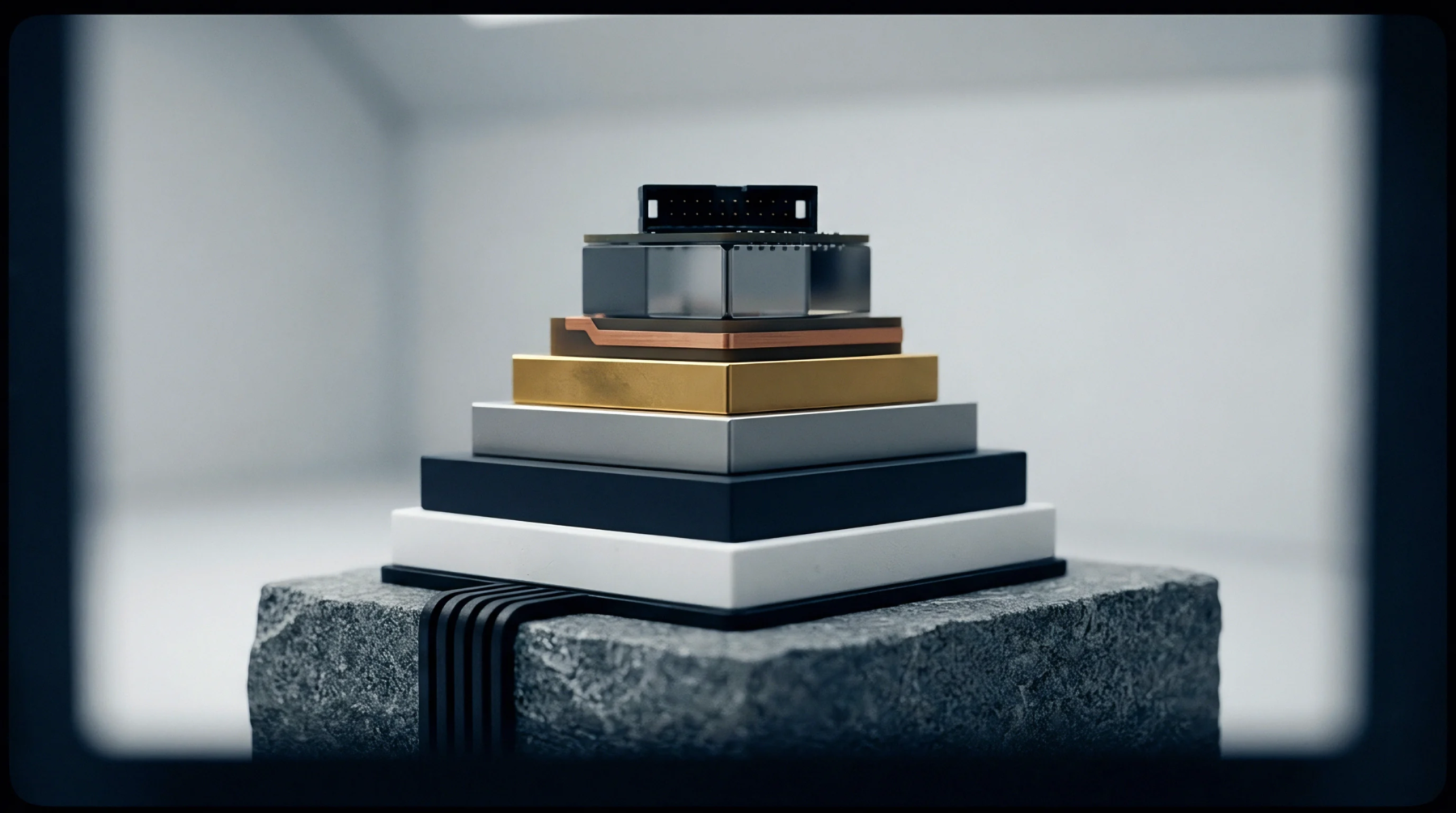
Laboratory procedure for determining the permittivity and loss tangent of unclad dielectric sheets. The clamped stripline test method utilizes a reusable fixture where the material is pressed between two ground planes and a center conductor.
Fixture Physics
Mechanical pressure maintains the electrical contact between the resonator and the material under test. While the clamped stripline test method avoids the variables of chemical etching, the air gaps between the sheets can introduce measurement errors. Consistent torque on the assembly bolts minimizes these gaps and ensures a uniform electromagnetic environment.
The fixture usually employs a specific strip length that supports multiple harmonic resonances to provide data across a wide frequency spectrum.
Material Evaluation
Relative permittivity is calculated from the resonant frequencies observed during the test sequence. Because the clamped stripline test method measures the material in a stripline configuration, the results provide a realistic baseline for multilayer board designs. The loss tangent is derived from the quality factor of the resonances.
Measurement Accuracy
Standardized procedures such as IPC-TM-650 define the specific dimensions and pressure requirements for the clamped stripline test method. Accuracy depends on the precision of the resonator dimensions. The flatness of the substrate samples determines the final reliability of the data.