Resolving Contradictory Customs Laboratory Standards for Sputtered Shielding versus Radio Front End Assemblies
Align sputtered RF module tariffs by pairing active silicon BOM cost proofs with non-destructive micro-CT scans to override customs lab material reclassifications.


Foil
Sputtered shielding relies on physical vapor deposition to lay down micro-thin metallic layers directly onto integrated circuit packages and radio front-end modules. Standard layer stacks combine copper for electrical conductivity with nickel, titanium, or stainless steel for corrosion protection and adhesion, reaching total thicknesses between 1.5 and 5.0 micrometers. Radio front-end assemblies rely on these conformal metallic coatings to achieve electromagnetic compatibility without adding structural metal enclosures.
Customs laboratories inspect imported components using destructive physical separation and chemical analysis. These laboratories evaluate the physical mass and surface chemistry of the metalized coating, often categorizing the entire component as a plated plastic article or base metal composite.
Conflict arises because electromagnetic compatibility engineering treats the sputtered layer as a boundary condition rather than a structural material. The active silicon die, power amplifiers, low-noise amplifiers, and impedance matching networks contained within the package define the essential operation of the system-in-package module. While completed radio equipment generally enters duty-free, an inspector isolating the physical enclosure produces a laboratory report focused entirely on the outer sub-micron copper skin.
The primary identity of the assembly splits between trade classification rules and radio certification filings.

Substrate Metallization versus Radio Architecture
Microelectronic packaging employs selective plasma etching followed by multi-target magnetron sputtering to encapsulate sensitive radio frequency components. The process deposits a seed layer of titanium, followed by a primary conductor of pure copper, and closes with a protective nickel capping layer. Physical vapor deposition creates a continuous conductive path across the molding compound, suppressing radiated emissions above 30 MHz and preventing external field cross-talk.
National tariff schedules separate simple metalized plastics from complex microelectronic assemblies based on physical composition metrics. Customs analysts strip the organic epoxy compound to weigh the metallic residue under automated chemical balances. This analytical approach treats the sub-micron metallic film as a structural coating under base metal tariff headings.
Telecommunications testing laboratories evaluate the identical part inside an anechoic chamber, measuring total radiated power, receiver sensitivity, and occupied bandwidth to confirm compliance with international radio standards.
Conformal shielding thickness below five micrometers signals functional electromagnetic compatibility design rather than structural cladding.

Electromagnetic Confinement Mechanisms
Conformal shielding prevents electromagnetic interference by reflecting and absorbing high-frequency energy at the package interface. The absorption loss depends on metal skin depth, which varies with signal frequency and material permeability. At 5.8 GHz, a two-micrometer copper film provides greater than 40 dB of attenuation, satisfying global regulatory limits for spurious emissions without heavy metal cans.
Cross-sectional inspection by customs metrologists often misses the internal passive and active elements embedded within the substrate. Scanning electron microscopy isolates the metallic interface, recording atomic percentages of copper and nickel. Tariff inspectors apply material-majority classifications when chemical data dominates the import summary report.
A modular package carrying integrated active silicon maintains its identity as a telecommunications assembly regardless of external plating composition.


Nomenclature
Harmonized System tariff classification determines import duty rates, trade policy restrictions, and entry documentation requirements. General Rules for Interpretation establish the legal principles governing commodity codes worldwide. General Rule 1 assigns classification based on the terms of headings and relative section or chapter notes.
When components contain multiple materials or function as multi-component assemblies, General Rule 3b mandates classification based on the material or component that confers essential character.
Customs laboratories frequently apply General Rule 1 strictly to the visible outer shell of sputtered radio modules. This practice places conformally shielded radio front-end assemblies under subheadings for printed circuit boards, worked plastics, or copper articles. Importers counter these findings by applying General Rule 3b, asserting that integrated transceiver circuits and power management dies determine the essential character of the assembly, without which unclassified modules incur back duties.

Why Do Customs Laboratories Misclassify Sputtered Radio Assemblies?
Analytical procedures inside border verification facilities rely on standard chemical and structural screening rules established for commodity imports. Inspectors sample incoming shipments by sectioning packages, dissolving organic substrates in chemical baths, and measuring the elemental ratios of the remaining solids. This laboratory protocol treats microelectronic components using the same criteria applied to decorative plated plastics, electroplated connectors, or passive stamped shields.
Regulatory type approvals from international telecommunications authorities do not automatically bind customs classification decisions. A Federal Communications Commission equipment authorization proves that a radio module complies with radiated emission limits, but border agents operate under independent customs law mandates. Without an explicit legal bridge connecting radio test evidence to tariff heading definitions, customs analysts default to elemental composition findings.
| Heading Code | Declared Commodity Description | Laboratory Classification Trigger | Duty Rate Spread | Technical Defense Basis |
|---|---|---|---|---|
| HS 8517.62 | Machines for the reception, conversion, and transmission of data | Integrated radio front-end functionality confirmed by active circuit block diagram | 0.0% (ITA Agreement) | Modular type approval certificate paired with active semiconductor component bill of materials |
| HS 8542.31 | Electronic integrated circuits: Processors and controllers | Monolithic or multi-chip System-in-Package silicon substrate identification | 0.0% (ITA Agreement) | Cross-sectional micro-CT scan showing active die wire-bonded or flip-chip mounted within substrate |
| HS 8548.00 | Electrical parts of machinery or apparatus not specified elsewhere | Absence of external antenna connector paired with exposed metallic package surface | 2.5% to 4.0% | RF circuit schematic demonstrating low-noise amplifier and transmit switch integration |
| HS 3926.90 | Other articles of plastics and materials of headings 3901 to 3914 | Organic molding compound exceeding 50% of total package mass by chemical extraction | 5.0% to 6.5% | Demonstration that plastic housing serves exclusively as dielectric encapsulation for RF silicon |

Tariff Code Frameworks under General Interpretation Rules
The Harmonized System offers multiple potential headings for advanced microelectronic packaging incorporating sputtered metals. Tariff item 8517.70 covers parts of telephone sets and apparatus for the transmission or reception of voice, images, or other data. Item 8542.31 covers multi-component integrated circuits containing active semiconductor chips.
Customs officers frequently reject both headings when physical examination reveals a continuous outer metal layer applied directly over molded resin.
Proving essential character under General Rule 3b requires detailed cost, functional, and volumetric analysis. The financial value of the active gallium arsenide or silicon germanium semiconductor dies inside a radio front-end assembly typically accounts for over 80 percent of the total bill of materials. The sputtered metallic shielding film accounts for less than 0.5 percent of total manufacturing cost.
An unadjusted classification from integrated transceiver to metalized plastic elevates import duty from zero to six point five percent at European entry ports.
Importers facing reclassification must prepare structured arguments that highlight the functional role of internal silicon structures. Essential character analysis establishes the economic and operational dominance of active semiconductor dies over outer protective coatings. System-in-Package verification provides structural cross-sections proving the assembly contains multiple integrated components linked by high-density interconnects.
Radio frequency validation uses accredited laboratory test reports to prove that the external sputtered coating functions as an electromagnetic shield rather than a decorative or structural enclosure.
- Essential character analysis quantifies the component cost breakdown to prove active silicon dies drive total module valuation.
- System-in-Package verification documents internal substrate interconnections to establish multi-chip integrated circuit status under HS 8542.31.
- Radio frequency validation presents radiated emission data proving the sputtered metallic layer operates strictly as an attenuation barrier.
- Customs ruling alignment maps international binding tariff decisions to national import declarations to prevent border laboratory reclassifications.
Failing to establish functional primary character during entry clearance quickly inflates duty rates, leading directly to retroactive duty assessments, inventory freezes, and mandatory penalties.


Assay
Customs laboratories execute chemical and physical test plans designed to identify base materials and manufacturing methods. Standard operating procedures for border labs mandate Fourier-transform infrared spectroscopy to identify polymers, energy-dispersive X-ray spectroscopy to detect surface metals, and Inductively Coupled Plasma Optical Emission Spectrometry for elemental quantification. Chemical digestion dissolves organic resins, leaving metallic residues for weight-ratio calculation.
Radio engineering laboratories employ fundamentally different evaluation tools. Anechoic chambers, vector network analyzers, and spectrum analyzers measure S-parameters, gain compression points, dynamic frequency selection, and out-of-band emissions. A customs lab isolates physical composition; a radio lab measures functional performance.
When customs analysts publish test reports based solely on chemical digestion, the physical findings mask the radio functionality of the assembly.
Destructive Spectroscopy versus Functional Radio Evaluation
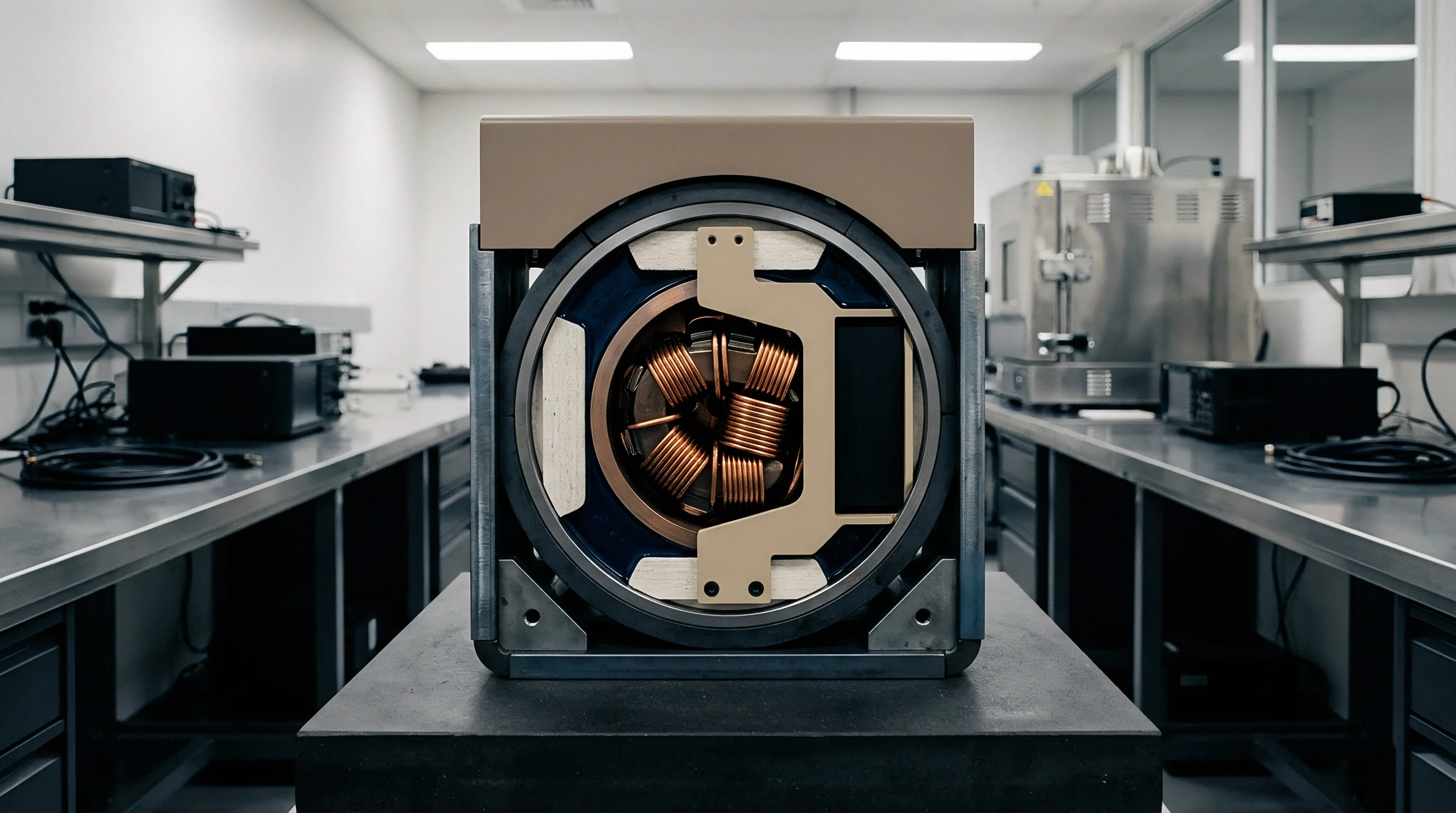
Testing conformally shielded components under destructive customs assays destroys the delicate bond wires and silicon dies inside the package. Sulfuric acid digestion strips the epoxy molding compound, exposing the copper-nickel sputtered layer as a freestanding metallic shell. Laboratory technicians document the metallic shell, weighing it against the original sample weight.
The resulting test certificate lists the item as a composite metal-plastic article under plastic or base metal tariff codes. This determination ignores the functional semiconductor circuit destroyed during the test process. Radio evaluation requires preserving structural integrity to apply operating voltages, inject radio frequency signals, and measure spatial electromagnetic field intensity.
Laboratory conflicts stem directly from these incompatible testing goals.
- Obtain identical reference samples from the manufacturing lot prior to external sputtering treatment.
- Subject the unsputtered reference sample to micro-XRF analysis to establish baseline substrate material composition.
- Execute high-resolution micro-computed tomography scans on the fully sputtered assembly to document internal semiconductor dies and wire bonds without physical destruction.
- Perform cross-sectional metallography per IPC-TM-650 Method 2.1.1 to prove sputtered coating thickness remains under five micrometers.
- Combine non-destructive structural imaging with functional radio frequency test logs in the primary technical defense file.

Quantitative Thin Film Characterization Protocols
Border authorities determine coating properties using standardized material measurement frameworks. ASTM B568 outlines micro-X-ray fluorescence methods for measuring coating thickness on metallic and non-metallic substrates. When applied to sputtered radio assemblies, XRF beam penetration often reads internal leadframe metalizing alongside outer shielding layers, corrupting elemental percentage calculations.
Adherence to ASTM B568 micro-XRF measurement without prior component isolation triggers false material-majority classifications.
Accredited metrology facilities avoid this error by calibrating energy-dispersive X-ray spectrometers specifically for thin-film substrate stacks. Setting electron beam acceleration voltages below 15 kV restricts excitation to the upper three micrometers of the package, preventing signal contamination from internal copper leadframes. Importers present this calibrated spectroscopic data to prove the sputtered coating represents a fractional layer rather than a structural bulk material.


Reconciliation
Resolving contradictions between customs laboratory findings and telecommunications regulatory filings requires a unified technical dossier strategy. Importers must bridge the gap between regulatory grants of authorization and import documentation before shipments reach port inspection gates. The regulatory grant proves the assembly functions as an intentional or unintentional radiator under national radio laws.
The customs dossier must prove that this exact radio functionality determines the tariff classification under international trade rules.
Customs authorities in major import markets maintain administrative mechanisms for pre-entry clearance. European Binding Tariff Information applications and United States Customs Rulings allow importers to submit technical documentation, structural cross-sections, and functional test plans for formal review before commercial shipping begins. Establishing classification certainty prevents unexpected customs laboratory seizures and duty adjustments.

Harmonizing Regulatory Grants with Customs Dossiers
A complete regulatory compliance filing contains circuit schematics, block diagrams, component lists, user manuals, and accredited test reports. Telecommunications regulators review these documents to grant market access under rules such as FCC Part 15 or ETSI EN 300 328. Customs officials rarely inspect these filings unless the importer submits them as evidence of tariff heading eligibility.
Combining regulatory approval records with customs classification files creates an indisputable record of functional identity. Importers map the block diagram from the regulatory filing directly to the physical bill of materials submitted for customs appraisal. Demonstrating that the internal integrated circuit drives the system functionality prevents customs laboratories from categorizing the component based on surface physical properties alone.
| Evaluation Domain | Telecommunications Regulatory Dossier | Customs Laboratory Evidence File | Reconciliation Method |
|---|---|---|---|
| Primary Objective | Demonstrate compliance with spectrum limits and spurious emissions | Determine physical composition and tariff heading assignment | Cross-reference emission limits to physical shielding design |
| Core Test Method | Radiated and conducted RF measurement in anechoic chamber | Destructive spectroscopy (SEM-EDX, ICP-OES) and surface metrology | Provide non-destructive micro-CT scans alongside RF test logs |
| Load-Bearing Document | FCC Grant of Authorization / RED Declaration of Conformity | Customs Laboratory Analysis Report / Official Sample Certificate | Submit advance ruling application linking grant to HS code |
| Component Focus | Transceiver logic, operating frequencies, power output | Substrate polymer mass, metallic layer thickness, plating ratio | Provide itemized BOM highlighting active silicon value ratios |

Financial Impact Analysis of Reclassification Scenarios
Commercial exposure calculation illustrates the necessity of proactive classification alignment. Consider an import lot of 100,000 sputtered radio front-end assemblies destined for smart metering infrastructure. Assume a free-on-board unit price of $4.50, yielding a total shipment entry value of $450,000.
Under declared heading HS 8517.70, the applicable duty rate under Information Technology Agreement schedules is 0.0 percent, resulting in zero direct tariff assessment. If customs laboratories reclassify the shipment under HS 3926.90 as articles of plastics due to outer organic molding compound mass, the standard duty rate increases to 6.5 percent, expanding direct tariff assessment instantly to $29,250.
Beyond direct duty increases, customs authorities impose administrative penalties for incorrect tariff declarations, typically ranging from 15 percent to 50 percent of the unpaid duty amount. A 15 percent penalty adds $67,500 to the entry cost, generating a total financial penalty of $96,750 on a single shipment. Secondary costs accumulate rapidly as port demurrage charges accrue at rates between $150 and $350 per container per day while administrative appeals proceed.
- Advance tariff filing secures a legally binding classification ruling before commercial production quantities cross international borders.
- Bill of materials auditing verifies component cost allocations to prove active semiconductor silicon drives package value.
- Non-destructive analytical packaging delivers high-resolution micro-CT imaging to customs labs to eliminate the need for acid digestion testing.
- Regulatory cross-referencing links type approval grants directly to shipping invoices and customs entry declarations.
Customs laboratories evaluate material composition while telecommunications authorities verify radiated field compliance.
The inclusion of mandatory General Rule 3b essential character documentation within commercial invoicing alters customs clearance velocity across major entry ports.


Settlement
Resolving active customs classification disputes requires formal administrative legal procedures. National customs legislations provide structured appeal mechanisms for importers challenging customs laboratory reclassifications. In the United States, importers file Protests under 19 U.S.C. 1514; in the European Union, administrative appeals proceed through national customs directorates under the Union Customs Code Article 44.
Successful appeals depend entirely on presenting verified metrology data that refutes the initial laboratory findings.
Administrative legal proceedings move slowly, often requiring six to eighteen months to reach final adjudication. Importers must maintain financial security through customs entry bonds while disputes remain open. Presenting comprehensive physical, economic, and functional evidence early in the administrative appeal cycle minimizes bond interest costs and prevents systemic supply chain disruptions across international manufacturing networks.

Administrative Appeals and Binding Advance Rulings
Binding advance rulings represent the most effective defense mechanism against contradictory customs laboratory decisions. Importers submit detailed technical petitions to national customs ruling offices prior to shipment clearance. The petition includes physical samples, micro-CT structural scans, complete bill of materials data, and copies of telecommunications type approval grants.
Rulings issued under these procedures legally bind customs officers at every port of entry within the issuing jurisdiction.
When an un-ruled shipment encounters a customs laboratory hold, the importer must initiate an immediate formal protest. Technical counsel prepares an evidence package demonstrating that the customs laboratory applied inappropriate test protocols. Showing that acid digestion destroyed the active semiconductor core allows legal counsel to argue that the laboratory report presents an incomplete characterization of the imported article.

Strategic Evidence for Customs Audit Defense
Post-clearance audits present additional financial risk to importers of sputtered radio modules. Customs audit divisions review historical entry declarations up to five years after entry, re-evaluating laboratory reports and tariff assignments. An adverse audit finding across years of historical imports can threaten the solvency of an electronics manufacturing practice.
Defending post-clearance audits requires maintaining permanent compliance dossiers for every conformally shielded part number. The dossier pairs raw factory sputtering specifications with certified semiconductor block diagrams and independent laboratory metrology reports. Establishing that the practice exercised reasonable care during entry declaration protects against fraud and gross negligence penalties under national trade laws.
Whether international harmonized tariff updates will explicitly incorporate sputtered electromagnetic shielding under semiconductor assembly definitions remains an open question for trade compliance authorities.