Meaning
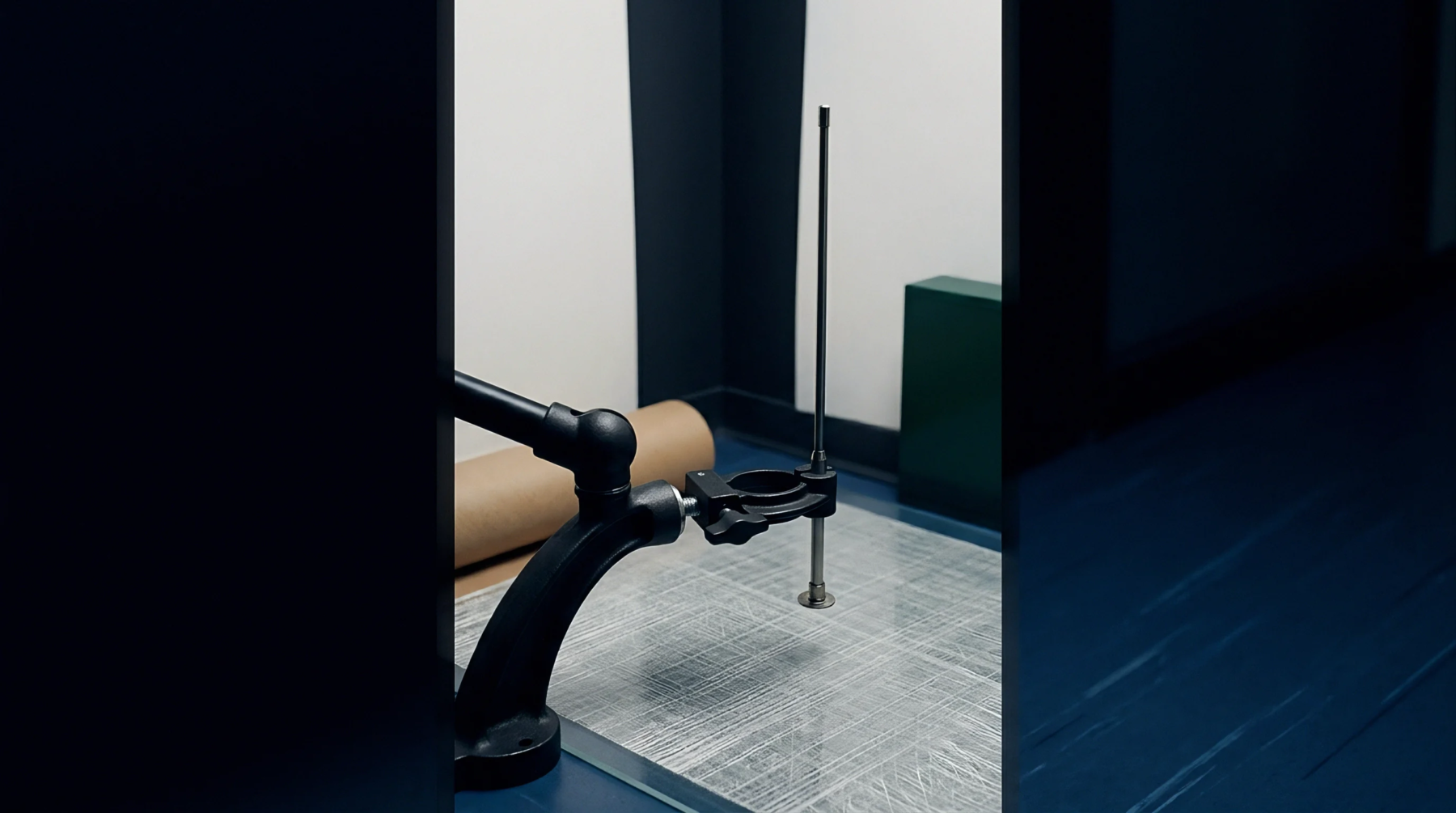
Measurement instruments used in automated exposure scanners detect local electric field strengths from any direction with minimal orientation error. Compliance labs employ an isometric probe to measure radio frequency fields inside tissue-simulating liquids. This device utilizes three orthogonal dipoles on a single shaft to capture the field vector regardless of the sensor angle.
The operational range of these tools spans from low-frequency cellular bands up to high-frequency millimeter-wave systems.
Sensor Configuration
The three internal dipoles are mounted symmetrically around the central axis of the instrument. This spatial arrangement allows the hardware to calculate the total electric field strength from the three individual component signals.
Calibration Procedure
Calibration laboratories run annual tests using known reference fields in standardized waveguides to verify sensor accuracy. The isotropic response of the isometric probe is evaluated by rotating the sensor housing while recording the signal output. Any deviation across different angles must remain below a fraction of a decibel to ensure repeatable measurements during product certification scans.
These reference checks must be completed before the sensor is deployed for official testing.
Error Reduction
Using a sensor with high directional uniformity prevents the measurement system from underestimating localized exposure peaks. Minor positioning errors during a scan could otherwise lead to inaccurate power readings if the sensor was sensitive to orientation. This uniform response is important near the simulated phantom boundary where field gradients are steep.
Ensuring consistent sensitivity across three axes increases the confidence level of the final compliance reports.