Meaning
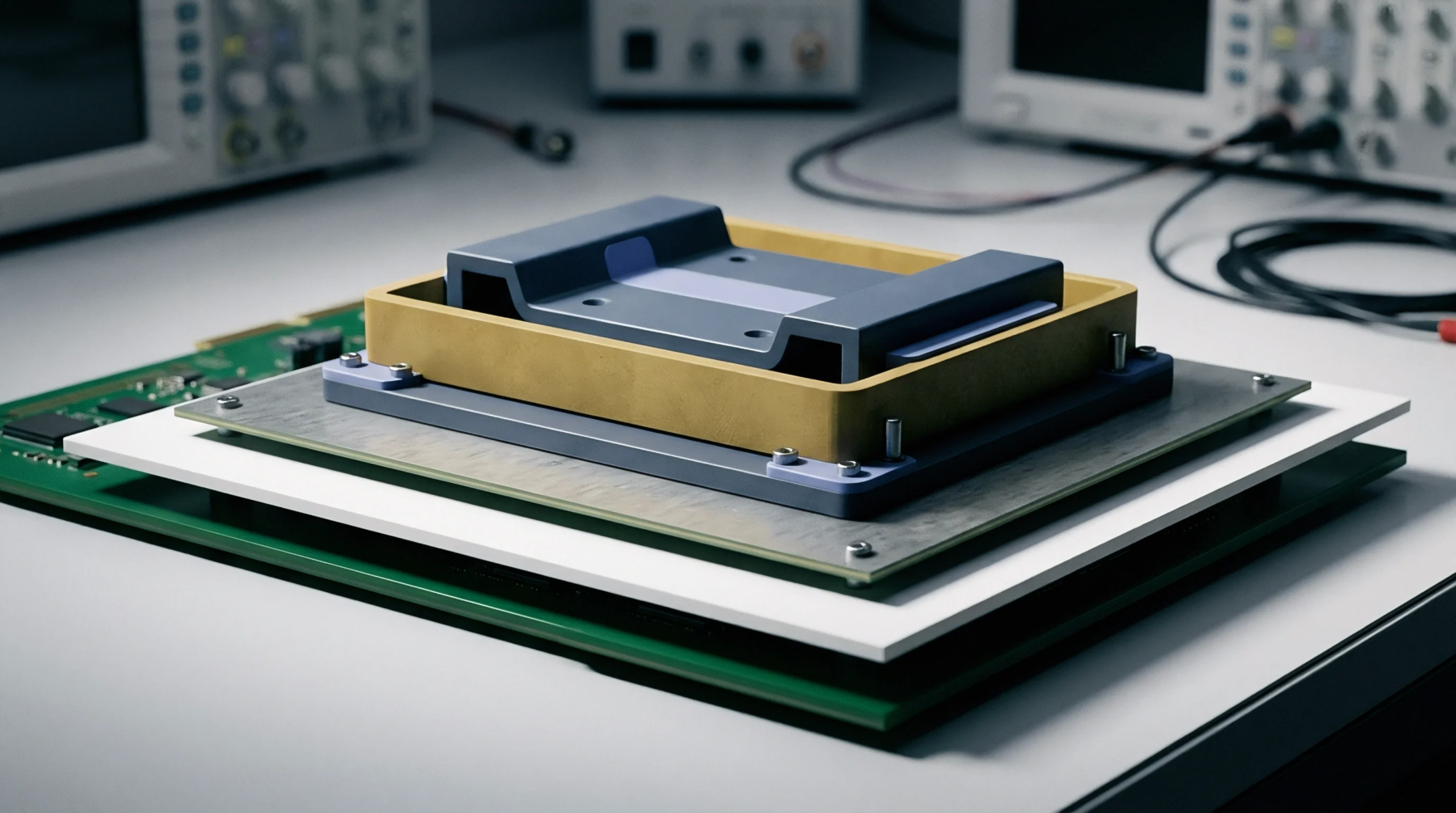
Architectural engineering practices embed a pre-certified radio frequency transceiver subsystem onto a larger host electronic motherboard within a final product enclosure. The method of modular integration allows equipment manufacturers to incorporate complex wireless connectivity into industrial or commercial products without executing end-to-end transmitter circuit layout and radio component qualification. The embedded module carries its own internal shielding, clock generation, voltage regulation, and certified software control, functioning as an independent radio engine.
This integration model ceases to preserve original compliance status when integration engineers modify internal circuit traces, adjust RF front-end filtering, or attach non-qualified antenna topologies.
Interconnect Design
Interface layout between the host printed circuit board and the modular transmitter governs signal integrity and overall radiated performance. High-speed digital buses, power supply tracks, and serial communication buses must interface with module castellations without introducing parasitic inductance or electrical ground loops. Integrating engineers must design controlled-impedance transmission lines, typically fifty-ohm coplanar waveguides, to guide radio energy to external board-mounted antenna terminals.
Ground planes on the host assembly must match the module footprint precisely, incorporating dense ground via stitching to suppress common-mode currents. Inadequate power supply filtering on the host board couples transient noise into sensitive radio amplifiers, raising adjacent channel leakage and degrading receiver sensitivity.
Antenna Realization
Host enclosure design alters radiation efficiency and intentional transmitter patterns significantly. Antennas integrated into plastic or composite housings must maintain clearance from metal chassis walls, battery packs, and internal display assemblies. Changing from a certified dipole antenna to an integrated chassis inverted-F antenna alters radiation properties, invalidating original equipment filings and triggering class two permissive change evaluations.
Host material properties, including dielectric constants of casing polymers, shift operational resonance points and reduce total radiated power. Engineers evaluate the voltage standing wave ratio across operating frequency bands to confirm impedance matching after mechanical enclosure assembly. Correct placement prevents enclosure walls from acting as RF attenuators.
Compliance Handover
Handover protocols require documentation confirming integration parameters match the original module grant conditions strictly. Original equipment manufacturers must execute host-level verification for unintended emissions to guarantee the host board does not emit illegal digital noise. The final engineering dossier bundles module regulatory certificates with host radiated test reports, enabling self-declaration or expedited equipment authorization filings.
Omitting explicit trace routing rules dictated by the module vendor invalidates modular coverage, forcing the host integrator into expensive full-system type testing. Systematic integration safeguards hardware schedules and ensures compliance across high-volume production operations.