Meaning
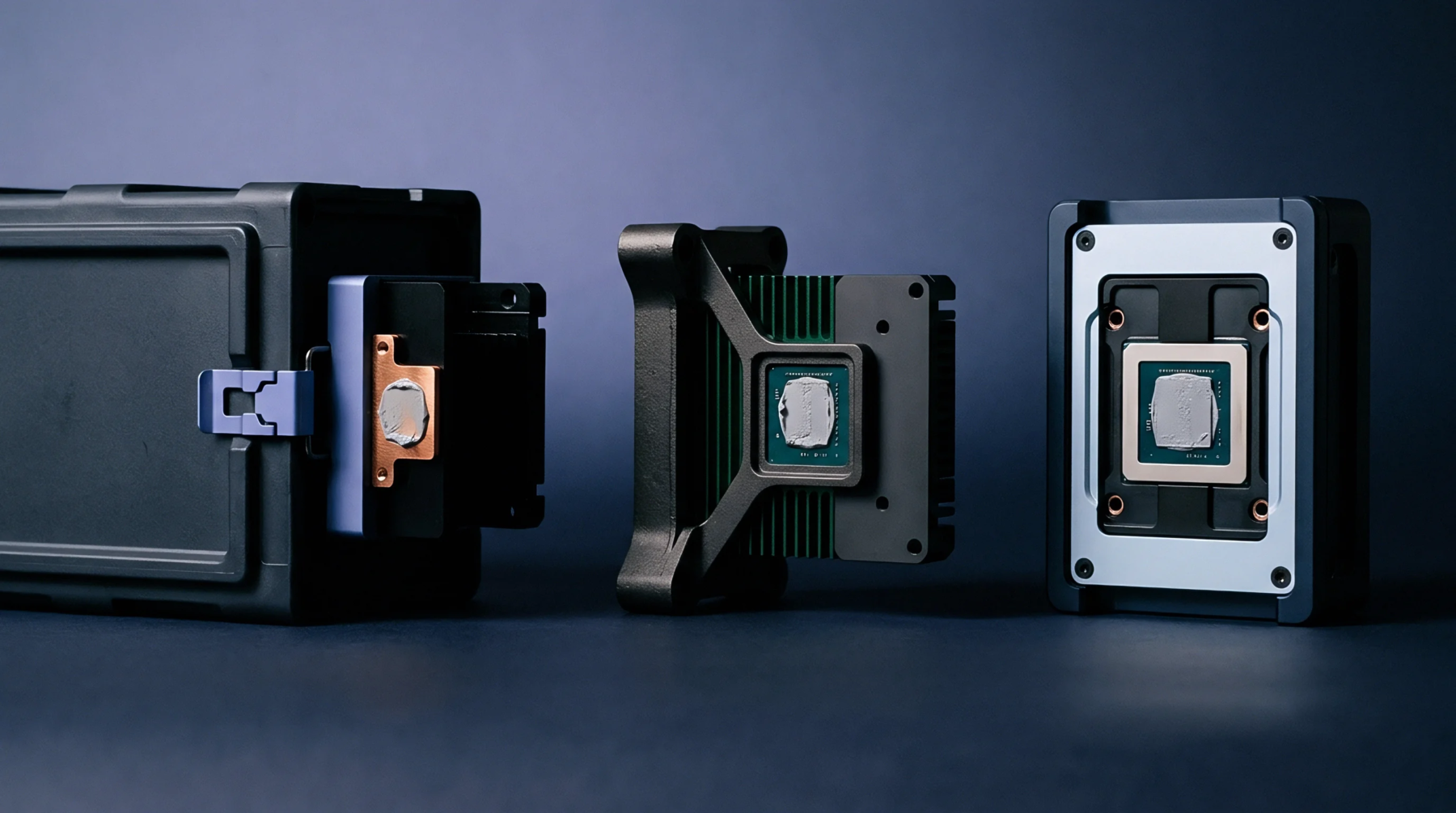
Optoelectronic packaging formats house both optical components and high-speed electrical circuits within a single co-designed enclosure to support dense fiber connections. An optical transfer package provides the mechanical and thermal stability required to keep lasers, photodetectors, and fiber arrays aligned. It protects these sensitive devices from humidity and mechanical shock while allowing high-frequency electrical signals to pass through its walls.
Designers use these packages to integrate silicon photonics chips into standard network switch line cards.
Mechanical Alignment
Internal lenses must be held in precise relation to the active laser facets to ensure low loss transmission. The optical transfer package relies on low expansion materials like ceramic or kovar to prevent thermal expansion from distorting the optical path. Epoxies with low shrinkage are cured with ultraviolet light to lock the optical fibers into their final positions.
Thermal Interface
Laser diodes generate significant heat that must be moved away from the silicon to maintain wavelength stability. An optical transfer package incorporates a copper tungsten base or an integrated thermoelectric cooler to manage the thermal pathway. This structure allows the device to operate efficiently even in hot data center environments.
Signal Integrity
High speed routing inside the module uses coplanar waveguides or microstrip lines to minimize signal distortion. Differential signals must be balanced to prevent electromagnetic interference from corrupting the optical receiver. This layout design helps to sustain data rates of hundreds of gigabits per second.