Board Support Package Repository Handover Requirements for Contract Manufacturers
A contract manufacturer BSP handover succeeds only when delivering complete, containerized source repositories that reproduce bitwise-identical images.

Payload
While production flashing stations on an electronics assembly floor accept compiled binaries, factory engineering teams routinely ask for complete source trees during pilot runs. Line halts follow when firmware flashing fails against altered hardware revisions. Sourcing agreements often stipulate delivery of a board support package without clarifying whether that means binary distribution files, an open repository tree, or a containerized build environment, yet a practical handover package has to deliver the entire software environment required to turn schematics into operational factory silicon.
Vendor tarballs packed with precompiled object files leave contract assemblers unable to isolate peripheral faults on surface-mount lines. When serial communication or power regulation fails during automated board testing, the plant troubleshoots by stepping through peripheral initialization routines. Delivering bare object files pushes that investigation back onto design teams, interrupting automated optical inspection and bed-of-nails validation while engineers trade logs across time zones.
Repository Topology across Bootloader and Kernel Trees
Embedded Linux platforms divide board-level configuration across distinct hardware description layers. Primary bootloaders set up clock trees and external memory timings before execution passes to the secondary bootloader and operating system kernel. The contract manufacturer requires explicit revision tags linking specific printed circuit board assembly revisions to matching git tree branches.
- Target Bootloader Source contains board-specific low-level initialization routines, power management integrated circuit sequences, and dynamic memory calibration parameters matching the exact memory packaging on the assembly bill of materials.
- Device Tree Source Files declare electrical pin multiplexing configurations, peripheral bus speeds, and regulator voltage thresholds for every hardware variant produced on the surface-mount placement line.
- Kernel Configuration Manifests disable unused hardware subsystems to reduce boot latency during factory functional testing and lock memory protection mechanisms.
- Out Of Tree Hardware Drivers supply proprietary physical layer interfaces for specialized radio modules, requiring explicit patch sets against specified long-term stable kernel revisions.
Upstream kernel changes routinely silence undocumented silicon registers during cold reset cycles.
When an assembly plant receives a repository with detached heads or uncommitted local diffs, automated continuous integration runners produce binaries that fail board bring-up. Structuring the repository with distinct git submodules or manifest repositories separates third-party upstream code from proprietary board-support additions, allowing technicians to tie every binary build directly to a reproducible commit hash.
Toolchain Pinning and out of Tree Modules
Cross-compilation pipelines introduce behavioral drift when toolchain versions diverge between design facilities and manufacturing plants. Glibc mismatches or compiler optimization flags can change execution behavior across physical bus interfaces. A contract manufacturer compiling kernel modules with an unverified host toolchain risks producing broken drivers that crash during power management sleep transitions.
Repository packages must supply pinned cross-compiler releases, matching C runtime libraries, and the exact configuration scripts needed to reproduce bitwise-identical images across independent build hosts.
Clean source checkouts compile without manual intervention when configuration trees specify complete dependency paths.
Dock
Host machine architectures alter build outputs unless isolated inside identical runtime environments. Moving firmware files through loose archive transfers risks corrupted file permissions, broken symbolic links, and missing build system environment variables. Production facilities rely on hermetic build systems where compiler tools, host utilities, and target sysroots sit within immutable filesystem layers.
When continuous deployment servers at the manufacturing site compile firmware images without container pinning, minor variations in host packages generate diverging binaries. These differences cause intermittent bus initialization timeouts that confound automated test fixtures.
A three-second mismatch in file creation timestamps shifts cryptographic image signatures across identical source trees.
Is Deterministic Bitwise Reproduction Enforceable across Compilers?
Deterministic compilation requires eliminating timestamps, sorting source file lists before linking, and hardcoding filesystem paths within debug symbols. Embedded build tools such as Yocto Project or Buildroot incorporate reproducible build configurations to verify that two separate build runs yield identical cryptographic checksums.
| Host Toolchain Environment | Target Image Component | Observed SHA256 Match | Production Consequence |
|---|---|---|---|
| Ubuntu 20.04 Native GCC 9.4 | U-Boot Second Stage Loader | Mismatched Checksum | Memory controller timings fail intermittent cold boots |
| Ubuntu 22.04 Native GCC 11.2 | Linux Kernel Image zImage | Mismatched Checksum | Device tree parser ignores peripheral power domains |
| Debian 11 Native GCC 10.2 | Root Filesystem SquashFS | Mismatched Checksum | Factory diagnostic scripts experience shell syntax halts |
| Containerized OCI Cleanroom GCC 10.3 | Complete Monolithic Flash Binary | Identical Checksum | Assembly programming station yields zero software fallouts |
Factory flashing stations verify binary authenticity by cross-referencing compiled image hashes against engineering release records. When an unpinned host system alters an instruction sequence, the target processor secure boot engine rejects the payload during fuse-blowing sequences on the packaging line.
Container Boundaries and Cleanroom Build Servers
Software transfers to contract manufacturing cleanroom build clusters incorporate Open Container Initiative images defining the complete compilation baseline. These execution containers contain cross-compilation binaries, host system packages, code signing utilities, and hardware validation scripts. Isolating the build environment from internet access prevents third-party repositories from injecting updated packages during production firmware compilation runs.
When an upstream dependency server disappears or mutates a remote branch, uncontained build pipelines stall. Providing self-contained container images preserves manufacturing continuity over multi-year product production lifecycles.
Line delays typically stem from developer repositories rather than untracked host package upgrades on site.
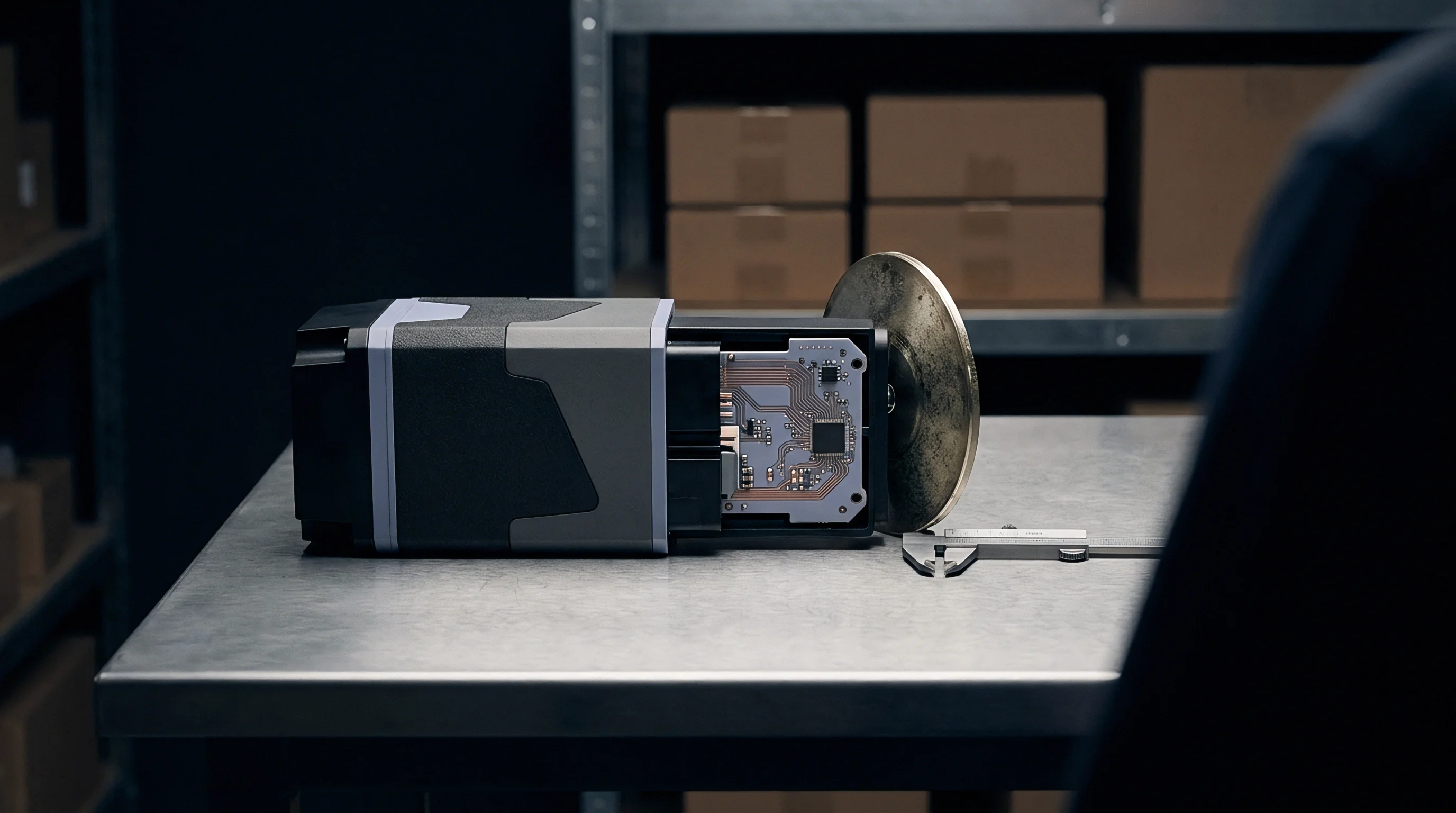
Lineage
Microprocessor suppliers routinely ship reference evaluation kits containing extensive kernel patches that never merge into upstream source branches. System design houses adopt these reference packages to accelerate initial functional prototypes, inheriting undocumented driver behaviors, unstable power management configurations, and unmaintained peripheral buses. When transferring the resulting board support package to a manufacturing partner, this untracked lineage becomes an operational hazard.
A contract assembler manufacturing hundreds of thousands of boards per quarter must navigate component obsolescence and silicon revision stepping updates. If the board support package repository lacks explicit git commit history, factory software engineers cannot isolate whether hardware changes or unrecorded kernel modifications caused board test failures.

Should Contract Manufacturers Modify Kernel Driver Configurations Independently?
Contract manufacturers adjust build configurations when sourcing secondary passive components or alternative memory chips. Granting unchecked modification rights to an assembly plant risks fracturing the software release lineage. When an assembly house alters memory drive strengths inside low-level registers to accommodate a secondary-source memory packaging without upstream change tracking, board stability degrades under thermal extremes.
- Unrecorded Register Tweaks alter clock phase alignments to pass room-temperature bed-of-nails checks while creating memory read corruption at elevated operating temperatures.
- Premature Driver Upgrades introduce breaking changes in kernel subsystem interfaces, disconnecting hardware security modules from device authentication systems.
- Direct Silicon Errata Workarounds bypass system power management states, raising operational heat dissipation beyond thermal design parameters.
- Untracked Board Revision Defines cause test firmware to apply incorrect radio calibration tables across differing printed circuit board layouts.

Hardware Errata Patches and Board Revision Interlocks
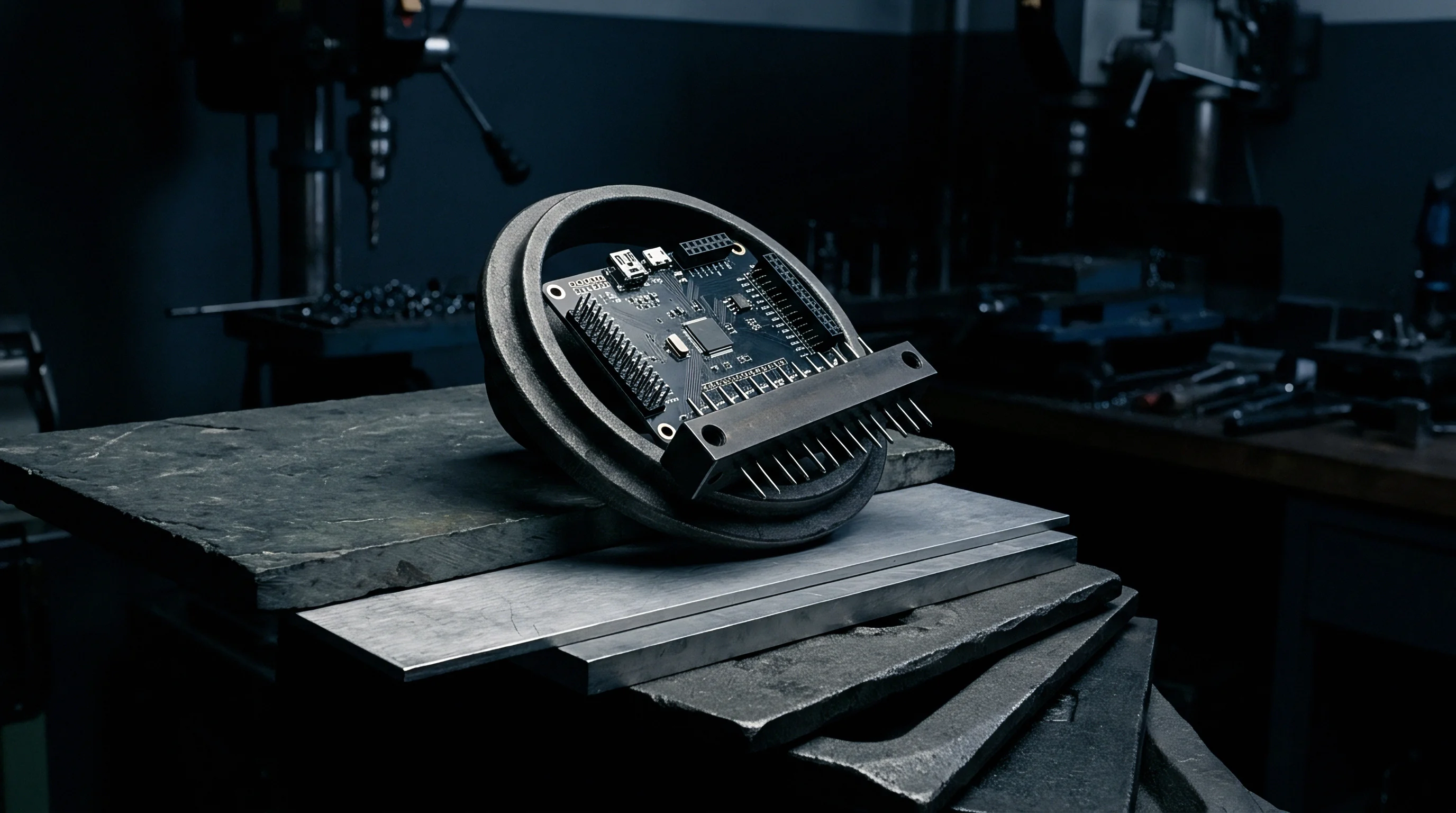
Silicon manufacturers issue hardware errata documents detailing silicon stepping bugs that demand software workarounds. These workarounds involve register write delays, disabled peripheral clocks, or specialized direct memory access sequencing. An engineering repository specifies precise silicon stepping revisions linked to corresponding device tree overlay files.
| Silicon Revision | Device Tree Overlay | GPIO Pin Strapping | Factory Flash Target |
|---|---|---|---|
| SoC Stepping A0 | soc-variant-a0-errata.dtbo | Pull-down on Pin 42 | Raw NAND Partition 0x00000000 |
| SoC Stepping A1 | soc-variant-a1-standard.dtbo | Pull-up on Pin 42 | Raw NAND Partition 0x00000000 |
| SoC Stepping B0 | soc-variant-b0-pcie-fix.dtbo | Floating Pin 42 | eMMC Hardware Boot Area 1 |
| Hardware pin strapping configurations determine which software overlay loads during power-on reset. | |||
Repositories maintain transparent commit histories documenting every hardware workaround applied to vendor baseline code. Removing vendor commit histories through squash merges strips the assembly house of context required to troubleshoot silicon stepping variations.
Whether contract assemblers bear commercial liability for latent memory timing defects introduced by third-party chip vendor errata updates remains undecided across international trade arbitrations.
Trial
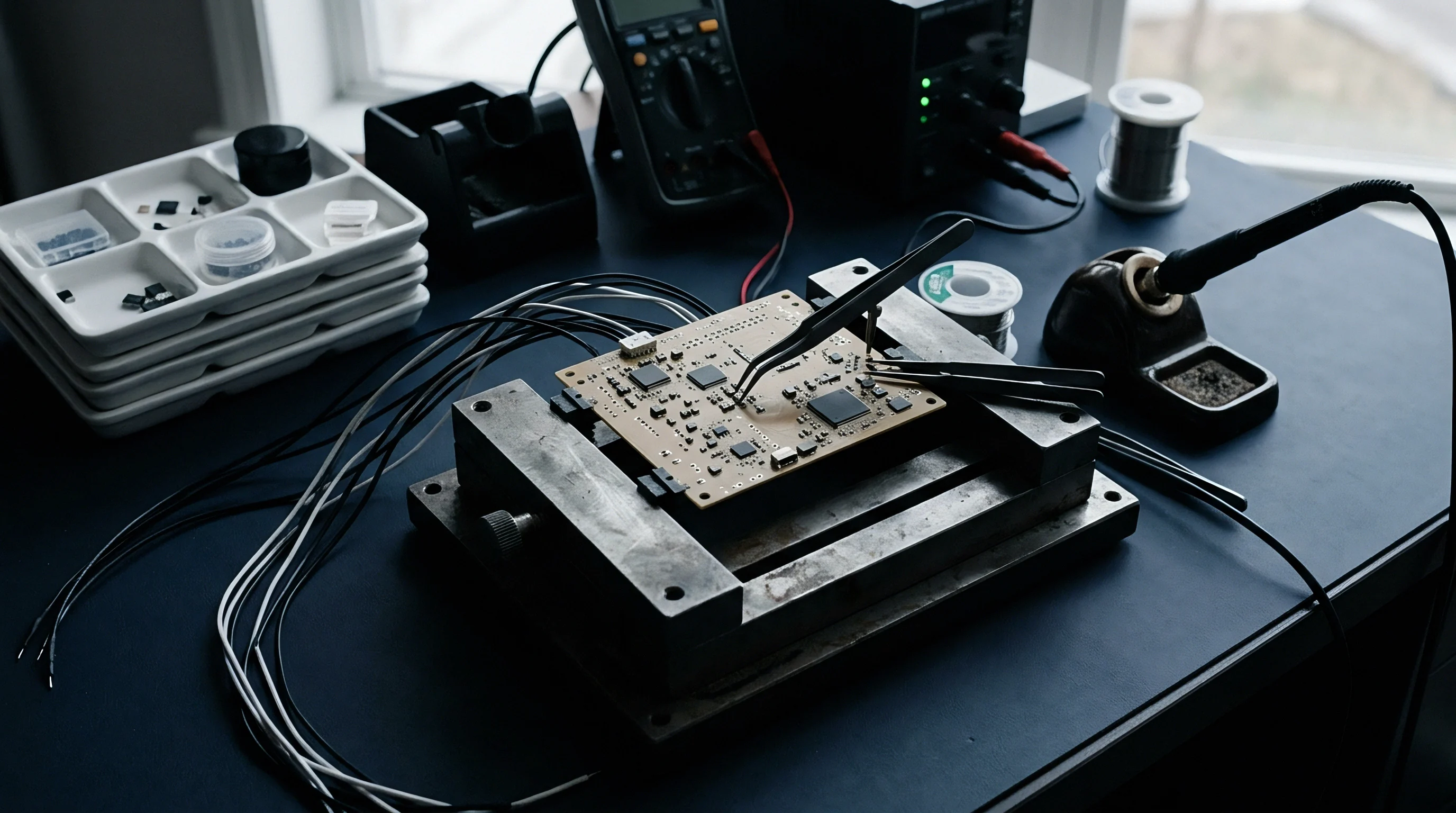
Automated functional test stations translate board support package stability into measurable factory yields. Bed-of-nails test fixtures and automated optical inspection systems verify solder integrity, yet operational verification demands running interactive diagnostic kernels directly on target hardware. A comprehensive handover package incorporates a lightweight, self-contained diagnostic operating system designed specifically for rapid hardware qualification on the manufacturing line.
Standard production operating system distributions require minutes to initialize complex services, negotiate network sockets, and launch user applications, whereas manufacturing test stations execute in seconds. A diagnostic Linux ramdisk image booted via Universal Serial Bus or serial peripheral interface directly verifies peripheral connectivity, read-write timing margins, and radio frequency operation without touching permanent storage media.
Golden reference boards preserve factory calibration baselines when component substitutions alter interface rise times.

Automated Acceptance Test Sequences on Factory Programming Fixtures
Line productivity correlates inversely with programming duration. Installing a three-gigabyte operating system image directly over serial interfaces creates unmanageable assembly bottlenecks. Modern programming fixtures flash minimal primary bootloaders to external memory, boot the device into a high-speed memory transfer utility, and stream production partitions over high-bandwidth buses.
Programming fixtures measure quiescent power draw across multiple voltage rails during diagnostic boot sequences to catch short circuits before applying full operating current.
- Voltage Rail Telemetry monitors dynamic current consumption across core, memory, and peripheral domains during high-speed peripheral bus stress tests.
- Memory Stress Algorithms cycle inverted bit patterns across dynamic random access memory buses to expose marginal trace impedance on high-density circuit routing.
- Peripheral Bus Scans query I2C, SPI, and PCIe busses to verify that all peripheral chips acknowledge polling requests within specified response windows.
- Nonvolatile Storage Integrity Tests perform destructive random block write operations on temporary partitions to determine flash memory write latency and error rates.

Bit Error Margins and Bus Timing Sanity Checks
Assume an automated factory line targeting one hundred thousand units annually runs fifty seconds per fixture cycle. A board support package that extends diagnostic execution by fifteen seconds increases annual line operation time by over four hundred machine hours. Optimizing diagnostic ramdisk footprints directly reduces nonrecurring fixture operational overhead.
Diagnostic firmware scripts capture raw bit error rates on serial buses, evaluate high-speed signal rise times via integrated analog-to-digital converters, and log cryptographic device identity certificates into secure manufacturing databases. When diagnostic sequences detect elevated bit error retry counts on an internal peripheral bus, the programming fixture flags the circuit board for manual rework before nonvolatile storage partitions are written.
Factory acceptance test software interfaces directly with the board support package repository, generating diagnostic outputs matching manufacturing execution system schemas.
Unverified flash partitions generate bricked modules on high-speed placement lines, idling surface-mount operations and incurring unrecoverable line-stoppage charges.


Settlement
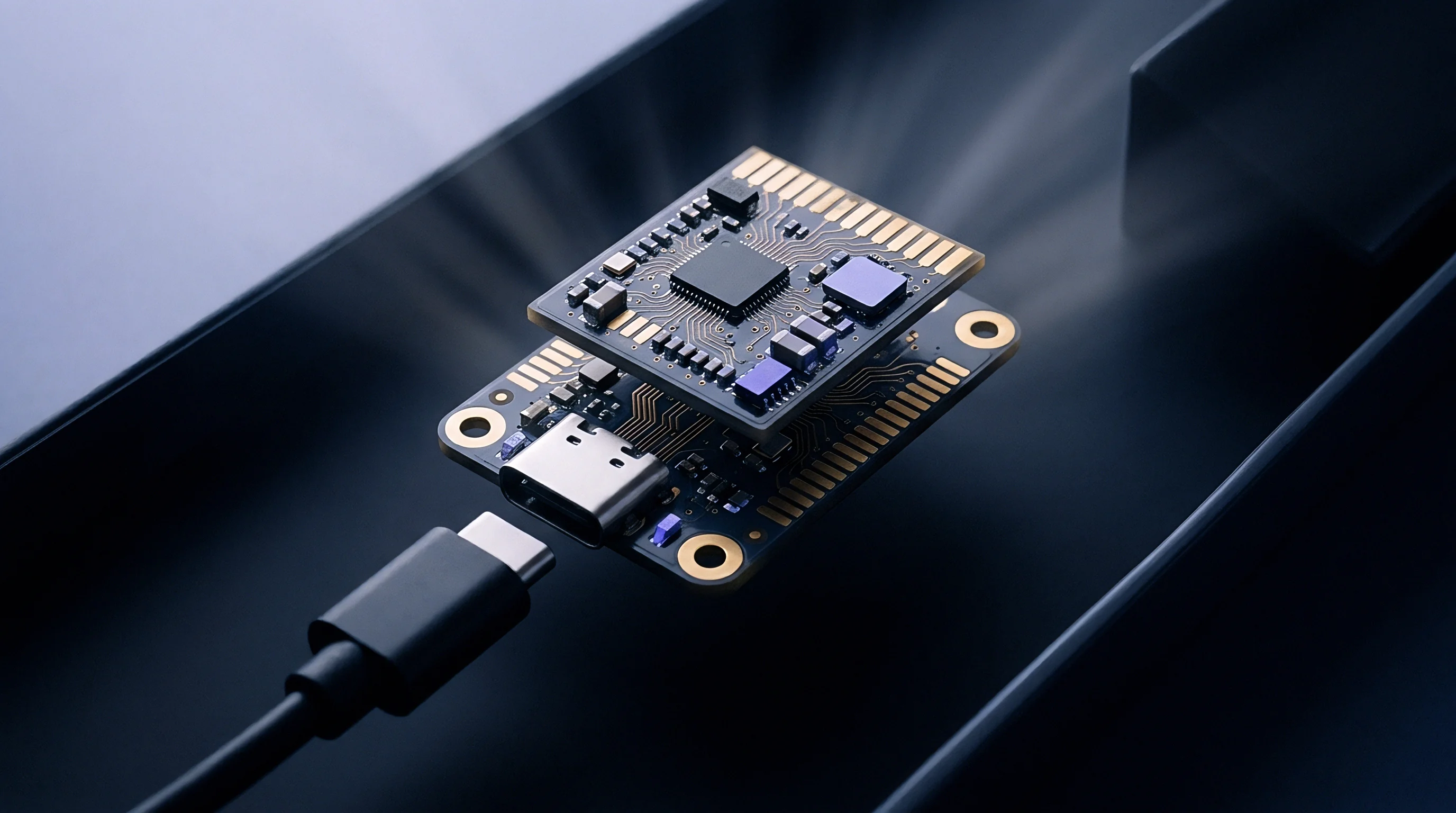
Contracts govern software handover long before assembly lines begin panel de-paneling. Sourcing disputes emerge when buyers assume turn-key manufacturing quotations include full ownership of custom board bring-up code, while contract assemblers view low-level firmware adaptations as proprietary manufacturing tooling. A clear Statement of Work decouples board support package repository deliverables from basic hardware fabrication fees.
Second sources demand complete source trees. If an original equipment manufacturer decides to move volume production to an alternative contract assembly house due to regional supply shocks or pricing disputes, the absence of an unencumbered board support package repository halts the transition for quarters.
Section 8.4 of the IEEE 1063 standard nullifies release certifications when embedded firmware repositories omit uncompiled target source code.
Commercial Ownership Boundaries in Nonrecurring Engineering Scopes
Engineering services teams within contract manufacturing houses charge nonrecurring engineering fees to adapt reference software to buyer-specific hardware layouts. Unless the commercial contract classifies this firmware engineering under a work-for-hire framework, the manufacturer retains ownership of the resulting board support layer configurations and test scripts.
| Engagement Tier | BSP Repository Deliverable | Toolchain Deliverable | Commercial Exit Recourse |
|---|---|---|---|
| Turn-key Module Assembly | Signed Binary Images Only | Proprietary Closed Compiler | Full redesign required to switch assembly facilities |
| Semi-Custom Co-Development | Application Source and Board Patches | Container Image with Prebuilt Binaries | Requires renegotiating license fees for low-level drivers |
| Full Nonrecurring Engineering SOW | Complete Bare-Metal and Kernel Git Tree | Open Source Reproducible Environment | Zero technical dependency on original factory house |
Contract manufacturing quotations detailing software handover deliverables enumerate explicit items: raw device tree files, board schematics matching software pin definitions, automated manufacturing diagnostic source code, continuous integration scripts, and signed security keys. Failure to stipulate these deliverables leaves the buyer dependent on a single supplier for future firmware bug fixes.
Software Escrow and Defect Remediation Terms
Long-lifecycle products deployed in industrial environments operate across decades, far outlasting typical manufacturing vendor relationships. Commercial software agreements mandate depositing complete build environments, source repositories, cryptographic signing material, and hardware test documentation into neutral third-party escrow facilities. Trigger conditions release these assets if the contract manufacturer faces insolvency or discontinues manufacturing services.
The standard IPC-1782 traceability clause mandates automated logging of commit identifiers against serial numbers, shifting warranty liability directly onto whoever modifies source branches without prior engineering signoff.