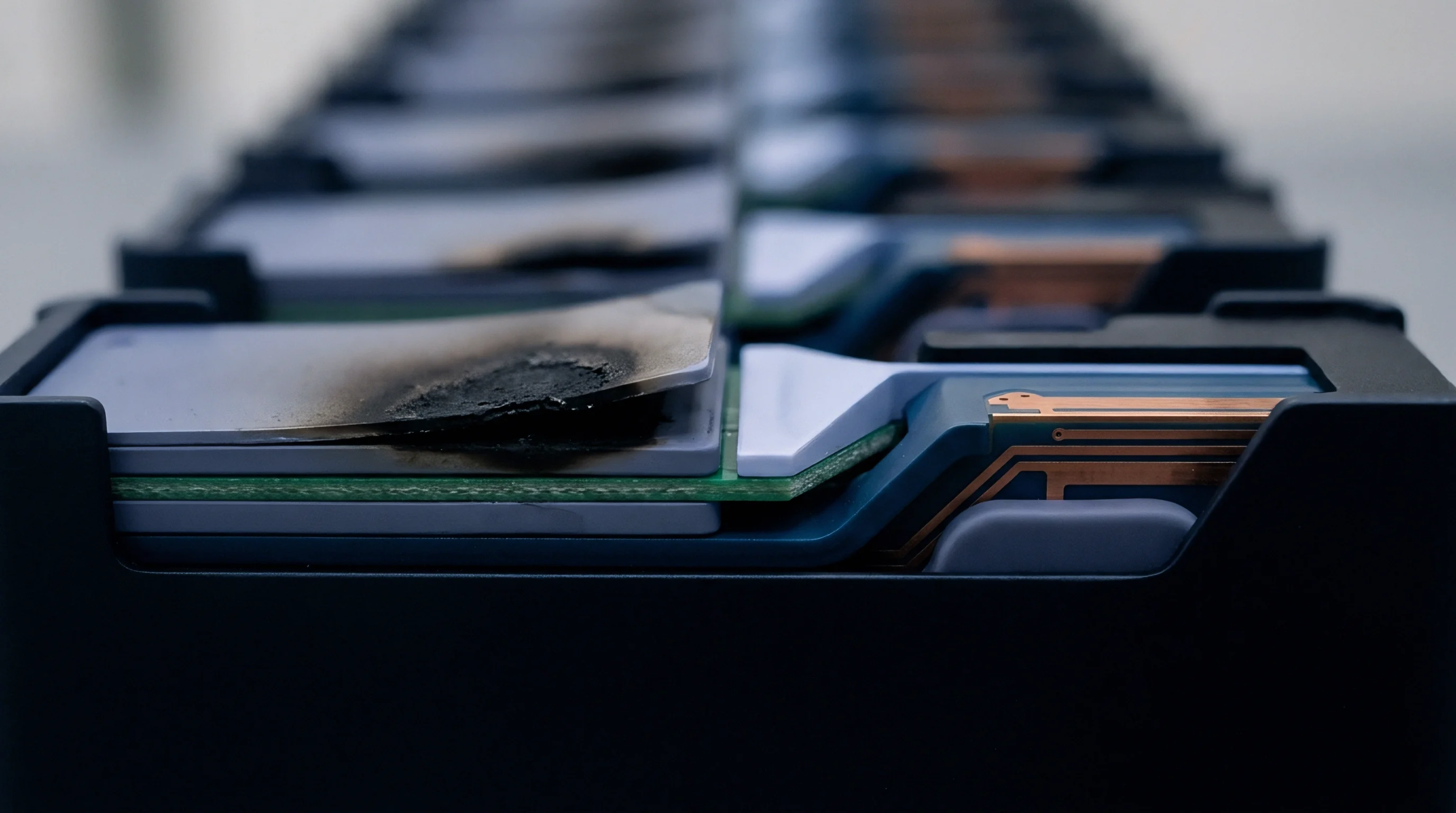
Meaning
Irreversible reduction in the chemical energy stored within a non-rechargeable cell limits the functional life of a device. The process of primary battery depletion occurs as the internal active materials are converted into stable compounds during discharge. This process is permanent and requires a physical replacement of the power source.
The end of life is reached when the output can no longer sustain the minimum operating voltage.
Voltage Drop
Decreasing potential across the terminals shows the remaining capacity. As primary battery depletion progresses, the voltage remains relatively stable before falling sharply near the end of the discharge cycle. Circuits must be designed to operate across this entire range to ensure reliable performance.
Impedance Rise
Internal resistance increases as the cell ages and its chemical environment changes. This effect causes the voltage to sag during high-current events, such as radio transmissions. Primary battery depletion often becomes apparent when the device can no longer handle the peak loads required for connectivity.
Shutdown Voltage
Electronic components have a minimum threshold below which they cannot function correctly. When primary battery depletion brings the supply to this limit, the system enters a hardware shutdown to prevent data corruption. This threshold defines the boundary of the usable energy in the cell.