Long Term Field Battery Depletion Triggered by Dynamic Rejoining Sequences in Dense Industrial Meshes
Dynamic rejoining loops drain primary lithium cells via passivation failure and brownout cycles; firmware must enforce passive orphan sleep and backoff limits.


Cascades
Overhead steel structures swinging through industrial bays disrupt localized Fresnel zones without warning, abruptly breaking line-of-sight paths. When heavy equipment blocks primary signals, nearby wireless nodes lose link budget margin and start dropping frames. In dense industrial deployments carrying hundreds of nodes per RF coverage area, losing a single routing parent immediately orphans its downstream children, forcing each affected node to shift from low-power periodic sleep into a high-duty-cycle active search state.
Once parent router tables clear, the search phase drives orphaned nodes to broadcast beacon requests across every available channel. In layouts where fifty to two hundred nodes sit within mutual range, these uncoordinated broadcasts flood the shared medium. Packet collisions spike immediately.
Nearby routing nodes with previously stable link margins experience buffer overruns and corrupted acknowledgment frames, letting localized path degradation spread into broad packet loss.
As collision rates rise, secondary parent nodes miss periodic keepalives from downstream links and mark those neighbors unreachable, severing further established paths. Topology disruption radiates outward from the physical obstruction in concentric waves. Nodes dozens of meters away from the barrier drop into discovery mode, abandoning valid line-of-sight connections to immediate neighbors as available power reserves collapse.
- Shadow Fading Triggers identify physical machinery shifts that attenuate sub-GHz or 2.4 GHz signals past receiver sensitivity thresholds, causing child disassociation.
- Channel Saturation Loops describe unthrottled beaconing that consumes available airtime and blocks adjacent nodes from sending valid route acknowledgments.
- Routing Table Evictions mark the point where parent nodes exhaust memory for downstream routes, dropping working links to preserve system stability.
- Cascading Orphan Sequences occur when link loss at a primary routing hub pushes multiple child clusters into simultaneous re-registration loops.
In dense facilities with high node counts per cubic meter, signal reflections off corrugated metal and concrete pillars intensify multipath fading. A node rejoining the mesh cycles repeatedly through radio frequencies to find an available parent. When many nodes try this at once, handshake success rates plummet, choking the medium with unacknowledged bursts and prolonging link restoration.
A single lost parent router in a dense mesh array triggers disassociation events across nodes that never lost RF line of sight to the gateway.
Uncontrolled recovery cascades exhaust cells across entire deployment sectors within hours, forcing early replacement of battery-powered hardware across the plant.

Anode
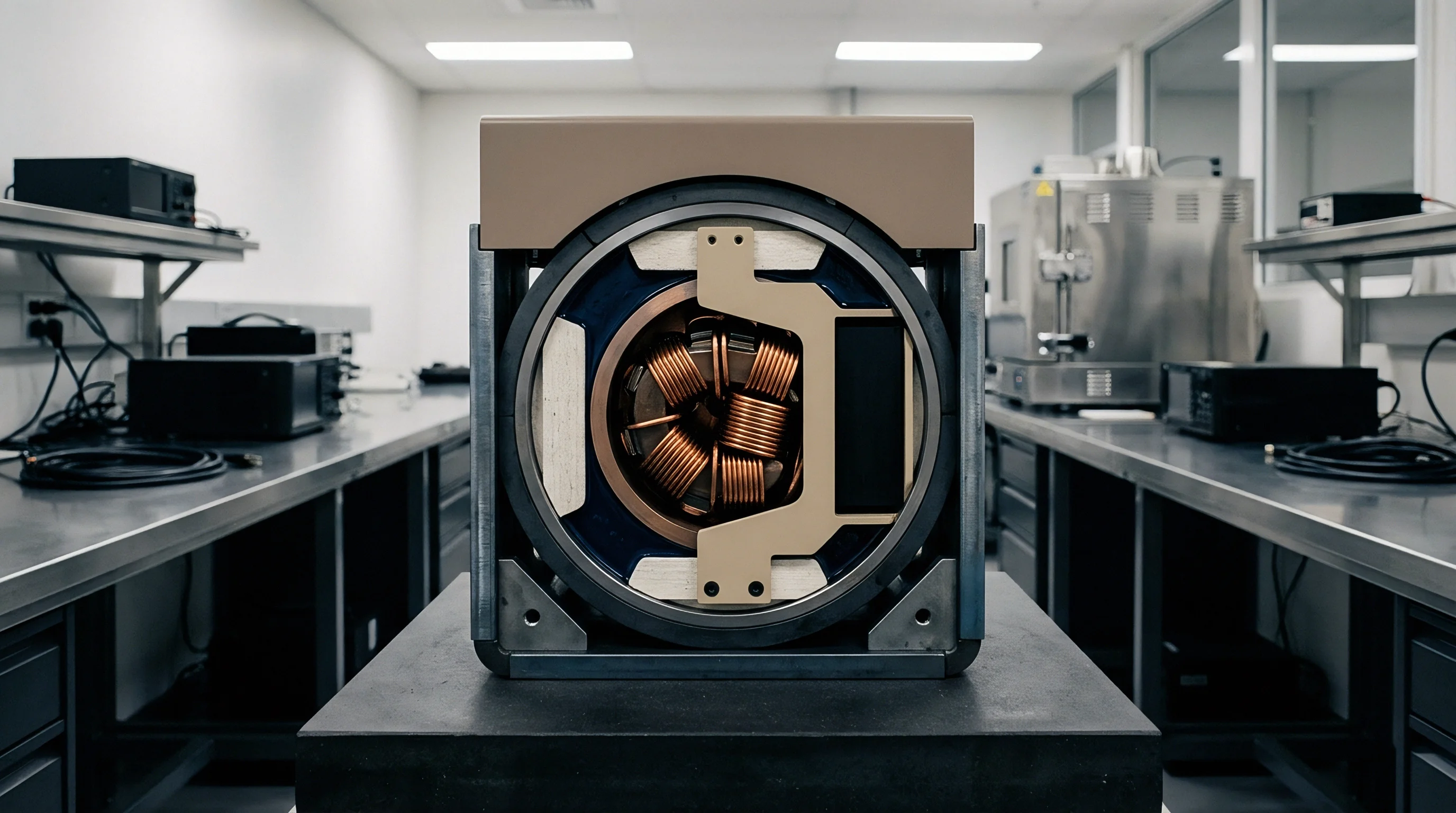
Primary lithium thionyl chloride chemistries offer high energy density alongside static microamp sleep currents. They depend on a protective lithium chloride passivation layer that forms naturally over the metallic lithium surface, suppressing self-discharge during idle periods. When an industrial node operates in steady state, drawing two to five microamps, this insulating layer stays thick and preserves capacity for service lives exceeding ten years.
Rejoin sequences disrupt this dynamic equilibrium. When link loss forces continuous channel scanning, current demand jumps from microamps to twelve to eighteen milliamps in receive mode, reaching up to one hundred twenty milliamps during high-power transmit bursts. This sudden load strips the passivation film from the metallic interface.
Without that protective layer, the cell undergoes rapid chemical activation, raising localized electrolyte temperatures and pushing up internal self-discharge rates.
Under sustained pulse loads during prolonged search states, primary lithium cells suffer severe voltage delay. Terminal voltage can drop below the microcontroller’s minimum operating threshold ~ typically 2.0 to 2.2 volts ~ even while substantial nominal capacity remains. This drop triggers a brownout reset on the integrated circuit.
Upon reboot, the MCU re-initializes the radio, restarts the high-current scan, and pulls voltage down once more, trapping the device in a continuous reset loop.
| Operating State | Current Draw (mA) | Duty Cycle (%) | Duration per Event | Cell Voltage Depress (V) |
|---|---|---|---|---|
| Deep Sleep (Quiescent) | 0.003 | 99.850 | Continuous | 0.00 |
| Periodic Beacon Receiver | 14.200 | 0.100 | 15 ms | 0.02 |
| Channel Active Scan | 18.500 | 100.000 | 12 s to 180 s | 0.45 |
| TX Join Request (0 dBm) | 32.000 | 0.030 | 8 ms | 0.15 |
| TX Join Request (+14 dBm) | 115.000 | 0.020 | 8 ms | 0.85 |
| Data measured across 3.6V ER14505 LiSOCl2 primary cells at 25 degrees Celsius under synthetic mesh search loads. | ||||
Heavy, repetitive pulse trains also alter the cell’s physical cathode structure. Depleting electrolyte around active discharge zones creates regions of high localized resistance that persist for hours, even if the radio finds a parent and returns to deep sleep. Subsequent transmit pulses then cause exaggerated voltage dips, leaving the node prone to secondary brownouts during ordinary data transmissions.
Operating a sub-GHz node at continuous receive mode during link recovery reduces nominal 2.6 Ah cell capacity by 38 percent through localized thermal self-discharge and lithium passivation collapse.
Battery vendors often blame field power failures on improper storage temperatures, overlooking how baseline cell ratings rely on low-current static profiles that bear little relation to real-world radio search behavior.

Algorithms
The state transitions governing orphan behavior dictate how fast an isolated node restores its connection. When a mesh stack hits its retry limit on unacknowledged frames, the device shifts from synchronized sleep into parent acquisition. In unoptimized firmware, this search state keeps the receiver listening continuously across every channel in the map, driving power draw up sharply.
Why Do Exponential Backoff Timers Fail in Dense Topologies?
Standard exponential backoff algorithms scale up the delay between rejoin attempts using an escalating multiplier. While this relieves airtime pressure in sparse networks, dense industrial sites present a different problem: hundreds of orphaned nodes execute backoff logic simultaneously within overlapping windows. Combined transmission activity remains above channel capacity, creating steady interference that prevents individual nodes from completing handshakes.
- The primary routing node drops from the topology because of power loss or RF path disruption.
- Downstream child devices exhaust link-layer retries and move into orphan recovery.
- Nodes initiate immediate channel sweeps, broadcasting high-power join requests across all permitted RF channels.
- Packet collisions corrupt incoming join responses from surviving neighbor parents.
- Nodes exhaust initial retry counters and cap backoff intervals at their maximum limit.
- Continuous channel scanning drains cell capacity until terminal voltage drops below MCU operational minimums.
- Brownout resets force a device reboot, clearing backoff timers and restarting discovery from state zero.
RPL networks in dense sub-GHz setups rely on Trickle timers to regulate control traffic. When link loss destabilizes the topology, the timer resets to its minimum interval, I-min. If I-min is set below a few hundred milliseconds in a dense cluster, devices flood the airwaves with DODAG Information Object packets.
This wave of routing repair frames blocks channel access and stops adjacent nodes from handling regular payload data, spreading instability further into the mesh.
Dynamic recovery timers must scale with local RF node density rather than static retry counters to prevent synchronized medium saturation.
Field data leaves open the precise boundary where stretching backoff delays trades off acceptable message latency against protecting cell voltage during extended obstructions.
Measurement
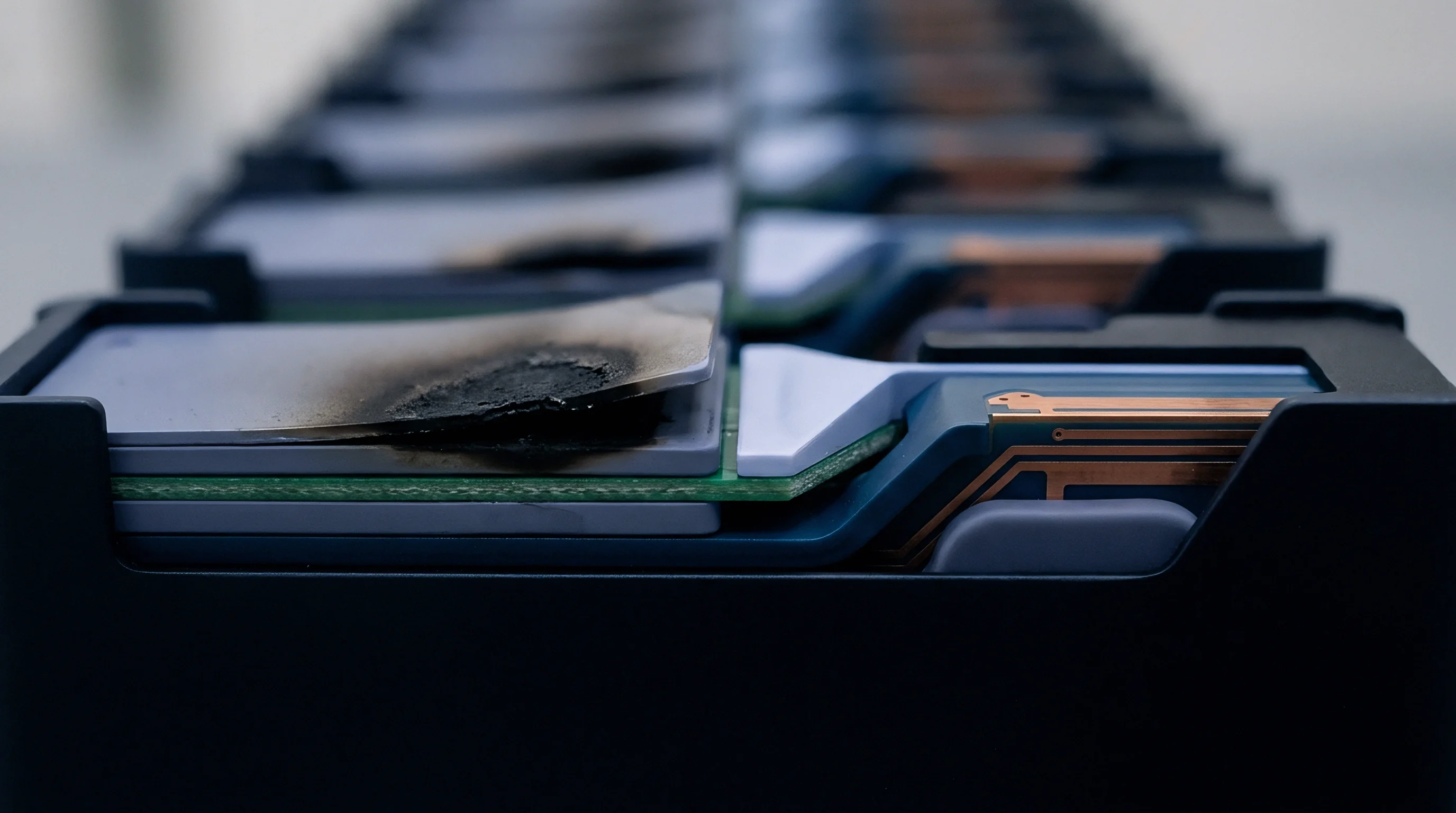
Profiling power draw during link loss takes high-bandwidth acquisition equipment that can capture microamp sleep currents alongside microsecond-scale transmit spikes over one hundred milliamps. Standard digital multimeters average measurements over broad windows, missing the fast pulse trains that strip battery passivation. Effective bench testing requires dedicated hardware with a dynamic range spanning six orders of magnitude.
A typical bench test places the unit in an RF shielded enclosure tied to a programmable attenuator. Increasing attenuation simulates physical obstacles and forces the module into recovery modes. High-speed probes capture current draw alongside digital logic markers mapped to radio state transitions, revealing watchdogs resetting in real time and correlating firmware behavior directly with battery drain.
| Rejoin Attempts per Day | Continuous Search Time (min) | Effective Ah Drained | Projected Service Life | Capacity Penalty vs Baseline |
|---|---|---|---|---|
| 0 (Steady State) | 0 | 0.22 Ah / yr | 10.2 years | 0 % |
| 5 | 15 | 0.48 Ah / yr | 4.8 years | 52 % |
| 20 | 60 | 1.12 Ah / yr | 2.1 years | 79 % |
| Continuous (Loop) | 1440 | 2.60 Ah / 3 weeks | 0.06 years | 99 % |
Profiling captures the exact point where terminal voltage gives way under load. If measurements show voltage dropping below MCU operating thresholds during join request bursts, firmware developers can adjust state timing to avoid overlapping pulses.
Validating long-term field performance requires testing active rejoin current profiles at sub-zero temperatures, where electrolyte conductivity drops significantly.

Parameters
Protocol design determines the energy spent restoring topologies across industrial radio bands. Sub-GHz configurations at 868 MHz or 915 MHz penetrate structural steel better than 2.4 GHz options, but offer lower bit rates and narrower bandwidth. These lower rates extend on-air transmit times for join handshakes, increasing the energy used on every attempt.
Time-Synchronized Channel Hopping protocols like WirelessHART and IEEE 802.15.4e handle topology changes with scheduled time slots. An unsynchronized node must scan hopping channels for network beacons, drawing continuous power until a slot-frame signal aligns its clock with a parent. Asynchronous meshes like Wirepas Massive take a different approach, using decentralized parallel scanning to distribute recovery loads among neighboring nodes and hold average rejoin current down.
| Protocol Stack | Frequency Band | Scan Current (mA) | Typical Rejoin Time | Energy per Rejoin (J) |
|---|---|---|---|---|
| Zigbee PRO (3.0) | 2.4 GHz | 16.5 | 4.2 s to 45.0 s | 0.23 to 2.45 |
| Thread 1.3 | 2.4 GHz | 15.8 | 2.1 s to 18.0 s | 0.11 to 0.95 |
| Wirepas Massive | 1.9 GHz / 2.4 GHz | 8.2 | 0.8 s to 6.5 s | 0.02 to 0.18 |
| WirelessHART (TSCH) | 2.4 GHz | 22.0 | 12.0 s to 300.0 s | 0.87 to 21.78 |
Firmware parameters control retry limits, discovery windows, and passive listening intervals. Setting too short a discovery window keeps nodes from finding distant parents, while an overly long window drains batteries during brief dropouts. Configuration parameters must balance discovery speed against cell chemistry constraints.
Specification mandates compliance with ETSI EN 300 220 duty cycle limits of one percent during search states to prevent regional sub-GHz band starvation during topological repairs.
Procurement agreements with explicit radio protocol requirements enforce power limits by obligating vendors to verify worst-case rejoin current against certified standards prior to shipment.

Mitigation
Firmware design is central to surviving link loss without ruining battery life. A passive orphan sleep state keeps radios out of continuous high-current search loops. If a node fails to find a parent within a set retry limit, the state machine enforces deep sleep for an escalating interval ~ ranging from minutes to hours ~ before running a single-channel probe.
Pairing Hybrid Layer Capacitors with primary lithium thionyl chloride cells mitigates high pulse loads. Positioned in parallel with the cell, the HLC provides low equivalent series resistance to buffer current spikes during join attempts. This keeps terminal voltage above MCU brownout thresholds, stopping reset loops and protecting the anode passivation layer from breakdown.
- Passive Orphan Sleep Enforcements shift nodes into microamp sleep modes after set search limits, preserving capacity during extended outages.
- Hybrid Layer Capacitor Buffers supply peak current during join broadcasts, keeping terminal voltage above brownout thresholds.
- Localized Density Jitter Controls randomize scan timing across node clusters, preventing synchronized beacon collisions on shared channels.
- Non-Volatile State Persistence saves last-known routing tables and channel maps to local memory, eliminating full-band sweeps after outages.
Procurement documents need explicit dynamic rejoin current limits. Specifying static sleep current alone misses real-world network stress. Qualification plans should subject full test arrays to simulated gateway outages, confirming that power draw stays within bounds during mesh recovery.
Designing for dense factory floors requires combining passive orphan state limits, low-ESR pulse buffering, and tested backoff parameters into a single requirement specification. Neglecting these safeguards during component selection drives up field maintenance and battery replacement costs.