Optimizing Unattached Protocol State Machine Timers for Primary Lithium Battery Preservation in Roaming Transceivers
Optimizing unattached transceiver backoff timers prevents severe passivation voltage dips and extends primary lithium battery service life past ten years.


Search
When a roaming transceiver loses terrestrial link coverage, the protocol engine triggers an automated acquisition state. Hardware operating in mobile or cross-border deployments can burn substantial energy attempting to re-establish synchronization with base stations. Unattached state machines govern these scanning intervals by executing channel sweeps, preambles, and handshake requests at programmed frequencies.
Primary lithium batteries powering isolated nodes deplete quickly during these unattached phases, since power amplifiers run at full gain trying to reach distant cell towers or gateways.
Timer configurations within the state machine determine the balance between link recovery speed and cell capacity. Module defaults often mandate aggressive polling cycles that sweep regional bands every few seconds after a drop. Leaving hardware on these settings in fringe areas rapidly drains the battery, as firmware without extended backoff keeps the radio front-end cycling between high-current reception and transmission states that draw hundreds of milliamperes per attempt.
Protocol behavior while detached differs across LTE-M, NB-IoT, LoRaWAN, and proprietary sub-GHz architectures. Each standard enforces its own rules for cell selection, tracking area updates, and gateway join retries. When infrastructure fails to acknowledge bursts, the internal state machine steps through candidate frequencies, burning energy on channel evaluation and baseband processing before dropping into brief sleep intervals.
- Continuous Active Scanning sweeps regional radio channels repeatedly without pause, driving receiver current draw continuously.
- Max-Power Transmission Attempts push power amplifiers to full output gain during unacknowledged preambles, draining battery capacity.
- Frequent Carrier Handshake Resets clear stored connection context, requiring full re-authentication protocols upon signal re-acquisition.
- Oscillating Gateway Joins cycle transceivers between transient signal acquisition and instant link drops, compounding protocol overhead.
Unattached State Energy Dissipation
Operating outside coverage boundaries forces transceivers to cycle power amplifiers repeatedly for initial handshakes. Detached protocol engines enter acquisition loops that draw upwards of 250 milliamperes during active radio frequency synthesis and transmission phases. Preserving battery life requires replacing continuous active sweeps with exponential backoff algorithms that scale retry intervals based on consecutive failed attempts.
When a 3GPP cellular module loses connection, it initiates Public Land Mobile Network selection. The baseband modem scans supported E-UTRA absolute radio frequency channel numbers, reading system information blocks to identify valid carrier signal sources. In fringe zones, poor signal-to-noise ratios prevent successful decoding of downlink broadcast messages, forcing the transceiver to step through candidate bands repeatedly.
Energy expenditure during this unsynchronized search state exceeds connected mode sleep current by five orders of magnitude.
Sub-GHz long-range architectures show a similar surge in energy consumption outside network boundaries. A LoRaWAN end device executing unacknowledged join-request frames uses maximum spreading factors to maximize link margin, resulting in long airtime durations. Repeated join requests sent across multiple channels without receiving join-accept downlink windows drain primary cell capacity rapidly.
Optimizing the state machine requires enforcing extended backoff delays between join cycles to bound cumulative airtime.
Automated cell search defaults typically prioritize link acquisition speed over battery longevity.


Anode
Primary lithium batteries rely on metallic electrode substrates that react under load. Lithium thionyl chloride and lithium manganese dioxide chemistry variants offer high energy density and low self-discharge rates, making them primary choices for long-term remote transceivers. Heavy current pulses demanded by unattached transceiver search cycles induce severe physical and chemical stresses on these cells.
High current draw forces rapid chemical conversion at the active metallic interface, triggering transient voltage suppression.
A passivating lithium chloride film forms naturally when metallic lithium contacts thionyl chloride electrolyte solutions. This passivating film prevents self-discharge, allowing primary cells to retain capacity over decade-long lifespans. However, sudden current demands during unsynchronized transmission bursts must punch through this crystalline barrier.
When a transceiver wakes from extended deep sleep to execute high-power channel scans, the sudden current demand across the passivated interface causes a deep voltage drop, known as voltage delay.
Operating temperature severely amplifies passivation effects and internal impedance within primary cells. At cold temperatures, electrolyte viscosity increases, slowing ion mobility and exacerbating voltage delay during sudden radio frequency transmission bursts. If unattached state machine timers trigger aggressive retry cycles while the cell remains in a passivated or chilled state, terminal voltage drops below the brownout reset threshold of system microcontrollers, causing continuous hardware power cycles.
A 2.5-ampere peak pulse drawn during a sub-GHz preamble scan drops terminal voltage across lithium thionyl chloride cells to 2.1 volts at minus twenty degrees Celsius.
| Chemistry Type | Nominal Voltage (V) | Peak Current Capacity (mA) | Passivation Risk | Operating Temp Range (°C) | Self-Discharge Rate (%/year) |
|---|---|---|---|---|---|
| LiSOCl2 (Standard) | 3.6 | 100 – 200 | High | -60 to +85 | < 1.0 |
| LiSOCl2 + HLC Capacitor | 3.6 | 2000 – 3000 | Low (Mitigated) | -40 to +85 | 1.5 to 2.0 |
| LiMnO2 | 3.0 | 500 – 1000 | Negligible | -40 to +70 | < 1.5 |
| LiFeS2 | 1.5 | 1500 – 2000 | None | -40 to +60 | 2.0 to 2.5 |
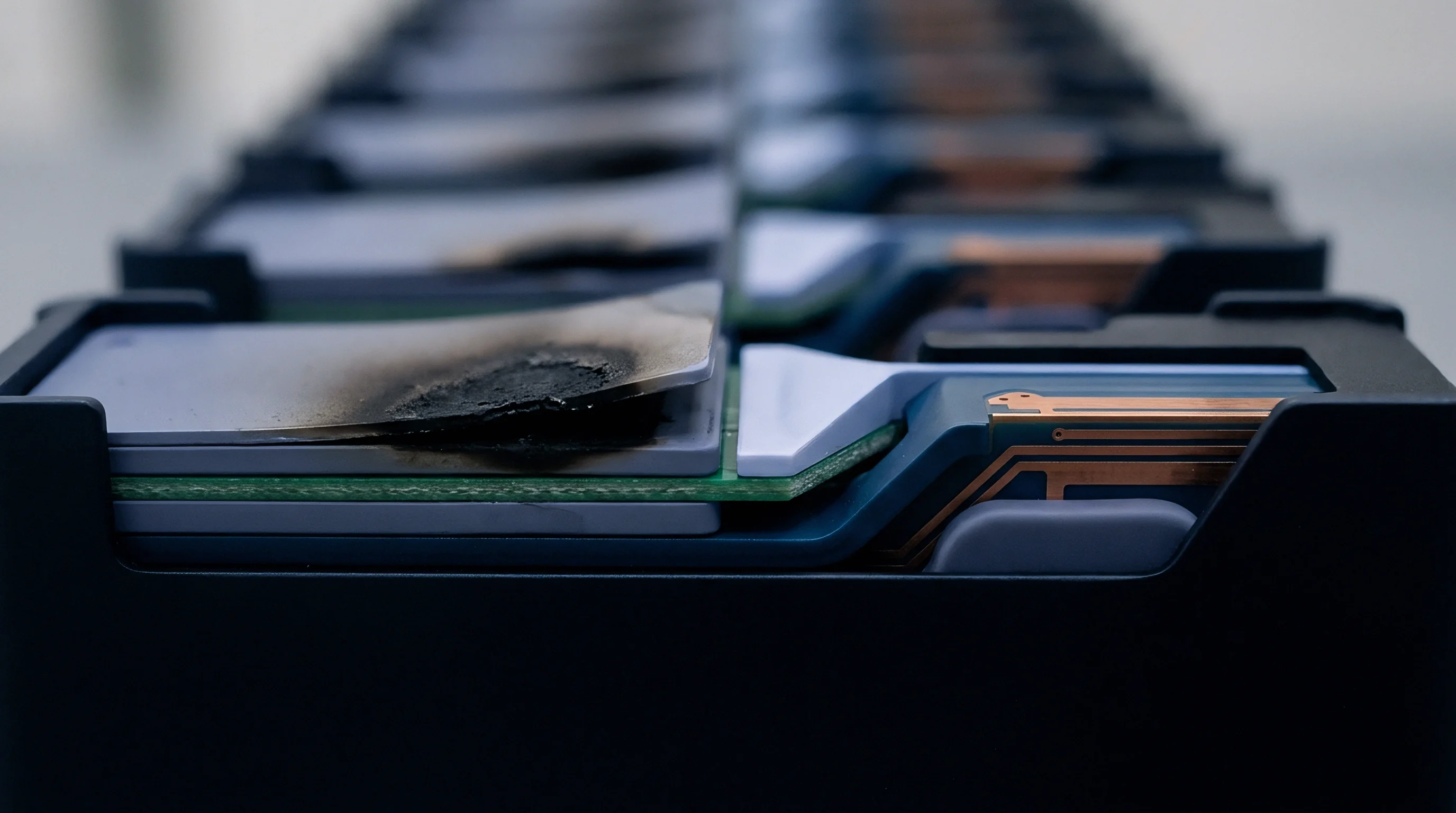
Passivation Layer Breakdown Dynamics
Internal film growth on lithium thionyl chloride surfaces increases baseline cell impedance during extended inactive intervals. When an unattached state machine wakes the radio module to sweep channel bands, the sudden load requirement forces electron flow through high-resistance passivation layers. Terminal cell voltage drops rapidly within microseconds, recovering slowly as the physical film ruptures under current flow.
Integrating hybrid layer capacitors alongside primary lithium thionyl chloride cells provides parallel pulse handling capacity. The secondary capacitor stores charge during sleep states, supplying heavy instantaneous currents required during unattached radio frequency bursts while buffering the primary cell from severe voltage suppression. Sourcing decisions must weigh the added unit cost of hybrid layer capacitors against the operational risk of brownout failures during prolonged out-of-coverage roaming events.
Unattached state machine parameterization directly influences cell depassivation frequency. Periodic short current pulses programmed into transceiver sleep routines keep passivation layers thin, preventing severe voltage delay at the expense of baseline energy consumption. Conversely, allowing complete passivation during multi-day sleep windows requires controlled, stepped depassivation routines before attempting full-power channel scans.
Underestimating voltage suppression during unsynchronized search pulses leads directly to microcontroller brownout resets and permanent capacity loss.


Cadence
Protocol timer parameterization establishes the temporal spacing between signal acquisition bursts. Keeping energy consumption sustainable requires transitioning unattached state machines from rapid linear retry timers to exponential backoff schedules with randomized delay jitter. Enforcing lower duty cycles during prolonged signal loss prevents rapid depletion of primary cell charge while ensuring transceivers resume communication when moving back into carrier coverage zones.
Cellular IoT specifications define standard timer structures to manage power consumption in low-power operating modes. The 3GPP framework provides Power Saving Mode T3324 and T3412 timers alongside extended Discontinuous Reception parameters. When transceivers enter unattached states due to signal dropouts, baseline state machine timers determine how long the radio maintains active tracking area update attempts before entering deep sleep states.
Adjusting timer ceilings balances response latency against battery preservation. Setting maximum out-of-coverage sleep timers to several hours reduces unattached state energy consumption to microampere baselines. Firmware architectures must account for mobile tracking use cases, where long sleep intervals between signal acquisition attempts delay asset location reporting after re-entering valid coverage areas.
Why Does Cellular PLMN Search Consume Exponentially More Energy in Roaming Fringe Zones?
Transceivers deployed along regional borders frequently cross coverage thresholds into unassigned signal areas. When carrier registration attempts fail, cellular modems initiate full Public Land Mobile Network scans across all supported frequency bands. Baseband processors evaluate signal strength, decode broadcast parameters, and send access requests to available cell towers.
In fringe zones, marginal signal quality causes repeated authentication handshakes to time out, forcing power amplifiers to run continuously at maximum transmission limits.
Exponential backoff scales retry delays based on failed attempts, preventing rapid energy drain during extended coverage outages. Formulaic timer scaling uses exponential equations incorporating randomized delay jitter to prevent localized transceivers from transmitting simultaneously upon infrastructure restoration.
- Initial Scan Burst initiates immediate signal acquisition for three seconds following link disconnect.
- Short Backoff Interval enforces a sixty-second sleep state before secondary channel sampling occurs.
- Exponential Ladder Scaling doubles sleep intervals sequentially up to a six-hour steady-state cap.
- Deep Sleep Hold maintains microampere baseline consumption until periodic wake-up timers expire.
Exponential timer expansion preserves primary battery capacity by matching sleep intervals to the statistical probability of infrastructure recovery.
| Protocol Standard | Initial Scan Interval (s) | Max Backoff Ceiling (hr) | Active Search Window (s) | Energy Cost / Search (mWh) |
|---|---|---|---|---|
| LTE-M (CAT-M1) | 15 | 24.0 | 12.0 | 0.85 |
| NB-IoT (NB1/NB2) | 30 | 48.0 | 20.0 | 0.42 |
| LoRaWAN (EU868) | 60 | 12.0 | 2.5 | 0.08 |
| Proprietary Sub-GHz | 10 | 6.0 | 1.0 | 0.03 |
Algorithmic Exponential Backoff Formulation
Mathematical state machine models structure delay increments to prevent rapid battery depletion. Implementing an exponential backoff formula with capped upper boundaries forces transceivers to spend over ninety-nine percent of unattached out-of-coverage periods in deep sleep mode. The operational state engine maintains timer counters across system resets, preserving state context within non-volatile memory during zero-power sleep phases.
Adding pseudo-random jitter to exponential timer delays spreads transmission attempts across temporal windows. Without jitter, clusters of roaming tracking transceivers moving together enter synchronized retry states, saturating local spectrum channels and causing mutual RF interference. Adding twenty percent randomized variation to retry intervals smooths channel load and improves overall handshake success probability upon re-entering signal range.
Matching protocol retry delays to the statistical latency of coverage restoration preserves baseline cell energy.


Yield
Direct empirical measurement of unattached transceiver current profiles demands high-resolution sampling hardware. Oscilloscopes paired with precision differential current probes capture dynamic power draw across microampere sleep modes, milliampere reception windows, and ampere-level transmission bursts. Characterizing state machine energy consumption requires long-duration logging to aggregate charge consumption across complete backoff cycles.
Bench testing unattached state machine dynamics requires controlled RF attenuation environments. Placing transceiver hardware inside shielded RF enclosures connected to programmable signal attenuators allows testing of signal loss, fading channels, and complete coverage degradation. Logging baseband state transitions alongside power rail current draw verifies whether state machine software executes programmed timer delays correctly under realistic out-of-coverage fault conditions.
Automated test scripts sweep attenuation levels to force transceivers into unattached registration states, monitoring time spent in active scanning versus deep sleep modes. Evaluating coulombic energy consumption across multi-day test runs highlights firmware bugs, such as unhandled protocol exceptions that cause baseband modems to lock up in high-current receiving states instead of entering power-saving sleep modes.
- Connect a calibrated high-bandwidth current probe in series with the primary lithium power source.
- Configure signal attenuation inside a shielded RF enclosure to simulate total out-of-coverage propagation loss.
- Trigger transceiver state transitions while capturing full-waveform current traces on a digital storage oscilloscope.
- Integrate current over time across acquisition bursts to calculate precise microampere-hour draw per search cycle.
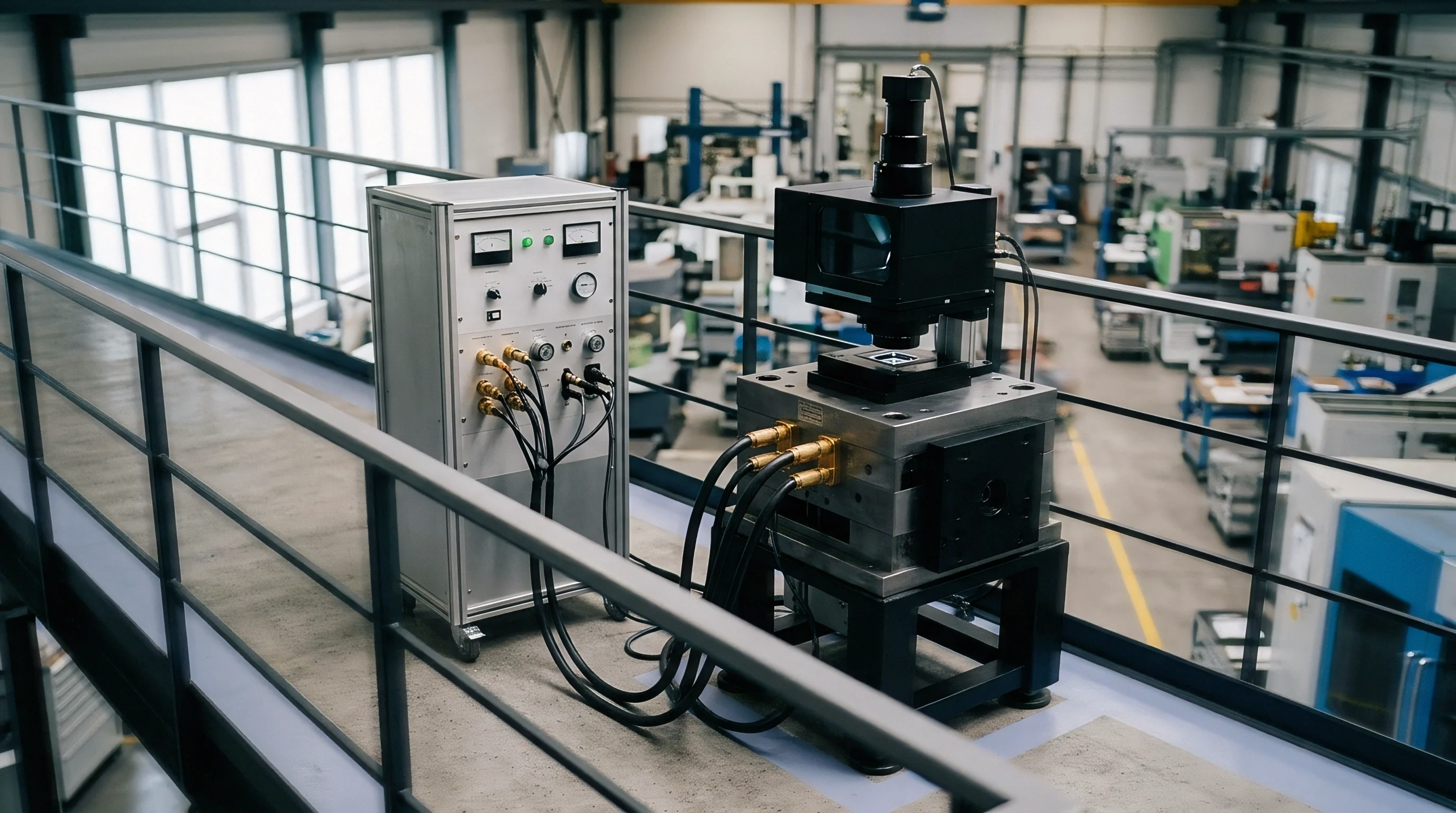
Bench Current Profiling Architecture
Precision shunt resistors paired with isolated differential amplifiers capture transient current spikes during transceiver boot cycles. Measurement setups must support high dynamic range to sample sub-microampere sleep currents alongside three-ampere transmission pulses without signal saturation. Digital coulometers integrate charge draw continuously over extended out-of-coverage test procedures to yield precise total milliampere-hour energy figures.
Regulatory compliance under ETSI EN 300 220 enforces a maximum one percent duty cycle limit on sub-GHz band transmissions, invalidating aggressive out-of-coverage scan algorithms.
Analyzing captured current traces reveals hidden energy losses during unattached search phases. Microcontroller wake-up delays, crystal oscillator stabilization windows, and post-transmission baseband processing loops draw significant energy before sleep states initiate. Optimizing firmware execution paths reduces residual processing time, returning transceivers to deep sleep modes immediately following channel evaluation bursts.
Whether transient temperature drops in field environments alter baseline state machine current draw beyond bench estimates remains an open question.

Compliance
Regulatory agencies and global carrier alliances enforce strict limits on transmitter duty cycles and connection attempt retry intervals. Regional band plans managed by the FCC, ETSI, and regional telecommunications authorities restrict sub-GHz airtime consumption to prevent channel congestion. Transceivers violating maximum duty cycle ceilings during extended out-of-coverage search states face certification rejection and market removal.
Cellular carrier acceptance testing mandates compliance with 3GPP protocol specifications. Global Certification Forum and PTCRB operational standards verify that roaming cellular hardware executes signaling retries within approved parameters. Unattached transceivers that flood cellular towers with repeated registration requests during local system outages risk carrier network rejection, resulting in permanent SIM access revocation.
Compliance documentation mandates complete qualification dossiers proving that out-of-coverage retry algorithms respect carrier rules. Module buyers must audit firmware state machine code to confirm that timers comply with carrier guidelines across all destination target markets.
- 3GPP T3324 Active Timer configures operational wake window duration prior to entering power saving states.
- 3GPP T3412 Extended Periodic TAU dictates deep sleep interval lengths reaching up to 413 days.
- ETSI Duty Cycle Ceiling enforces strict sub-GHz transmission duration limits under one percent per hour.
- Carrier Rejection Backoff Timer prevents rapid retry loops when regional roaming access is denied.

Carrier Acceptance and Regulatory Limits
Testing laboratories mandate detailed verification dossiers demonstrating state machine operational boundaries. Transceivers operating in European sub-GHz allocations must strictly observe ETSI EN 300 220 duty cycle limits, restricting transmission activity to one percent or one-tenth of one percent per hour depending on band designation. Firmware state machines operating outside coverage must count transmission airtime to enforce absolute duty cycle compliance.
Unsynchronized transceiver restarts deplete cell energy faster than continuous out-of-coverage sleep regimes.
Cellular carriers manage network load using rejection cause codes transmitted during registration failures. When base stations return rejection messages indicating temporary network congestion or unassigned roaming restrictions, transceiver state machines must interpret these codes and apply specific timer backoffs. Ignoring network cause codes and maintaining aggressive re-try timers causes immediate rejection from regional carrier networks.
Standard clause 3GPP TS 24.301 Section 5.3.7 restricts repeated tracking area update attempts, forcing unattached devices into extended backoff sleep to protect carrier infrastructure.


Outlay
Long-term operational expenditure for remote sensing hardware scales directly with field battery service life. Sourcing engineers evaluating module unit pricing must account for battery capacity degradation driven by unattached protocol dynamics. Mismanaged state machine timers reduce ten-year design targets to eighteen-month operational failures, triggering costly physical service calls across deployed asset fleets.
Calculating total cost of ownership requires translating microampere-hour battery consumption into field maintenance dollars. Sourcing primary lithium cells with integrated hybrid layer capacitors increases initial hardware bills of materials. However, buffering primary chemistry against voltage drops caused by unattached search pulses prevents premature cell failure, yielding net operational savings across deployment lifecycles.
Financial models comparing standard timer configurations against optimized exponential backoff state machines prove that software optimization yields immediate returns on engineering investment. Extending hardware service life past warranty thresholds eliminates field service calls, directly protecting product operating margins.
| Parameter / Metric | Default Timers (Unoptimized) | Optimized Exponential Backoff | Financial Impact (10k Units) |
|---|---|---|---|
| Out-of-Coverage Scan Interval | 30 Seconds Linear | Exponential (Max 6 hrs) | Software Configuration Cost |
| Unattached Current Draw (Avg) | 18.5 mA | 0.045 mA | 99.7% Energy Reduction |
| Battery Service Life (Field) | 1.2 Years | 9.8 Years | +8.6 Years Lifespan |
| Field Battery Replacements | 7 Collections Over 10 Years | 0 Collections Over 10 Years | $850,000 Service Cost Saved |
| Landed Cost per Delivered Message | $0.042 | $0.003 | 92.8% Unit Cost Reduction |

Total Ownership Lifecycle Calculations
Service maintenance costs for field replacements exceed initial transceiver hardware expenses. Physical replacement of depleted primary lithium cells in remote asset tracking installations incurs technician labor, truck dispatch, and administrative management costs averaging fifty to one hundred dollars per unit. Optimizing state machine firmware before mass production avoids fleet-wide field replacement expenditures.
Procurement teams must integrate lifecycle energy accounting into initial vendor qualification requirements. Standardizing state machine timer parameterization across hardware variants ensures consistent battery preservation performance across all roaming transceiver deployments.
Structuring state machine backoff timers around actual carrier signal loss physics secures long-term device operational margins.