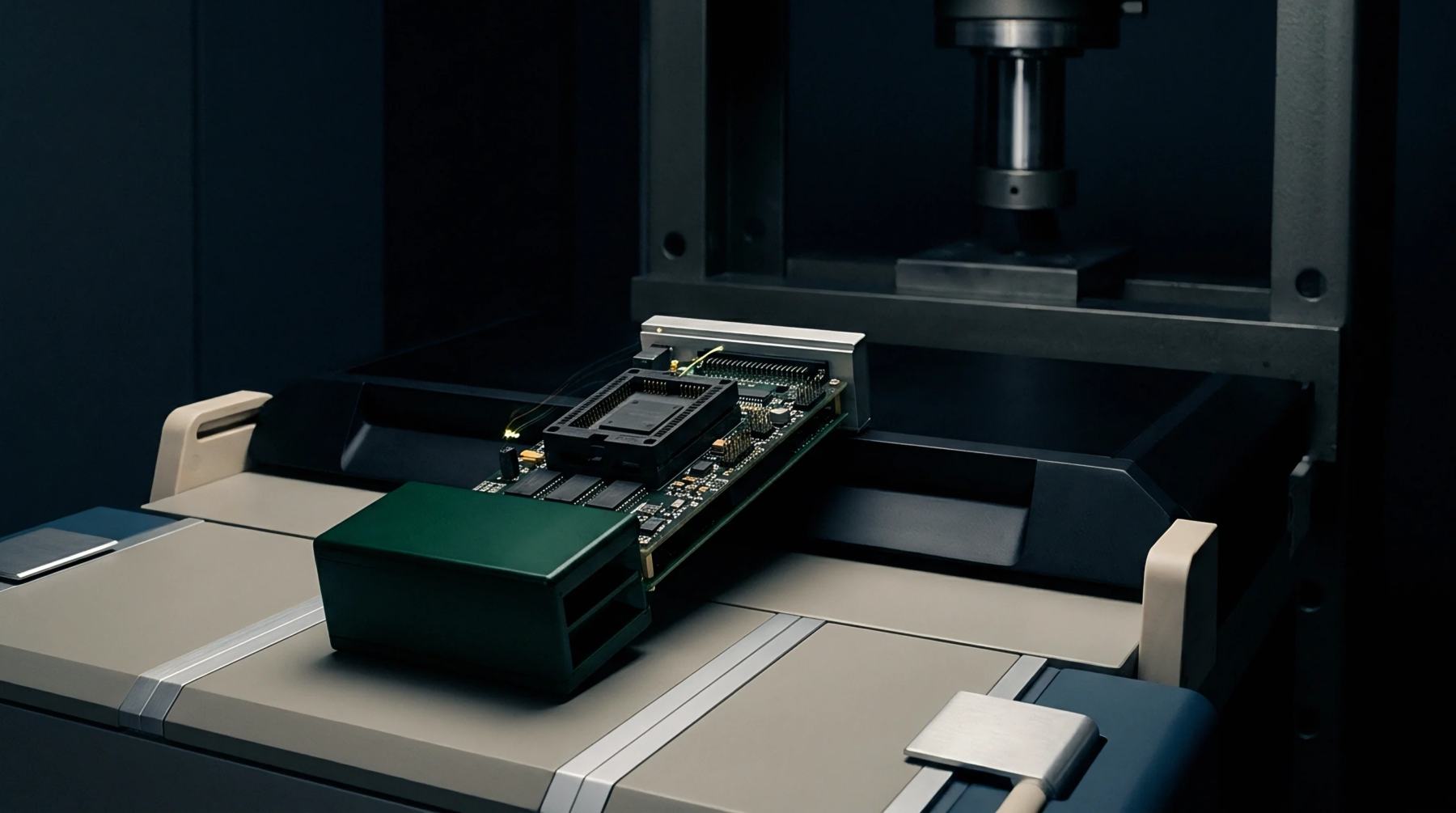
ATE Fixture Design Escrow File Formats and Asset Transfer Procedures
Verify uncompiled native CAD, wiring schedules, and containerized test sequences in escrow to ensure seamless physical fixture transfer and line re-qualification.
Production environments and hardware development laboratories employ high-level scripting environments to orchestrate instrumentation, read device telemetry, and log performance results without manual intervention. Python test automation combines interpreted code structures with hardware interface libraries to coordinate power supplies, radio frequency spectrum analyzers, cellular signaling units, and digital multimeters. The operational scope covers functional hardware bring-up, environmental chamber qualification, and end-of-line production testing across digital, analog, and wireless interfaces.
It stops applying to hard real-time systems that require microsecond-level deterministic hardware interrupts directly inside low-level assembly or bare-metal firmware.
Test station architectures communicate with physical bench instruments via standardized transport protocols and application interfaces. Utilizing Python test automation enables engineers to control complex test instruments over Virtual Instrument Software Architecture interfaces, universal serial bus lines, Ethernet links, or general purpose interface bus connections. Scripts send Standard Commands for Programmable Instruments instructions to power sources to sweep operating voltages, while simultaneously querying spectrum analyzers to record intentional radiator transmission profiles.
Rapid script modification allows developmental testing setups to adapt when hardware revisions alter expected current draw or pin configurations. Automated sweeps generate statistical distributions of component operational limits across wide temperature ranges.
Modern connected hardware requires simultaneous verification of internal system states while external RF parametric tests run. Through dedicated serial port drivers and network socket interfaces, Python test automation executes automated command line sequences, parses device bootloader logs, and reads sensor telemetry directly from microcontrollers under test. Test scripts verify whether internal baseband modems lock onto cellular frequencies within designated time limits while tracking system power consumption on laboratory current probes.
If a firmware assert occurs or an expected interface fails to respond, the execution engine catches the exception, captures the debug stack trace, and logs the hardware serial number to a local database. Parallel test architectures allow a single computer to verify multiple sub-assemblies concurrently, improving production throughput.
Manufacturing execution systems ingest raw performance data to track component yields and flag drift across production shifts. Test suites written for Python test automation format complex radio frequency parameters, signal-to-noise ratios, and interface resistances into standardized JavaScript Object Notation or comma-separated value files. Automated scripts push these records to cloud dashboards or enterprise quality servers, triggering alert dispatches when parameter margins narrow toward failure thresholds.
Code execution ends with explicit pass or fail determinations, clearing the hardware under test for subsequent enclosure packaging or routing it to rework benches.
Verify uncompiled native CAD, wiring schedules, and containerized test sequences in escrow to ensure seamless physical fixture transfer and line re-qualification.
Expertise is a utility, not a secret. sentiention™ publishes its working knowledge as open reference: intelligence layer covering the materials it sources, the markets it enters, and the reference that serves both.