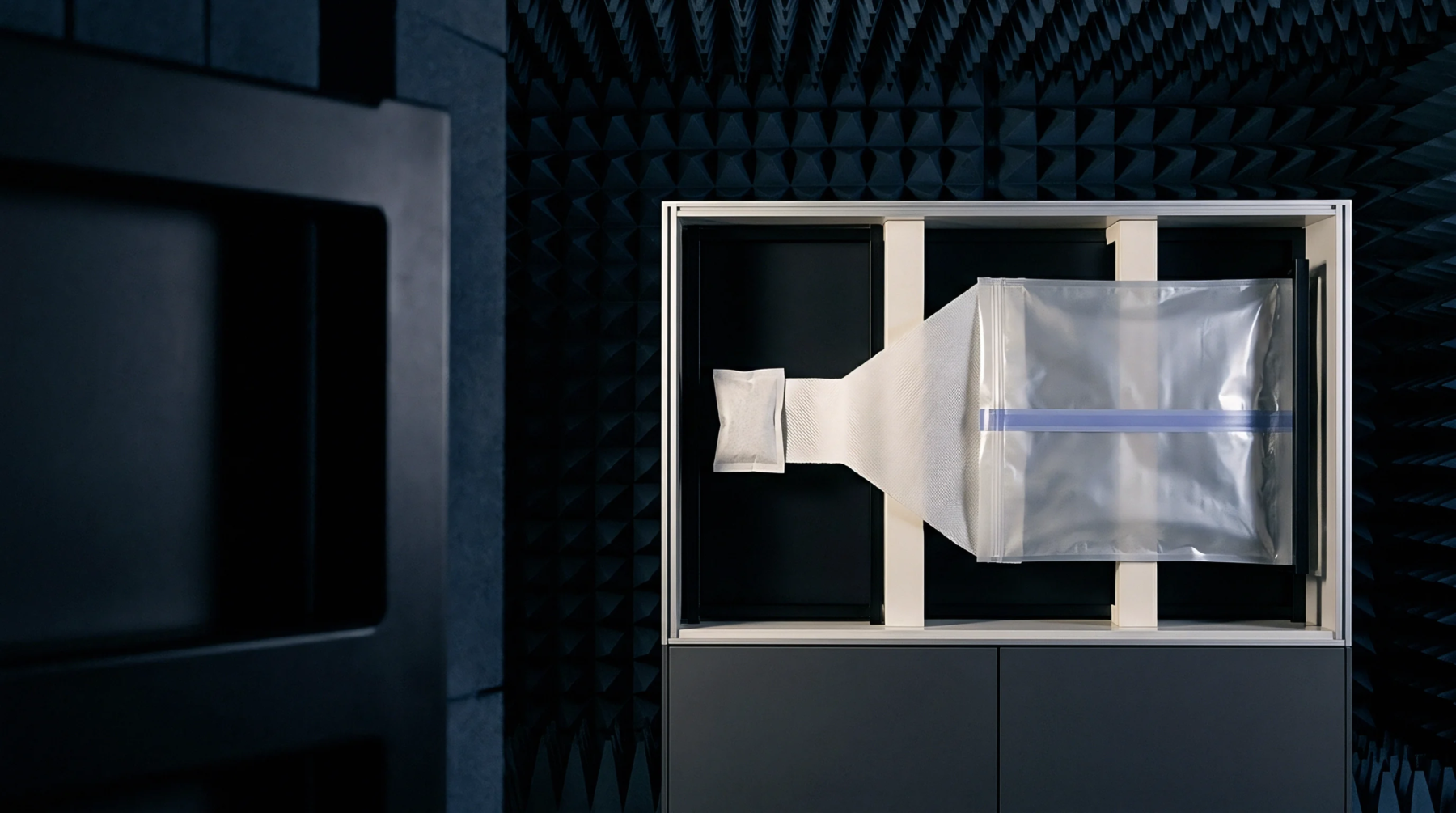
Determining Radiated Emission Changes from Radio Module Firmware Updates
Firmware register and power table modifications alter radiated emissions, requiring pre-scan verification and permissive change filings before release.
Programmatic calculation and permanent storage of factory correction values inside non-volatile memory aligns transceiver operating characteristics with target specifications. Digital adjustments performed during RF register calibration compensate for component tolerances, semiconductor fabrication variations, board substrate trace losses, and analog filter deviations. Automated production equipment measures radio frequency parameters across active frequencies, writing determined compensation offsets into non-volatile lookup tables or register banks.
Calibration aligns internal local oscillator frequencies, power detector responses, baseband filter bandwidths, and power amplifier gain stages to reference standards. The scope covers internal analog and digital radio transceiver configurations, concluding when factory test lines lock calibration partitions against subsequent modification.
Local oscillator stability depends on precision reference clocks whose fundamental quartz frequencies shift slightly due to manufacturing variations. Testing hardware samples carrier output frequencies against calibrated rubidium or GPS-disciplined spectral counters during production line power-up. Software routines calculate frequency offsets and write correction values into internal register trims, adjusting internal varactor diode capacitances to achieve target frequency accuracy.
Baseband analog filter stages undergo similar programmatic alignment to compensate for internal resistor-capacitor time constant variations across silicon wafers. Calibrating internal operational registers maintains tight modulation masks and prevents spectral energy leakage into adjacent channels.
Transmit power output accuracy requires mapping physical gain registers against measured radiated or conducted field strengths across operational temperature ranges. Automated test fixtures command modules to transmit across low, mid, and high channels while wideband power sensors log actual output levels. Internal power detector diodes exhibit non-linear voltage-to-power curves that vary between component manufacturing lots, demanding individual point-by-point calibration.
Test systems generate interpolation matrices that map internal analog-to-digital converter readings directly to true decibel-milliwatt levels across defined operational ranges. Writing these values into internal registers ensures the device transmits at maximum legal boundaries without exceeding regulatory limits.
Modern wireless architectures rely on complex zero-intermediate-frequency and low-intermediate-frequency topologies that require symmetrical reception channels for signal decoding. In-phase and quadrature phase mismatches, internal direct current offsets, and local oscillator leakage degrade receiver sensitivity if uncorrected. Factory calibration algorithms inject balanced test tones into receiver front-ends, recording signal vector magnitudes and phase angles to calculate physical path differences.
Calibration coefficients compensate for quadrature phase errors and amplitude imbalances, writing corrective digital values into baseband processing registers. Successful completion of RF register calibration releases the radio module for physical enclosure assembly and integration.
Firmware register and power table modifications alter radiated emissions, requiring pre-scan verification and permissive change filings before release.
Expertise is a utility, not a secret. sentiention™ publishes its working knowledge as open reference: intelligence layer covering the materials it sources, the markets it enters, and the reference that serves both.