Meaning
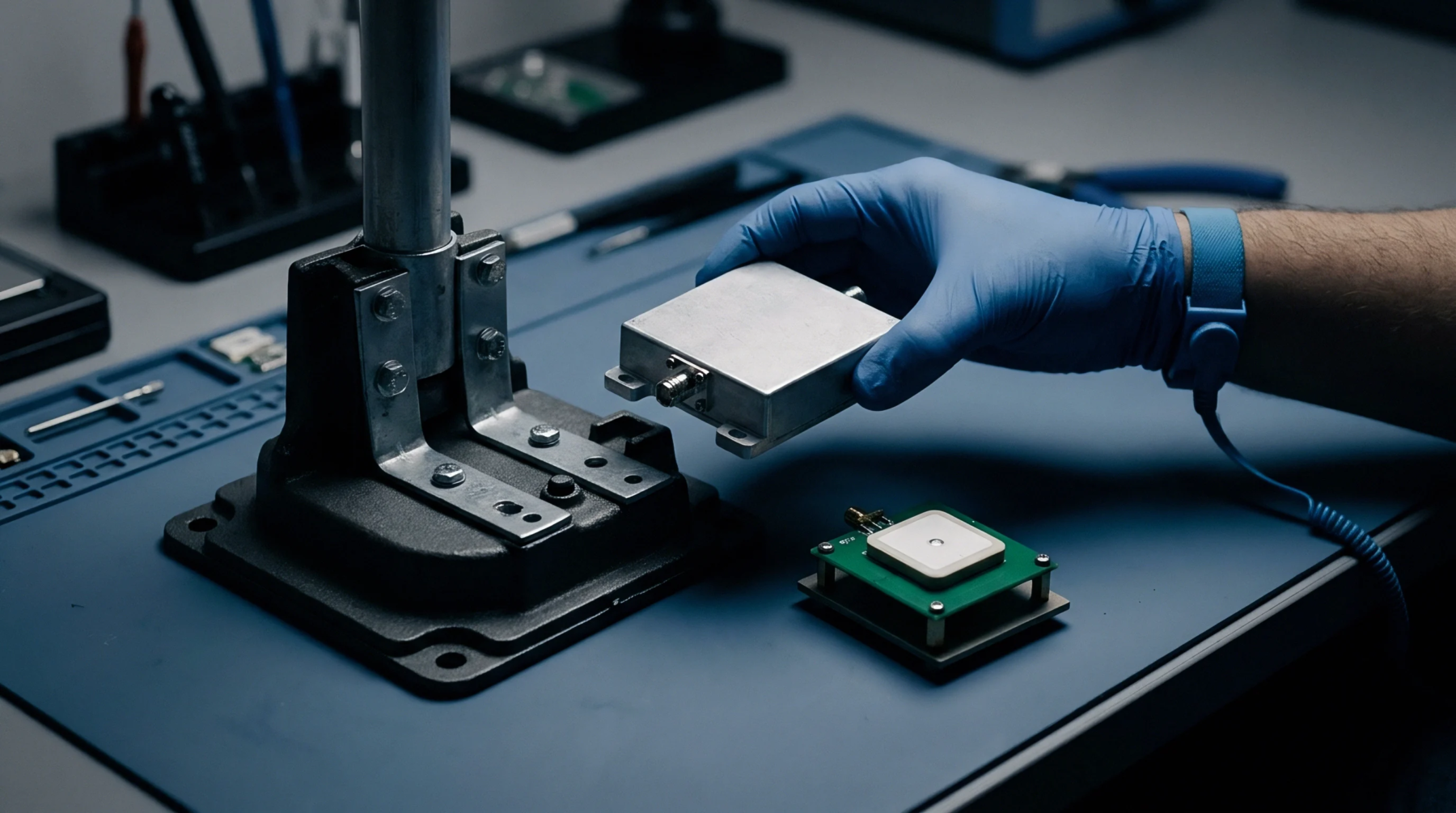
Integrated hardware assemblies comprise a base board populated with fixed standard components plus a dedicated area for user-defined circuitry or specialized sensors. These semicustom modules allow manufacturers to balance the economy of mass-produced controllers with the functional necessity of proprietary signal processing. A design team selects this platform when standard off-the-shelf boards fail to provide the specific input-output counts or voltage requirements for an application.
Integration Constraint
Physical dimensions dictate the cooling capacity for the final assembly because the added circuitry generates heat that the original heat sink architecture may not account for. Proper mounting requires verification of the mechanical fit within the housing and the clearance for any added antennas or connectors. An enclosure designed for a stock module often lacks the internal volume to house the increased height of a custom daughterboard.
Thermal Budget
Power consumption increases as the logic density rises on the modified section of the board. Engineers calculate the total thermal load by summing the static draw of the core components and the dynamic switching currents of the new application-specific logic. Failure to dissipate this energy leads to local hot spots that degrade the performance of sensitive analog components located nearby.
Certification Liability
Regulatory approval follows the assembly as a single entity rather than treating the base and the extension as separate items. A modification to the circuit board layout forces a new electromagnetic compatibility test to confirm that radiated emissions remain within legal limits. Compliance status hinges on the final population of the board because the added conductive paths alter the existing ground plane performance.