Achieving Bit for Bit Binary Reproducibility in Secondary Factory Firmware Compilation
Achieving bit for bit firmware compilation across secondary factories requires containerized hermetic toolchains, deterministic flags, and mapped file paths.


Variance
Cross-compiling the same C or C++ source code across different host environments often produces distinct ELF binaries. Even when firmware passes basic bench tests, checksums calculated on separate build servers will fail to match at the factory gate. That divergence undermines quality assurance, invalidates safety certifications, and leaves production microcontrollers running unverified code.
These variations stem from standard translation steps in the build toolchain. Unless configured otherwise, compilers, preprocessors, and linkers record host-specific details in their output. When build host directory paths, system clocks, or file system traversal orders seep into object files, secondary assembly sites cannot reproduce the binaries generated by the primary design facility.

Sources of Non-Determinism in GCC and Clang Pipelines
Translation units capture environment metadata during build passes. Both GCC and LLVM Clang record directory trees, compiler flags, and host CPU architectures inside object files. If a secondary manufacturing partner unpacks source code into a different folder structure, internal pointer offsets shift, changing string literal table lengths and pulling the entire memory map out of alignment.
Preprocessors introduce volatility through built-in macros like standard time and date queries, which expand into dynamic strings at compile time. Every run embeds a unique ASCII sequence into the read-only data section, so object files generated minutes apart yield differing byte streams before they even reach the linker.
Linkers create additional shifts. When wildcard patterns appear in linker scripts, GNU ld and LLVM lld consume object files in whatever order the host file system returns them. Because directory listings are non-deterministic across filesystems, section positions fluctuate between builds, placing function entry points and data tables at unpredictable target addresses.
A three-byte variance in ELF section headers alters flash memory alignment and shifts execution timing by 14 microseconds under peak bus load.
Compiler Artifact Differences and Embedded Timestamp Injection
Multi-threaded optimization introduces instruction-level variations during loop vectorization or floating-point operations. When compilers schedule optimization threads based on host core availability and system load, differences in thread timing produce distinct assembly instruction sequences. The high-level logic remains identical, but the underlying machine bytes diverge.
Debugging symbols also bake local context into ELF files. DWARF sections store absolute file paths to source code on the build machine. If the primary vendor and a secondary plant build under different folder paths, their string tables will not match.
Stripping debug symbols late in the build process fails to fix the issue if those string length differences already shifted section boundaries earlier.
Architecture alignment requirements compound these boundary shifts. ARM Cortex-M, RISC-V, and Xtensa cores enforce 4-byte or 8-byte alignment boundaries. The padding bytes inserted between sections default to uninitialized host memory or arbitrary fill characters, leaking compiler residue into the final image.
Minor binary mismatches are often dismissed as harmless timestamp variations that do not affect runtime execution.
| Source Mechanism | Toolchain Component | Root Cause | Binary Consequence |
|---|---|---|---|
| Timestamp Injection | C Preprocessor | Macro expansion during preprocess phase | Volatile ASCII bytes injected into read-only memory sections |
| Absolute Path Mapping | Compiler Frontend | Host system directory structure recording | Variant string lengths shift relative jump target offsets |
| Unordered Object Linkage | Linker Utility | File system traversal order instability | Functions and data symbols reordered across flash pages |
| Parallel Optimization | Code Generator | Host core contention during instruction scheduling | Instruction sequence variants with identical functional logic |
| Debug Section Strings | DWARF Generator | Environment username and build host naming | Extended debug string tables change section byte counts |

Vault
Hermetic containerization insulates compilation toolchains from host OS dependencies. Reproducing builds across distributed facilities requires isolating the execution environment entirely ~ wrapping the compiler, cross-assembler, headers, and build scripts into an immutable package so that the output binary depends only on source files and container state.
Container engines like Docker or Podman anchor build execution to fixed base distributions. Pinning compiler packages, glibc headers, and system utilities to explicit SHA-256 digests prevents background updates from changing generated code. Even if a secondary plant runs a host Linux distribution with different utility versions, the build path stays identical inside the container.

Why Does Build Path Length Alter Embedded Firmware Binaries?
Source path lengths directly affect symbol string sizes inside object sections. If compilers process source files from different root directories, the stored path strings vary in length. A longer or shorter file path shifts the size of read-only sections, which propagates through the link step and moves downstream function symbols to different binary addresses.
Both GCC and Clang supply path remapping flags to standardize directory structures. Passing prefix map directives forces the compiler frontend to rewrite source paths to a fixed logical root regardless of the host’s actual directory layout, ensuring matching string tables across build sites.
Linker scripts need explicit boundary definitions to stop section padding drift. Setting defined fill bytes prevents linkers from stuffing uninitialized host memory into gaps, while explicit alignment directives maintain consistent section spacing even when object section sizes vary.
Fixing absolute directory build paths inside containerized toolchains eliminates environmental pointer drift across secondary compiler environments.

Hermetic Container Packaging and Environment Pinning
Environment variables can easily alter compilation output if left unmonitored. Standard shell environments pass locale settings, terminal formats, and user identities into build passes. Build scripts must strip host context, exposing only a minimal, sanitized set of parameters.
Forcing standard ASCII processing prevents differences in character set sorting during build file generation.
Timestamps also require deliberate build configurations. Modern compilers support environment flags that replace system clock queries with a fixed historical epoch timestamp, forcing preprocessor time macros to expand to the same integer value on every run.
Third-party libraries must be built from source inside the container. Relying on pre-compiled host libraries introduces external binary dependencies that slip past reproducibility controls. Rebuilding static dependencies alongside application code ensures consistent toolchain settings and optimizations across the entire image.

Deterministic Linker Flags and Path Prefix Mapping
Reaching bit-for-bit reproducibility requires specific compilation flags that suppress volatile metadata and standardize object file outputs.
- Define a clean execution environment that strips all host environment variables except PATH and minimal target identifiers.
- Install fixed compiler toolchain binaries into the container image using verified cryptographic digest locks.
- Configure the build system to pass path prefix mapping flags to map local system roots to standardized target virtual paths.
- Inject static epoch environment variables to force deterministic timestamp macro expansions.
- Pass linker instructions to enforce static symbol table ordering and specify explicit byte fill patterns for unallocated memory gaps.
- Execute compilation inside isolated build containers with host network interface access disabled.
A build environment that depends on host system libraries will produce shifting binaries as soon as it moves to secondary tooling.

Digest
Comparing primary and secondary factory builds requires section-by-section inspection. Byte-level utilities like cmp or simple file hashes report mismatch failures without revealing why they occurred. When site compilation outputs differ by single bytes, structural inspection is needed to locate modified ELF sections, symbol addresses, or header structures.
Specialized binary disassemblers can isolate variations down to specific bytes. Tools like diffoscope unpack nested binary structures, extracting ELF headers, DWARF symbols, relocations, and disassembly traces. Comparing section checksums reveals whether a mismatch stems from executable code changes, altered string tables, or unaligned debug metadata.

Binary Diffing and ELF Section Alignment Analysis
Inspecting read-only data sections highlights string expansion and preprocessor macro volatility, while comparing text sections isolates instruction reordering introduced by compiler optimization steps. If text section byte sequences match identically while overall hashes fail, the divergence resides in read-only data, symbol tables, or alignment gaps.
Flash memory layouts enforce strict sector boundary definitions. ARM Cortex-M microcontrollers require vector tables at fixed base addresses, followed by code text, read-only data, and initialized data load images. If a section changes size, downstream sections shift across sector boundaries prematurely, triggering mass memory realignment across the flash binary.
Under ISO/IEC 27001 binary supply chain controls, unmatched secondary flash checksums trigger immediate assembly line lockdown.

DWARF Debug Symbols and Symbol Table Matching
Symbol tables manage target function addresses and global variable references. Static symbol ordering differs across link passes if object files arrive in varying sequences. Sorting symbol tables alphabetically or by value prior to final image layout resolves non-deterministic linking outcomes.
Stripping debug information removes non-functional differences, but production verification demands matching debug-enabled binaries to maintain field traceability.
Even stripped binaries need header inspection. ELF headers store target machine flags, entry point addresses, and section offset tables. Mismatched entry points indicate linking variations that alter system initialization timing, so section headers must be checked to confirm bit-for-bit parity across all allocated flash space.
Unmatched build image hashes force secondary factories to run unvalidated binaries, voiding regional compliance certifications and introducing untracked memory corruption.
| ELF Section | Primary Build Value | Secondary Build Value | Root Cause Marker | Remediation Action |
|---|---|---|---|---|
| .text | 0x08001000 – 0x0800A412 | 0x08001000 – 0x0800A41E | Instruction reordering via vectorizer | Fix loop optimization flags and core targets |
| .rodata | 0x0800A420 – 0x0800C110 | 0x0800A420 – 0x0800C138 | Host directory string expansion | Apply source directory prefix mapping |
| .data | 0x20000000 – 0x20000840 | 0x20000000 – 0x20000840 | Identical static variable initialization | No remediation necessary |
| .ARM.attributes | Build attributes: ARM v8-M | Build attributes: ARM v8-M extended | Secondary toolchain gas assembler default shift | Explicitly declare architecture target in build options |
| .debug_info | DWARF version 4 offset 0x0012 | DWARF version 4 offset 0x0018 | Variant build system user paths | Normalize build directories in container scripts |


Contract
Dual-sourcing contracts require clear terms covering firmware deliverables and build environment custody. Handing C source code to a secondary assembly facility without specifying the precise compilation setup invites build drift. Sourcing agreements must treat the complete build container, source files, toolchain dependencies, and verification scripts as a single integrated deliverable.
Non-recurring engineering budgets must reflect build environment validation steps. Secondary site bring-up demands allocating engineering hours specifically to verify bit-for-bit hash reconciliation. Omitting reproducible compilation acceptance tests from contract statements of work shifts legal responsibility back to the buyer when secondary factory builds diverge from reference binaries.
Engineering Transfer Schedules and Source Build Escrow
Software transfers require secure escrow accounts to preserve the build toolchain over time. Host environments change as OS distributions drop support for legacy toolchains. Storing source code alone exposes production lifecycle management to severe risk when legacy compilers become unavailable.
Escrow deliverables must bundle archived container images alongside source repositories.
Milestone schedules require bit-for-bit validation before secondary manufacturing lines receive sign-off. The secondary site must build the production image inside the verified container, compute the SHA-256 binary digest, and match the target reference hash generated by the primary design house. Payment milestones release only when cryptographic binary identity proves successful bring-up.
Factory secondary build servers running unpinned host distributions introduce floating-point calculation differences across identical ARM Cortex-M microcontrollers.

NRE Allocation and Dual-Sourcing Responsibility
Clear task allocation prevents disputes over build maintenance. Design transfer packages must state clearly which party owns toolchain maintenance, compiler bug resolution, and build environment updates over the product lifecycle. The following parameters define the structural scope of firmware handover documentation packages:
- Hermetic Container Deliverable containing fully installed cross-compilers, build scripts, and dependencies pinned to exact SHA-256 digests.
- Canonical Source Repository Access containing exact commit hashes matching production firmware tags without uncommitted local workspace modifications.
- Deterministic Linker Configuration specifying section boundaries, explicit fill bytes, and static section alignment rules.
- Automated Hash Verification Script running containerized builds and validating generated flash images against baseline reference checksums.
- Bill of Materials Toolchain Schedule documenting exact software licenses, compiler release versions, and host container base OS builds.
Consider an engineering transfer programme for a dual ARM Cortex-M33 wireless module firmware image (512 KB target size). Primary toolchain environment containerization consumes 80 engineering hours at 150 USD per hour, totaling 12,000 USD NRE. Secondary factory site bring-up and hash verification require 24 hours at 150 USD per hour, adding 3,600 USD.
Total reproducibility engineering transfer cost lands at 15,600 USD. Across a 100,000 unit production run, the amortized reproducibility cost is 0.156 USD per unit. Preventing a 1.5% field rework rate on 100,000 units at 8.00 USD per reflashed unit avoids 12,000 USD in rework exposure, balancing the initial transfer expenditure.
Standard handover agreements incorporating IEEE 829 configuration audits specify that target firmware compliance requires exact cryptographic digest identity before payment milestones release.
| Transfer Activity | Primary House Hours | Secondary Site Hours | Cost (150 USD/hr) | Deliverable Artifact |
|---|---|---|---|---|
| Containerization & Prefix Mapping | 40 | 10 | 7,500 USD | Docker Image Archive & Build Scripts |
| Linker Map & Boundary Locking | 24 | 8 | 4,800 USD | Deterministic Linker Scripts |
| CI/CD Hash Verification Pipeline | 16 | 6 | 3,300 USD | Automated Validation Test Suite |
| Secondary Site Initial Bring-up | 8 | 24 | 4,800 USD | Secondary Build Audit Report |
| Final Binary Hash Reconciliation | 4 | 12 | 2,400 USD | Cryptographic Acceptance Certificate |


Verification
Flash programming gates act as a final check on the factory floor before microcontrollers receive runtime images. Automated programming tools operating on secondary assembly lines integrate checksum checks prior to executing chip flash writes. If a secondary build server produces an image with a non-matching SHA-256 hash, the flash programmer halts production, preventing unvalidated binary installation.
Continuous integration pipelines automate bit-for-bit build validation across geographical locations. When developer teams commit code changes, automated runner instances execute containerized builds across primary and secondary target virtual machines simultaneously. CI pipeline steps compare output binary digests, flagging non-deterministic compilation issues immediately during active development passes.

Factory Gate Hash Verification and Flash Image Audit
Verifying flash memory payloads requires stripping ELF headers, symbol tables, and debug metadata with object copy utilities. Calculating SHA-256 cryptographic hashes over raw binary payload arrays removes non-functional header discrepancies, focusing verification strictly on executed target flash data.
Production line test fixtures verify programming accuracy by reading back memory contents from programmed microcontrollers. Reading back target flash data via SWD or JTAG debug interfaces validates chip flash controller behavior. Verification systems compare read-back sector data byte-for-byte against master reference images, confirming target execution reliability.
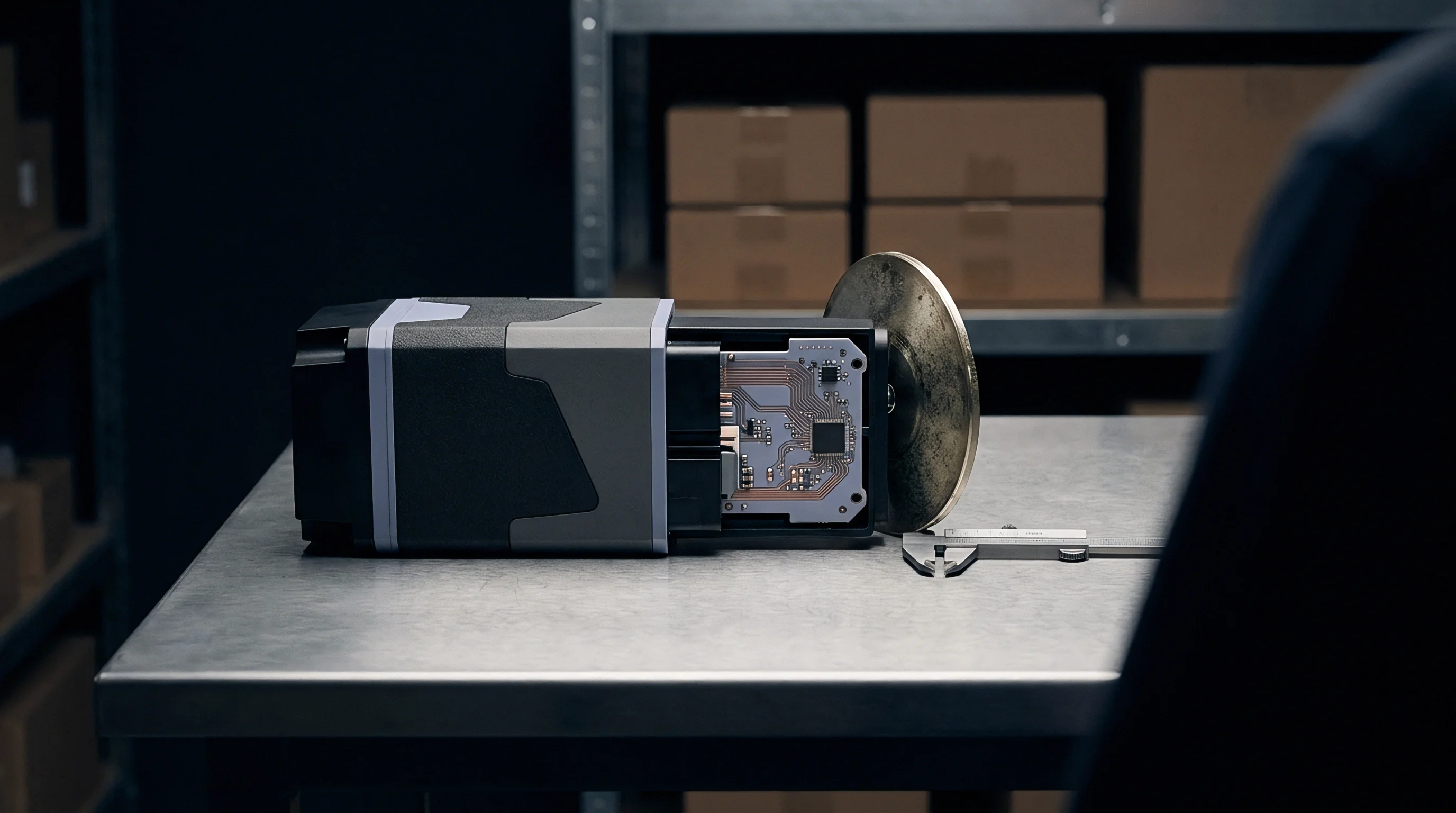
Automated CI Pipeline Gates for Secondary Assembly
Automated verification gates operate inside isolated build environments. Secondary plants execute daily compilation tests to verify build server operational integrity. Automated build scripts fetch baseline repository tags, launch execution containers, generate target binaries, and upload checksum reports to central quality databases automatically.
Comprehensive Software Bill of Materials (SBOM) specifications back up this verification process. Specifications capture source revision hashes, compiler container image digests, target binary checksums, and dependency package inventories. Linking SBOM records directly to secondary factory batch numbers ensures complete software traceability across distributed manufacturing runs.
Achieving absolute bit-for-bit identity across secondary compilers takes upfront engineering effort, but it eliminates silent firmware variations before units reach the field.