Calculating Landed Premium Spreads under Dual Sourced Microcontroller Allocations
Calculating landed premium spreads requires blending primary contract prices, grey market spot markups, firmware porting NRE, freight, and scrap rates.


Dock
When microcontrollers arrive from split supply lines, receiving inspection separates incoming reels into primary contract lots and broker spot purchases. Secondary supply lines activated during semiconductor allocations introduce physical and administrative variations before parts reach surface-mount assembly equipment. Component packaging, moisture sensitivity indicators, lot tracking codes, and reel orientation all differ between factory-direct distribution channels and independent broker allocations.

Receiving Protocols for Dual Allocation Lots
Verification of incoming semiconductor packaging starts at the physical reel labels before components reach automated placement feeders. Primary contract shipments arrive in factory-sealed ESD packaging with standard barcodes, tray headers, and certified manufacturer certificate of conformance documentation. Spot purchases often arrive with repacked reels, mixed date codes, or third-party distributor labels covering original manufacturer lot identifiers.
Technical teams inspect carrier tape width, pocket pitch, pin-one alignment, and cover tape peel force to verify physical compatibility with high-speed feeders.

Discrepancy Vectors in Grey Market Shipments
Secondary allocations purchased through independent stocking distributors present distinct risk profiles compared to factory-direct tape-and-reel shipments. Quality control teams execute x-ray inspection, decapsulation, and lead solderability testing to identify re-marked or refurbished microcontrollers before release to production inventory.
- Moisture barrier seal breach indicates potential humidity absorption during intermediate storage, demanding baked recovery protocols prior to surface-mount reflow assembly.
- Lead oxidation and bent pins arise from improper tray packaging or manual re-reeling, causing high false-rejection rates on automated optical inspection stations.
- Re-reeled carrier tape mismatch introduces component feeding jams on pick-and-place nozzles, dropping line efficiency below eighty percent.
- Counterfeit matrix re-marking disguises slower speed-grade silicon as premium high-frequency microcontrollers, generating random timing failures during thermal stress screening.
Broker-supplied components require comprehensive physical and electrical validation prior to line release.
Reels acquired through independent spot market brokers carry a twenty percent higher rejection rate during automated surface-mount optical inspection.
Receiving personnel segregate broker-sourced microcontrollers into quarantined inventory bins pending destructive physical analysis and electrical parameter validation.
Extended lead times and split shipments stem from upstream wafer fab allocation caps rather than inventory hoarding.


Porting
Migrating firmware between two microcontroller architectures requires an explicit software layer that isolates hardware peripherals from application logic. When dual-sourcing forces the adoption of a secondary microcontroller family, software engineering costs shift from routine maintenance to active hardware abstraction layer development. Firmware abstraction layers hide register-level differences between primary and secondary microcontrollers, allowing identical application code to execute across both silicon platforms.

Hardware Abstraction Layer Isolation Strategies
Creating a unified Application Programming Interface across distinct silicon architectures relies on decoupling peripheral register calls from execution logic. Direct register manipulation binds firmware tightly to a single chip family. Wrapping timer initialization, general-purpose input output toggling, serial peripheral communications, and analog conversion functions inside generic wrapper functions allows seamless driver swapping at build time.
Pinout Mapping and Board Layout Adapters
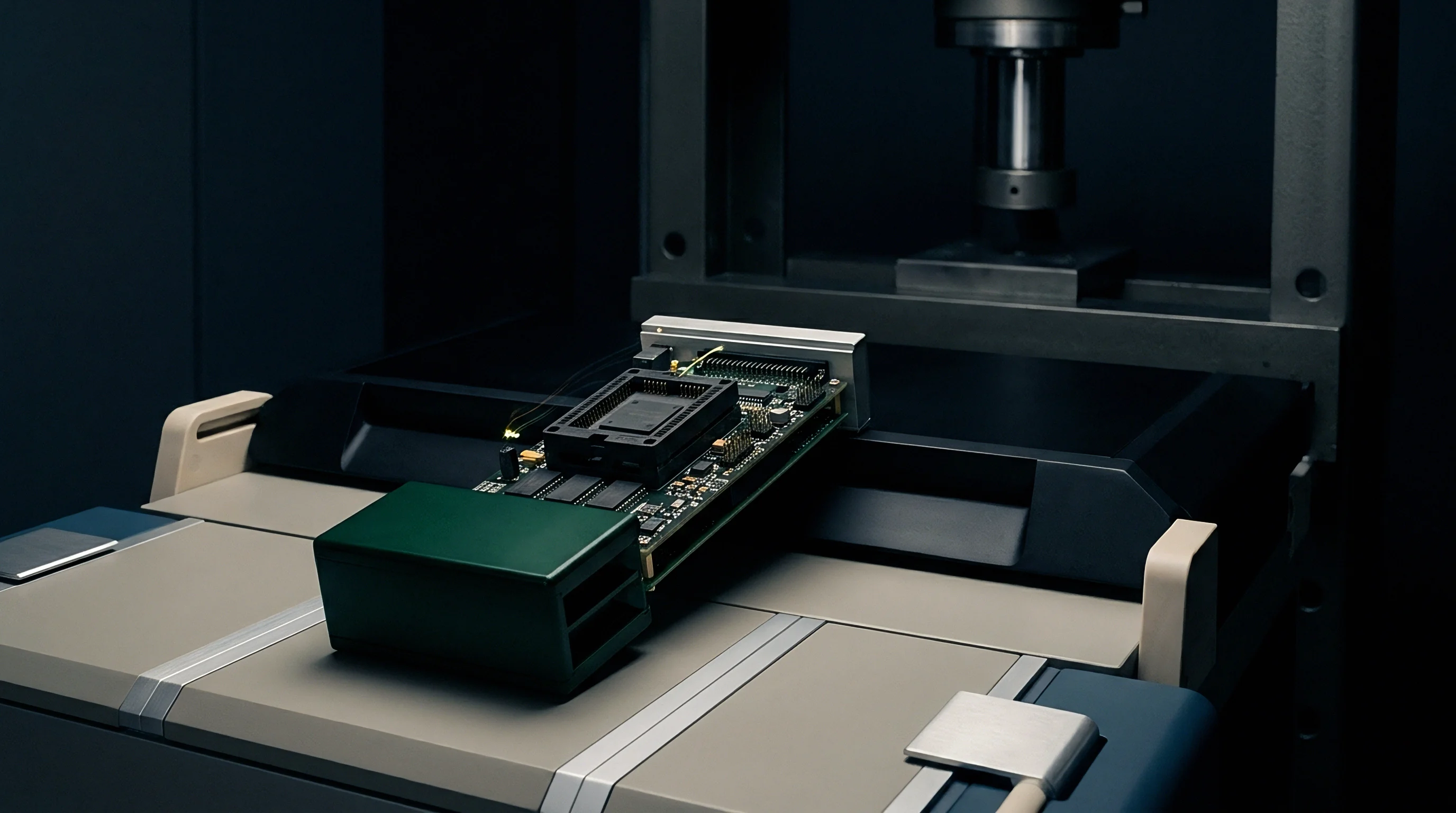
Dual-layout printed circuit board designs accommodate secondary microcontroller footprints by placing overlapping solder pad patterns on the board substrate. When pin-compatible drop-in alternatives are unavailable, layout engineers route traces to dual-footprint pad clusters or daughterboard interposer cards. Solder mask clearances and trace clearances accommodate tight pitch quad-flat package or ball-grid array packages side-by-side.
- Map every peripheral register of the secondary microcontroller directly against the primary device function register table.
- Develop board support package drivers within an isolated C file structure that exposes standardized function signatures.
- Execute unit test suites on both silicon variants to measure timing variations in interrupt service routines.
- Run automated hardware-in-the-loop tests across temperature ranges from minus forty to eighty-five degrees Celsius.
Firmware abstraction increases memory overhead by five to twelve percent compared to direct register writes.
Engineering teams allocate four hundred hours of firmware engineering time when porting a complex motor control stack between ARM Cortex-M4 and RISC-V architectures.
Design transfers involving secondary microcontroller qualification demand complete functional regression testing across all operating modes before releasing production build images to manufacturing.
Failing to isolate peripheral register writes behind a unified driver interface produces catastrophic timing jitter during multi-threading context switches in production units.


Tariff
Financial accounting for dual-allocated microcontrollers isolates base component costs from line-item charges added during international transportation. When primary contract supply covers only a fraction of production demand, procurement teams procure balance volumes through grey-market channels, introducing drastic freight markups, broker commissions, customs import duties, and expedite premiums into the landed unit cost equation. Calculating landed cost spreads requires tracing every charge applied between the wafer fabrication site and the assembly plant intake.

Structure of International Expedite Surcharges
Calculations for landed cost incorporate customs duty rates, air freight premiums, and broker clearance fees alongside base purchase order prices. Expedite logistics options such as dedicated air charter services or onboard courier delivery increase transportation expenses by factors of ten relative to standard consolidated ocean or air freight. Import tariff classifications under Harmonized System codes vary depending on country of origin and semiconductor package type, altering duty rates from zero to twenty-five percent.

Landed Cost Component Breakdown
Base component purchase orders reflect only a fraction of the actual cash outlay required to place parts onto assembly lines during allocations. Additional line items include independent distributor markup percentages, electrical re-test fees, reel packaging conversion fees, insurance surcharges, and customs broker administration fees.
| Cost Component | Direct Franchised Channel | Grey Market Spot Broker | Spread Multiplier Range |
|---|---|---|---|
| Base Unit Purchase Price | 3.20 USD | 18.50 USD | 5.78x |
| Air Freight Logistics | 0.08 USD | 1.45 USD | 18.12x |
| Import Customs Duty | 0.00 USD (0%) | 4.62 USD (25%) | Infinite |
| Broker Fee and Escrow | 0.00 USD | 1.85 USD (10%) | Infinite |
| Incoming Test and Bake | 0.05 USD | 0.65 USD | 13.00x |
| Total Effective Landed Unit Price | 3.33 USD | 27.07 USD | 8.13x |
- Incoterms transfer point specification defines whether seller or buyer assumes financial risk for sudden customs tariff hikes during transit.
- Freight cost escalation cap limits logistics premium surcharges charged by spot brokers to pre-approved percentages of total order value.
- Broker authentication escrow clause holds payment in third-party escrow until incoming electrical and physical qualification tests pass inspection.
- Currency fluctuation corridor limit establishes price adjustment boundaries when purchasing allocations in foreign currencies under volatile exchange rates.
Spot broker markups vary widely depending on market availability and supply urgency.
Incoterms DDP agreements place the financial liability of sudden customs valuation adjustments onto the seller, preventing unexpected invoice additions upon delivery.
Detailed ledger accounting tracks freight and tariff variance lines separately from standard Bill of Materials purchase price variances to maintain clear visibility into allocation premiums.
Inclusion of an ISO 9001 certified traceability clause in supply agreements shifts financial liability for counterfeit testing costs to the broker upon lot failure.


Assortment
Variations in semiconductor manufacturing lots introduce differences in power consumption, clock jitter, and analog-to-digital converter linearity between primary and secondary silicon suppliers. When dual sourcing forces the concurrent use of microcontrollers from different foundries or design generations, functional yield variations directly impact assembly landed cost calculations.

How Do Silicon Revision Differences Alter Test Yield Spreads?
Discrepancies in internal flash memory write timing across microcontroller stepping revisions affect full-functional pass rates during factory flash burning. Primary devices utilizing ninety-nanometer embedded flash processes exhibit write burn times of three seconds per megabyte, whereas secondary devices using fifty-five-nanometer processes complete writes in one second. Factory programming station throughput drops when slow-writing stepping batches enter production lines, increasing manufacturing labor costs per unit.

Electrical Characterization across Dual Factories
System performance measurements reveal minor voltage threshold variations between microcontrollers fabricated in separate semiconductor foundries. Analog peripheral behavior, internal RC oscillator drift over ambient temperature, and deep-sleep current draw vary between fabrication runs. Dual sourcing demands continuous qualification tracking across incoming semiconductor batch lots.
- In-circuit programming verification report documents flash memory burn success rates and write cycle timing parameters across lot batches.
- Analog peripheral signal-to-noise ratio logs confirm that internal analog-to-digital converters maintain resolution requirements under secondary silicon power noise.
- Thermal cycle clock drift measurements record phase-locked loop frequency stability between minus forty and eighty-five degrees Celsius.
- Power consumption profiling matrices map active, idle, and sleep mode current draw profiles to verify battery life compliance.
Variations in flash programming duration alter line throughput and final manufacturing yield.
Determining whether micro-architectural differences in analog comparator settling time induce sporadic resets under high electromagnetic interference remains an open empirical investigation.


Ledger
Consolidating unit manufacturing costs across asymmetric supply volumes demands a unified financial equation that captures both fixed non-recurring engineering and variable unit markups. Calculating the true landed premium spread under dual-sourced microcontroller allocations requires blending franchised contract baseline costs, grey-market spot buy premiums, software porting engineering amortization, and scrap yield differentials into a single weighted formula.

Mathematical Formula for Blended Landed Cost
Total landed premium spreads depend on the exact ratio of contractually priced microcontrollers to high-markup spot allocation volume. The mathematical calculation of effective unit landed cost combines weighted unit purchase costs, amortized software development expenses, additional logistics surcharges, and scrap cost adjustments:
Landed Cost = (V1 C1 + V2 C2) / (V1 + V2) + (NRE_porting / Total_Volume) + Surcharge_freight + (Scrap_Rate Base_Cost)
Where V1 represents primary contract volume, C1 represents primary unit cost, V2 represents secondary allocation spot volume, C2 represents secondary unit spot cost, NRE_porting represents software engineering hours multiplied by hourly labor rate, and Scrap_Rate represents line rejection percentage.

Sensitivity Analysis of Allocation Split Ratios
Varying the ratio between primary contract silicon and secondary grey-market allocation exposes non-linear profit margin shifts in high-volume electronics assembly. Operating under an eighty-twenty contract-to-spot ratio absorbs premium costs with manageable product price adjustments. Shifting to a fifty-fifty allocation split increases effective unit costs dramatically, requiring product retail price revisions or temporary margin absorption.
| Allocation Split Ratio (Primary / Spot) | Primary Unit Landed Cost | Spot Unit Landed Cost | Amortized Firmware NRE per Unit | Effective Blended Landed Unit Cost | Landed Cost Premium Spread (%) |
|---|---|---|---|---|---|
| 100% Primary / 0% Spot | 3.33 USD | 0.00 USD | 0.00 USD | 3.33 USD | 0.00% |
| 80% Primary / 20% Spot | 3.33 USD | 27.07 USD | 0.80 USD | 8.88 USD | 166.67% |
| 60% Primary / 40% Spot | 3.33 USD | 27.07 USD | 0.80 USD | 13.63 USD | 309.31% |
| 50% Primary / 50% Spot | 3.33 USD | 27.07 USD | 0.80 USD | 16.00 USD | 380.48% |
| Assumptions: Total production volume of 50,000 units; firmware porting NRE of 40,000 USD (400 engineering hours at 100 USD per hour); scrap yield rates held constant at 1.5%. | |||||
Absorbing spot market component premiums into overall product margin requires dynamically adjusting product sale prices when secondary allocation volume exceeds primary contract supply.
Financial controllers utilize landed premium spread formulas to negotiate dynamic cost-sharing agreements with customers during prolonged semiconductor shortages.
Maintaining dual active supply channels protects assembly lines against single-source assembly shutdowns when allocations suddenly tighten across global markets.