Commercial Retainer Allocation Models for Extended Hardware Lifecycle Toolchain Maintenance
Structured retainer allocation models protect long-lifecycle hardware programmes by funding containerized toolchain maintenance and active test jigs.


Frost
Toolchain Degradation across Extended Lifecycles
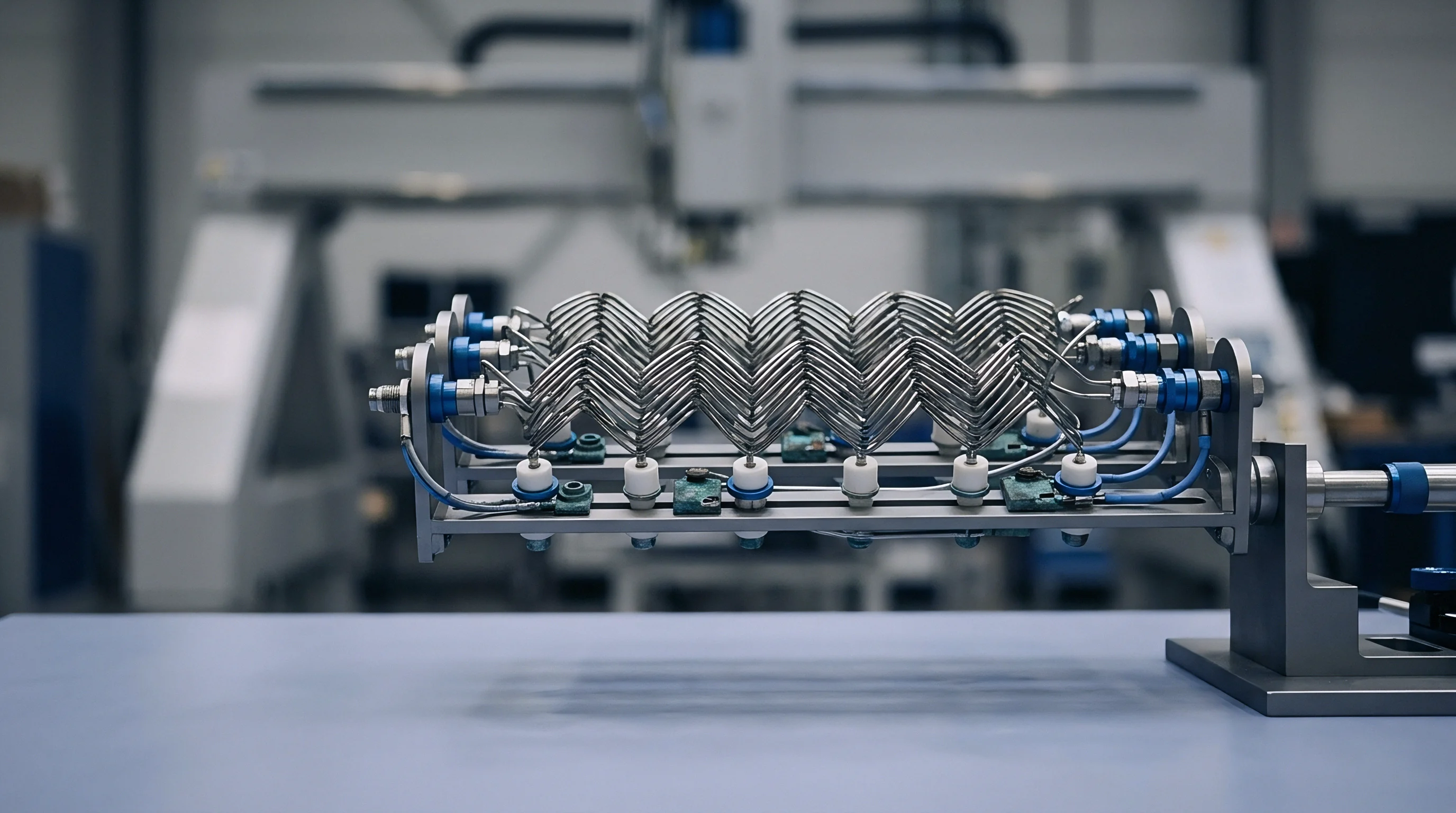
Long-lifecycle electronic hardware deployed in industrial automation, medical devices, defense, and automotive safety systems frequently remains in active production and field service for fifteen to thirty years. While the silicon target may remain unchanged across decades, the software toolchain required to compile firmware, generate binary artifacts, program non-volatile memory, and execute automated acceptance testing deteriorates rapidly. Upstream software dependencies evolve, vendor licensing servers vanish, host operating systems drop support for legacy 32-bit binaries, and physical debug interfaces disappear from commercial PC workstations.
Toolchains drift quietly. A firmware source tree that compiled without warnings on a specific Linux kernel and compiler combination in 2012 often fails to link when built on modern distributions. Dynamic libraries pulled in by proprietary vendor IDEs disappear from official repositories, and hardware programmers reliant on parallel ports, proprietary USB drivers, or discontinued FTDI chipsets lose communication with modern host controllers.
Without deliberate toolchain preservation, production lines stall whenever a mandatory component re-source, end-of-life redesign, or security patch forces a firmware rebuild.
Toolchain build failure rates reach eighty percent within seven years of initial engineering freeze when host dependencies remain unmanaged.

Host Environment Drift and Legacy Dependencies
Host operating systems routinely push security patches and dynamic library upgrades that break unmaintained compiler binaries. Glibc updates introduce symbol versioning incompatibilities that prevent legacy cross-compilers from executing altogether, while shared libraries such as libpng, libssl, and ncurses deprecate functions relied upon by legacy IDE linkers. Licensing mechanisms tied to MAC address bindings, USB hardware dongles, or retired floating license daemons also fail when moved onto modern host hypervisors.
Preserving source code integrity alone offers zero protection against toolchain bit-rot. Unless compiler flags, architecture-specific code generation passes, and static linkage behaviors match exactly, modern toolchain substitutions alter the binary footprint. These variations alter execution timing, stack usage, and register allocation, invalidating existing safety certifications under ISO 26262, IEC 61508, or DO-178C specifications.
Re-qualifying a modified binary artifact against aerospace or automotive safety standards costs hundreds of thousands of dollars, making toolchain preservation economically imperative.
Hardware Emulator and Programmer Obsolescence
In-circuit emulators, JTAG debuggers, and gang programmers form the physical bridge between compiled binary files and production silicon. Interface hardware relies on host-side driver stacks that modern operating systems routinely deprecate. Windows kernel driver signature enforcement blocks legacy 32-bit USB programmers outright, while ongoing driver refactoring in Linux strips support for legacy serial interfaces and custom ISA or PCI card adapters.
Physical programming fixtures wear out over repeated production runs. Socket contacts degrade, target connector pins bend, and interface board FPGA logic corruption occurs over extended storage periods. When a proprietary hardware programmer fails without available off-the-shelf replacements, production halts instantly regardless of binary availability.
Retainer allocation models must account for hardware programmer maintenance, spare socket inventory, and adapter board redesigns alongside software toolchain preservation.
| Toolchain Component | Failure Vector | Timeline to Obsolescence | Impact on Manufacturing |
|---|---|---|---|
| Cross-Compiler Executables | Dynamic library symbol mismatch on host operating system | 3 to 5 years | Inability to rebuild firmware from verified source tree |
| Proprietary Vendor IDE | License server shutdown or dead hardware dongle driver | 5 to 8 years | Loss of project workspace configurations and linkage scripts |
| JTAG Flasher Drivers | Kernel driver signing changes on modern host controllers | 4 to 6 years | Inability to program target microcontrollers on assembly lines |
| Host Build Substrate | Deprecation of 32-bit execution binaries on 64-bit OS | 6 to 10 years | Silent build failure or missing dependency errors |
| Physical Debug Adapter | Physical socket wear, FPGA logic decay, board interface loss | 7 to 12 years | Complete physical inability to flash or debug target silicon |
Neglecting the physical and host dependencies surrounding legacy cross-compilers guarantees total build failure when a critical field issue forces a firmware rebuild a decade after deployment.


Reserve

Commercial Retainer Allocation Models
Retainer allocation models structure the financial and operational mechanisms for maintaining legacy toolchains across extended device lifecycles. Engineering service providers and turnkey integrators structure these agreements to ensure dedicated engineering availability, maintained hardware test benches, and functioning build environments. Selecting an inappropriate commercial model exposes the original equipment manufacturer to severe financial spikes or total loss of toolchain maintainability.
Hardware original equipment manufacturers select between fixed annual standby retainers, tiered consumption models drawing against dedicated engineering hours, and hybrid capacity reservations. Each model shifts the operational risk and cost burden differently between the customer and the engineering service provider.
Contractual SLA terms governed by ISO 9001 quality management standards force providers to run verifiable monthly build checks against target hardware.
Fixed Annual Standby Capacity Allocation
Fixed annual standby retainers establish a continuous contract fee paid to the engineering service provider. In exchange, the contractor guarantees functional toolchain maintenance, continuous environment updates, and immediate access to designated engineering hours when firmware rebuilds or bug fixes become necessary. The contractor maintains live physical test jigs and virtual build containers throughout the calendar year.
- Uncalibrated Hardware Jigs physical programming fixtures accumulate contact resistance and clock drift over idle storage months without scheduled calibration checks.
- Unverified Virtual Machine Images build container images stored in passive cloud archives fail silently when hypervisor hosts update underlying host CPU instruction sets.
- Loss of Contextual Knowledge engineering personnel rotate off legacy accounts, leaving no active staff familiar with undocumented linker flags or compiler quirks.
- Unnoticed Vendor License Expirations node-locked vendor compiler licenses quietly expire or lose connectivity to legacy floating license servers without generating alerts.

Tiered Consumption against Dedicated Hours
Tiered consumption allocation combines a reduced base retainer fee with pre-priced blocks of engineering hours consumed during firmware interventions. The base retainer covers infrastructure hosting, periodic virtual machine spin-ups, and physical jig maintenance. When target component end-of-life events or field defects arise, the customer draws down engineering hours from prepaid tiers at negotiated rates.
With automated sanity builds running weekly, this model balances predictable baseline costs with operational flexibility during engineering surges. It prevents the original equipment manufacturer from paying full operational rates during quiescent build years while protecting the service provider from uncompensated bench maintenance overhead.
Under Section 14.2 of standard industrial engineering service agreements, the service provider assumes financial liability for toolchain reconstruction costs exceeding the baseline retainer if periodic automated sanity build logs are missing from the audit trail.
Substrate

Virtualization and Reproducible Build Architecture
Encapsulating toolchains inside virtualized infrastructure provides structural isolation from host operating system evolution. Virtual machines and containerized build environments freeze the exact Linux distribution version, dynamic libraries, compiler binaries, build automation tools, and environment variables required for bit-for-bit binary reproducibility.
Modern build automation systems utilize Docker, Podman, or QEMU system emulators to construct deterministic build environments. Storing container files and base layers alongside source code repositories ensures that any developer or build server can execute builds identically regardless of host system updates.

How Are Host Operating System Upgrades Abstracted across Decades?
Abstracting host operating system upgrades requires decoupling the toolchain execution environment from physical hardware controllers. Hypervisors virtualize physical USB interfaces, serial ports, and network interface cards, passing raw signals directly into guest operating systems running legacy kernel versions.
Type-1 hypervisors pass PCI pass-through commands directly to dedicated legacy debug interface cards. Where physical hardware adapters cannot be virtualized, hardware emulators translate modern USB-C or Ethernet commands into legacy JTAG or background debug mode protocols. This protocol translation allows modern developer workstations to control legacy target hardware without maintaining native 32-bit hardware interfaces.
Containerizing compiler toolchains guarantees build environment stability across host operating system updates.

Containerization and Bare-Metal Emulation Layers
Hardware emulation layers replace physical debuggers with software abstractions executing on field-programmable gate arrays or microcontrollers. Open-source or proprietary debugger abstraction layers interface between vendor-specific IDEs and target silicon. Emulation layers intercept legacy GDB machine interface commands and map them to modern debug protocols.
To ensure build environment security and reproducibility, container images and virtual disk archives receive cryptographic SHA-256 signatures upon formal qualification. These signed images sit in geographically redundant artifact repositories alongside raw build logs, target memory maps, and qualified binary outputs.
| Environment Parameter | Containerized Substrate (Docker/Podman) | Full System Virtualization (QEMU/VMware) | Physical Hardware Jig Bench |
|---|---|---|---|
| Host Abstraction Level | User-space dynamic library isolation | Full kernel, memory, and PCI device emulation | Zero abstraction; native physical hardware |
| Storage Overhead | 500 MB to 4 GB per environment image | 20 GB to 100 GB per virtual machine image | Physical bench footprint and cabinet storage |
| Build Execution Speed | Near-native performance (95-98% efficiency) | Moderate overhead (60-80% native speed) | Native physical host speed |
| Debug Port Pass-Through | Requires USB device pass-through mapping | Full physical pass-through via hypervisor | Direct physical connection to target pins |
| Lifespan Viability | 10 to 15 years before kernel syscall shifts | 20+ years on standard hypervisors | Limited by socket wear and physical decay |
Modern host virtualization layers introduce timing irregularities that can corrupt debug loops during hardware-in-the-loop target execution.


Dossier
Handover Documentation and Verification Packages
Comprehensive handover documentation converts implicit engineering knowledge into audited, repeatable procedures. When transferring toolchain maintenance responsibilities to an external service partner or retaining an extended maintenance team, explicit deliverable specifications prevent operational gaps. Missing file formats, omitted build scripts, or missing license keys render design transfer packages useless.
A complete toolchain dossier contains source code, compiler binaries, static library files, linker scripts, build configuration scripts, board support packages, and hardware programming procedures. The documentation defines exact file paths, environment variables, network access requirements, and verification test suites. Every file format carries explicit validation criteria.
Verification dossiers without bit-for-bit binary checksum matches indicate silent toolchain compiler drift.

The Extended Toolchain Transfer Package Index
The toolchain transfer package serves as the definitive reference archive for long-term support operations. This package enters controlled configuration management systems and immutable physical storage media upon initial product sign-off.
- Run automated cryptographic checksum verification across all source files, linker scripts, and target binaries.
- Instantiate the isolated build environment container on a clean host operating system instance without network access.
- Execute the build automation script to compile the complete firmware stack from raw source code files.
- Compare generated binary outputs against qualified golden binary files using bitwise comparison tools.
- Flash the generated binary onto a physical target bench jig using the documented programming interface.
- Execute automated regression test suites to verify physical hardware timing and functional performance.
- Compiler Binary Archives static tarballs or installer executables for cross-compilers, linkers, and assemblers with vendor patch files.
- Environment Configuration Scripts Makefiles, CMake scripts, container recipes, and environment variable setup scripts defining exact build paths.
- Licensing Deliverables node-locked license files, USB dongle physical inventory, floating license server configurations, and perpetual vendor license keys.
- Bench Hardware Schematics CAD drawings, gerber files, bill of materials, and wiring schematics for custom programming and test interface boards.
- Automated Test Suites unit test scripts, hardware-in-the-loop test harnesses, expected output logs, and code coverage analysis configurations.

Automated Sanity Builds and Regression Harnesses
Automated build verification prevents silent toolchain decay. Scheduled build pipelines spin up virtual build containers on a continuous cycle, pull current source code trees, recompile binaries, and compare hash outputs against registered golden build artifacts. Any discrepancy triggers immediate engineering investigation before critical field interventions arise.
Physical test jigs connected to continuous integration pipelines validate hardware programming and peripheral execution automatically. Microcontroller GPIO pins, UART debug outputs, and bus analyzers report timing performance directly to central logging infrastructure.
Extended retainer contracts must account for the eventual deprecation and shutdown of proprietary vendor compiler licensing servers over a twenty-year hardware lifespan.
Ledger

Financial Modeling and Retainer Amortization
Financial structures for long-lifecycle toolchain maintenance balance baseline maintenance overhead against variable engineering interventions. Calculating the total cost of ownership across a twenty-year hardware operational window requires analyzing retainer fees, infrastructure hosting, hardware replacement cycles, and non-recurring engineering charges during component replacement projects.
Unamortized toolchain risk creates catastrophic financial exposure during component end-of-life cycles. When microcontrollers or peripheral chips reach end-of-life status, engineering teams rebuild firmware, adjust pin configurations, and re-certify target hardware. If the toolchain has deteriorated, engineering hours expand exponentially to rebuild build environments before addressing the hardware change.
| Cost Component | Ad-Hoc Unmaintained Model | Fixed Standby Retainer | Tiered Consumption Retainer |
|---|---|---|---|
| Annual Standby Base Fee | $0 | $25,000 / year | $12,000 / year |
| Build Environment Hosting | $0 (ad-hoc local storage) | $3,000 / year (virtualized) | $3,000 / year (virtualized) |
| Hardware Jig Maintenance | $0 (unmaintained storage) | $5,000 / year | $3,000 / year |
| Emergency Rebuild Cost (3 Events) | $180,000 (toolchain recovery) | $30,000 (pre-maintained) | $45,000 (discounted hours) |
| 15-Year Total Cost of Ownership | $180,000 (high risk of failure) | $495,000 (guaranteed uptime) | $315,000 (optimized balance) |
Worked Example of Extended Maintenance Retainer Calculation
Consider an industrial motor drive product line with a fifteen-year active production mandate. Assume an engineering hourly rate of $175 for legacy embedded software specialists. Rebuilding a lost toolchain environment without documentation or maintained container images requires an average of 350 engineering hours per occurrence, yielding $61,250 in non-recurring engineering expenses per emergency intervention.
Assume three mandatory component re-sources occur over the fifteen-year lifecycle due to semiconductor end-of-life events. Under an ad-hoc model, toolchain reconstruction costs total $183,750, excluding production line downtime losses exceeding $50,000 per day. Under a tiered retainer model with a $12,000 annual standby fee covering containerized environment hosting, automated weekly sanity builds, and physical jig maintenance, the total baseline retainer cost equals $180,000 over fifteen years.
Unamortized Toolchain Risk and Cost Distribution
The tiered model includes pre-priced engineering hour allocations at a ten percent discount ($157.50 / hour). Emergency component re-source interventions require only 80 engineering hours when using maintained toolchains, costing $12,600 per event. Total lifecycle cost under the structured tiered retainer equals $217,800 over fifteen years.
The predictable financial model eliminates catastrophic schedule delays, guarantees immediate deployment of qualified firmware patches, and protects product margins against unamortized engineering liabilities.
Landed costs absorb engineering hours when toolchain maintenance retainer expenses are amortized directly across total unit manufacturing volume rather than booked as general overhead.