Continuous Cloud Native Firmware Integration and Automated Cross Border Escrow Deposit Verification Architectures
Automated cross-border escrow verification validates deterministic firmware builds on physical test benches before triggering milestone payment disbursements.


Pipeline

Continuous Integration Architecture for Containerized Firmware Toolchains
Modern cloud native firmware generation relies on isolated execution environments containing fixed compiler distributions, system libraries, and target hardware emulation layers. A build system operating inside containerized toolchains produces deterministic outputs only when every dependency, environment variable, and static memory allocation parameter is explicitly bound within immutable image manifests. When hardware vendor BSP libraries introduce non-deterministic timestamps or machine-dependent system paths during compilation, binary equivalence across independent execution environments breaks down immediately.
Firmware integration pipelines designed for cross-border software escrows isolate compilation steps into modular, reproducible stages. The toolchain container image contains the precise GCC or Clang toolchain binaries, target header files, link script specifications, and cryptographic signing utilities. Toolchain components receive explicit SHA-256 hash validation before execution commences inside an air-gapped container instance.
Cross-border release agreements requiring deterministic build verification fail when vendor board support packages embed runtime timestamps into compiled ELF sections.

Deterministic Build Constraints and Cryptographic Signing Sequences
Achieving byte-for-byte identical binary generation requires removing built-in macro expansions such as build time and date directives inside source C files. Compiler flags standardizing directory prefixes enforce uniform debugging symbols across diverse developer workstations and remote integration servers. Variable stack allocation order and uninitialized memory sections represent additional sources of binary drift that automated build runners systematically audit prior to artifact packager execution.
Once compilation yields static binaries, secure boot signature generation takes place using dedicated hardware security modules or virtualized cryptographic engines. The build engine isolates the raw image file, computes a digest across designated image headers and flash sectors, and applies an asymmetric signature using a private signing key held in secure hardware storage. The resulting manifest pairs the raw application payload, public verification key hashes, memory offset tables, and checksum entries into an integrated release image.
- Container registry policies enforce strict hash immutability for compiler toolchain images.
- Source repositories bind build configuration parameters to explicit git commit IDs.
- Compilation scripts strip execution host path directories from object file debugging symbols.
- Post-compilation hooks execute static binary verification to ensure memory section boundaries match link script definitions.
Every compiled binary binary artifact moves directly from the container build step to automated verification stages. Firmware engineering teams establishing continuous delivery pipelines for embedded controllers maintain strict audit logs detailing toolchain image digest records, compilation parameters, and intermediate link maps. Containerized toolchain maintenance balances security updates against deterministic build repeatability requirements.
Toolchain maintenance schedules demand strict retention of legacy compiler releases to support long-term binary verification runs across multi-year escrow agreements.


Gate

Hardware-in-the-Loop Test Bench Allocation and Target Board Orchestration
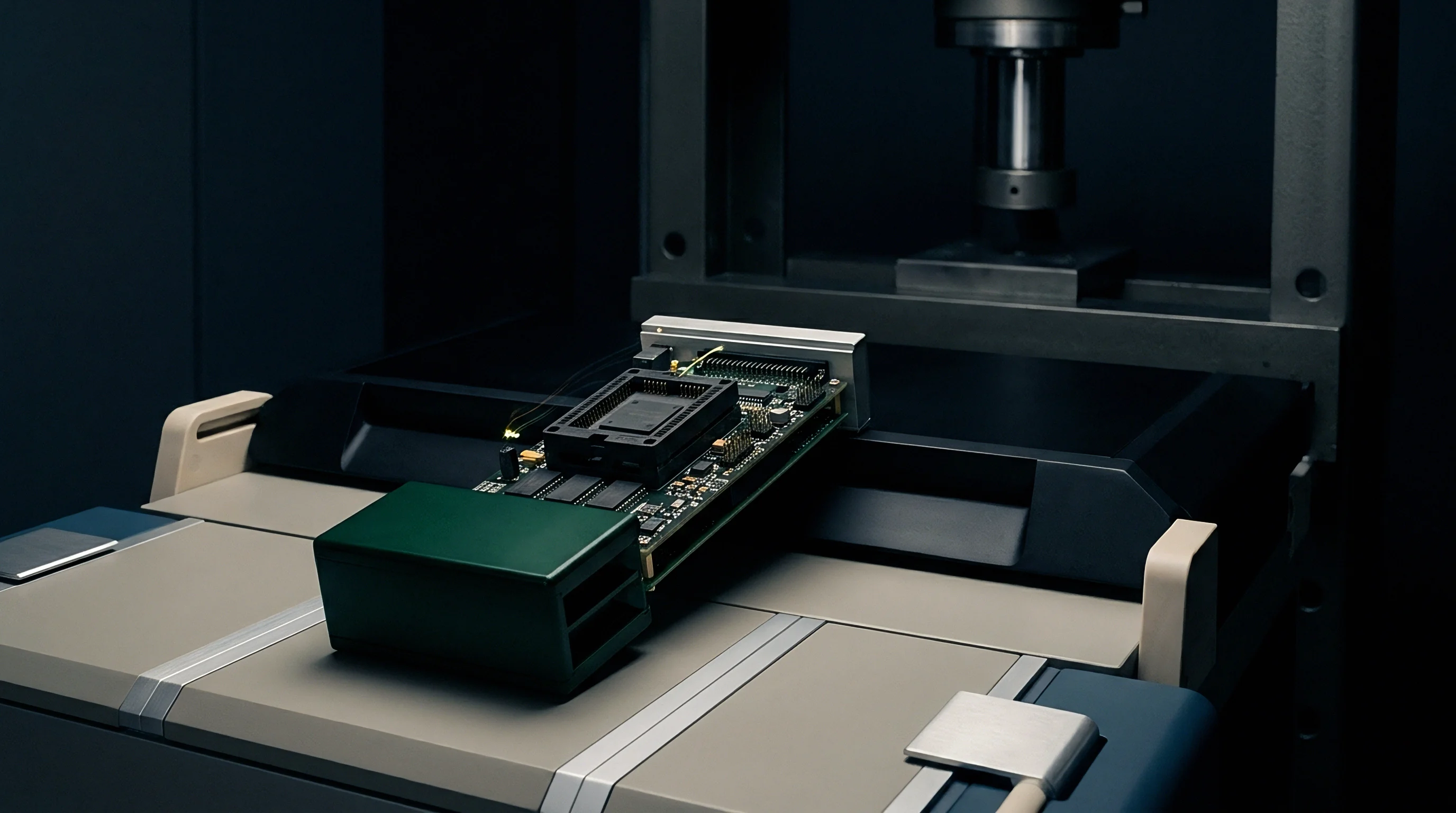
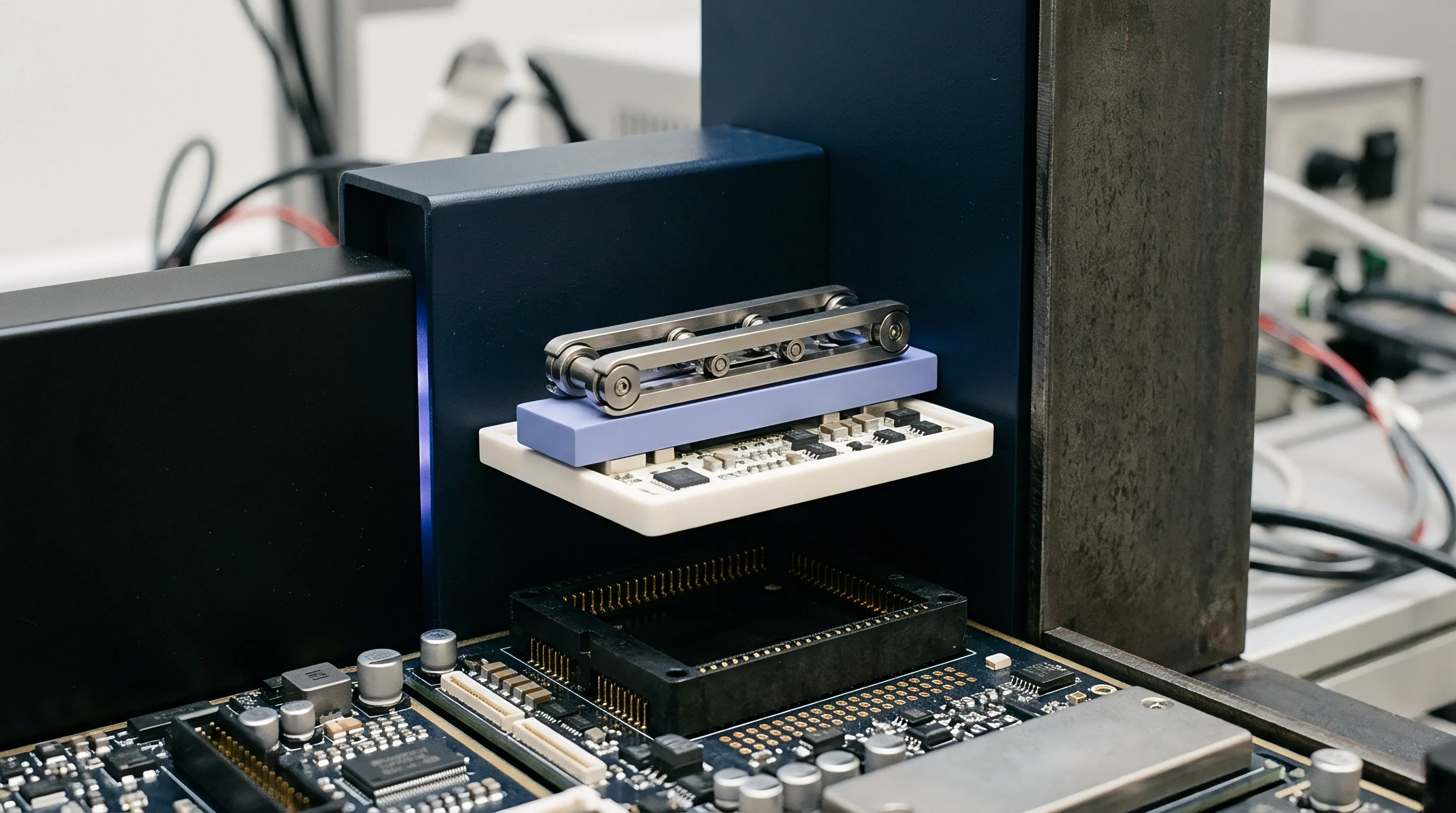
Automated verification of compiled firmware images requires physical target microcontrollers wired to automated testing infrastructure. Virtual target emulators provide initial logic sanity checks, but peripheral timing drift, hardware interrupt collisions, and real-world flash write latencies demand physical silicon execution prior to escrow deposit validation. Hardware-in-the-Loop test bench facilities deploy clusters of development boards connected to programmable power supplies, logic analyzers, bus sniffers, and automated debug probes.
Target board orchestration systems assign compiled binaries to available physical hardware nodes based on peripheral revision requirements. Debugger interfaces flash compiled image payloads into internal microcontroller flash memory banks, reset execution registers, and monitor boot diagnostic outputs via isolated serial interfaces. Test suite runners simulate real-world sensor input signals, command bus messages, and physical power interruptions while sampling microcontroller telemetry streams.
| Verification Stage | Execution Host | Interface Protocol | Target Throughput | Latency Ceiling |
|---|---|---|---|---|
| Bootloader Verification | Physical Bench Node | SWD / JTAG | 1.2 MB/s | 450 ms |
| Peripheral Bus Stress | Logic Analyzer Rack | CAN FD / SPI | 10.0 Mbps | 12 ms |
| Flash Endurance Run | HIL Power Controller | Direct Memory Access | 50.0 MB/s | 2100 ms |
| Cryptographic Key Loading | Hardware Security Module | UART / Secure Element | 115.2 kbps | 85 ms |

Boundary Scan Automated Debugging and Physical Signal Capture
Microcontroller bring-up verification during continuous delivery flows leverages JTAG boundary scan capabilities to validate internal registers without executing external debug scripts. Test probes monitor current draw profiles across dedicated power rails to detect illegal low-power state transitions, peripheral clock failures, or unhandled processor fault exceptions. Automated test harnesses log execution results directly into binary verification records alongside current consumption profiles and bus communication captures.
Peripheral interface qualification involves asserting synthetic noise patterns across external communication buses while monitoring packet retry metrics. Automated bench runners run continuous testing loops across varied voltage levels and system clock frequencies to ensure physical target stability. When compiled binaries fail physical test execution, peripheral analyzer traces and memory dump files automatically attach to the build verification package for forensic engineering review.
Hardware bench runner allocation scripts assign compiled firmware images to physical target microcontrollers within 15 seconds of build container completion.
Failure to capture peripheral bus timing violations during automated HIL bench testing leads directly to unexpected field lockups once firmware releases deploy to production hardware environments.
Deposit

Why Do Automated Software Escrows Fail Build Audits?
Software escrow failures during automated build verification stem primarily from incomplete environment capture. Deliverables containing only raw C source files routinely fail automated escrow compilation tests because external toolchain binaries, private package repositories, build scripts, and linker configurations were omitted from the deposit payload. Escrow deposit verification engines require self-contained packages containing source repositories, container configurations, build dependencies, hardware configuration manifests, and test scripts.
Deposit structure standards mandate clear segregation between open-source components, proprietary IP libraries, and client-specific application code. The escrow deposit payload packages source files alongside cryptographic digests of every included binary library, ensuring third-party audit teams can inspect, compile, and sign the application payload independently.
- Source Code Archives containing complete revision history, submodules, and configuration files.
- Toolchain Manifests specifying container image digests, compiler versions, and flag configurations.
- Cryptographic Asset Vaults holding test keys, signing scripts, memory layout maps, and verification certificates.
- Automated Test Suites including bench runners, physical test scripts, peripheral stimuli definitions, and expected telemetry output benchmarks.
Depositing incomplete firmware assets prevents independent verification agents from reproducing compiled binaries during release trigger evaluations.

Dual-Key Cryptographic Custody and Deposit Immutability Controls
Cross-border escrow deposit verification relies on asymmetric dual-key custody mechanisms to guarantee asset integrity without compromising developer IP rights. Upon successful automated build and test validation, the build system packages source code, toolchains, and binary signatures into an encrypted container signed jointly by the firmware developer and the escrow verification agent. Access to escrowed assets requires concurrent decryption signatures from authorized representatives of both contracting entities.
| Artifact Category | File Format | Verification Method | Acceptance Standard |
|---|---|---|---|
| Source Tree | TAR.GZ / Git Bundle | SHA-256 Digest Validation | Zero Uncommitted Modifications |
| Compiler Toolchain | OCI Container Image | Deterministic Re-compilation | Byte-for-byte Matching Output |
| Linker Configuration | LD Script / Memory Map | Memory Section Audit | Strict Layout Conformance |
| HIL Test Suite | Python / Robot Framework | Automated HIL Bench Run | 100% Pass Rate on Target Hardware |
Escrow verification frameworks utilize immutable ledger entries to log deposit events, build output cryptographic signatures, and hardware test pass certificates. Every deposit iteration updates the verification record with timestamped hash entries, creating an unalterable audit trail that documents firmware development progress across contracting milestones.
Under standard software deposit covenants, the escrow agent shall release compiled binaries and source code to the client within five business days following validated proof of developer contractual default or insolvency.


Jurisdiction

Cross-Border Export Regulations and Dual-Use Technology Compliance
Transferring compiled firmware assets, source code, and cryptographic compilation toolchains across international borders introduces complex compliance obligations under export control regimes. Dual-use technologies incorporating advanced encryption algorithms, secure element access routines, or specialized wireless protocol stacks fall under international export classifications such as the Wassenaar Arrangement, European Union Dual-Use Regulations, or US Export Administration Regulations. Continuous integration systems hosting cross-border escrow build runners ensure build runners locate within approved geographic jurisdictions.
Automated verification workflows inspect source packages for controlled cryptographic algorithms prior to initiating cross-border file transfers. When firmware projects utilize cryptographic libraries exceeding export threshold limits, build systems restrict raw code deposits to secure regional data centers, executing build validation steps remotely without moving raw source files across physical or jurisdictional borders.
Export control compliance routines halt automated cross-border repository syncing whenever unapproved cryptographic primitives appear inside source code additions.

Legal Custody Boundaries and Regional Escrow Vault Routing
Data sovereignty regulations dictate how source files, developer credentials, and user data telemetry cross regional borders. Escrow agreements covering cross-border engineering programs establish strict boundaries governing which entities retain legal custody of source assets at specific stages of the integration pipeline. Automated escrow routers evaluate destination server jurisdiction tags before executing data deposit transfers, steering sensitive asset packages into compliance-certified storage nodes.
Regional legal jurisdictions enforce differing subpoena powers, IP discovery processes, and asset seizure mechanisms over software escrow repositories. Contractual frameworks isolate escrow verification infrastructure into neutral legal jurisdictions, utilizing multi-party escrow legal entities established under local corporate regimes specifically recognized for robust IP protection laws.
The offshore development team stated that automated build verification delays stem entirely from external data compliance inspection checks rather than build script compilation errors.


Telemetry

Real-Time Execution Monitoring and Hardware Defect Classification
Continuous firmware integration pipelines generate extensive execution telemetry streams during physical target validation runs. Monitoring software tracks microcontroller memory utilization patterns, processor instruction pointers, stack depth usage, and peripheral bus error counters in real time. Processing execution logs using automated parsing utilities allows build verification engines to detect subtle memory leaks, register corruption, or stack overflow conditions prior to escrow deposit approval.
Hardware failure classification mechanisms distinguish between software bugs, peripheral configuration errors, and physical test bench hardware degradation. Microcontroller crash logs containing fault status register dumps and stack trace snapshots automatically map back to original source code lines using debug symbol maps maintained within the container build environment.

Deterministic Build Overhead and Escrow Financial Arithmetic
Consider an engineering team executing a turnkey firmware development contract for a custom industrial IoT gateway module. The contract defines three milestone escrow deposits tied to automated HIL test validation runs. Non-recurring engineering expenses total 240,000 USD, with milestone payments structured at 30 percent upon architecture freezing, 40 percent upon continuous integration HIL qualification, and 30 percent upon final escrow deposit verification.
Executing deterministic build validation requires containerized compilation runners operating alongside physical test bench hardware. Assume each automated build and HIL test execution run consumes 1.75 hours of bench time across a cluster of 8 physical target boards, billed at an operational infrastructure cost of 45 USD per bench hour. Over a 16-week development cycle with 120 automated integration runs, total HIL bench testing operational costs compute as follows:
120 build runs multiplied by 1.75 hours equals 210 total bench operational hours. Multiply 210 hours by 45 USD per hour to yield 9,450 USD in direct physical verification costs. Incorporating cloud build container compute charges of 1,200 USD and third-party automated escrow audit verification fees of 8,500 USD brings total automated integration and escrow verification expenses to 19,150 USD.
Comparing this verification expenditure against potential cross-border default risks demonstrates clear financial justification. Re-engineering unverified firmware acquired from a failed offshore development partner requires an estimated 950 engineering hours at 140 USD per hour, totaling 133,000 USD in remedial engineering costs, plus an estimated 60-day delay in product commercialization. Investing 19,150 USD in automated cross-border escrow verification reduces technical handover risks by 85 percent while securing milestone disbursements against verified software performance metrics.
Automated telemetry collection systems store execution logs, binary hash tables, and physical logic analyzer traces inside encrypted audit archives. Independent technical auditors evaluate these historical telemetry traces to verify whether software stability metrics consistently met contractual threshold requirements across all development phases.
What timing threshold bounds acceptable bus contention recovery latency during automated multi-node CAN FD stress testing?

Disbursement
Automated Milestone Clearing and Multi-Party Financial Settlement
Integrating continuous firmware build pipelines with automated escrow release mechanisms streamlines cross-border milestone payments. Smart contracts or automated escrow banking API workflows trigger financial transfers immediately upon receiving cryptographic proof of deposit verification. When an automated build runner validates binary compilation, confirms byte-for-byte reproducibility against developer hashes, and executes a 100 percent pass run across physical HIL test suites, the verification engine issues a signed release token to the escrow payment clearing house.
Automated payment clearing protocols eliminate administrative delays associated with manual code reviews and international wire transfers. The escrow clearing service validates the verification engine’s cryptographic signature against registered public keys, checks contractual release conditions, and authorizes fund transfers from buyer escrow accounts directly to developer banking entities across international payment rails.
- Build pipeline completes containerized compilation and generates binary artifacts.
- Escrow verification engine pulls source files, reproduces binary output, and validates SHA-256 digests.
- Hardware-in-the-Loop bench executes full physical regression test suite on target microcontrollers.
- Test runner issues cryptographically signed pass certificate to escrow verification registry.
- Escrow clearing system verifies signatures and executes automated cross-border wire transfer.
Contractual frameworks governing automated escrow disbursement incorporate emergency dispute lock routines. If physical telemetry runners detect unhandled memory faults or binary non-reproducibility during verification runs, payment clearing systems lock escrow deposits automatically, notifying technical audit committees to conduct manual code reviews.
Cross-border financial settlement workflows require integrated tax clearance, currency exchange rate locking, and international compliance auditing to execute multi-currency disbursements smoothly upon release token authorization.