Escrow Deposit Verification Protocols for Long Term Manufacturing Rights in Turnkey Hardware Engagements
Independent physical assembly and bit-for-bit cleanroom firmware compilation from escrowed files establish production continuity during supplier insolvency.


Vault
Turnkey hardware engagements routinely fall apart when factory line stoppages or field failures demand direct intervention, only for the buyer to find the escrow deposit packed with uncompilable source trees and broken board layouts. Hardware escrow exists as an operational backstop for manufacturing continuity. To work, the physical repository has to hold everything needed to turn out a working unit, running from bare printed circuit board fabrication data down to bring-up scripts and test fixture firmware.
Most hardware escrow agreements lapse into uselessness at the first deposit because the transaction is treated as a paperwork formality. Stashing away an uninspected archive of raw Gerbers and precompiled binaries yields zero manufacturing independence. If the design house fails, breaches the contract, or walks away, bringing an alternate contract manufacturer online requires fully validated fabrication files, native CAD databases, structured bills of materials with active manufacturer part numbers, programmable logic sources, and the original build toolchains.
Deposits span mechanical tooling, bare printed circuit board fabrication data, electrical procurement, bare-metal firmware, and factory test stations. Each area calls for its own validation procedure before the escrow agent issues an acceptance certificate. Standard escrow agents rarely have the bench equipment or embedded engineering staff needed to verify whether a deposited firmware tree compiles into bit-for-bit parity with what is running on the line.
Standard deposit clauses without third-party physical build validation leave the buyer holding unusable archives during insolvency events.
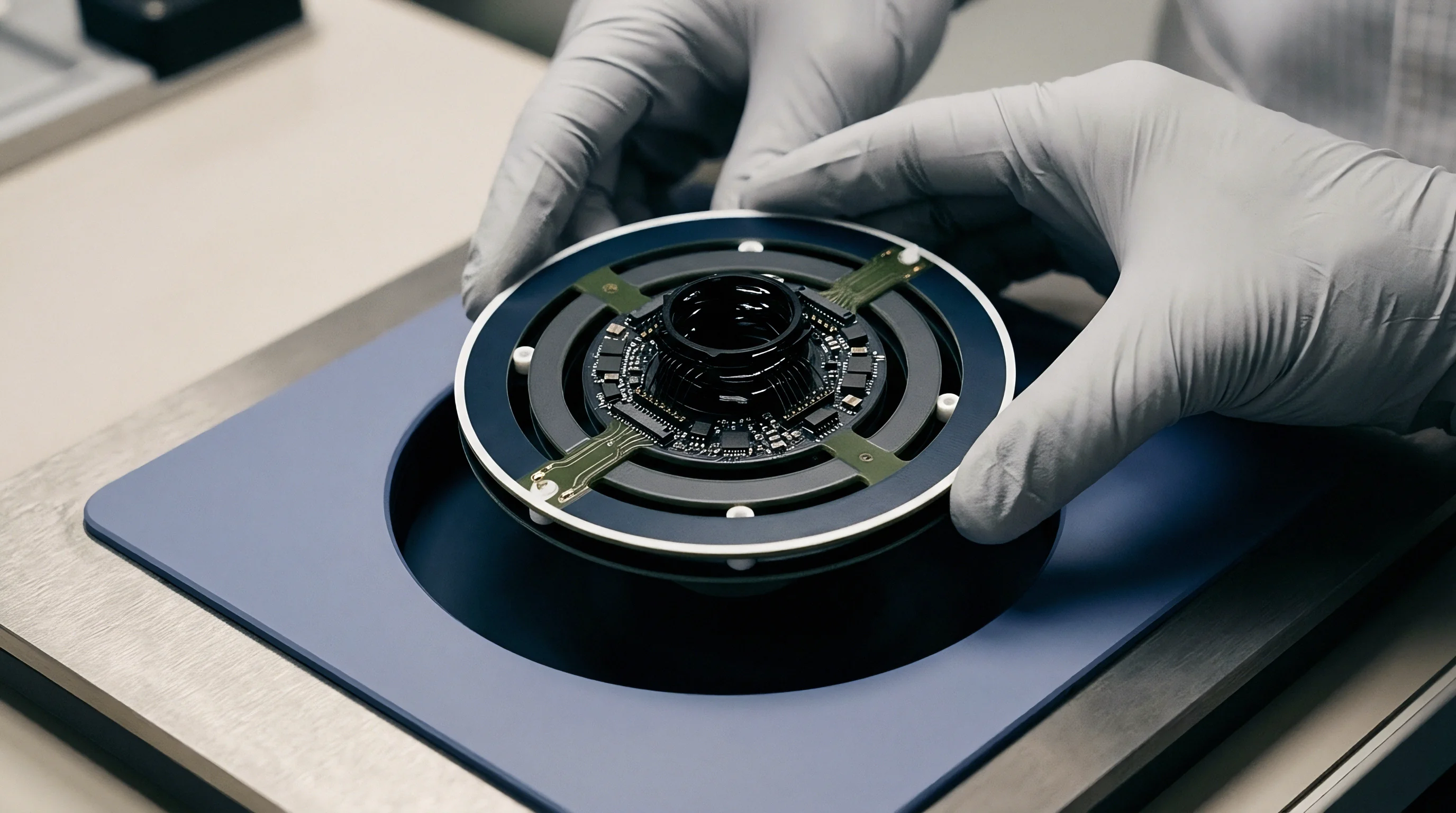
A disciplined verification regime turns the deposit from a dead storage handoff into a hard qualification gate. The buyer specifies verification criteria directly in the Master Manufacturing Agreement and Software Escrow Agreement, tying non-recurring engineering disbursements to signed-off technical deposits. Physical board assembly, continuity testing, firmware flashing, and functional runs must succeed using nothing beyond the files, schematics, and work instructions retrieved from the escrow vault.

Dossier
A complete manufacturing rights deposit covers four distinct layers: board CAD databases, embedded software trees, mechanical assembly packages, and production test fixtures. Dropping any single layer leaves an alternate assembly plant unable to build or qualify finished product.

Printed Circuit Assembly Design Layer
Native design files are the foundation of the printed circuit board assembly package. Relying solely on production Gerbers blocks redesign work when parts go obsolete or secondary lines open up. Deposit sets must include the native schematic capture files, board layouts with intact layer stack-ups, netlists, and internal design constraints.
Modern electronics manufacturing relies on neutral transfer formats alongside native CAD data. Deposits require complete IPC-2581 or ODB++ datasets that detail component coordinates, drill tables, pad geometries, and layer assignments. These neutral packages prevent translation errors when an alternate manufacturing facility generates automated surface mount placement programs from proprietary board layouts.
| Domain | Mandatory Native Files | Neutral Output Formats | Verification Artifact |
|---|---|---|---|
| Schematic Capture | Native CAD database, component symbol libraries | Searchable vector PDF with complete net annotations | Automated netlist comparison to layout database |
| Board Layout | Native board files, internal layer stack-up rules | IPC-2581 Rev C or ODB++ version 8.1 data packages | Design rule check zero-error report from secondary CAD tool |
| Fabrication | NC drill files, route files, fabrication master notes | Gerber X2 with embedded aperture and layer attributes | Bare board coupon cross-section microsectioning check |
| BOM | Hierarchical procurement spreadsheet with internal SKUs | Flat CSV detailing manufacturer part numbers and approved alternates | Distributor API electronic inventory availability confirmation |
| Firmware | C/C++ sources, assembly, RTOS trees, build automation files | Signed binary images, hex files, register map documentation | Bit-for-bit hash match across independent cleanroom compilation |
| Test Fixtures | Bed-of-nails pin schematics, wiring harnesses, test software | STEP models of clamshells, mechanical fixture drawings | Golden sample board boundary scan and functional log capture |

Firmware Source Repositories and Toolchains
Embedded source code without its exact build environment is practically useless. Deposits require explicit toolchain manifests, documented cross-compiler revisions, linker scripts, board support packages, and hardware abstraction layers. If silicon vendor bootloaders or third-party libraries are licensed only as binaries, the deposit must document linking rules and distribution rights in full.
The deposit package details target programming procedures, header pinouts, debug interfaces, and key provisioning workflows. For microcontrollers with secure boot enabled, the archive must hold root-of-trust signing keys, injection scripts, and hardware security module configurations. Missing provisioning keys reduce an entire production run to dead silicon.
Handing over precompiled binaries without reproducible build scripts keeps the buyer tied to the original vendor. The verification protocol enforces a cleanroom build from source, checking that the generated output hashes match the firmware running on active factory units.


Gauge
Verification protocols follow an escalating ladder of technical rigor. The chosen tier marks the line between an administrative document check and real proof of manufacturability.

Level One Inventory and Structural Integrity Checks
Basic verification stops at file-level inventory and archive integrity. The inspector checks file listings against the agreed manifest, verifies checksums, and confirms that file extensions match expected CAD and software formats. This confirms archives extract cleanly, drawings show legible title blocks, and bills of materials list expected component counts.
Level One checks require no bench equipment and offer no technical assurance that the hardware can actually be built.

Level Two Toolchain Reproduction and Source Compilation
Compilation audits establish whether the source repository produces functional binaries. The auditor sets up an isolated cleanroom workstation, provisions the specified operating system, installs compiler toolchains following the supplied documentation, and runs the build scripts. A clean Level Two pass generates firmware binaries, bootloaders, and flash images without manual intervention or compile errors.
Level Two cleanroom compilation proves software build reproducibility under isolated operating systems without verifying board-level hardware execution.
Binary analysis compares generated output files against golden binaries pulled from commercial retail units. Any mismatch between build hashes and production hashes stops the deposit from clearing. The vendor must then correct the discrepancy by fixing source files, build flags, or environment paths.

Level Three Physical Fabrication and Boundary Testing
True manufacturing insurance requires an empirical build run. Level Three verification commissions a pilot batch of printed circuit board assemblies built strictly from vaulted data. The test team orders bare boards from an independent PCB house, buys components through authorized distribution against the escrow bill of materials, runs surface-mount placement using deposited centroid files, and flashes cleanroom-compiled firmware through the specified debug headers.
- Raw Data Extraction isolates all fabrication Gerbers, IPC-2581 packages, and pick-and-place centroid files directly from the locked escrow deposit.
- Independent Procurement routes active and passive electronic components through franchised distributors, identifying obsolete part numbers and unauthorized substitutions.
- Bare Board Fabrication executes at an external, unaffiliated printed circuit board facility following deposited stack-up sheets, copper weights, and dielectric tolerances.
- Surface Mount Assembly programs automated placement equipment and reflow ovens using deposited assembly drawings, solder paste masks, and feeder profiles.
- Cleanroom Firmware Flashing loads binaries compiled during Level Two verification directly into onboard flash storage via standard JTAG or SWD interfaces.
- Automated Functional Validation mounts manufactured boards into deposited test fixtures to record electrical operating points, clock frequencies, and protocol telemetry.
A Level Three run flushes out every undocumented tweak sitting on the original assembly line. Missing solder paste definitions, mislabeled test pads, trace length errors, and unwritten programming steps all surface under this test. The process clears only when the newly fabricated units hit the exact quality benchmarks applied to the primary line.

Drill
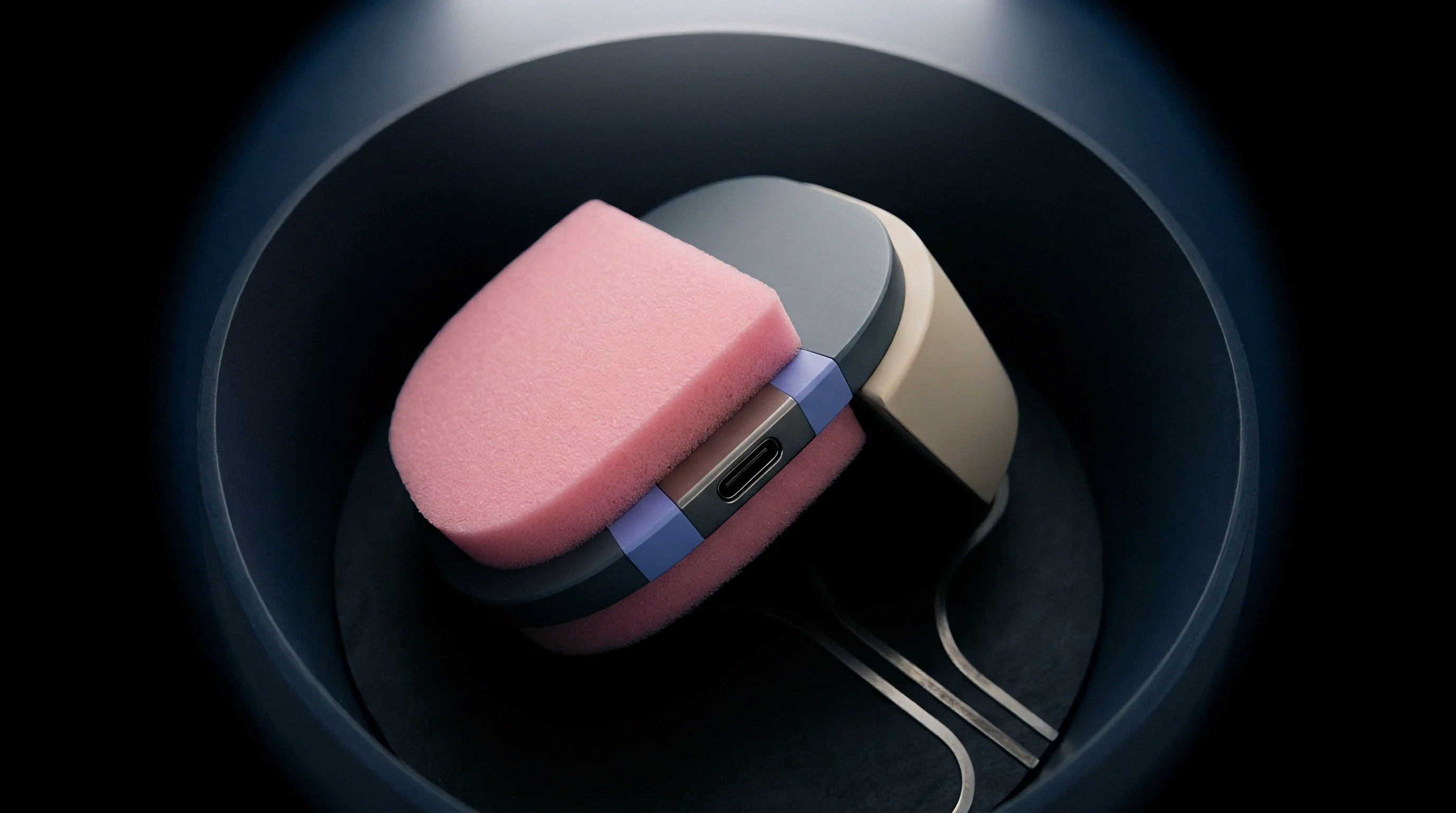
Replicating test fixtures is usually the hardest hurdle when shifting turnkey manufacturing between sites. Contract manufacturers frequently develop custom bed-of-nails beds, test enclosures, and programming stations whose design files never get rolled into standard manufacturing transfer packs. If the secondary facility cannot test the finished boards, production halts immediately.

Test System Documentation Requirements
Turnkey contracts need to mandate deposits for all factory test stations. That means full electrical schematics for fixture interfaces, point-to-point pogo-pin wiring lists, custom breakout boards, and mechanical assembly drawings. Mechanical prints must state pneumatic actuator strokes, clamping pressures, and strain limits meeting IPC-J-STD-001 criteria.
Automated test code requires the same level of care. Deposits need the source code for test sequences, bus communication scripts, instrument drivers, and boundary-scan test profiles. Proprietary functional test suites built on specialized industrial test engines require either explicit software license assignments or complete open-source runner equivalents.
| Test Station Subsystem | Deposited File Type | Physical Artifact Checked | Acceptance Standard |
|---|---|---|---|
| Pogo-Pin Interface | Drill coordinate file, wiring netlist | Bed-of-nails receptacle alignment | Target test pad strike accuracy within 50 micrometers |
| Signal Routing | Fixture interface PCB schematic, Gerber suite | Bare interface board, coax cable harnesses | Insertion loss under 0.5 dB across operating frequency |
| Instrumentation | Test script source code, instrument configuration | Power supply, DMM, spectrum analyzer rack | Measurement reproducibility across 30 consecutive cycles |
| Boundary Scan | BSDL models for integrated processors, scan files | JTAG/IEEE 1149.1 controller card | Complete chain detection, pin fault injection response |
| Mechanical Clamping | 3D CAD assembly, pneumatic schematic | Custom pressure plate, pneumatic cylinders | Zero board flexure damage per IPC-9704 strain limits |
Calibration Routines and Diagnostic Validation
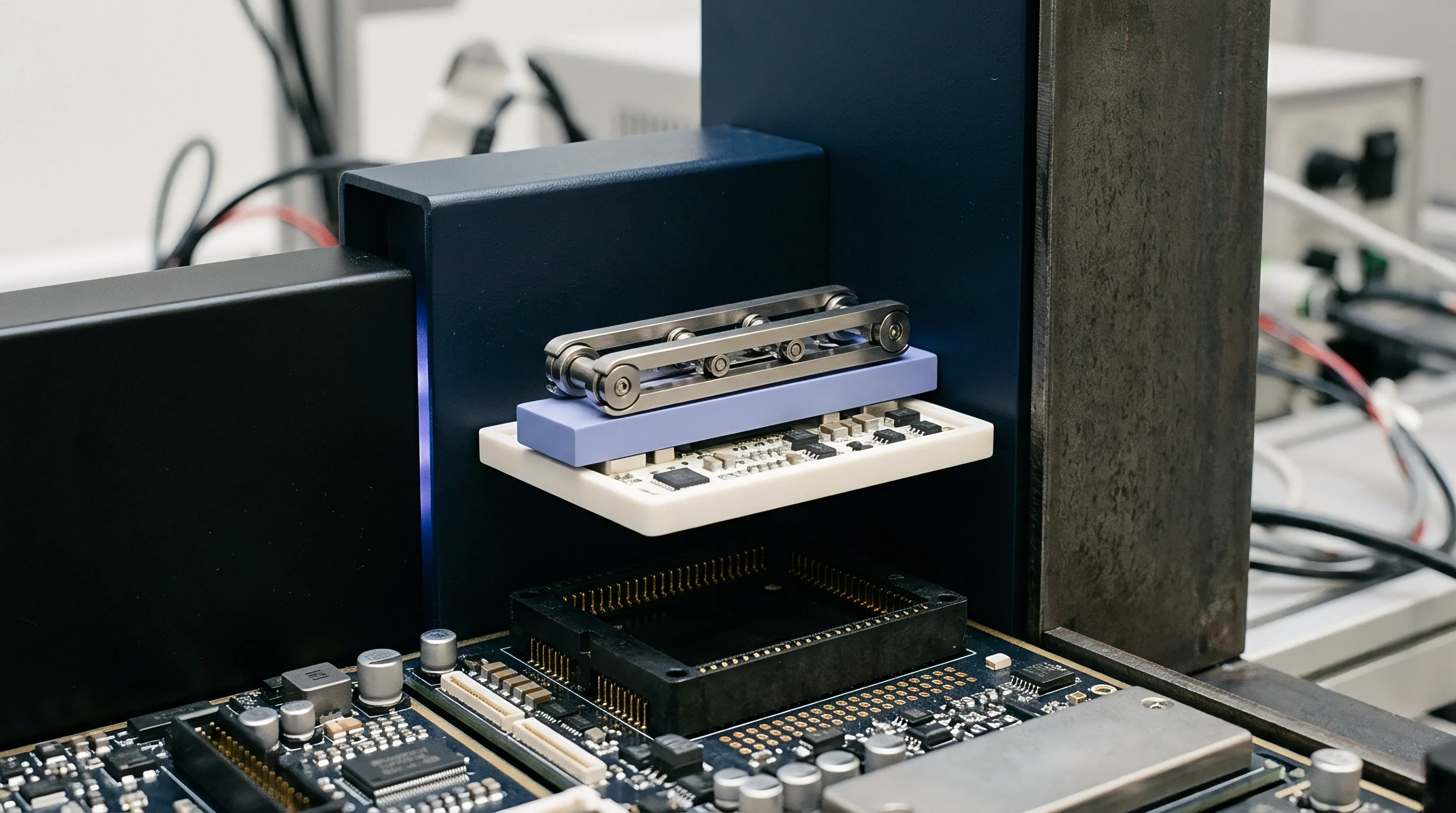
Reconstructed test fixtures require structured calibration. Escrow verification executes diagnostic suites using known-good golden samples and engineered silver boards. Silver units carry open traces, shorted passive components, or modified firmware to verify that the test setup catches real manufacturing defects.
Calibration routines establish traceable baselines using reference meters, frequency counters, and power supplies. The verification protocol sets formal pass/fail limits that account for line noise, parasitic impedance, and instrument tolerance. Thresholds must prevent both false failures and escaping defects, keeping the statistical process capability index at or above 1.33.
Treating test fixtures as proprietary internal shop aids outside the product IP scope leaves the buyer unable to enforce quality thresholds at an alternate contract manufacturer.


Trigger
Release conditions govern the exact legal and technical events that unlock physical and intellectual assets held in escrow. Ambiguity here invites lengthy litigation while assembly lines sit frozen. Hardware supply agreements require clear, objective operational failures to serve as conditions precedent.

Operational Inability and Financial Distress Triggers
Insolvency triggers should hinge on public, verifiable facts. Standard phrasing includes formal bankruptcy filings, appointment of an administrator or receiver, corporate liquidation, or unresolved creditor judgments outstanding past sixty calendar days. Release terms must not depend on prior dispute adjudication, as court proceedings routinely tie up operational contracts for quarters at a time.
Technical defaults run parallel to financial distress. Standard operational triggers cover unexcused shipment cessations lasting thirty consecutive days, sustained defect rates above two percent over three consecutive production lots, or formal end-of-life notices issued without an agreed last-time buy window. Agreements generally give the supplier a cure period of ten business days to resolve performance issues before release kicks in.
Agreements require an expedited contest period. If the buyer files a release demand based on operational default, the supplier gets ten calendar days to challenge it. Contested notices place the escrow archive into technical escrow review, handing jurisdiction over to a designated technical arbitrator instead of a general civil court.
Section 14.3 of the Standard Hardware Manufacturing Agreement releases manufacturing archives upon certified insolvency, unexcused production cessation exceeding thirty days, or uncured delivery defaults.
Delayed deliveries during liquidity stress are often attributed to raw-material force majeure rather than structural insolvency. Clear contractual terms define exact documentation boundaries, specifying that component shortages excuse non-performance only when accompanied by certified distributor allocation letters covering entire global market volumes.


Parity
A hardware escrow audit ultimately hinges on proving parity between what sits in the vault and what runs on the production floor. Design changes happen constantly during high-volume production: passives migrate footprint sizes, firmware revisions squash edge-case bugs, and PCB layouts get copper adjustments to lift assembly yields. Storing revision B files while the factory churns out revision E offers zero protection.

Audit Protocols for Engineering Change Orders
Escrow terms must mandate automated updates pegged to engineering change orders. Every design revision signed off for the factory floor requires a matching escrow deposit. The purchase terms should bar incoming production lots from clearing buyer quality inspection unless supported by an escrow deposit confirmation covering that exact revision.
Field auditors check physical board markings, component date codes, and PCB copper etch revisions against the deposited layout files. Barcode labels must resolve directly to the bill of materials version stored in the archive. Any gap between physical silkscreen labels and archived files points to untracked revisions on the line.
- Gerber Layer Alignment superimposes deposited photoplotter traces directly over extracted production artwork to expose unauthorized copper modifications, ground-plane clearances, and trace thinning.
- Firmware Hash Comparison matches cryptographic digests of cleanroom-built code against binary images extracted directly from the microcontroller on a randomly sampled, commercially packaged production unit.
- BOM Cross-Verification reconciles every reference designator on the assembled printed circuit board against the vaulted part list, catching grey-market component swaps and unapproved vendor selections.
- Tooling Drawing Reconciliation checks physical injection molding tool cavity numbers, cooling line layouts, and ejection pin locations against deposited mechanical computer-aided design files.
Laboratory analysis confirms component authenticity across the deposited bills of materials. Verification protocols require X-ray inspection of complex ball grid array packages to check internal wire bonding against manufacturer datasheets. Unannounced silicon die revs tucked inside identical plastic packages will disrupt bring-up at an alternate manufacturing site.
When a vendor substitutes five-percent passives where one-percent tolerances were specified without logging an engineering change, the yield fallout lands entirely on the buyer. Enforcing parity audits prevents unrecorded part substitutions from eroding operating margins.


Settlement
Running a comprehensive escrow verification protocol incurs concrete lab, assembly, and legal costs. How those costs are structured decides whether validation actually happens or gets skipped as overhead. Supply agreements need to establish who pays setup costs, annual vault fees, and the expenses tied to Level Two or Level Three audits.
Cost Allocation and Verification Milestone Economics
Contracts generally separate basic holding fees from technical audit costs. Buyers routinely pay standard escrow retention fees, running $1,500 to $4,000 annually for data storage, and $6,000 to $12,000 when physical tooling, jigs, and controlled storage are involved. The supplier covers initial deposit packaging and documentation as part of baseline non-recurring engineering milestones.
Audit costs scale with required engineering and lab hours. A standard Level One archive review runs between $2,000 and $5,000 in technician time. Level Two compilation and toolchain verification lands between $8,000 and $15,000, depending on build complexity, cryptographic architectures, and binary hashing requirements.
Level Three physical builds represent a much heavier line item. Line setup, short-run board fabrication, component procurement via franchised distributors, and SMT line scheduling total $25,000 to $60,000 for complex multi-layer internet-of-things hardware. Contract terms govern which side absorbs that cost.
Standard agreements put initial audit fees on the buyer if the deposit passes, shifting the entire bill to the supplier if the build fails to compile, assemble, or test cleanly. Deposit failure clauses also require the supplier to pay for subsequent re-audits, which discourages incomplete engineering handoffs.

Can Alternate Contract Manufacturers Execute Production from Escrow Data Alone?
Transferring an active product between competing contract manufacturers is notoriously difficult. Once the escrow archive clears release, the new factory must program pick-and-place lines, build reflow profiles, tune automated optical inspection equipment, and calibrate wave or selective solder setups with zero help from the original engineering team.
The transition works only if the vaulted assembly documentation captures mechanical fits, conformal coating boundaries, thermal profiles, and chassis fastener torque limits. Even with an audited Level Three verification package, bringing an alternate production line up to volume still takes eight to fourteen weeks from initial release.
If functional test fixtures and complete fabrication notes are missing, that transfer window stretches past nine months, destroying inventory plans and market share.