Module Integration Rights and Sourcing Strategy Frameworks for Hardware Teams
Module integration levels dictate engineering ownership, file transfer rights, firmware access, and long-term landed cost metrics across production lifecycles.


Boundary
Choosing a module sourcing tier forces a trade-off between execution risk and product differentiation. Where the division of labor falls between host engineers and the module vendor determines who maintains firmware, who requalifies the radio across silicon steppings, and who absorbs production yield fallout. Sourcing contracts generally establish this boundary under four models.
Turnkey sourcing offloads schematics, parts selection, layout, firmware, and regulatory certification to the vendor. The buyer gets a completed subsystem that communicates over standard buses like SPI or UART, keeping initial non-recurring engineering low. The drawback is that differentiation disappears ~ competing products can buy the same performance off the shelf.
Because the vendor retains the design files, the host team cannot adjust driver behavior or touch component placement on the substrate.
| Integration Level | Deliverables Transferred | Firmware Access | IP Ownership | Design Control |
|---|---|---|---|---|
| Turnkey | Binary firmware images, physical modules, integration datasheets | Compiled binaries, API documentation | Supplier retains all IP | Supplier controls BOM and layout changes |
| Semi-Custom | Modified schematics, binary drivers, custom pinout definitions | Board Support Package, static libraries | Shared IP on custom pinout or routing | Joint change control board authority |
| Reference Design | Native CAD files, full schematic source, bill of materials | Source code, register maps, build scripts | Buyer owns host design and derivative layout | Buyer holds full hardware change authority |
| White-Label | Enclosed modules, pre-compiled applications, AT command sets | High-level configuration APIs | Supplier retains hardware and software IP | Supplier controls all engineering choices |
Semi-custom integration permits adjustments to board outlines, connector placement, or antenna routing while leaving the core radio and processor intact. The buyer covers tooling modifications and layout respins; the supplier keeps the RF schematics but accommodates input on pinouts and power delivery. Software access is usually restricted to static libraries, which leaves host developers working strictly at the application layer.
Reference designs hand raw schematics, netlists, and layout files directly into the buyer’s CAD environment. Dropping the circuitry directly onto the main system board eliminates daughtercards, redundant PCB material, and connectors, driving down unit costs and conserving board area. In exchange, the host team owns manufacturing yields, RF signal integrity, and full regulatory certification.
White-label sourcing delivers finished, encapsulated hardware addressed through high-level APIs or AT commands. The original design manufacturer manages the BOM, patches firmware, and coordinates sub-tier part supply. The host team has little to no visibility into internal component substitutions, which can surface without warning during supply crunches.
Vague integration boundaries leave host teams troubleshooting third-party firmware, spinning motherboards to accommodate unannounced module changes, and paying for unplanned re-certifications when an upstream supplier swaps silicon without notice.
Firmware
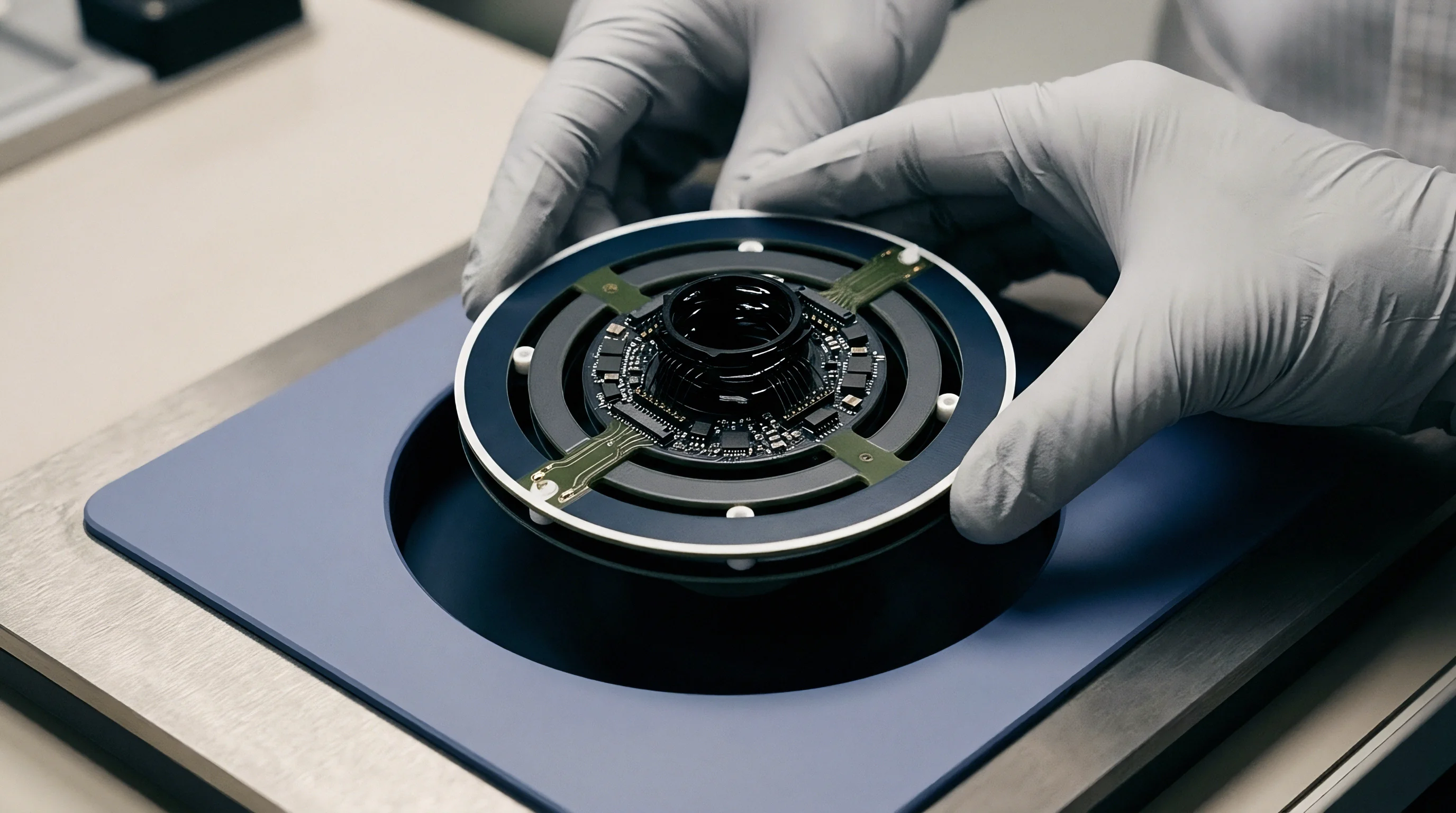
A module’s reliability often comes down to driver quality. Vendor reference firmware is typically built to demonstrate features on an evaluation board, not to handle production corner cases. Peripheral initialization, sleep-state transitions, and bus recovery routines in vendor SDKs routinely require extensive host-side rewrites.
When drivers rely on binary blobs, low-level register interactions remain hidden, making bus deadlocks difficult to isolate.
Proprietary binary blobs embedded within driver stacks strip the host system of runtime telemetry and lock execution to specific silicon revisions.
Board Support Packages vary widely in maturity. When a supplier ships pre-compiled static libraries, the host team is pinned to specific toolchains and compiler versions. Upgrading the host RTOS kernel or compiler suite then breaks the build.
Furthermore, addressing silicon errata requires waiting on vendor patches, which stalls shipping schedules whenever lower-level bugs appear in field testing.
Licensing terms determine how much driver code can actually be touched. Permissive open-source licenses allow engineering teams to audit, patch, and redistribute driver modifications. Proprietary vendor licenses, by contrast, often forbid tampering with driver internals, preventing engineers from repairing buggy peripheral setup code or tightening interrupt latency.
Ambiguous licensing can also stall diligence during corporate acquisitions or OEM distribution deals.
When silicon revisions alter power profiles, latent firmware bugs in low-power states can trigger intermittent modem lockups at sub-zero temperatures. Resolving them often deadlocks over whether the failures stem from host-board decoupling margins or initialization bugs inside proprietary vendor driver libraries.

Jig
Transferring a module to production requires physical test fixtures, automated routines, and calibrated RF test gear. For custom and semi-custom hardware, contracts must settle who designs, builds, and maintains these manufacturing fixtures; without that clarity, responsibility for line yield fallout becomes impossible to assign.
- In-Circuit Test Fixtures verify component values, trace continuity, and power rails against shorts using bed-of-nails contact arrays.
- RF Conducted Test Benches measure transmit power, frequency drift, and receiver sensitivity through coaxial test switches before antennas are connected.
- Automated Test Executables execute register-level test routines across internal buses and verify onboard flash memory.
- Environmental Burn-in Chambers stress solder joints and silicon junctions through concurrent thermal cycling and active electrical loading.
Shifting production to a secondary facility requires precise replication of the original test line. Fixtures need calibration logs traceable to national standards; if those routines are embedded in proprietary vendor test suites, a second-source plant cannot qualify incoming units. Test limits, instrument setups, and golden-unit baselines must all be documented as transfer deliverables.
Standard ISO 9001 quality audits fail to surface hidden manufacturing defects when production test fixture calibration logs remain in vendor control.
Fixture custody must be settled in the master services agreement. By linking fixture ownership to NRE funding and referencing IEEE test standards, the buyer retains legal title to the hardware beds, wiring schematics, and test routines once production transfers.


Schematic

What Files Constitute a Complete Transfer Package?
A complete transfer package turns licensing rights into workable engineering data. Receiving only Gerber files prevents teams from modifying schematics or tuning layer stack-ups in native CAD. Full design control requires the underlying electronic design automation databases.
A thorough package includes the source files and fabrication data needed to reproduce the board:
- Native CAD source files, including schematics, symbol libraries, PCB footprints, and layout databases.
- Gerber X2 or IPC-2581 fabrication packages detailing copper layers, solder masks, drill charts, and silkscreen art.
- A manufacturing bill of materials with primary and alternate approved vendors, manufacturer part numbers, and component footprints.
- Substrate stack-up documentation detailing dielectric materials, layer thicknesses, copper weights, and calculated trace geometries for controlled impedance.
- Firmware repositories containing source code, linker scripts, toolchain specifications, headers, and automated build scripts.
- Production test packages with fixture wiring maps, test binaries, pass/fail limit tables, and calibration procedures.
A complete Gerber package missing native CAD source files increases second-source layout bring-up timelines by eight weeks minimum.
Take a dual-sourcing transfer of a semi-custom Bluetooth module from Vendor A to Vendor B. Vendor A hands over Gerbers and a PDF schematic, but withholds the native Altium CAD databases. Vendor B must redraw the schematic and board layout from scratch, billing 120 engineering hours at 125 dollars per hour ~ a 15,000 dollars expense before fabrication begins. Differences in substrate processes then require recalculating 50-ohm microstrip trace widths.
Vendor A ran an FR-4 process with a dielectric constant of 4.2 at 2.4 gigahertz and a 0.2 millimeter dielectric height, calling for a 0.36 millimeter trace width. Vendor B stocks laminate with a dielectric constant of 4.5, which shifts the required width to 0.33 millimeters. Re-routing these lines manually in the absence of native files can introduce unwanted coupling; in this case, receiver sensitivity drops by 3 decibels during bench checks.
Resolving the layout flaw adds six weeks to the schedule, accompanied by 22,000 dollars in extra board spins and RF lab qualification costs.
Because layout adjustments alter trace impedance, formal acceptance criteria must specify how RF harmonic suppression will be validated when the design is built on a secondary facility’s substrate process.

Contract
Supply contracts govern what happens when a vendor changes internal components, phases out a module, or reallocates line capacity. Change management typically hinges on Part Change Notifications. Without strict contractual terms, vendors can swap out passives, flash memory, or baseband silicon without advance notice, threatening factory yields and invalidating RF certifications.
| Clause Category | Standard Industry Baseline | Risk-Mitigated Term | Operational Consequence |
|---|---|---|---|
| PCN SLA | 30-day notice prior to change | 90-day notice with sample submission | Provides bench testing time for alternate silicon verification |
| End-Of-Life Notice | 6 months last-time-buy window | 12 months notice plus 6 months delivery | Prevents sudden product line shutdowns during supply disruptions |
| Source File Escrow | No access to design files | Native CAD and build scripts in escrow | Enables design transfer if supplier enters bankruptcy or defaults |
| Yield Floor Penalty | Supplier baseline yield | Guaranteed 98 percent yield threshold | Financial credit applied when factory drops below target yield |
Part Change Notification terms grounded in JESD46 standards require written warning for any modification affecting form, fit, function, or reliability. Sourcing teams typically demand at least ninety days advance notice alongside qualification samples. Lapses here create field liabilities ~ such as when an unannounced flash memory substitution with slower write cycles hangs devices during over-the-air firmware updates.
Unlocked source code without raw build scripts leaves hardware engineering teams incapable of compiling valid binary images.
IP clauses establish who owns derivative work. When a buyer funds custom antenna tuning or board layout modifications, the contract must define those schematics and layouts as buyer-owned property. Pairing this with exclusivity provisions prevents the supplier from marketing the funded design to competitors within defined territories or market windows.
Source code escrow provides insurance against vendor distress. An escrow agreement triggers release of firmware repositories, CAD databases, and test scripts if the vendor enters insolvency, fails to meet volume commitments, or breaches change-notification covenants.
Leaving a legacy supplier remains cost-effective only when contracts mandate immediate release of custom molding dies, test beds, and firmware repositories upon written demand.

Amortization
Module procurement balances non-recurring engineering expenses against unit piece-part costs. Vendors often structure proposals to trade upfront development fees for higher per-unit margins, requiring careful scrutiny to uncover tooling recovery baked into component prices.
Upfront NRE covers dedicated engineering labor, tooling, test bed construction, and lab compliance testing. Amortized agreements fold these expenses directly into the unit price. A supplier offering zero upfront NRE, for instance, might add a five-dollar surcharge across an agreed baseline of 50,000 units.
If cumulative shipments exceed that forecast, the buyer continues overpaying unless the contract triggers an automatic price drop once the NRE balance is cleared.
Paying NRE fees upfront secures unencumbered title to tooling dies, test fixtures, and design collateral. Absorbing the capital expenditure early reduces landed unit costs and widens product margins as volume scales. Evaluating the break-even volume determines precisely when upfront payments yield a lower total cost of ownership than amortized unit rates.
Landed cost calculations incorporate base module price, amortized tooling, duty rates, freight, scrap allowances, and host engineering support overhead. Factoring incoming defect rates into these models prevents unexpected margin erosion when cheaper turnkey modules produce elevated failure rates on the main assembly line.