Legal and Technical Recourse for Binary Blob Vulnerabilities in Semi Custom Modules
Isolate opaque module binary blobs using MPU sandboxing while securing source escrow execution rights in procurement contracts to force rapid vendor updates.


Blob
Semi-custom system-on-chips and wireless modules typically ship with pre-compiled machine code executed directly on the host microcontroller. Vendor deliveries often split high-level host application programming interfaces from low-level physical layer drivers, providing the drivers as static library archives or raw binary files linked into the host build pipeline. Compiled object code obscures whatever memory corruption risks lurk beneath.
These binaries run physical layer operations, low-power state scheduling, radio calibration, and cryptographic engine routines. With the host operating system granting privileged bus access to peripheral controller hardware, vulnerabilities inside opaque binaries directly threaten the stability and security of host application memory.
Security flaws in vendor microcode tend to surface long after deployment. Memory corruption inside wireless stack processors can permit remote code execution without host operating system authorization, just as buffer overflows in cellular baseband binaries allow frame injection straight into physical memory over the air interface. Integrators generally uncover these issues through third-party audits, automated protocol fuzzing, or public Common Vulnerabilities and Exposures releases.
Remediation stalls because the engineering team has no source code to trace the execution path, compile a patch, or verify variable allocations.
Firmware visibility varies with the commercial handover model. Turnkey integrations obscure almost all physical layer execution, leaving the engineering team entirely dependent on vendor release cycles. Semi-custom scope agreements might grant header definitions and symbolic register maps while still withholding core algorithmic assembly.
The table below outlines firmware delivery formats and corresponding vulnerability profiles across standard integration tiers.
| Binary Class | Execution Level | Vulnerability Vector | Vendor Source Delivery State |
|---|---|---|---|
| Physical Layer PHY Driver | Hardware Register / DMA Direct Access | Ring buffer boundary overflow during packet reception | Pre-compiled static library (.a /.o object) |
| Wireless Protocol Stack | Real-Time OS Thread / Privileged Context | Heap corruption during key exchange handshake | Stripped binary blob without debugging symbols |
| Power Management Microcode | Co-processor / Low-Power RISC Core | Unsigned state transition causing system lockup | Mask ROM or encrypted boot binary |
| Cryptographic Accelerator Engine | Dedicated Hardware Security Module | Side-channel timing leakage in key derivation | Signed blob loaded into secure RAM enclave |

Vendor Software Deliverables and Sealed Physical Layers
Embedded designs rely on silicon-specific binaries to initialize clock trees, regulate power states, and tune radio front-end matching networks. Silicon vendors distribute pre-compiled code primarily to protect proprietary calibration algorithms and radio frequency modulation IP, effectively walling off physical implementation details from host software teams. That boundary means code runs inside the host memory map without offering any access for host-level code auditing.

Vulnerability Vectors in Opaque Hardware Binaries
Exploits directed at opaque binaries usually exploit unvalidated input from interface buses or over-the-air frames. Malformed packets trigger non-standard memory copy routines in wireless stack drivers, or incoming serial buffers overflow static memory allocations when packet length fields bypass validation. Because vendors often compile binary blobs on legacy toolchains lacking stack canaries or address space layout randomization, memory corruption leads straight to arbitrary code execution.
Integrators have no way to alter buffer dimensions or insert bounds checks directly into the compiled driver.
Closed binary deliveries protect intellectual property across shared hardware physical layers, though they deny integrators visibility into the underlying driver execution.


Defect
Unpatched flaws in vendor microcode compromise host integrity whenever execution privileges remain flat across architectural boundaries. Containing opaque binaries within deterministic limits requires technical controls built directly into host hardware. Hardware-assisted sandboxing confines untrusted binary routines to explicit memory segments, preventing unauthorized writes to peripheral control registers, while memory protection units isolate driver buffers to catch invalid address references before they corrupt the real-time operating system kernel.
Memory Protection Unit configuration overhead increases instruction cycle latency by 4.2 percent on ARM Cortex-M33 cores when trapping register writes from untrusted radio binaries.
When vendor source code is unavailable, engineering teams wrap driver interfaces in software shims. These wrapper drivers validate function arguments, restrict pointer ranges, and verify packet lengths before passing parameters along to compiled vendor routines. If an input breaches safety thresholds, the shim drops the frame and records the boundary violation rather than handing execution over to the closed binary driver.
Hot-patching provides a viable workaround when vendor microcode resides in rewritable flash or static RAM. By using direct memory access controllers and static RAM overlay units, the system intercepts function calls and routes execution into host-maintained patch routines. The isolation sequence below establishes hardware containment for an opaque driver blob.
- Map every memory region assigned to untrusted machine instructions inside host static RAM.
- Assign hardware register write masks using memory protection boundaries.
- Intercept execution vector jumps through wrapper shims.
- Redirect unpatched driver calls to validated static RAM code routines.
- Trigger hard fault handler resets upon non-conforming memory access.
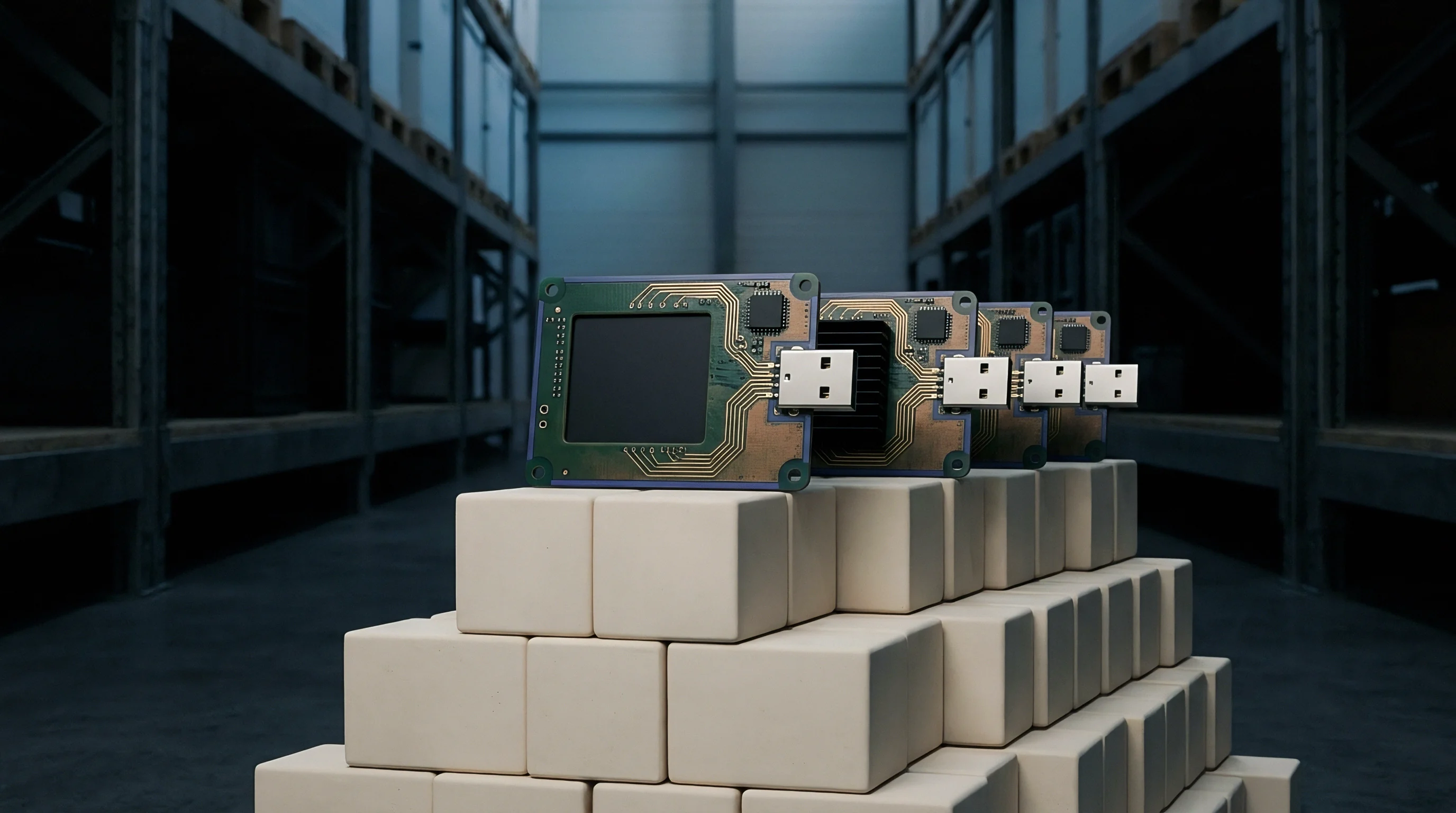
Hardware Sandboxing and Memory Protection Limits
Modern microcontrollers feature hardware memory protection units capable of isolating application code from untrusted physical layer libraries. Access permission masks restrict binary execution to designated peripheral registers and dedicated direct memory access buffers. Any write outside those boundaries triggers an immediate hardware memory fault, terminating the untrusted thread before host application state can be corrupted.
Latency overhead remains low enough for real-time operating systems to maintain spatial isolation during live network traffic.

Binary Wrapper Drivers and Register Interception Shims
Wrapper drivers act as stateful filters between host application logic and compiled vendor libraries, intercepting function calls to check pointer alignment, buffer boundaries, and re-entrancy flags. Catching null pointers and out-of-bounds indices prior to binary entry prevents raw assembly routines from executing invalid branch instructions.
| Technique | Latency Impact | Hardware Requirement | Recovery Scope |
|---|---|---|---|
| Memory Protection Unit Sandboxing | 1.5 to 4.5 percent CPU cycles | Hardware MPU with region locking | Traps invalid memory access and halts thread |
| Software Wrapper Parameter Sanitization | 0.8 to 2.1 percent CPU cycles | None (Host CPU execution) | Prevents malformed parameter entry to binary |
| Static RAM Overlay Function Redirection | 2.0 to 6.0 percent CPU cycles | Patch RAM or hardware breakpoints | Replaces vulnerable binary routines entirely |
| Hardware Hypervisor Spatial Isolation | 5.0 to 12.0 percent CPU cycles | ARM TrustZone or RISC-V PMP | Enforces complete hardware execution separation |

Hot-Patching Execution Flows via SRAM Overlay Remapping
Architectures equipped with hardware breakpoint units allow targeted interception of specific binary instruction addresses. When execution hits a vulnerable address inside the opaque binary, the hardware triggers an exception that diverts the core to secure static RAM containing fixed replacement code. This approach sidesteps vulnerable vendor routines without requiring source code access or full firmware rebuilds, keeping system behavior deterministic while neutralizing known microcode bugs.
Running unisolated radio microcode without memory protection unit boundaries leaves host memory vulnerable to arbitrary code execution whenever network frame buffers overflow.


Contract
Procurement agreements for customized wireless modules frequently assign operational liability without establishing clear binary source delivery obligations. To secure meaningful legal recourse, master service agreements must establish explicit delivery schedules, remediation timelines tied to service level agreements, and intellectual property covenants. Default commercial warranties leave buyers unprotected against software abandonment once silicon vendors retire legacy product lines.
When vulnerabilities appear in delivered binary blobs, the contract determines whether the supplier absorbs engineering remediation costs or shifts them to the buyer. Establishing defined Common Vulnerability Scoring System thresholds provides an objective basis for technical support obligations. The items below reflect frequent contractual pitfalls in semi-custom module procurement agreements.
- Indemnity Carve-Outs exclude third-party binary libraries from vendor liability clauses.
- Vague Remediation Timelines permit vendors sixty days to deliver critical security patches.
- Obfuscated Dependency Chains hide upstream silicon vendor code within module assembly binaries.
- End-of-Life Software Abandonment terminates microcode maintenance while hardware production continues.
A contract term specifying target SLA remediation for critical Common Vulnerability Scoring System ratings shifts post-handover engineering costs to the silicon vendor.

SLA Terms for Common Vulnerability Scoring System Ratings
Service level agreements gain practical teeth when patch delivery schedules tie directly to Common Vulnerability Scoring System scores. Critical flaws rating above 9.0 warrant emergency binary patches within fourteen calendar days, while high-severity issues typically require remediated releases within thirty calendar days. Procurement contracts without these quantitative benchmarks allow vendors to postpone microcode maintenance indefinitely without violating commercial terms.

Implied Warranty of Merchantability and Statutory Claims
Commercial statutes provide a baseline remedy when semi-custom modules carry irremediable security defects. Under the implied warranty of merchantability, hardware shipped with closed-source firmware must operate safely in ordinary commercial service. Demonstrating that an unpatched binary flaw leaves host systems exposed to remote compromise supports claims of non-conforming delivery, giving buyers grounds to reject shipments or demand financial offsets against non-recurring engineering fees.

Decompilation Rights under Software Copyright Exceptions
Statutory copyright frameworks provide narrow exceptions for reverse engineering pre-compiled software. Provisions under the European Union Software Directive and exemptions within the United States Digital Millennium Copyright Act allow binary decompilation specifically for interoperability and vulnerability research. Procurement contracts need to preserve these statutory rights explicitly, ensuring non-disclosure agreements do not restrict engineering teams from analyzing binary code during an urgent incident response.
Section 14.2 of the IEEE standard master procurement agreement requires suppliers to provide source code releases within five working days of an unpatched CVSS 9.0 rating.


Extraction
Placing software repositories in third-party escrow offers little practical security unless the deposit includes full toolchain replication testing. While source code escrow is designed to preserve access if a supplier enters insolvency, corporate dissolution, or default, verification requires proving that the deposited files compile into bit-identical binaries using the specified toolchain.
Binary blobs audited without bit-identical toolchain verification fail to recompile under updated host operating systems.
A software bill of materials documents the open-source libraries, static driver archives, and compiler versions incorporated into module firmware. In parallel, static binary analysis maps disassembly structures to expose internal call trees, memory management routines, and undocumented register access.

Does Source Code Escrow Guarantee Firmware Reconstructability?
Depositing raw source files into escrow does not ensure that an engineering team can generate working binaries if the vendor defaults. Compilers, build flags, linker configurations, and proprietary generation scripts must accompany the codebase. Without an identical build environment, teams face compiler errors, register allocation shifts, and timing discrepancies that stall execution on target hardware.
Regular automated build tests remain the only reliable way to validate escrow contents.
- Toolchain Bit-Identicality validates compiler flags, header versions, and linker parameters against target binaries.
- Linker Script Custody secures exact memory allocation maps for rebuild verification.
- Cryptographic Signing Keys confirm build output authenticity across production hardware batches.
- Hardware Emulation Harness proves automated build output functionality before escrow fund release.

Software Bill of Materials and Binary Disassembly Verification
Software bill of materials inventories identify embedded open-source components governed by licenses such as the GNU General Public License. If a supplier bundles copyleft code into closed binary blobs, buyers gain immediate leverage to demand complete source disclosures. Where source access remains legally restricted, static disassembly tools trace control flow and extract register interfaces to support host wrapper development.
Whether automated reverse engineering toolchains can reliably reconstruct proprietary memory-mapped register calls without running afoul of copyright statutes remains an unresolved engineering challenge.


Arbitration
Commercial disputes over unpatched microcode require weighing the cost of switching suppliers against the expense of engineering containment. Replacing a module demands capital investment, printed circuit board redesign, and regulatory re-qualification. In negotiations, these figures establish the baseline for claiming non-recurring engineering credits or piece-part price reductions from a non-compliant supplier.
Switching hardware vendors during active production consumes eleven months of requalification testing.
Dual-sourcing strategies lessen exposure to single-vendor binary blobs by mandating standardized pinouts and hardware abstraction interfaces across primary and secondary suppliers. The table below compares the financial and schedule impact of module replacement against host-level software containment.
| Path | Engineering Hours | Qualification Delay | Landed Cost Impact per 100k Units |
|---|---|---|---|
| Hardware Module Replacement | 1,800 to 3,200 hours | 8 to 14 months | 140,000 to 280,000 USD |
| Host Software Wrapper Containment | 240 to 450 hours | 1 to 2 months | 15,000 to 35,000 USD |
| Static RAM Overlay Binary Patching | 400 to 850 hours | 2 to 4 months | 30,000 to 65,000 USD |
| Full Source Code Escrow Release Execution | 600 to 1,200 hours | 3 to 6 months | 50,000 to 110,000 USD |

Commercial Offsets and Non-Recurring Engineering Recovery
Financial claims against module vendors rest on direct engineering costs incurred while isolating firmware vulnerabilities. When binary defects threaten product safety, buyers frequently withhold non-recurring engineering milestone payments or deduct charges from landed unit costs. Settling these issues commercially avoids arbitration while securing supplier funding for host-side wrapper development.

Second-Sourcing Mechanics for Module Redesign
Carrying out a second-sourcing transition depends on a design transfer package that preserves physical board layout. Standardized footprints allow swapping module vendors without altering mainboard Gerber files. The checklist below covers the essential elements of a viable design package.
- Symbolic Disassembly Maps document function offsets inside uncompiled radio stacks.
- Register Memory Maps define hardware peripheral registers accessed by closed binaries.
- Automated Regression Suites verify host driver behavior following binary wrapper updates.
- Alternative Pin-Compatible Layouts preserve printed circuit board Gerber files against module replacement needs.
Procurement teams secure lower long-term remediation costs by negotiating binary decompilation rights into the initial master service agreement.