Software Defect Attribution in Embedded Microcontroller Systems
Firmware defect attribution in embedded MCUs requires register-level crash logging and explicit hardware-software liability boundaries in supply contracts.


Isolation
Isolating execution failures in microcontroller systems requires separating hardware state transitions, vendor libraries, and application code. When an ARM Cortex-M4 or RISC-V core trips a HardFault handler or gets trapped in a reset loop, the underlying cause is rarely the instruction currently executing. Power supply brownouts, unaligned flash memory reads, clock jitter during phase-locked loop configuration, and ESD register corruption produce symptoms indistinguishable from software null-pointer dereferences or stack overflows.

Fault Vectors across Hardware Software Boundaries
Sorting electrical instability from code execution faults depends on reading the core registers right after a processor locks up. Microcontroller architectures log crash states in dedicated registers like the Configurable Fault Status Register, HardFault Status Register, and BusFault Address Register. A voltage transient on VDD rails that dips below the reset threshold trips brown-out reset flags in the reset controller, while prefetching instructions from an unmapped address populates memory management fault bits.
| Failure Category | Physical or Logical Cause | Primary Hardware Register Indicator | Root Cause Responsibility |
|---|---|---|---|
| Bus Fault | AHB/APB peripheral read timeout or unaligned memory access | BFAR / CFSR (BFARVALID) | Custom Application or Driver Layer |
| Hard Fault | Escalated usage fault, execution of illegal instruction opcode | HFSR (FORCED) / CFSR (UNDEFINSTR) | Application Firmware Development |
| Brown-Out Reset | VDD supply droop below minimum operational voltage threshold | RSTCTRL / RMU (BOR / POR flag) | Power Supply and PCB Design |
| Watchdog Timeout | Infinite loop, deadlock, or starvation of high-priority task | RSTCTRL / WDOG (WDOGRESET flag) | RTOS Task Scheduler or Code Logic |
| Clock Failure | External crystal oscillator startup failure or PLL unlock | RCC / CMU (CSSF clock security flag) | Layout Routing or Passive Selection |
Determining whether memory corruption comes from signal degradation or wrong memory protection unit settings is a critical step. Poor signal integrity on external SPI flash interfaces can flip single bits during instruction fetches, leading the core to execute invalid opcodes. Microcontroller vendor register maps detail the exact status bits set when execution halts, offering clear metrics to separate board layout issues from software bugs.
Silicon Errata versus Driver Defect Signature
Silicon errata sheets detail dozens of hardware flaws that only trigger during specific code sequences. For example, an IC might freeze its Direct Memory Access controller if a peripheral transaction finishes right as the system transitions into a low-power mode. Developers building peripheral abstraction layers often mistake these hardware bugs for driver flaws, wasting hours trying to patch silicon logic bugs in software.
Isolating the cause requires a deterministic test harness that decouples peripheral control registers from upper-level application logic. Reproducing the crash on a vendor evaluation board with bare-metal assembly loops confirms the bug lies in silicon errata or the low-level HAL specification. If the error disappears on reference hardware, attention shifts to board routing, power decoupling networks, or component timing.
Deciding whether peripheral state corruption comes from an undocumented silicon timing glitch or an interrupt service routine race condition is nearly impossible when vendor hardware trace buffers are too shallow.

Latch
Capturing the execution state at the exact microsecond of a lockup is essential to pinpoint defects. Production microcontrollers operate without attached interactive debuggers, so diagnostic data must be written to non-volatile memory before the reset controller wipes core registers.
State Preservation across Unexpected System Resets
Saving register values across crash events requires uninitialized static RAM or internal flash logs. Standard C runtime startup code zeroes out the BSS segment and copies initial data on boot. By configuring the linker script to skip a specific memory block during initialization, the fault handler can write the program counter, link register, stack pointer, and fault status registers before calling a system reset.
Single-bit error correction flags in internal flash memory logging registers provide proof of silicon aging or power rail transient noise when system crashes occur unpredictably.
Crash dumps must capture the full interrupt status register map. Masked interrupts or bad priority groupings frequently cause nested interrupt starvation, leaving lower-priority routines unable to drain peripheral FIFOs before buffers overflow. Hardware trace registers saved during the fault handler reveal whether the processor was executing a system tick, a peripheral interrupt, or application code when it froze.

Memory Protection Unit Trap Configurations
Setting up the Memory Protection Unit establishes hard memory boundaries around execution regions, task stacks, and peripheral registers. In multi-threaded RTOS setups, dynamic allocation causes heap fragmentation and stack pointer overruns. Setting zero-access guard regions directly above each task stack trips a MemManage exception the moment a stack pointer crosses its limit.
- Define thread stack memory boundaries within the linker control file.
- Program memory protection unit region descriptor registers during task creation.
- Enable background region rules for privileged software execution layers.
- Route MemManage trap interrupts to a dedicated fault analysis handler.
- Write thread identifier and bad address memory references into non-volatile storage.
Catching stack overflows becomes reliable when hardware traps halt the CPU before adjacent memory gets corrupted. Without active MPU stack guards, memory corruption surfaces hundreds of milliseconds later as wild math outputs or invalid jump targets, forcing tedious manual code reviews.
Hardware memory protection zones convert silent memory corruption into immediate, register-logged execution halts.


Scope
Integration scopes divide responsibility among silicon vendor libraries, turnkey module firmware, third-party drivers, and proprietary application code. Unclear boundaries around code ownership and test coverage regularly cause billing disputes when bugs show up in the field.

Where Does Software Fault Responsibility End on Modules?
Turnkey microcontroller modules ship with pre-flashed bootloaders, board support packages, and wireless protocol stacks from the integrator. Contracts need to state clearly whether a crash inside vendor protocol binaries counts as a hardware warranty failure or an application integration defect. Closed-source static driver libraries prevent engineering teams from running static analysis or patching underlying code bugs.
| Integration Level | Firmware Deliverables Supplied | Defect Attribution Scope | Acceptance Criterion |
|---|---|---|---|
| Turnkey Module | Compiled binary, closed HAL, bootloader | Integrator owns HAL and stack defects | Zero crash rate under vendor stress test suite |
| Semi-Custom Platform | Open-source HAL, board support package, application skeleton | Shared liability based on execution context | Passing automated API regression tests |
| Reference Design | Unmodified vendor SDK, schematic source files | Client owns all software defects | Successful verification on reference hardware |
| Custom Engineering | Full source repository, CI/CD scripts, unit test suite | Contractor guarantees SOW compliance | 100 percent pass rate on agreed test vectors |
Buying turnkey software packages without source code places the entire burden of proof on the customer. If a peripheral driver fails to clear an I2C bus lockup, the buyer has to build an isolated bare-metal test case demonstrating that the vendor driver fails standard bus recovery procedures as defined by NXP I2C specifications.
Under standard IEEE 12207 engineering contracts, vendor liability for pre-compiled firmware stacks terminates upon customer modification of any lower-level hardware abstraction layer source file.

Statement of Work Execution Boundaries
NRE quotes should detail software acceptance criteria right alongside hardware manufacturing yields. Standard statements of work mandate specific static analysis gates, such as zero MISRA C high-severity violations, before milestone payments are released. Leaving automated testing requirements out of the initial scope lets suppliers hand over code that passes basic checks while hiding severe memory leaks or race conditions.
Software deliveries need a complete bill-of-materials manifest. A full release package includes linker scripts, exact compiler toolchain versions, build flags, static analysis configs, and automated unit test scripts. Missing compiler version details often causes disputes when code builds fine in the vendor environment but fails in client CI/CD pipelines because of optimization flag differences.
Standard supply agreements state that if a defect reproduces in the vendor reference build environment within ninety days of final release, the vendor must supply a patch at no added engineering cost.
Telemetry
Pinpointing software defects in dense microcontroller code requires real-time hardware tracing and non-intrusive logging. Standard debug prints alter timing enough to mask thread race conditions and peripheral delays, making high-level logging useless for catching intermittent bugs.
Instrumentation and Trace Hardware
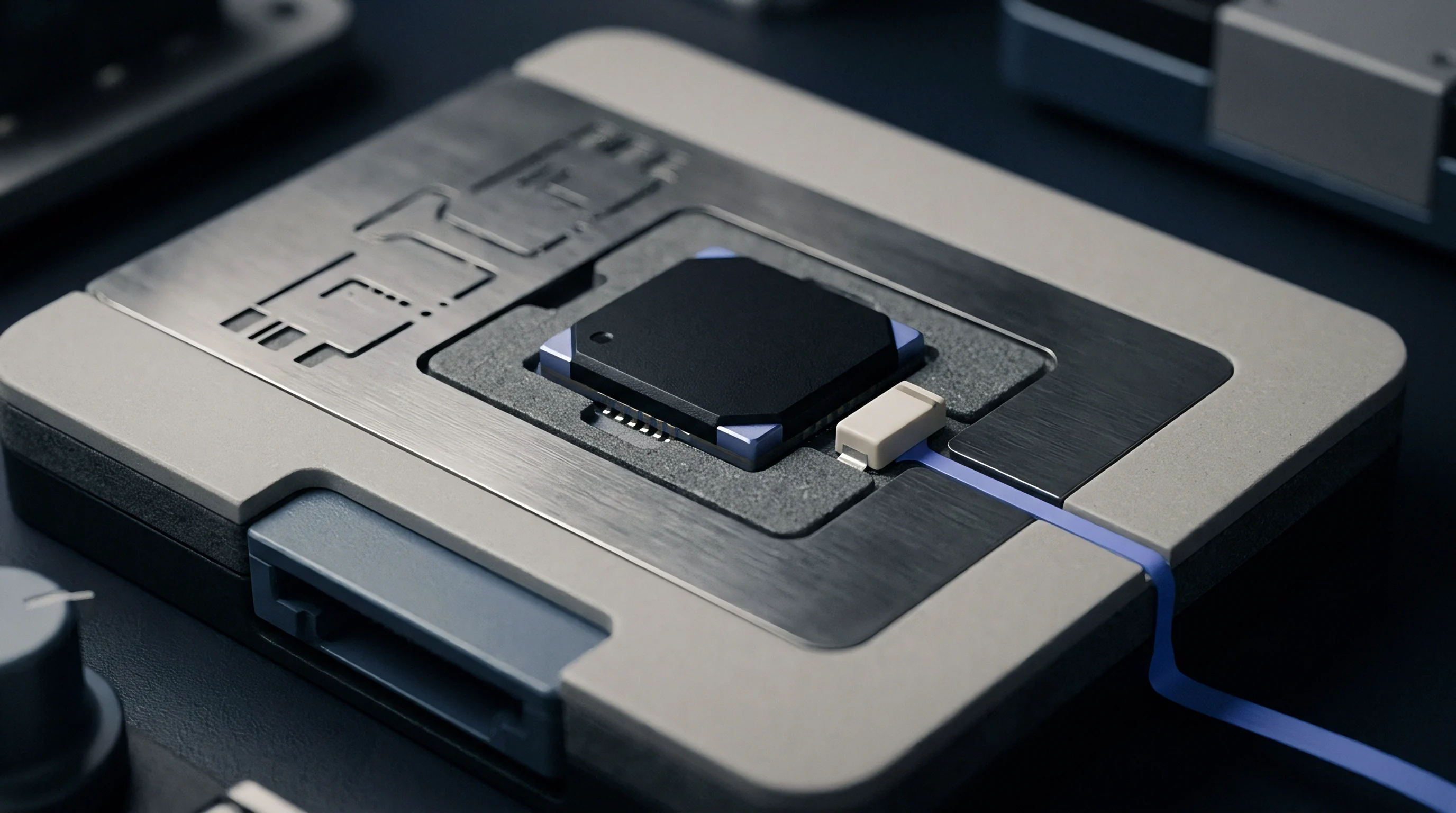
ARM CoreSight architectures offer serial wire output and Embedded Trace Macrocell interfaces that stream instruction execution without adding CPU wait states. Connecting high-speed logic analyzers to dedicated trace ports produces time-stamped execution graphs that show the exact sequence leading to a crash.
- Embedded Trace Macrocell captures instruction execution streams continuously without introducing CPU wait states or execution jitter.
- Serial Wire Output streams software instrumentation trace packets across a single pin for Real-Time Operating System event tracking.
- Segger Real-Time Transfer writes diagnostic log buffers directly to RAM over the debug probe interface within sub-microsecond intervals.
- Flash Memory Event Rings store compressed instruction exception traces inside non-volatile memory blocks for field post-mortem analysis.
Adding trace mechanisms to production builds ensures intermittent field failures leave actionable data. Teams should reserve dedicated internal flash blocks for crash dumps, maintaining cyclic buffers that log state changes, task switches, and interrupt triggers.

Automated Bring-Up and Qualification Jigs
Hardware-in-the-loop test benches validate firmware stability across environmental extremes. Rigs vary supply voltages, apply thermal stress, and inject bus noise while running continuous automated test scripts, helping separate software memory leaks from physical hardware degradation.
A good test rig measures current draw alongside execution trace output. Sudden current spikes during a specific subroutine point to internal bus contention or GPIO shorts caused by misconfigured pin direction registers. Automated test benches run millions of cycles, catching rare timing anomalies that manual testing misses.
Trace logs captured without calibrated timestamps on external hardware analyzers rarely count as valid evidence of driver software failure under standard warranty terms.


Covenant
Commercial terms determine financial liability when firmware bugs trigger factory line stops, product recalls, or field service dispatches. Structuring financial remedies requires explicit bug severity definitions in supply and development contracts.

Software Defect Classification and Commercial Remedies
Contracts must break down software defects into clear operational tiers tied to resolution SLAs. A Tier 1 defect bricking a device or creating a safety hazard demands immediate resolution at the vendor’s expense. Tier 2 defects affect non-critical features that have workarounds, while Tier 3 covers minor UI or logging issues.
- Critical Execution Failures demand patch releases within five business days and vendor coverage of field flash update costs.
- Peripheral Interoperability Bugs require driver updates within fifteen business days and root-cause analysis documentation.
- Static Analysis Violations require code cleanup during the next scheduled platform maintenance cycle.
- Specification Deviation Issues require renegotiation of acceptance metrics or targeted software updates.
Reflashing deployed hardware in the field frequently costs more than the original software NRE. Contracts without clear terms for firmware-induced recall liabilities leave buyers taking on full remediation costs when buggy supplier code fails in production.
Clear liability terms force suppliers to share financial risk, incentivizing thorough regression testing, static analysis compliance, and hardware-in-the-loop validation before code is released.
Failing to define defect categories and SLA windows in supply agreements leaves buyers bearing all costs for field recovery, assembly line stops, and warranty claims when firmware hangs post-shipment.