Arbitrating Silent Silicon Errata Disclaimers against Third Party Embedded Protocol Library Failures
Arbitrating silent silicon errata requires isolated hardware signal traces, stack transaction logs, and contract clauses linking firmware defects to chip steppings.


Trap
Microcontroller vendors routinely ship silicon revisions with undocumented register misbehaviors omitted from early data sheets. Integrators loading commercial middleware onto new steppings encounter edge-case crashes originating from internal bus contention. When an unlisted flaw causes failures inside a third-party library, both suppliers point to their contracts.
Semiconductor manufacturers rely on standard liability waivers that sell silicon as is, without guaranteeing flaw-free operation under every timing combination, while software vendors cite license carve-outs disclaiming responsibility for hardware-induced anomalies.
The system builder bears the immediate burden of line stoppages, field returns, and redesign overhead. Resolving the deadlock requires identifying where hardware register behavior deviates from published software abstraction layers. Third-party drivers execute peripheral register read and write sequences based on documented execution timing; if an unlisted state machine lockup occurs during high-speed direct memory access bursts, the software stack stalls in an unrecoverable loop.
A peripheral bus clock drift exceeding 1.2 percent at 85 degrees Celsius forces asynchronous FIFO pointers to misalign during burst DMA writes.
Determining liability between silicon manufacturers and software suppliers depends on isolating the physical point of failure. Software libraries interact with microcontrollers through memory-mapped register banks. When an undocumented erratum alters register flags unexpectedly, driver state machines make incorrect control flow decisions, causing what looks like a routine software crash.
Silicon vendors disclaim liability for unlisted errata under standard purchase terms, while software providers disclaim responsibility for underlying register misbehavior.
- Asynchronous Clock Domain Misalignment occurs when high-frequency bus bridges drop incoming bytes during burst transfers, corrupting application payloads before software interrupt flags register.
- DMA Controller Pointer Corruption surfaces during concurrent peripheral reads, forcing internal memory pointers to overwrite adjacent buffer descriptors without raising hardware exception alerts.
- SPI Peripheral Bit Slip occurs when edge detection logic misses clock transitions under specific voltage ripple conditions, altering frame alignment.
- Hardware Cryptographic Engine Deadlocks manifest when concurrent memory bus access disrupts internal pipelining, locking peripheral registers until a master hardware reset executes.
Technical documentation for early-access silicon often omits edge-case timing restrictions that surface only during concurrent peripheral operations. Integrators accepting standard purchase terms from both silicon foundries and software vendors assume complete financial responsibility for resolving hidden hardware defects. Component sales documentation routinely disclaims peripheral reliability outside nominal room-temperature reference configurations, leaving system builders to absorb functional failures.


Triage
Isolating Register Misbehavior from Software Faults
Diagnostic sweeps begin by logging peripheral bus transactions at the physical layer, where register reads return garbage or bus clocks freeze completely. Differentiating a silicon hardware flaw from a software library bug demands isolating driver routines from internal hardware state transitions. Engineers build isolated test drivers that replicate the exact register read and write cadence of the third-party middleware stack without executing external library code.
If the microcontroller peripheral locks up under this isolated driver, the root cause sits inside the physical silicon gates.
When the isolated test harness operates without error under identical timing parameters, scrutiny shifts back to the software stack. Third-party protocol stacks frequently make implicit assumptions about peripheral timing recovery intervals. If a software stack fails to clear an interrupt flag before initiating the next direct memory access transfer, the resulting hardware hang stems from software misconfiguration rather than a hardware defect.

Signal Integrity Verification across Bus Interfaces
Physical layer noise corrupts register state tables during high-speed peripheral transfers, particularly when signal lines collapse under external interference. Measuring voltage transients and phase jitter on external bus pins confirms that physical signal integrity meets published specifications before peripheral lockups are attributed to silicon errata. High-speed serial interfaces operating at high transfer rates require precise clock distribution to prevent internal sample logic from latching invalid bus states when logic gates lose state.
| Diagnostic Indicator | Silicon Erratum Signature | Third-Party Library Bug Signature | Isolation Method |
|---|---|---|---|
| Register State | Control flags overwrite unexpectedly without CPU write cycles | Flags remain unchanged due to missed software updates | Hardware breakpoint on memory-mapped addresses |
| Bus Activity | Clock lines freeze mid-frame during continuous DMA transfers | Frames transmit completely with invalid data payloads | External logic analyzer trace capture |
| Thermal Sensitivity | Failure frequency escalates with ambient chip temperature shifts | Failure rates remain constant across operating temperatures | Environmental chamber thermal cycling |
| Stepping Dependency | Defect disappears when switching silicon revision die masks | Defect persists unchanged across all chip revisions | Cross-stepping hardware execution comparisons |
Isolating root causes requires rigorous register snapshots taken immediately before and after functional system failures occur.
Compliance with ISO 26262 ASIL-B fault detection metrics requires physical hardware lockup handlers to reset the peripheral channel within 50 microseconds of register desynchronization.
Isolating failures through systematic signal capture prevents unnecessary engineering spending on software modifications. Misinterpreting a silicon defect as a software coding error delays production schedules by months while incurring heavy rewriting expenses that yield zero operational stability.

Bench
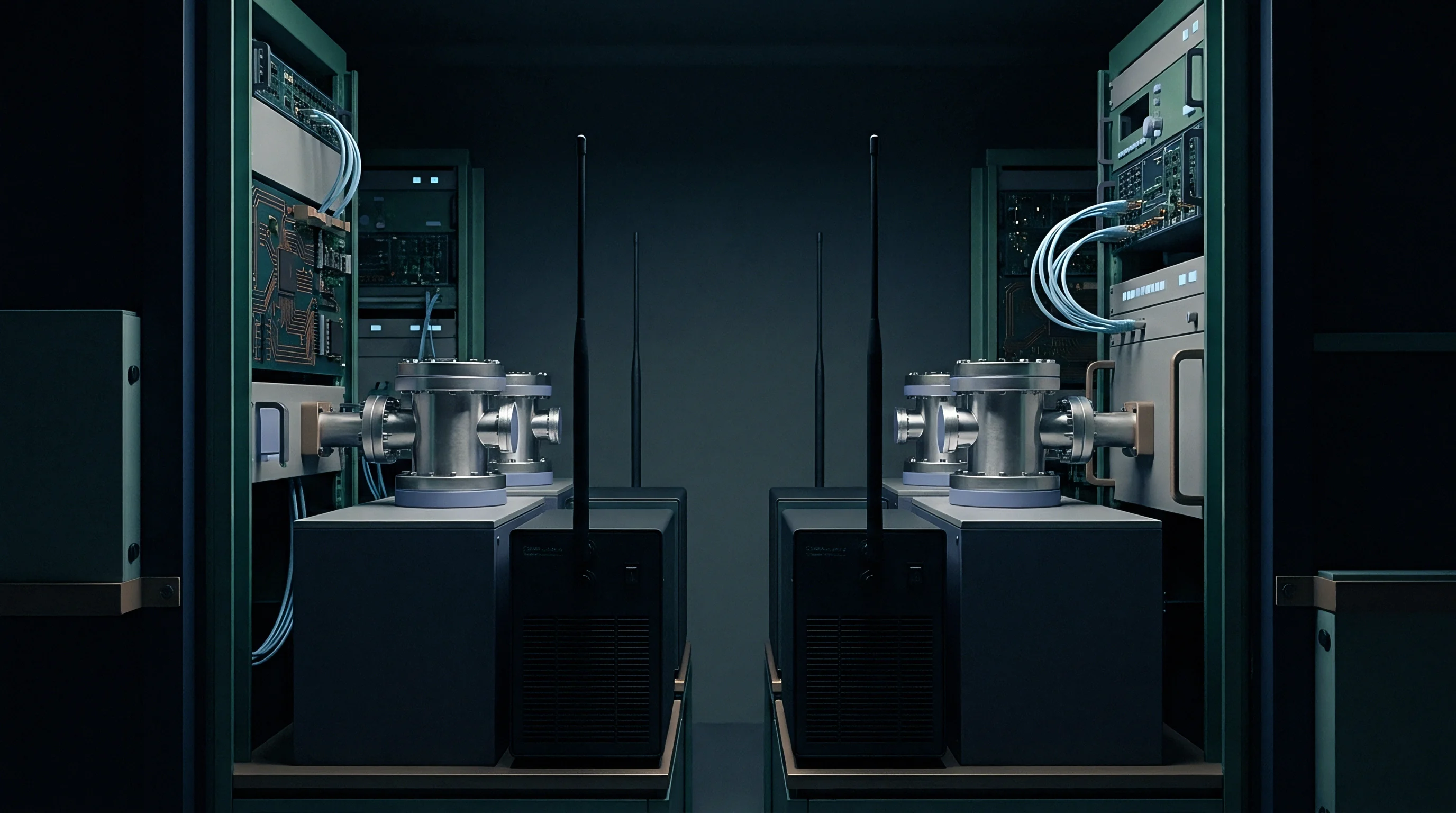
Physical validation setups resolve technical disputes by measuring actual pin voltage timing against documented bus states under controlled thermal stress. The bring-up desk uses automated test benches to isolate silent silicon errata from software logic errors. High-speed oscilloscopes and multi-channel logic analyzers capture transient bus activity, linking physical signals to register access logs generated by embedded firmware while hardware-in-the-loop stress suites force peripheral controllers into heavy concurrent load states.
Constructing an isolated test harness requires removing third-party library abstractions entirely. The validation engineer writes bare-metal driver code that reproduces the exact register manipulation sequence executed by the protocol library. If bare-metal code triggers the same lockup under identical bus loading, the defect originates within the silicon die; if bare-metal execution remains stable, the software stack contains logic flaws or race conditions.

Can Register State Snapshots Isolate Hardware Flaws?
Internal memory controllers continuously update execution flags during active peripheral routines. Capturing register snapshots at the precise nanosecond of failure exposes internal state corruption. Logic analyzer triggers hook directly to external hardware interrupt lines, freezing memory bus traces when peripheral controllers halt.
System integrators use these traces as objective evidence when submitting non-conformance reports to silicon vendors.
Collecting conclusive physical evidence requires executed validation procedures that isolate register operations from external software interference.
- Connect multi-channel logic analyzers directly to external peripheral pins while running continuous data transaction streams.
- Configure internal microcontroller trace macros to capture execution state memory buffers instantly when hardware interrupt lines drop.
- Inject power supply ripple across operating temperature bounds to expose sensitive voltage-threshold gate timing anomalies.
- Cross-reference captured register dumps against chip revision identification codes and peripheral errata releases.
Thermal stress testing exposes layout design flaws and undocumented gate propagation delays inside microcontrollers. Operating peripheral blocks at elevated junction temperatures accelerates physical gate timing degradation, forcing latent silicon errata to manifest predictably during laboratory testing. Integrators vary core supply voltages within allowed operating limits while monitoring peripheral registers for unexpected bit flips.
When silicon foundries receive physical trace logs demonstrating internal register corruption under nominal operating parameters, the burden shifts back to their applications engineering teams. Silicon vendors examine internal bus logic to confirm whether the reported behavior stems from an unlisted hardware erratum or incorrect register sequencing by the host application.
Technical uncertainty remains over whether embedded protocol library vendors can reasonably be expected to implement software workarounds for hardware defects that the silicon manufacturer has not officially acknowledged in release errata documents.
Rider
Contractual agreements explicitly allocate technical responsibilities to prevent software suppliers and semiconductor vendors from disclaiming financial liabilities. Engineering scope documentation defines clear acceptance boundaries for third-party firmware components and underlying silicon hardware. Master service agreements that lack explicit silent errata clauses force system builders to absorb all costs associated with hardware workarounds.
System integrators draft addendums that establish mandatory technical support response times when unlisted hardware defects emerge during production runs.

Structuring Allocation Clauses for Silent Defects
Procurement specifications define measurable performance boundaries for integrated hardware components to ensure contract terms allocate responsibility clearly. When purchasing commercial protocol software stacks, buyers include technical clauses that oblige software vendors to deliver firmware workarounds for verified silicon errata within defined timeframes. Conversely, silicon supply contracts incorporate non-recurring engineering cost recovery mechanisms when silicon stepping changes break existing, validated software driver stacks.
| Tier Level | Silicon Errata Disclaimer | Library License Provision | Arbitration Mechanism |
|---|---|---|---|
| Silicon Vendor | Disclaims unlisted errata liabilities under standard sales terms | Not applicable | Joint laboratory signal validation against published data sheets |
| Software Vendor | Not applicable | Disclaims hardware failures under standard as-is licensing | Bare-metal harness execution proof proving stack compliance |
| System Integrator | Absorbs field return costs if contracts lack recourse riders | Absorbs integration engineering costs for software patches | Independent technical expert review of test dossiers |
| Module Customer | Transfers all warranty claims directly to system integrator | Rejects hardware failure excuses for product outages | Contractual service level agreement penalty enforcement |
Clear liability terms protect system integrators from bearing duplicate costs for hardware and software defects. System builders enforce technical documentation standards, demanding that semiconductor manufacturers supply detailed register state diagrams for all peripheral sub-blocks.
When hardware errata sheets remain unpopulated for pre-release silicon steppings, protocol stack execution logs serve as the primary legal evidence of internal bus contention.
Structuring commercial contracts around clear technical acceptance criteria ensures that supplier risk shifts to the party responsible for component defect resolution.
- Stepping Specific Errata Clauses restrict vendor liability waivers to silicon stepping revisions explicitly documented prior to production purchase orders.
- Third Party Middleware Warranties establish software vendor obligations to supply patch releases when underlying drivers adhere to published chip specifications.
- Joint Technical Arbitration Protocols specify independent laboratory validation routines when parties dispute hardware versus software failure origins.
- Non-Recurring Engineering Offsets permit system integrators to deduct isolation costs from future silicon component purchases upon defect confirmation.
Procurement teams protect project budgets by inserting explicit software patch delivery schedules into master vendor contracts. Incorporating section 4.2 of the IEEE Standard 1548 Hardware Software Interface Agreement transfers investigation expenditures directly to the component vendor whenever unlisted register lockups occur during standard stack execution.


Recourse
Financial recovery operations require system integrators to bundle technical test dossiers with clear landed-cost calculations. System builders calculate the true financial impact of silent silicon errata by tallying wasted engineering hours, production downtime, scrap hardware yields, and field update expenditures. Technical dossiers containing logic analyzer captures, bare-metal isolation code, and thermal chamber logs establish proof of hardware non-conformance during commercial negotiations.

Financial Chargebacks and Engineering Hour Offsets
Engineering resource allocation forms the primary baseline for commercial reimbursement claims. System integrators issue formal non-conformance claims against silicon foundries upon verifying that unlisted hardware errata caused system-level failures. Rather than demanding direct monetary refunds, buyers negotiate commercial credits applied against future volume component shipments or secure dedicated field application engineering support for custom firmware workaround development.
Commercial software vendors reject liability for hardware state corruption unless firmware triggers documented out-of-spec register sequences.
System builders offset integration losses by negotiating volume discounts or engineering credits on future chip steppings rather than pursuing prolonged litigation against silicon foundries.