White Label Products Sold by Your Own Competitor
White-label products sold by competitors share baseline hardware, exposing both brands to identical silicon errata, component supply shocks, and vendor lock-in.


Pedigree
When competing products share an original design manufacturer, the differences between them often come down to firmware build flags, plastic enclosures, and margin structures. ODMs routinely build a single reference printed circuit board assembly, create a unified hardware platform, and white-label the final product to multiple commercial brands. Many brand owners sell identical hardware without knowing their competitors source from the exact same line.
Confirming that shared lineage means inspecting internal PCB layouts, trace routing, FCC telemetry filings, and register maps rather than trusting external marketing datasheets.

ODM Supply Base Commonality
Low- to mid-volume hardware integrators rely on turn-key manufacturing programs primarily to avoid non-recurring engineering fees. Under these contracts, the factory keeps full ownership of the schematics, fabrication files, and tooling. It builds a core product platform, clears regulatory approvals, and licenses the design out under custom branding terms.
Two competing brands end up buying what looks like a bespoke solution, even though both units come off the same surface-mount line with identical Gerber files and bills of materials.
Platform lineage is easy to hide behind internal factory part numbers. A resistor network or power management IC might carry an in-house SKU on one production run and a standard manufacturer part number on another. Yet beneath the silkscreen, the trace routing, thermal vias, and decoupling capacitor placements match down to the micron.
Uncovering this shared hardware is necessary to calculate real manufacturing costs, anticipate supply shortages, and see whether a competitor holds a genuine engineering edge or simply a better distribution network.
A shared RF front-end architecture reduces non-recurring engineering fees by 68 percent when standard reference layouts remain un-modified.

Shared Platform Identifiers
Spotting shared hardware across competing products comes down to physical teardowns and regulatory filings. Unless protected by strict confidentiality requests, RF equipment certified under FCC or CE rules requires public submission of test photos, operational descriptions, and block diagrams. Comparing these filings for competing devices often exposes matching system-on-chip models, crystal oscillator frequencies, antenna trace geometries, and matching network designs.
| Integration Scope Level | Mechanical Customization | PCB Layout Changes | Vendor Errata Exposure | Unit Cost Premium |
|---|---|---|---|---|
| White-Label Standard | Enclosure color and pad-printed silkscreen only | Zero layout alterations permitted | Direct vulnerability to shared platform bugs | Baseline unit pricing |
| Semi-Custom Platform | Custom plastic tooling with standard mounting posts | Minor connector relocation on edge traces | High exposure to shared base microcode errata | 12 percent to 18 percent above baseline |
| Custom Enclosure Sourcing | Fully customized industrial design and thermal housing | Modified stack-up with shared core circuit block | Partial isolation through custom firmware branches | 25 percent to 40 percent above baseline |
| Cost figures represent published industry ranges across mid-volume industrial IoT and radio module manufacturing programs. | ||||
Firmware inspection offers even stronger proof of a shared origin. White-label manufacturers rarely write custom base code for individual clients. Instead, they compile a master binary and toggle client features using board support package flags, peripheral driver settings, or EEPROM configuration values.
Interrogating system registers over a serial connection often uncovers identical compilation paths, internal software versions, and driver initialization sequences across rival products.
When asked about identical circuit boards appearing in competing products, white-label factories generally insist that reference hardware represents standard industry design and provides no distinct advantage to either brand.

Silicon
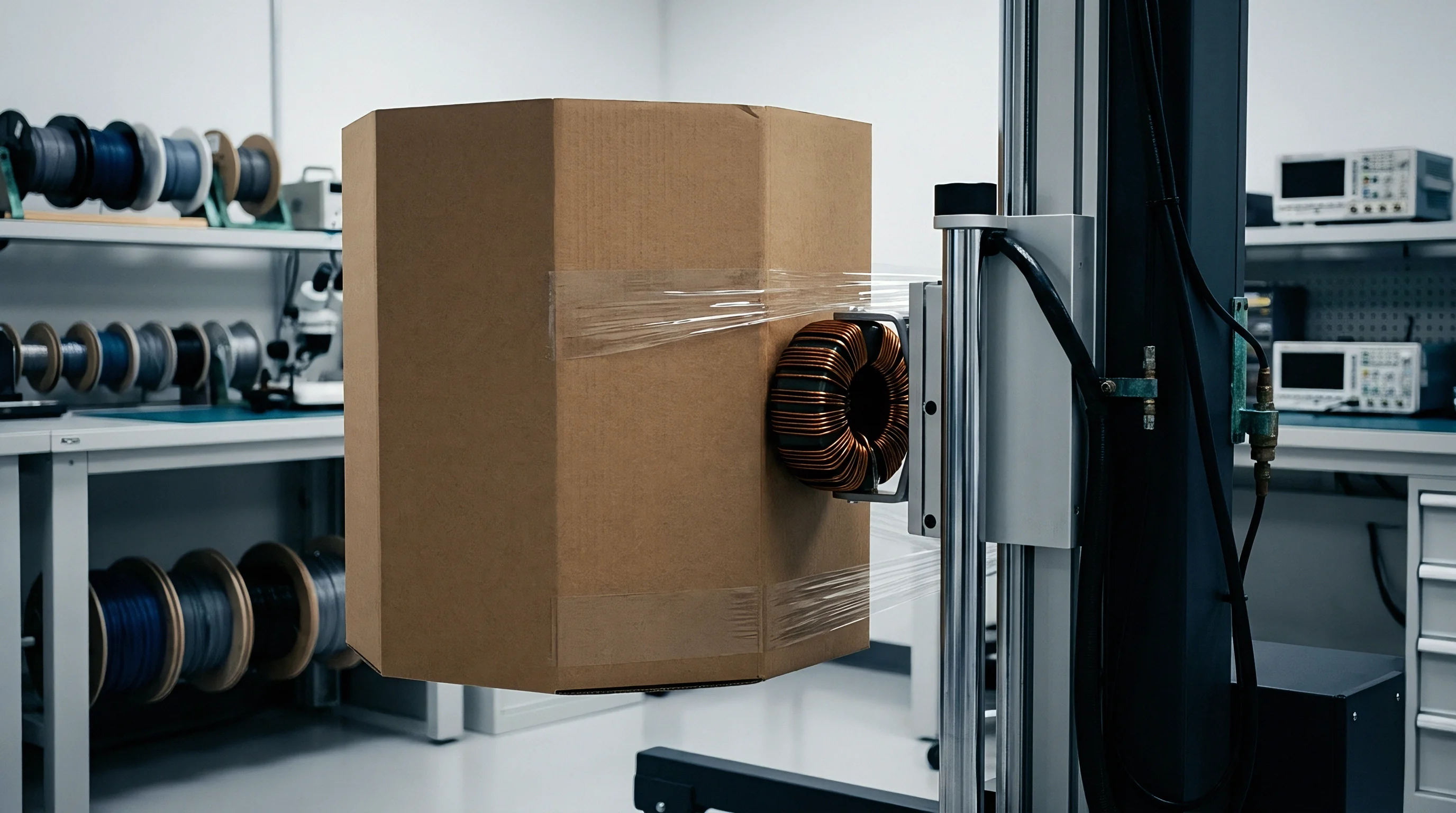
Regardless of enclosure design, the microcontroller and RF chipset set hard limits on performance, timing tolerances, and power consumption. When competing brands rely on the same white-label platform, they run on identical silicon stepping revisions ~ leaving both vulnerable to the same hardware errata. Evaluating how these underlying chips perform under different thermal, electrical, and firmware conditions reveals operational weaknesses shared across both product lines.
Microcontroller Errata in Common Firmware
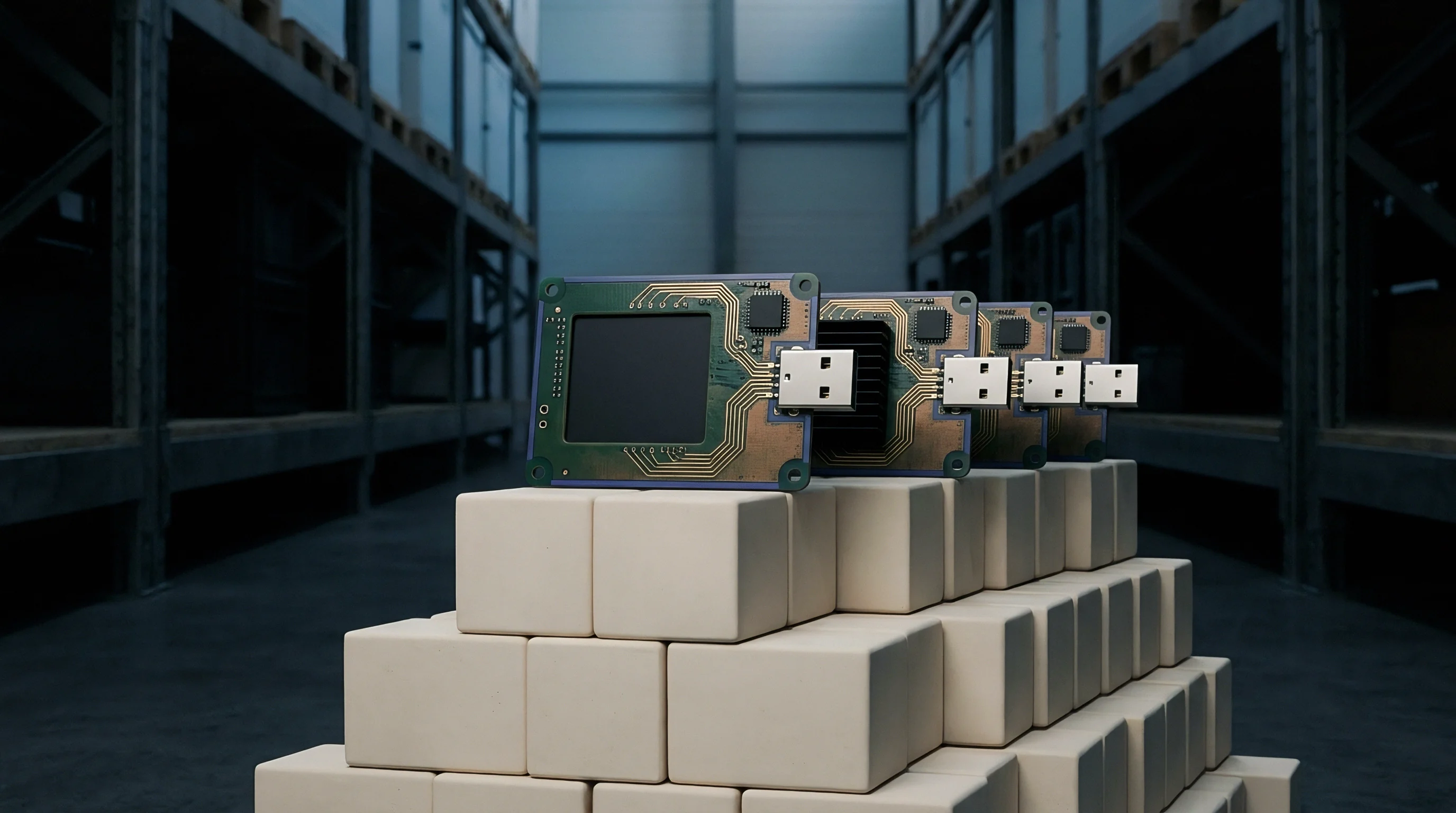
Chipmakers publish errata sheets detailing hardware flaws in specific silicon revisions. To work around these bugs, an ODM builds patches directly into the platform’s hardware abstraction layer. When competitors use that same foundation, both end up relying on identical software workarounds for underlying silicon defects.
If a patch fails to cleanly resolve a DMA controller race condition or ADC non-linearity, both products will fail intermittently under the same edge-case workloads.
Contract manufacturers frequently push blanket firmware updates across all customer builds to maintain a single core codebase. An unvetted microcode patch can alter timing margins on peripheral buses, degrade analog sensor precision, or disrupt power management transitions. Because both products share those base drivers, a flawed update creates immediate field failures for both brands at the same time.
An unverified firmware update applied to shared RF modules invalidates joint regulatory filings under IPC-1752A component declarations.
Whose Tooling Amortization Drops Unit Costs First?
Unit costs change rapidly as batch sizes scale on a shared platform. ODMs aggregate orders across all clients to hit higher discount tiers with chip foundries and component suppliers. The buyer ordering larger volumes amortizes the factory’s tooling and SMT setup costs much faster.
Factories typically pass those savings on to their high-volume accounts while keeping unit prices elevated for smaller buyers using the exact same hardware.
When a competitor doubles its order volume, the factory gets better pricing on passives, power management ICs, and wireless silicon. That competitor can use those savings to cut retail prices or increase ad spend, using the shared platform to squeeze competing margins. Tracking rival order volumes gives buyers the leverage to negotiate price reductions based on the factory’s total purchasing volume rather than single purchase orders.
- Shared Memory Errata creates unhandled buffer overflows when processing high-throughput serial streams through identical driver stacks.
- Thermal Via Density Deficits cause localized overheating and clock throttling under sustained full-load operation.
- Power Rail Cross-Talk introduces high-frequency noise into sensitive analog front-end circuits during wireless bursts.
- Inadequate Reset Timing triggers intermittent boot loops when supply voltages drop near the cutoff threshold.
- Uncalibrated Internal Oscillators cause frequency drift and dropped packets across wide operating temperature ranges.
Ignoring shared silicon weaknesses eventually risks expensive product recalls once unpatched errata show up across production lots in the field.


Transfer
Transferring production from an ODM to a secondary facility requires complete design files, source repositories, and manufacturing documentation. White-label contracts rarely hand over full intellectual property, leaving brands tied to the original factory for build runs, firmware updates, and component engineering changes. Securing true manufacturing independence requires contract terms that explicitly define source file deliverables, test fixture designs, and escrow triggers before commercial launch.
Design Transfer Package Integrity
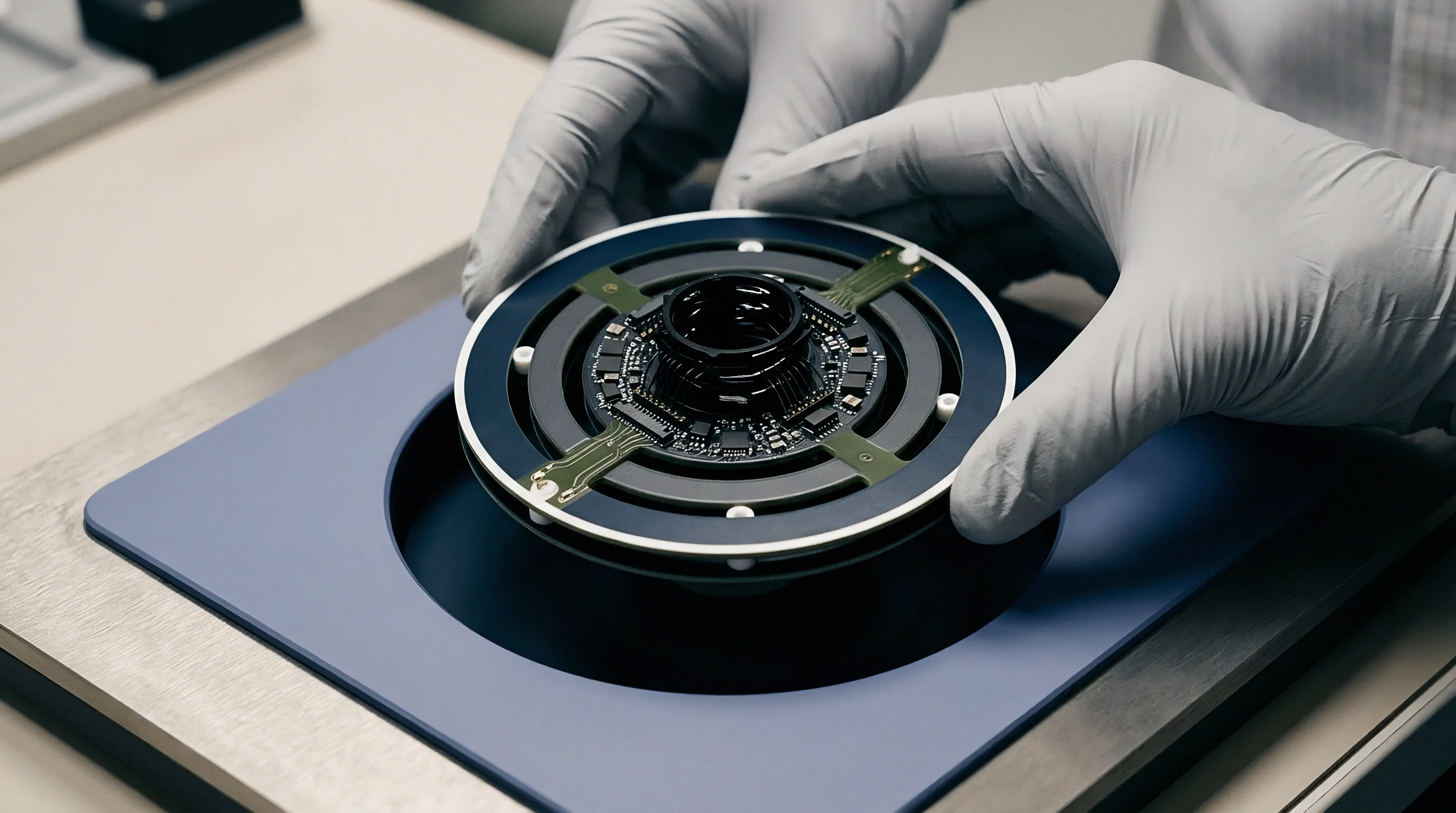
A complete design transfer package needs native CAD files, BOM data, fabrication and assembly drawings, and uncompiled source code with toolchains. White-label vendors usually provide only output files like Gerbers, NC drill maps, and compiled binaries. While those let another factory spin boards, they prevent engineering tweaks, schematic corrections, or component substitutions during supply chain disruptions.
True technical control requires uncompiled source, hardware setup files, and isolated build environments. Having those assets allows independent compilation and testing without relying on the factory. Without native schematics and editable PCB layout files, any board revision forces a return to the original supplier, handing them all technical leverage.
Contractual ownership of fabrication binaries without source repository rights guarantees complete vendor lock in during line transfer.

Bill of Materials Variance Control
Unannounced component swaps are a major source of friction on shared platforms. Contract manufacturers regularly substitute passives, flash memory, or power ICs to save costs or navigate shortages. A part substitution approved for a competitor’s run can easily introduce timing jitter, higher quiescent current, or thermal issues into custom product lots if incoming QA misses the change.
- Execute a complete audit of incoming production files to verify schematic alignment against approved golden samples.
- Extract peripheral initialization routines from compiled binaries to verify register settings.
- Perform electrical validation across sample units from consecutive lots to check power rail stability and noise thresholds.
- Verify part numbers on high-density assemblies using automated optical inspection profiles linked to approved component databases.
- Re-compile host application code in an isolated build environment to ensure binary outputs match before approving line release.
| Document Deliverable | White-Label Standard | Semi-Custom Contract | Full Transfer Agreement |
|---|---|---|---|
| Schematic Source Files | Vendor Retained | Vendor Retained | Full Ownership Transferred |
| PCB Layout Gerber Files | Escrow Restricted | Shared Access Granted | Full Ownership Transferred |
| Firmware Source Code | Compiled Binary Only | Escrow Deposited | Full Repository Access |
| Test Jigs and Fixture Specs | Vendor Proprietary | Vendor Proprietary | Complete Schematics Delivered |
| BOM Component Sourcing Rights | Factory Restricted | Factory Restricted | Approved Vendor List Included |
Standard manufacturing agreements state that no component substitutions on controlled bills of materials may occur without written engineering change notice approval from the brand owner.


Arbitrage
White-label financial trade-offs come down to balancing upfront NRE against unit landed costs. Sourcing a turn-key product eliminates PCB layout expenses, compliance testing, and tooling investments, enabling fast market entry. But that low bar to entry exposes brands to risk: competitors can launch on the exact same platform with the same cost structure, forcing competition purely on price and marketing efficiency.

Engineering Scope and Landed Cost Arithmetic
Calculating real costs requires looking past the unit quote from the factory. True landed cost includes unit pricing, amortized NRE, freight, tariffs, warranty reserves, and long-term software support. When a competitor sells the same unit, their margin advantage stems directly from volume shipping discounts, tariff classification strategies, and distribution efficiency.
A rival shipping three times the volume will secure lower factory pricing and cheaper freight rates, gaining an immediate structural margin advantage on identical hardware. Determining whether to build custom or buy white-label requires identifying the volume threshold where owning the PCB layout and tooling yields a lower landed cost than paying turn-key vendor fees.
Competitors sourcing from an identical assembly line absorb shared component yield losses through non-linear price escalations.

Worked Cost Model for Shared Platform Amortization
Consider a wireless edge gateway program evaluating two development paths over a three-year lifetime at 20,000 units. Path A uses an existing ODM platform with zero NRE, $15,000 in enclosure tooling, and a factory unit price of $42.00. Path B uses a semi-custom design, requiring $85,000 in NRE for layout and software, $35,000 for enclosure and test tooling, $12,000 in compliance testing, and a factory unit price of $31.00.
Under Path A, total costs reach $855,000 ($15,000 tooling plus $840,000 in unit costs), which works out to $42.75 per unit landed before freight and duties. Path B requires $132,000 in fixed upfront capital ($85,000 NRE + $35,000 tooling + $12,000 testing) plus $620,000 in unit costs, totaling $752,000 ~ or $37.60 per unit. Path B saves $103,000 over the product life despite the $132,000 initial outlay, hitting break-even at 12,000 units.
- Annual Production Volume Thresholds show where custom engineering NRE becomes cheaper per unit than turn-key supplier pricing.
- Competitor Shipping Metrics reveal whether rivals gain margin advantages through batch purchasing scale.
- Firmware Maintenance Costs require explicit contractual division between contract manufacturers and internal teams.
- Regulatory Recertification Fees apply whenever custom housings alter RF propagation or thermal limits.
- Tooling Deprecation Schedules affect long-term unit costs as injection mold amortizations expire across extended production runs.
What specific volume threshold would force an original design manufacturer to grant exclusive regional distribution rights on a shared platform?


Sanctuary
Protecting market share while using white-label hardware requires strict contractual boundaries, explicit exclusivity terms, and defined IP ownership. ODMs maximize factory throughput by selling the same core design to as many buyers as possible. Preventing a manufacturer from selling identical features, housings, or firmware to direct rivals requires both legal and operational safeguards.
Exclusivity Clauses and Geographic Restrictions
Exclusivity clauses stop white-label vendors from supplying identical products to named competitors within specific regions or sectors. Strong provisions list competitors by corporate entity and brand while defining the exact hardware parameters off-limits to others. Loose clauses relying on vague market descriptions let suppliers bypass rules by tweaking external plastic colors while leaving the underlying board untouched.
Factories accept exclusivity only if minimum order volumes offset the sales lost by turning away other buyers. Including liquidated damages and audit rights in manufacturing agreements provides legal recourse and financial remedies if an ODM quietly sells the same platform to a competitor.
Firmware Repository Custody and Intellectual Property Protection
Proprietary software is the single best way to differentiate shared hardware. Sourcing best practice is to hold full ownership of custom applications, UI code, and cloud protocols while licensing the base driver layer. Storing custom application code in encrypted flash blocks prevents competitors from copying features, even when sourcing identical boards from the same line.
| Risk Exposure Category | White-Label Model | Semi-Custom Model | Risk Mitigation Strategy |
|---|---|---|---|
| Direct Competitor Cloning | Severe exposure across all features | Moderate exposure on shared PCB base | Enforce strict geographic exclusivity covenants |
| Supply Chain Allocation | Low priority during shortages | Medium priority based on NRE commitment | Contractually secure component stock buffers |
| Unsanctioned Design Revisions | High risk of silent component swaps | Medium risk controlled by change notice | Mandate strict PCN approvals before production |
| Firmware Vulnerability Sharing | Critical shared exposure to base bugs | Isolated exposure on custom code branches | Maintain private firmware build repositories |
Maintaining in-house software capabilities ensures that features, bug fixes, and security patches remain proprietary assets, preserving product differentiation regardless of shared hardware.
Custom application code locked inside encrypted flash remains the strongest defense against platform cloning in shared manufacturing environments.