MME Timer Clamping Effects on LTE-M Battery Service Life
MME timer clamping reduces LTE-M battery life from 10 years to under 1 year by overriding requested sleep parameters and forcing frequent tracking updates.


Negotiation
LTE Cat-M1 modems enter power-saving states by negotiating parameters directly with the core network during initial attach and tracking area update procedures. The Non-Access Stratum layer transfers the operational energy terms through binary-encoded timer fields inside TS 24.301 messaging. A wireless endpoint requests specific durations for two primary mechanisms, known as Power Saving Mode and extended Discontinuous Reception.
The serving Mobility Management Entity evaluates the requested values against internal network profiles before returning the final binding configuration in the NAS Attach Accept or TAU Accept response.
Power saving configurations rely on two distinct timers to govern sleep depth and wake periodicity. Timer T3412 extended sets the periodic tracking area update interval, which dictates how long an endpoint may stay in deep sleep without contacting the base station. Timer T3324 defines the Active Time, specifying how long the modem remains reachable in Connected or Idle mode after completing a transmission.
Radio links consume current. When the active period elapses, the modem powers off its baseband processor and radio frequency front-end, dropping baseline draw from several milliamperes down to deep sleep levels between 1.5 and 3.5 microamperes at 3.6 volts.
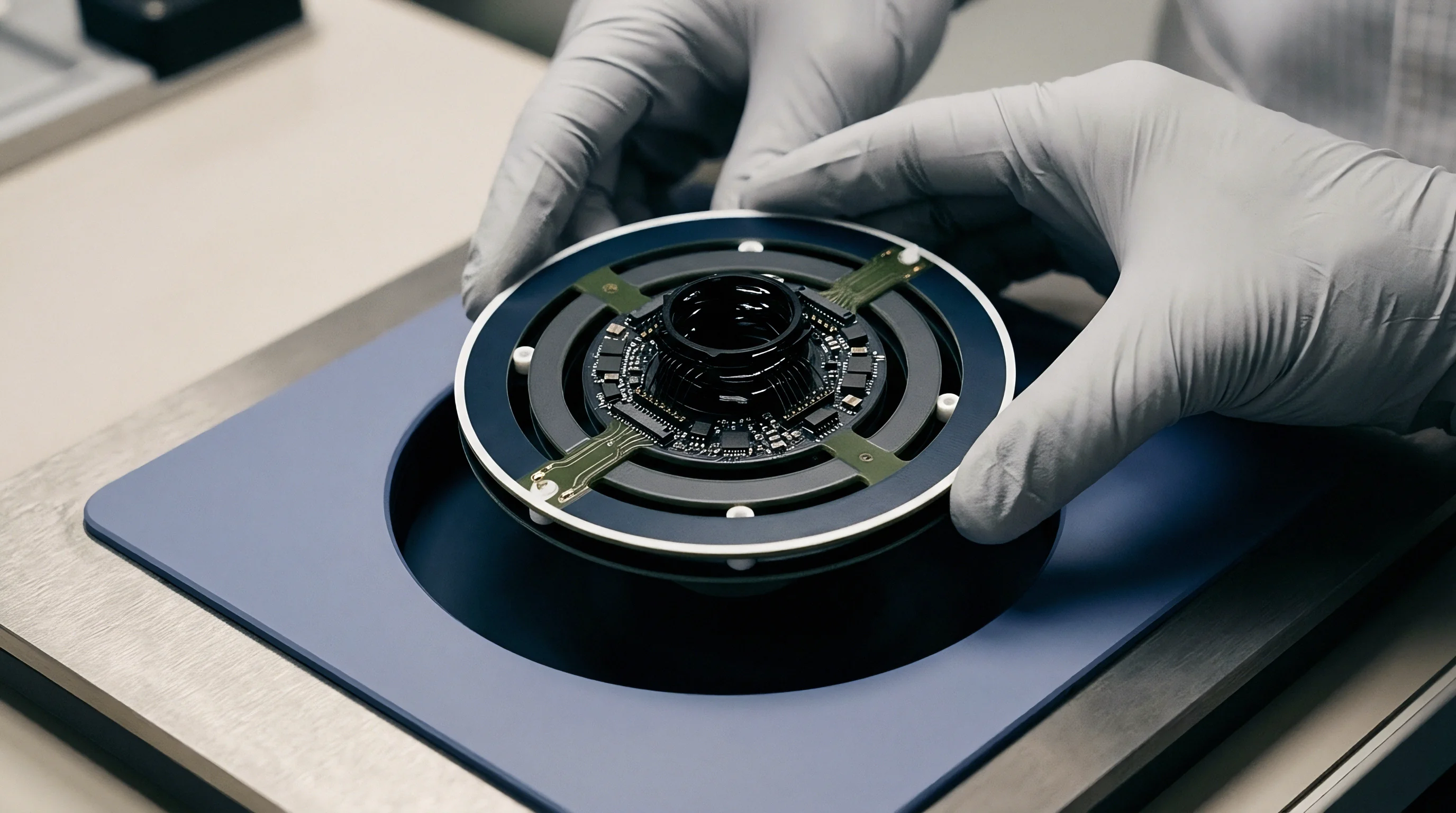
NAS Signaling and Energy State Definition
Modems indicate desired sleep parameters using Information Elements within the Attach Request or Tracking Area Update Request message. Extended GPRS Timer 3 encodes T3412 extended using a three-bit unit multiplier and a five-bit binary value, allowing requested sleep periods up to 413 days. GPRS Timer 2 encodes T3324 using a similar multiplier structure, covering durations from 2 seconds up to 186 minutes.
Standard 3GPP specifications define how these values are transmitted across the air interface, but the cellular infrastructure retains absolute authority over the actual granted values.
- The modem boots and transmits an NAS Attach Request containing requested T3412 extended and T3324 values embedded in the GPRS Timer Information Elements.
- The eNodeB forwards the NAS payload over the S1-MME interface to the serving core network node.
- The core control plane evaluates subscriber database records, regional operator policies, and local traffic conditions against the requested timers.
- The control node constructs an Attach Accept message containing the binding granted values for T3412 extended and T3324.
- The endpoint parses the NAS response payload and updates its internal power management state machine to match the network granted parameters.

Requested Timers versus Granted Network Values
A persistent disconnect exists between requested power profiles and delivered network parameters. Product developers design energy budgets assuming the network grants every requested timer value exactly as submitted. Industrial sensors transmitting once per day request a T3412 extended value of 24 hours alongside a T3324 Active Time of 2 seconds.
Modems remain stuck in idle. Core network nodes often reject these aggressive power-saving requests, returning clamped timer values that force endpoints to wake up far more frequently or remain awake far longer than engineered.
The 3GPP TS 24.301 specification permits core nodes to override endpoint-requested power timers without returning a protocol rejection code.
Extended Discontinuous Reception introduces an additional layer of timer negotiation operating during the active idle phase. While PSM completely disables radio reachability to maximize battery longevity, eDRX allows endpoints to stay reachable during extended sleep cycles between paging monitoring windows. The endpoint requests an eDRX cycle value, such as 40.96 seconds or 81.92 seconds for Cat-M1, along with a Paging Time Window of 2.56 seconds.
If the control node grants eDRX but reduces the cycle interval to 10.24 seconds, receiver current spikes increase dramatically over the operational deployment term.
The discrepancy between requested and granted timers originates from core infrastructure configuration rules that prioritize network control plane stability over individual battery life targets. Core network control nodes allocate memory tables for every attached device context. Retaining millions of sleeping endpoint context records for months without periodic radio handshakes risks exhausting memory pools on gateway hardware.
As a result, network operators configure hardware rules that limit maximum T3412 extended durations and enforce minimum T3324 Active Times across entire APNs or subscriber groups.


Clamp
Core infrastructure software applies administrative overrides to incoming Non-Access Stratum requests through algorithmic rule engines. Network operators program these parameters within the Mobility Management Entity or Home Subscriber Server to enforce control plane capacity standards. When an LTE-M module requests a 72-hour T3412 sleep timer to achieve a decade of operation on a lithium primary battery, the MME inspects the subscriber profile and silently clamps the granted timer to a ceiling of 2 hours or 4 hours.

Core Network Policies and Mobility Server Rules
Network operators implement timer clamping to safeguard signal processing resources and manage paging channel congestion. High densities of static IoT endpoints can overload core memory tables if devices remain detached for extended periods without location verification updates. Setting conservative timer caps forces endpoints to re-register predictably, maintaining active routing tables across the EPC.
Core networks enforce hard ceilings. The operational consequence falls entirely on the device energy storage system, which must support a signaling overhead ten to twenty times greater than calculated during product design.
- HSS Profile Overrides define hard limits per IMSI range, where the home subscriber database dictates maximum T3412 and minimum T3324 values regardless of UE request headers.
- MME Global Ceiling Rules apply system-wide limits across all attached endpoints on a specific APN, capping extended periodic updates to standard 54-minute or 2-hour windows.
- Roaming Interconnect Restrictions restrict long-duration power saving modes for visiting SIM cards, resetting timer values to legacy defaults when endpoints cross international borders.
- Congestion Control Throttling dynamically reduces granted sleep timers during high network traffic events, forcing devices into frequent tracking updates to maintain active network visibility.

Roaming SIM Profiles and Home Subscriber Overrides
Global IoT deployments relying on roaming multi-operator SIMs suffer the most severe timer clamping effects. Roaming steering platforms and visited network MMEs frequently reject extended T3412 values requested by non-domestic SIMs. A device operating perfectly on its home network with a 24-hour periodic update timer can be clamped to a 30-minute timer the moment it connects to a visited roaming partner.
Roaming profiles alter timer limits. This sudden factor-of-forty increase in update frequency quickly drains primary cell capacity long before the planned operational lifecycle completes.
| Roaming Tier Profile | Requested T3412 | Granted T3412 | Requested T3324 | Granted T3324 | Sleep Duty Cycle Impact |
|---|---|---|---|---|---|
| Tier 1 Domestic Direct | 24 Hours | 24 Hours | 2 Seconds | 2 Seconds | Nominal (99.98% Sleep) |
| Tier 2 Regional Roaming | 24 Hours | 4 Hours | 2 Seconds | 16 Seconds | 6x Power Increase |
| Tier 3 Global Multi-IMSI | 72 Hours | 2 Hours | 5 Seconds | 60 Seconds | 28x Power Increase |
| Tier 4 Legacy Interconnect | 168 Hours | 54 Minutes | 2 Seconds | 186 Seconds | 85x Power Increase |
Clamping active time via timer T3324 introduces an equally destructive energy penalty. When an endpoint finishes sending a 200-byte telemetry packet, it requests a 2-second Active Time to allow for incoming network acknowledgments before sleeping. If the serving MME clamps T3324 to 60 seconds or 186 seconds, the modem baseband stays locked in receiver listening mode for nearly three minutes per wake cycle.
The requested value fails. Operating in idle receiver mode consumes 15 to 25 milliamperes, drawing thousands of times more current than the 3-microampere PSM sleep baseline during a completely idle window.
Network vendors often defend these timer limits by pointing to core stability guidelines. Carrier support documentation routinely indicates that restricted timers are necessary to preserve signaling channel integrity and prevent stale device context accumulations across global network nodes.


Pulse
Current profiles captured on precision bench meters illustrate the massive power variance created by clamped network timers. A standard Cat-M1 transmit event consists of a brief high-current pulse during random access and data transmission, followed by the T3324 active idle tail, and finally the deep PSM floor. The energy consumed during a single transmission cycle depends heavily on the length of that active idle tail and how often the periodic TAU pulse repeats.

Active Idle Drain versus Power Saving Sleep
Measuring an LTE-M module operating at 3.6 volts reveals distinct current regions across its operational cycle. Transmit current pulses reach 120 to 250 milliamperes during physical uplink shared channel transmissions under nominal coverage conditions (RSRP above -85 dBm). Once transmission ends, the modem drops to RRC Connected mode and then into RRC Idle mode, pulling approximately 18 milliamperes while listening for paging frames.
If T3324 is granted at 2 seconds, the total active idle energy is small. If clamped to 186 seconds, the modem consumes 18 milliamperes for 186 seconds, burning 3.34 coulombs of charge solely waiting for page requests that never arrive.
A module clamped from a 24-hour T3412 down to a 1-hour periodic update experiences a 24-fold increase in daily tracking registration energy expenditure.
The total battery energy balance is calculated by summing the charge consumed across all operating states over a designated period. The continuous background battery degradation combines self-discharge, passivation recovery overhead, and baseline deep sleep current. Clamped timers shift the energy distribution so that idle listening and periodic update handshakes completely dominate the battery budget, eclipsing the energy used for actual user payload transmissions.
- Passivation Layer Growth accelerates when long sleep intervals are interrupted by forced high-frequency current pulses, raising internal cell resistance over operational life.
- Voltage Depression Recesses occur during sudden transmit pulses following extended sleep, risking unexpected modem brownout resets under low temperatures.
- Cell Capacity Degradation scales non-linearly when continuous milliampere-level active idle tails heat the internal chemistry of sealed lithium primary batteries.
- Premature Functional Failure strikes devices when cumulative microampere-hour consumption exceeds cell rating years ahead of schedule.

Battery Service Life Modeling under Clamped Timers
Evaluating real-world battery longevity requires modeling specific chemistry types under nominal versus clamped timer conditions. Primary Lithium Thionyl Chloride (LiSOCl2) cells offer high energy density (up to 400 Wh/kg) and low self-discharge rates (below 1% per year), making them standard choices for long-life IoT products. However, their high internal resistance makes them vulnerable to continuous current draws caused by extended T3324 active idle clamping.
Lithium Iron Disulfide (LiFeS2) AA batteries deliver lower total capacity but better peak current handling, though their higher self-discharge rate reduces lifetime under clamped conditions.
| Timer Profile Condition | T3412 Granted | T3324 Granted | 19 Ah LiSOCl2 D-Cell | 2.4 Ah LiFeS2 AA Pair |
|---|---|---|---|---|
| Ideal Engineering Target | 24 Hours | 2 Seconds | 14.8 Years | 9.2 Years |
| Mild Active Clamping | 24 Hours | 60 Seconds | 8.1 Years | 4.6 Years |
| Severe Active Clamping | 24 Hours | 186 Seconds | 3.9 Years | 2.1 Years |
| Mild Periodic Clamping | 2 Hours | 2 Seconds | 3.2 Years | 1.8 Years |
| Severe Combined Clamping | 1 Hour | 186 Seconds | 0.9 Years | 0.4 Years |
Take an industrial tank monitoring endpoint powered by a single 19 Ah LiSOCl2 D-cell operating at 3.6 volts. The design spec assumes one 200-byte telemetry report per day, requesting a 24-hour T3412 periodic TAU and a 2-second T3324 Active Time. Under nominal network parameters, the device consumes 0.015 milliampere-hours daily in PSM sleep, 0.035 milliampere-hours in payload transmission, and 0.010 milliampere-hours during active idle, yielding an estimated field life exceeding 14 years.
The battery dies early.
If that same device connects to a roaming network that clamps T3412 to 1 hour and T3324 to 186 seconds, the energy ledger collapses entirely. The modem now performs 24 TAU registrations daily instead of one, with each registration dragging out into a 186-second idle listening phase. Daily current consumption surges from 0.060 milliampere-hours up to 23.4 milliampere-hours.
The functional operational lifespan of the 19 Ah battery drops from nearly 15 years to under 10 months. Failing to account for core network timer clamping in battery sizing calculations guarantees project failure across field deployments.


Audit
Identifying timer clamping requires structured protocol validation and electrical tracing during initial hardware qualification. Product teams cannot rely on modem firmware configuration logs alone, as AT command settings reflect only what the module requested from the network. Diagnostic routines must extract the negotiated parameters returned directly by the serving MME in the network NAS layer signaling.

What Unsolicited Response Codes Expose Clamped Timers?
Modem AT commands provide direct visibility into negotiated core network parameters through unsolicited result codes. Standard 3GPP TS 27.007 commands enable developers to query negotiated PSM and eDRX settings after registering on the target network. Issuing AT+CPSMS=1 requests PSM parameters, but reading back the operational status via AT+CEREG=4 or AT+CEREG=5 reveals the actual values granted by the core MME.
| Command String | Target Function | Response Payload Format | Diagnostic Objective |
|---|---|---|---|
| AT+CPSMS? | Query Requested PSM Settings | +CPSMS: mode, “T3324″,”T3412” | Confirms local firmware requested timer inputs |
| AT+CEREG=5 | Enable Extended Network Registration URC | +CEREG: stat,lac,ci,Act, “T3412_ext”,”T3324″ | Captures actual MME-granted timer parameters |
| AT+CEDRXS=1,4,”0010″ | Request eDRX Configuration | OK / ERROR | Requests 40.96s eDRX cycle for Cat-M1 |
| AT+CEDRXRDP | Read Negotiated eDRX Parameters | +CEDRXRDP: act,requested,provided | Compares requested vs MME-provided eDRX values |
Execution of AT+CEREG=5 causes the modem to emit an unsolicited response code whenever network registration states or network-granted timers change. The resulting string contains binary-encoded representations of the granted extended T3412 and T3324 timers. Data logs show direct proof.
If the string returns "01000001" for T3412 extended, the bit sequence decodes to a multiplier of 10 hours times 1, granting a 10-hour periodic update. If it returns "00000100", the multiplier shifts to 2 minutes times 4, revealing that the network clamped T3412 down to just 8 minutes.
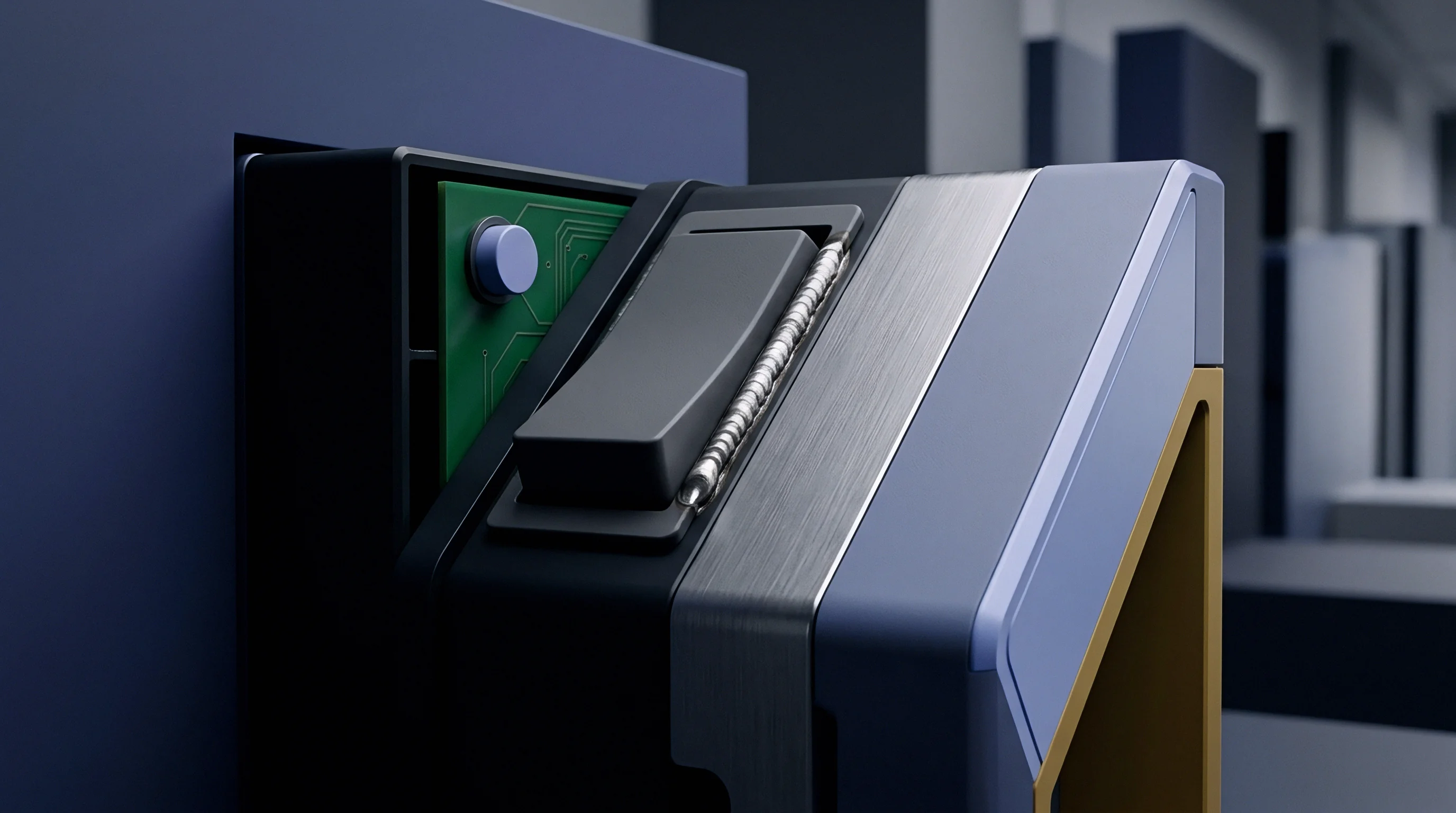
Bench Diagnostic Hardware and Current Trace Verification
Verifying timer compliance requires correlating modem software logs with physical electrical measurements. Current profiling instruments, such as the Qoitech Otii Arc or Keysight N6705 DC Power Analyzer, record sub-microampere current draws continuously over extended test windows. Connecting current probes in series with the device battery supply yields clear visual proof of negotiated network timer behavior.
A typical current measurement procedure begins by capturing baseline sleep profile traces in a controlled lab setup. Hardware traces expose hidden energy. The current trace should show a rapid drop to sub-5 microampere levels within milliseconds of transmission completion if T3324 is set to zero or granted at minimal values.
If the trace displays a flat 18 milliampere baseline extending for minutes after packet delivery, the bench profile proves that the serving MME has clamped T3324 upward.
- Connect the endpoint supply pins to a calibrated current profiling power supply set to 3.60 VDC.
- Enable high-speed sampling (minimum 100 kS/s) to capture microsecond transition states between active and sleep modes.
- Issue the registration AT commands and initiate a test transmission to trigger an NAS exchange with the cellular network.
- Record the current profile continuously for at least two complete periodic update cycles to measure actual T3412 extended intervals.
- Export the raw current trace data and integrate total charge consumption across the active, idle, and sleep phases.
Field verification requires testing hardware on live commercial base stations across every targeted deployment country to capture actual operator MME clamping policies.
How do network operators respond when presented with trace logs proving that clamped NAS timers reduce deployed IoT battery life from ten years down to twelve months?

Tariff
Preventing catastrophic energy failure requires securing binding service level guarantees for network timer parameters during SIM procurement. Enterprise IoT buyers often evaluate cellular connectivity purely on data volume costs per megabyte, ignoring the protocol-level timer configurations enforced by carrier roaming partners. Commercial contracts must explicitly specify minimum allowed T3412 values and maximum allowed T3324 values across all destination network profiles.
Carrier Service Agreements and Fixed Value APNs
Major MNOs offer private Access Point Names (APNs) configured with customized MME timer profiles for high-volume enterprise deployments. Negotiating a static APN configuration ensures that the core network honors requested PSM and eDRX parameters without applying default consumer-grade clamping rules. Paging channels draw microamps.
Specifying timer configurations directly within the SIM profile guarantees consistent behavior across domestic and international roaming partners.
Enterprise connectivity contracts must include technical annexes governing core network timer handling. Sourcing documentation should stipulate that visited roaming MMEs are contractually prohibited from clamping T3412 below 12 hours or extending T3324 beyond 16 seconds for designated IMSI ranges. Including these terms gives product engineering teams a clear legal recourse if network operator software upgrades alter core clamping behavior unexpectedly.

Firmware Mitigation for Overridden Network Parameters
Device firmware must implement adaptive power management routines to handle unexpected network timer clamping gracefully. When a modem detects that a serving network has clamped T3412 to an unacceptably low duration, the application processor can choose to defer optional telemetry reports or dynamically adjust its sensor sampling rate. Field deployments suffer silent failure.
If the granted T3324 active time is excessively long, firmware can issue an explicit detach or power-down command to force the modem directly into deep sleep, bypassing the network active idle phase entirely.
Implementing forced modem power-downs requires careful software architectural design. Shutting down baseband power avoids the multi-minute 18-milliampere idle tail forced by a clamped T3324 timer, but it forces the device to execute a full cold attach procedure on its next wake cycle. A full attach requires re-establishing security contexts, exchanging RF signaling, and consuming significant transmit energy.
Firmware algorithms must calculate the energy crossover point, electing to execute a forced power-down only when the granted T3324 duration creates an energy penalty greater than the energy required for a full network re-attach.
Standard carrier procurement agreements should include the following binding operational clause to protect deployed device service life:
The connectivity provider shall configure all serving core Mobility Management Entities and Home Subscriber Servers to grant requested extended periodic update timers (T3412 extended) up to 24 hours and limit active time timers (T3324) to a maximum of 16 seconds across all approved roaming partner networks; any network parameter modification that reduces granted sleep time below 12 hours shall constitute a breach of service availability SLAs.