Optimizing Protocol Framing and Gateway Inactivity Timers to Prevent Exponential Data Overage Billing
Synchronizing gateway payload aggregation with cellular modem and carrier inactivity timers eliminates micro-bursts that trigger exponential overage billing.

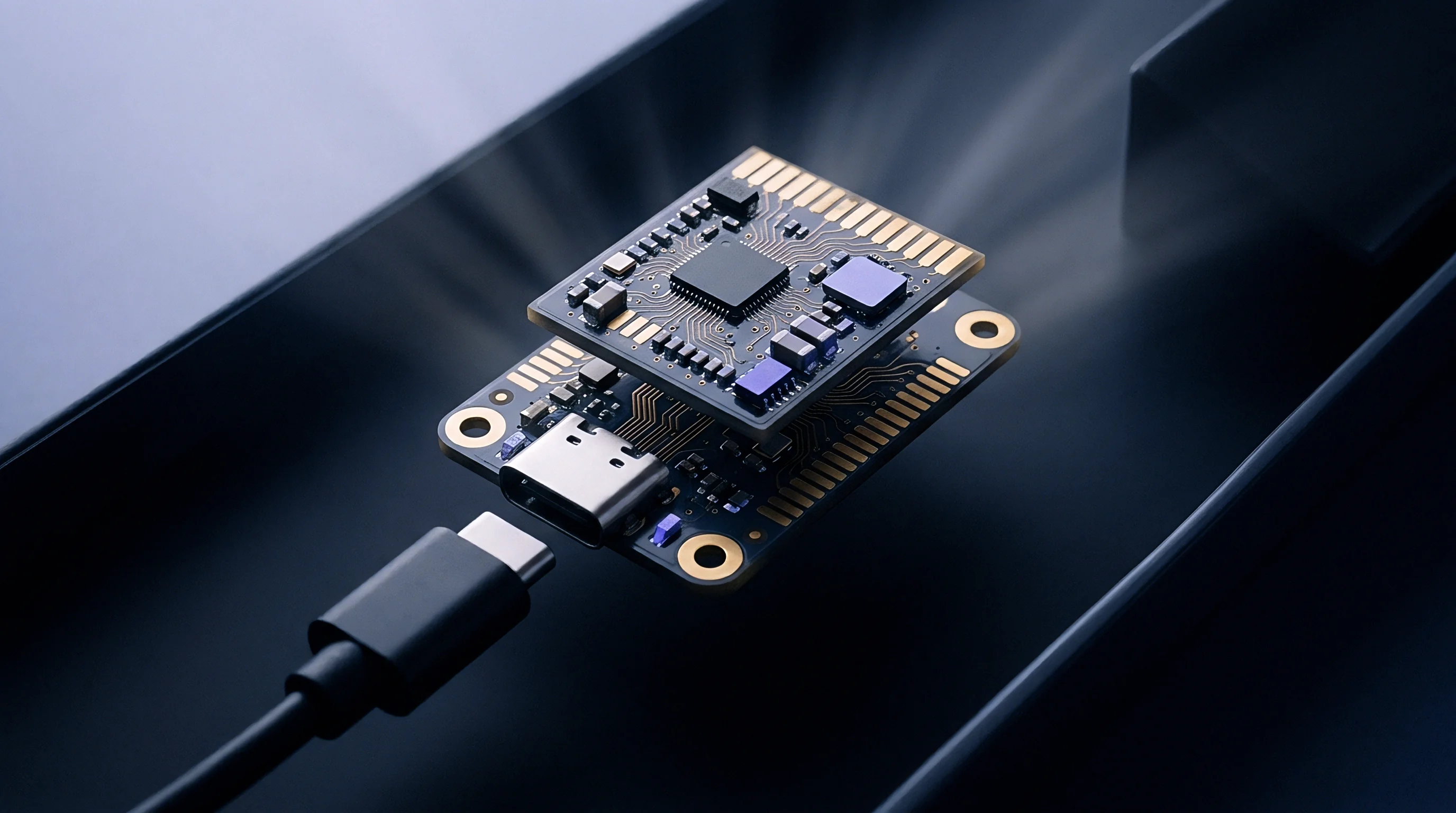
Trap
An enterprise gateway sending an eighteen-byte sensor telemetry packet over LTE Cat-M1 every five minutes routinely runs up several megabytes of unexpected data per device each month. Bench tests show why the numbers diverge. Every transmission establishes a Radio Resource Control connection with the base station, negotiates cryptographic keys, exchanges application tokens, and triggers gateway inactivity timeouts that drop radio bearers before queued acknowledgments can clear.
Carrier billing systems then measure these bursts in discrete minimum blocks, rounding small transfers up to a full kilobyte or ten kilobytes.
Radio modules drop into low-power modes quickly.
Mismatched timers eat into operating margins. Cellular operators set base station Radio Resource Control inactivity timers between four and ten seconds to free up capacity. When an edge gateway sends telemetry at intervals just longer than that window, the modem drops from connected to idle mode between messages.
The next transmission then requires a full random-access channel sequence, radio bearer reconfiguration, and non-access stratum signaling cycle. That signaling exchanges between two and six kilobytes of control data on the billing record without delivering any sensor payload.
A transmission interval exceeding the base station radio bearer inactivity timer multiplies non-payload signaling volume by a factor of twenty on Cat-M1 channels.
Treating cellular links like local Ethernet connections causes data usage to snowball quickly. Repeating small payload transfers thousands of times a day hits carrier quantization boundaries head-on. A device sending twenty bytes every three minutes generates 480 transactions daily.
Under a tariff that rounds each data session up to ten kilobytes, those twenty bytes are billed as ten kilobytes every time. The monthly bill reflects 144 megabytes per device for less than three hundred kilobytes of actual telemetry.
Deploying gateways with misaligned inactivity timers across a large fleet scales these billing overages exponentially, turning profitable hardware deployments into ongoing operational losses long before field defects are even identified.


Header
Standard network protocols impose a heavy byte tax before telemetry even hits the antenna. A bare twenty-byte temperature and vibration payload wrapped in standard IP stacks carries considerable overhead. IPv4 adds twenty bytes, User Datagram Protocol adds eight bytes, and Constrained Application Protocol adds another four to eight bytes of header data.
Moving from UDP to Transmission Control Protocol increases the transport header to twenty bytes while introducing three-way handshakes, packet acknowledgment airtime, and teardown sequences.
Small payloads carry disproportionate overhead penalties.
Transport headers consume a significant share of raw bandwidth.

Is CoAP Header Compression Worth the Processing Overhead?
Static Context Header Compression squeezes IP and UDP headers down to two to four bytes over constrained radio links. Doing this requires state synchronization between the edge gateway and the carrier core or termination server. On an ARM Cortex-M4 microcontroller running at 64 MHz, the computational cost is under twelve microseconds per frame, while stripping twenty-six bytes of static header fields from every datagram on the wire.
| Protocol Architecture | Transport Header (Bytes) | Security Framing (Bytes) | Application Envelope (Bytes) | Total Wire Size (Bytes) | Billed Usage at 1KB Rounding |
|---|---|---|---|---|---|
| Plain UDP with CoAP Binary | 28 | 0 | 4 | 52 | 1024 |
| DTLS 1.2 with CoAP CBOR | 28 | 29 | 14 | 91 | 1024 |
| TCP with MQTT JSON Payload | 40 | 0 | 48 | 108 | 1024 |
| TLS 1.3 with MQTT JSON Payload | 40 | 37 | 48 | 145 | 1024 |
| SCHC Compressed UDP CoAP | 4 | 13 | 4 | 41 | 1024 |
Data padding further inflates overall message size.
Security framing adds substantial mass to the wire. Datagram Transport Layer Security version 1.2 introduces record headers, sequence numbers, initialization vectors, and authentication tags that add twenty-nine to thirty-seven bytes per record. An initial DTLS handshake exchanges 1.2 to 2.5 kilobytes across four separate packet flights.
If the link drops because of aggressive power-saving timers, the entire handshake repeats, burning hundreds of billable kilobytes just to restore encryption.

Framing Deficiencies in Constrained Uplinks
- Excessive JSON Serialization expands numeric variables into ASCII strings, tripling payload size compared to Concise Binary Object Representation.
- Unoptimized TLS Record Sizes force multiple crypto-layer fragments across cellular boundaries, generating redundant record headers.
- Redundant Application Keepalives transmit thirty-byte heartbeat frames every thirty seconds, preventing cellular modems from entering deep low-power sleep modes.
- Uncompressed Topic Strings in publish-subscribe topologies duplicate identical twenty-character path strings inside every periodic telemetry transmission.
Binary encoding structures strip away text padding. Using Protocol Buffers or CBOR reduces floating-point sensor arrays to packed byte slices. Choosing efficient framing preserves scarce uplink airtime, reduces RF amplifier heat, and keeps payload datagrams well under cellular channel MTU limits.
Sizing datagrams to fit within a single radio link control layer frame prevents fragmentation across intermediate network nodes.


Timer
Cellular modems and gateway microcontrollers run multiple overlapping inactivity timers that dictate radio states, IP socket persistence, and carrier translation tables. Discontinuous Reception, extended DRX, Power Saving Mode timers (T3324 and T3412), and application socket timeouts all run concurrently. Configuring these timers independently without cross-layer coordination forces hardware to draw maximum power while generating endless micro-burst billing events.
The radio context often drops without explicit warning.
Firmware timers directly govern modem operating states.

Do Cellular Carriers Aggregate Fragmented User Datagrams?
Carrier base stations do not bundle separate datagrams that arrive across distinct radio bursts. Any transmission sent after the radio inactivity timer expires creates a separate session record in the Serving Gateway and Packet Data Gateway core. If a device sends three ten-byte packets with four-second gaps between them and the tower timer is set to three seconds, the carrier billing system logs three independent transactions, applying rounding rules to each.
| Timer Designation | Governing Layer | Typical Default Value | Recommended Setting | Failure Impact on Billing |
|---|---|---|---|---|
| T3324 (Active Timer) | 3GPP NAS (Modem) | 20 Seconds to 54 Minutes | 4 Seconds to 16 Seconds | Modem stays in receive mode, burning battery and missing sleep slots |
| T3412 (Periodic TAU) | 3GPP NAS (Carrier) | 54 Minutes to 310 Hours | 12 Hours to 72 Hours | Excessive Tracking Area Updates trigger recurring control signaling |
| Carrier NAT Keepalive | Core Cellular Gateway | 30 Seconds to 120 Seconds | Dynamic Ping (180s) | Carrier drops UDP mapping, causing cloud servers to drop downlink control |
| RRC Inactivity Timer | eNodeB Radio Access | 4 Seconds to 10 Seconds | Static Carrier Setting | Modem drops to idle, requiring full RRC setup for next packet burst |
| Gateway Local Batching | Application Firmware | 0 Seconds (Immediate) | 300s to 3600s Window | Continuous immediate transmissions maximize carrier rounding penalties |
Every connection renegotiation drains battery reserves.
Aligning application transmission schedules with carrier NAT timeouts eliminates unnecessary keepalive frames. Point-to-point UDP sessions usually keep firewall translations open for thirty to one hundred and twenty seconds. If application firmware sends ping packets every twenty-five seconds to maintain downlink reachability, a single device accumulates over eighty thousand billing transactions a month.

Inactivity Timer Synchronization Sequence
- Query Serving Cell Timers using standard 3GPP AT commands to retrieve negotiated active time and periodic update intervals from the cellular tower.
- Configure Local Queue Buffers in gateway flash memory to collect sensor records across an extended aggregation window before waking the cellular baseband.
- Flush Accumulated Data Blocks in a single multi-kilobyte burst, ensuring the transmitted payload fills the minimum carrier billing quantization tier.
- Issue Fast Dormancy Command or allow the modem to enter deep sleep immediately following socket acknowledgment reception, preventing extended idle listening.
Whether cellular core networks will eventually automate edge-coordinated inactivity scaling without requiring manual AT command management on constrained microcontrollers remains an open question in carrier standards bodies.


Drain
Unoptimized telemetry shows up clearly on monthly cellular SIM invoices. Engineering leaders reviewing large deployments frequently find billed usage running twenty to fifty times higher than raw payload math would suggest. Understanding how quantization thresholds, roaming broker packet splits, and session drop penalties work allows teams to fix firmware before shipping units at scale.
Billed data volumes climb far faster than expected.
Carriers bill based on connection sessions and packets.
Quantization Arithmetic and Roaming Surcharges
Take a fleet of five thousand cellular IoT gateways monitoring industrial cold-storage units. Each device reads eight temperature sensors, generating twenty-four bytes of binary payload every sixty seconds. On paper, that works out to 2.88 kilobytes per device daily, or 86.4 kilobytes a month.
Across five thousand units, total raw data transfers equal 432 megabytes per month.
Frequent connection resets multiply operating expenses in the field.
Uncontrolled buffer accumulation introduces unnecessary latency.
| Metric / Architecture | Unbuffered Real-Time (60s Burst) | Buffered Aggregation (15m Burst) | Optimized CoAP/SCHC (1hr Burst) |
|---|---|---|---|
| Raw Telemetry Payload | 432 MB | 432 MB | 432 MB |
| Protocol and Security Headers | 1.85 GB | 123 MB | 31 MB |
| RRC Setup and Teardown Signaling | 90.0 GB | 6.0 GB | 1.5 GB |
| Billed Data Volume (1KB Rounding) | 216.0 GB | 14.4 GB | 3.6 GB |
| Billed Data Volume (10KB Rounding) | 2.16 TB | 144.0 GB | 36.0 GB |
| Monthly Cost at $0.08 / MB (1KB Tier) | $17,280 | $1,152 | $288 |
| Monthly Cost at $0.08 / MB (10KB Tier) | $172,800 | $11,520 | $2,880 |
Radio link teardowns force full network re-attachments.
Much like port authorities charging a flat minimum berth fee whether a ship unloads one container or five thousand, cellular packet gateways bill transactions against fixed minimum thresholds. When telemetry arrives in tiny fragments, billing disconnects entirely from the actual volume of data moved over the air.
A contract clause establishing ten-kilobyte rounding per data session turns a forty-byte payload burst into a ten-thousand-byte invoice charge on every connection cycle.
Carrier support teams often blame soaring IoT data invoices on rogue firmware loops or unacknowledged cloud retransmissions, overlooking how base station inactivity timers break small telemetry streams into separate billable sessions.


Dispute
Stopping recurring overages requires setting clear technical and commercial terms during SIM contract negotiations and hardware qualification. Enterprise buyers need to confirm how operators log Call Detail Records and define session terminations. Confusion over whether an RRC release triggers a CDR closure regularly leads to major invoice disputes running into hundreds of thousands of dollars.
Detailed billing records highlight these underlying architectural defects.
Cellular operators enforce strict session rounding rules across profiles.

Commercial Verification Checklist
- Call Detail Record Aggregation Window definitions must specify twenty-four-hour roll-up boundaries rather than per-transaction session resets.
- Minimum Data Chargeable Increments must be negotiated down from ten kilobytes to one kilobyte or exact single-byte metering across primary and roaming partner profiles.
- Signaling Plane Billing Exclusions must explicitly exempt non-access stratum attach frames and tracking area updates from the billable user-plane byte allocation.
- SIM Tier Pooling Thresholds must automatically absorb individual gateway overages across the total fleet data pool without applying immediate punitive per-megabyte rate multipliers.
Firmware controls serve as the primary operational defense. Queueing data locally on the gateway, compressing protocol wrappers with CBOR and SCHC, and tuning modem T3324 timers to fit application traffic patterns permanently lowers data consumption. Clear contract terms then ensure remaining radio transmissions are billed strictly for data moved over the antenna.
Under standard GSMA roaming agreements, tariff schedules for low-power wide-area devices explicitly allow operators to treat dormant IP contexts as closed sessions whenever the radio access bearer stays inactive for longer than twelve consecutive minutes.