Conformity Registration Transfer Mechanisms for Korean Radio Equipment Importation
Transferring Korean KC radio registrations requires joint RRA filings, laboratory test report consent, and precise UNI-PASS importer matching to prevent border holds.
Stamp
Under Article 58-2 of the Radio Waves Act, South Korea ties radio compliance directly to the certificate holder. Any radio transceiver, cellular module, Wi-Fi router, or Bluetooth peripheral brought into the country needs either a Conformity Certification or a Conformity Registration from the National Radio Research Agency. The agency logs each approval under one legal entity, identified by a corporate registration number or foreign manufacturer code.
If an overseas manufacturer relies on a local distributor to submit the initial paperwork, that distributor often ends up listed as the sole holder ~ effectively locking market access to that specific Korean entity.
Problems arise when an overseas vendor wants to switch sales channels, replace a distributor, or set up its own subsidiary in Seoul. Korean customs checks inbound freight through UNI-PASS, its electronic clearance portal, which matches the importer of record on the invoice against the certificate holder in the official registry. If those two entities do not match, clearance grinds to a halt.
Foreign suppliers that assume a single factory test report lets multiple independent importers clear shipments without extra paperwork quickly run into trouble at the border.
A KC conformity registration belongs strictly to the corporate entity recorded in the National Radio Research Agency database, regardless of who paid the testing laboratory.
Holder Authority under Radio Waves Act
Holding a KC registration grants exclusive control over importing the product, adding family models, and modifying the certificate. The Ministry of Science and ICT, acting through the National Radio Research Agency, treats the named entity as the only custodian responsible for electromagnetic compatibility, spectrum limits, and product safety. If a foreign vendor sells an unmodified radio module through three different Korean distributors, every distributor historically needed its own registration or a formal sub-authorization under the main filing.
Legal control rests entirely with the entity named on the certificate.
This gives local agents considerable leverage. If the relationship between a foreign vendor and its Korean distributor sours, the distributor keeps full rights to the registration number printed on the product packaging and housing. The vendor cannot simply tell customs to clear the same model for a new partner; Korean law views the registration as property linked to the original holder until an official transfer updates the database.

Customs Clearance Verification at Border Gates
The UNI-PASS portal automatically checks import declarations against compliance records in seconds. When a broker enters the tariff code alongside the KC identification number, the system verifies whether the importer on the bill of lading matches the registered holder. Any discrepancy sends the container to a bonded warehouse, where daily storage fees stack up while the dispute sits unresolved at Busan or Incheon.
Clearing the hold requires a formal transfer of the registration, a joint-holder consent filing, or a fresh testing campaign paid for by the new importer. Overseas manufacturers often find that former distributors refuse to sign off on a transfer unless they are compensated for past lab costs.
Assignment
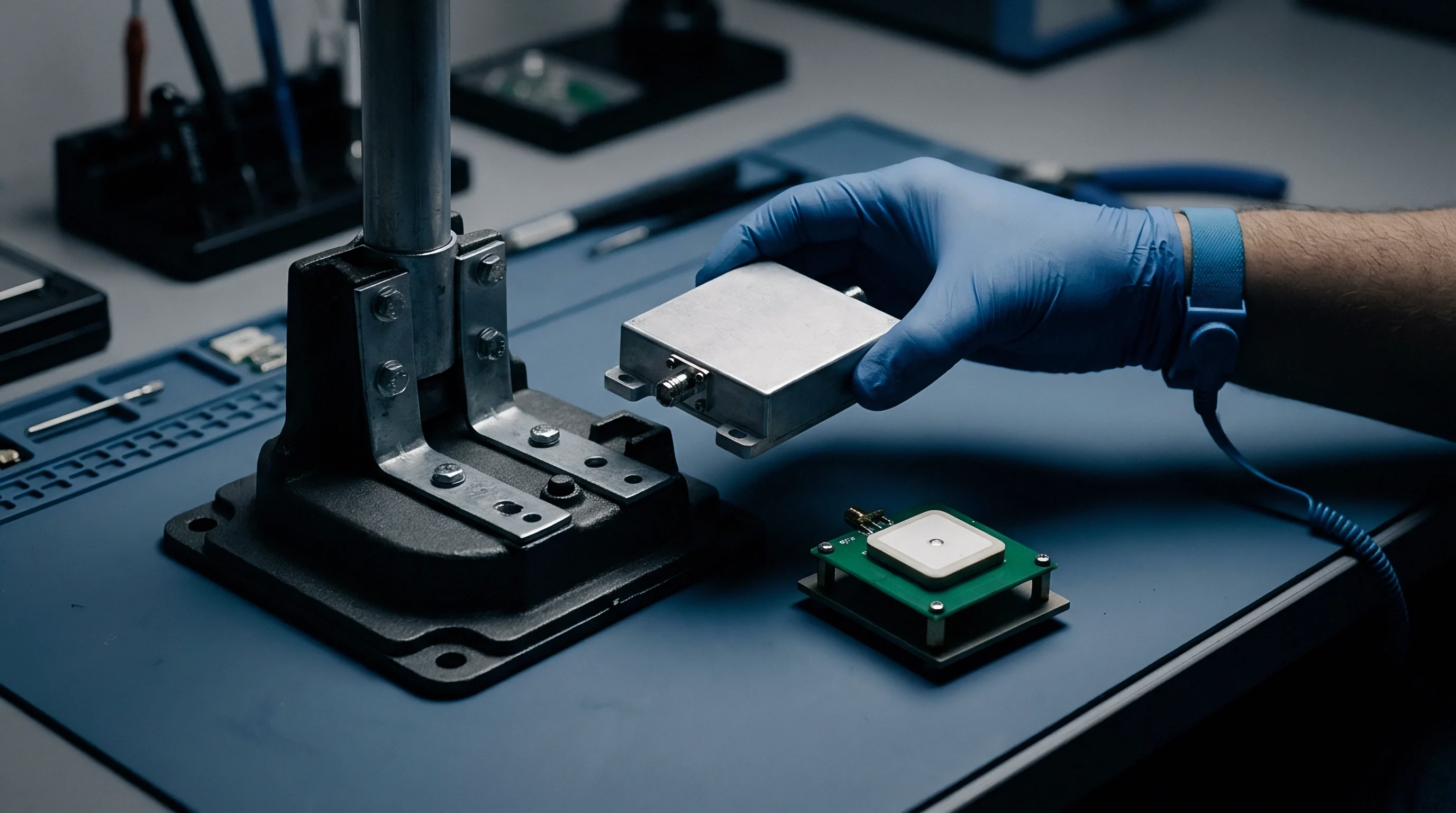
Reassigning a KC registration to a new entity requires a procedure called Change of Certificate Holder Name, regulated under the National Radio Research Agency Notice on Conformity Assessment of Radio Equipment. This updates the database and keeps existing test reports valid, assuming the hardware has not changed. However, the transfer requires written consent from both the old and new holders.
Without mutual agreement, the agency turns the application down, leaving the new importer with no choice but to re-test.
The paperwork must be exact ~ a missing corporate seal or incorrect registration number will cause an immediate rejection. Applications go through an accredited Korean certification body or directly through the agency portal, supported by business registration certificates from both companies. Once complete, processing takes five to ten working days, compared to the six to eight weeks required for a full re-testing campaign.
- Submission of the official Application for Modification of Conformity Assessment, signed with corporate seals by representatives of both parties.
- Filing of the original KC Conformity Registration certificate issued by the National Radio Research Agency.
- Updated business registration certificates proving active corporate standing in South Korea or foreign manufacturer registration codes.
- The original test reports, accompanied by written consent from the original applicant and the testing laboratory permitting report reuse.
- Surrender of the original certificate for cancellation or digital update in the agency database.
Contractual assignments specifying immediate surrender of KC test report consent rights eliminate operational deadlocks when changing Korean distribution partners.
Documentary Requirements for Ownership Reassignment
Agency reviewers inspect corporate authorizations and consent forms closely. The National Radio Research Agency requires the outgoing holder to sign an official agreement surrendering its rights over the registration number and transferring regulatory duties to the recipient. Overseas companies must submit notarized signatures with consular authentication or a Hague apostille.
Domestic Korean entities validate filings using an official corporate seal certificate, known as Injam-myeong-myeong-seo, issued by local court registries.
Disputes often center on test report ownership. Even if an outgoing holder agrees to sign the transfer, the lab that performed the original electromagnetic compatibility and radio frequency testing must still confirm the report’s validity, as it retains the underlying raw data.
Is Joint KC Registration Transfer Feasible for Imported Radios?
Foreign manufacturers can avoid single-distributor lock-in without establishing a local subsidiary by taking advantage of co-applicant structures. Under RRA guidelines, a foreign manufacturer can hold a KC registration directly under its foreign corporate name if it appoints a South Korea-based In-Country Representative. The manufacturer retains ownership of the registration, while local distributors clear shipments using authorization letters tied to that primary grant.
Direct ownership simplifies distributor changes. To switch sales partners, the foreign principal cancels the existing authorization letter in the system and issues a new one to the incoming partner. Customs accepts the updated letter without input from the outgoing distributor, keeping authority firmly in the manufacturer’s hands.
To protect supply continuity, manufacturers often include clear transfer language in distribution agreements. A standard clause reads: “Upon termination of this Agreement, the Distributor shall within ten business days execute all necessary documents required by the National Radio Research Agency to transfer all KC Conformity Registrations, test reports, and associated regulatory identification codes to the Manufacturer or its designated third-party representative without additional consideration.”
Shield
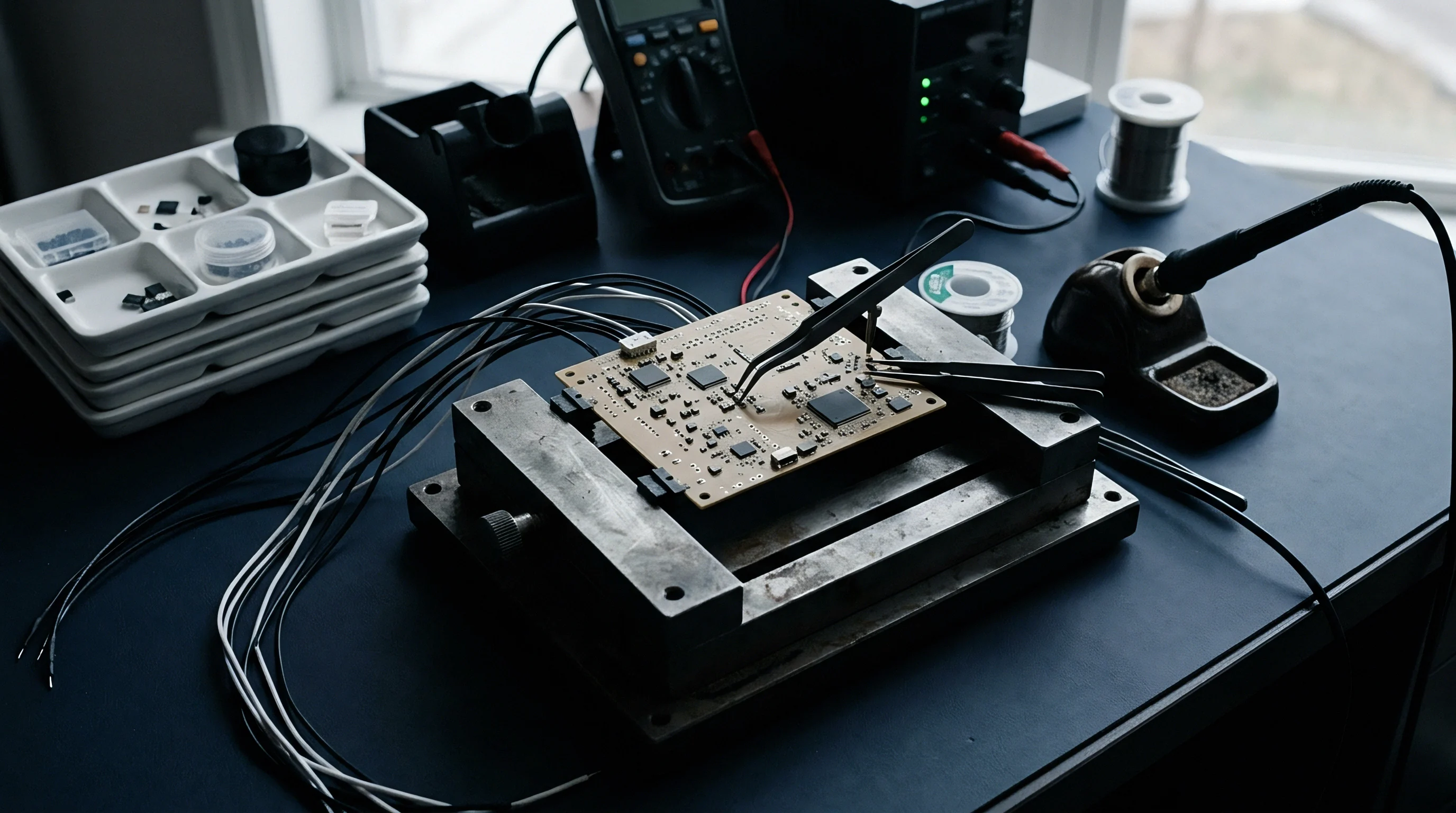
Once a transfer goes through, regulatory liability shifts completely to the new certificate holder. Under Article 58-3 of the Radio Waves Act, the new registrant becomes solely responsible for post-market audits, factory compliance, technical documentation, and product recalls. If the National Radio Research Agency selects a transferred model for audit testing and finds non-compliant spurious emissions, the new holder faces the resulting fines, administrative penalties, and recall orders.
Reviewing the technical dossier before accepting a transfer helps avoid unexpected liabilities. Experienced importers check that the original lab work covers all applicable Korean Radio Equipment Standards, including KN 301 489 for EMC and KN 300 328 or KS X 3124 for radio parameters. If Korean technical standards changed between the original testing date and the transfer request, supplementary testing will be required before approval.
Re-testing RF output parameters under EN 300 328 or KN 301 489 adds four weeks and 8,000,000 KRW to an uncooperative transfer attempt.
Test Laboratory Re-Authorization and Report Reuse
Reusing historical test data depends on the accreditation of the laboratory that performed the original work. Korean regulations accept reports from domestic designated labs or foreign labs recognized under bilateral Mutual Recognition Agreements. If the original report came from an unaccredited facility or relied on outdated testing standards, the agency will reject it during transfer review, requiring new lab tests.
Getting laboratory consent can also create delays. Testing facilities invest considerable effort into test plans, calibration curves, and chamber measurements, and they may refuse to re-issue reports if the original client has unpaid fees or if contractual terms restrict document reproduction ~ a major hurdle, considering direct transfer otherwise saves twelve weeks over starting from scratch.
| Path Mechanism | Time Frame | Outgoing Consent | Lab Report Reuse | Regulatory Risk |
|---|---|---|---|---|
| Direct Name Transfer (명의변경) | 1 to 2 Weeks | Mandatory | Full Reuse Allowed | Inherits Historical Deficiencies |
| Co-Applicant Foreign Principal | 2 to 3 Weeks | Not Applicable | Full Reuse Allowed | Isolated to Foreign Holder |
| Fresh Independent Filing | 6 to 10 Weeks | Not Required | New Testing Required | Zero Historical Risk |
Post-Market Surveillance and Regulatory Indemnity
The Radio Monitoring Center conducts annual surveillance audits by purchasing market-ready equipment from retail channels or import docks. It tests conducted emissions, harmonic distortion, radiated field strength, and specific absorption rates against current standards. A failure triggers immediate enforcement under Article 58-4, which can lead to registration revocation and public notice of the violation.
Skipping a thorough technical review before taking over a registration leaves the new holder vulnerable to past design changes. If the manufacturer altered circuit traces, swapped filtering capacitors, or changed antennas after the initial filing without registering a derivative update, the new holder remains liable for selling non-compliant hardware. If enforcement actions freeze shipments, expenses multiply quickly.
Derivative
Managing variants, family models, and design revisions on a transferred registration requires following the RRA classification structure. Korean regulations distinguish between the primary base model and derivative models approved under the same registration umbrella. When a registration transfers, all approved derivative models move with it.
Adding new derivative models later requires the new holder to submit documentation showing electrical and RF equivalence to the original tested base model.
Family model filings offer a cost-effective way to add product variations, provided the core RF circuitry, board layout, enclosure shielding, and output power match the base unit. Permissible changes include minor cosmetic tweaks, non-RF component removals, enclosure color updates, or slight power circuit adjustments that do not affect electromagnetic compatibility.
- Unapproved PCB Trace Layout Changes that alter microstrip impedance or ground plane integrity, invalidating previous radiated emissions test data and forcing a re-test.
- RF Front-End Component Substitutions involving low-noise amplifiers, power amplifiers, or bandpass filters that alter harmonic emissions or occupied bandwidth.
- Antenna Gain Escalation where low-gain internal antennas are swapped for higher-gain models, exceeding the maximum equivalent isotropically radiated power listed in the original filing.
- Enclosure Material Alterations replacing shielded or metallic housings with non-conductive plastics, leaving internal oscillator circuits prone to unshielded radiation leakage.
- Firmware Operating Parameter Modifications that open restricted frequency bands, raise transmit duty cycles, or bypass dynamic frequency selection rules required on 5 GHz Wi-Fi bands.
Family Model Classifications and Technical Equivalence
Adding derivative models after a transfer requires thorough documentation showing that the variant meets RRA family criteria. Applicants must submit circuit diagrams, block diagrams, component layouts, internal photos, and an engineering justification detailing every difference between the base unit and the new model. The documentation must prove that RF behavior remains unchanged.
Auditors examine derivative models closely, knowing companies sometimes try to slip altered hardware under existing certifications to save on lab fees. If an audit reveals a modified board layout or a different RF transceiver chip in a family model, regulators can revoke the entire registration ~ canceling clearance for the base model and every associated variant.
| Modification Class | Hardware Scope | Required Test Level | Approval Timeline |
|---|---|---|---|
| Class A (Cosmetic) | Color, enclosure plastic, non-RF passive parts | Document Review Only | 3 to 5 Days |
| Class B (EMC Impact) | Clock frequency change, main board layout, power circuit | Partial EMC Testing | 2 to 3 Weeks |
| Class C (RF Impact) | RF IC substitution, power amplifier, antenna swap | Full RF and EMC Re-test | 4 to 6 Weeks |
| Modifications must be submitted under official RRA modification forms prior to domestic commercial distribution. | |||

Hardware Alterations Triggering Full Recertification
Some hardware changes go beyond allowed modification limits, requiring a fresh conformity assessment altogether. Changing the main RF system-on-chip, enabling new transmission bands, or increasing power amplifier output alters the fundamental radio performance of the device. These updates cannot be filed as minor revisions or derivative models.
When an overseas factory updates internal silicon mid-lifecycle, the local holder must decide whether to submit a Class C modification or run a new testing campaign, as unapproved hardware risks seizure at customs. Maintaining supply continuity becomes difficult if an overseas contract manufacturer swaps components without issuing advance engineering change notices.
Tariff
Weighing a registration transfer against a new certification campaign requires comparing government fees, lab costs, translation charges, and potential inventory delays. Official transfer fees and local agent handling charges usually cost far less than full laboratory testing. The decision often comes down to whether the outgoing holder demands an excessive payout to sign the consent forms.
Filing fees apply per model. In-country representatives typically charge between 1,200,000 KRW and 2,500,000 KRW to handle a direct transfer, covering translation, signature verification, and agency portal submissions. By contrast, running new EMC and radio testing for a multi-band wireless device at an accredited Korean lab costs between 8,000,000 KRW and 18,000,000 KRW, depending on whether it includes Bluetooth, Wi-Fi, or cellular capabilities.
Landed costs rise steeply when a missing consent letter forces an imported radio batch into bonded warehouse storage.

Commercial Cost Framework for Registration Transfer
Calculating the full cost of a delay means factoring in bonded storage fees and missed delivery windows. Port storage and demurrage at Incheon escalate quickly after the initial grace period expires. A container held for four weeks during a paperwork dispute can easily rack up millions of Korean Won in storage fees ~ costing more than a new testing program would have.
Maintaining a direct registration through a local agent also involves ongoing costs. In-country agents charge annual representation fees between 1,500,000 KRW and 3,500,000 KRW per certificate to handle official correspondence, manage regulatory obligations, and process annual surveillance notices from the agency.
- Certificate Holder Status Review to verify whether the existing KC registration is held by the foreign principal or a local distributor.
- Test Report Consent Verification securing written confirmation from the original testing laboratory that report copies can be re-issued to the new entity.
- Formal Transfer Agreement Execution obtaining signed, notarized transfer consent documentation from the outgoing certificate holder prior to contract termination.
- Hardware Consistency Audit inspecting current production units against construction photos in the original test report to verify technical identity.
- Customs Portal Profile Linking updating the UNI-PASS profile to ensure smooth customs clearance upon arrival at Korean ports.
Worked Cost Model Comparing Transfer against Refiling
Consider a practical example involving an imported dual-band Wi-Fi industrial gateway. At an annual volume of 5,000 units and a landed wholesale value of 200,000 KRW per unit, total annual shipments equal 1,000,000,000 KRW. The overseas manufacturer decides to replace its existing Korean distributor with a new logistics partner.
In Scenario A, the transfer is cooperative. The outgoing distributor signs the consent agreement for a reimbursement of 3,000,000 KRW covering past administrative expenses. Government processing fees come to 1,500,000 KRW, and legal translation costs 500,000 KRW.
The transfer clears in ten business days with no port delays or lost sales, bringing the total expense to 5,000,000 KRW.
In Scenario B, the outgoing partner refuses consent. The manufacturer must start over with a fresh filing. Lab testing for the dual-band Wi-Fi gateway costs 12,000,000 KRW, and sample delivery, testing, and reporting take eight weeks.
During this period, an incoming shipment of 1,000 units sits at Incheon for six weeks awaiting clearance. Daily storage fees of 150,000 KRW add up to 6,300,000 KRW. The six-week delay postpones 200,000,000 KRW in sales, resulting in an estimated 40,000,000 KRW loss in gross margin.
Direct out-of-pocket expenses reach 18,300,000 KRW, while total commercial impact tops 58,000,000 KRW.
These scenarios underscore why addressing registration rights in original distribution agreements is critical for avoiding costly supply chain disruptions.