Customs Clearance Procedures for Integrated Host Wireless Declaration Deficiencies
Rectifying host wireless declaration deficiencies requires bonded manipulation, accredited test exhibits, and formal agency filings to avert cargo seizure.


Dock
Containerized freight arriving at maritime terminals or air cargo gateways encounters automated enforcement filters prior to cargo release. Electronic entry summaries submitted through customs management systems cross-reference tariff codes against Partner Government Agency targeting criteria. When an imported commercial product contains an intentional radiator, automated systems verify whether the radio subassembly possesses valid equipment authorization matching the declared operational parameters.
Regulatory authorities monitor imports through dedicated data exchange mechanisms. In the United States, the Automated Commercial Environment accepts entry data under the Federal Communications Commission message set, demanding explicit transmission of equipment authorization types, Grantee Codes, and Product Identifiers for integrated radio modules. The European Union relies on national customs authorities operating alongside market surveillance bodies under Regulation EU 2019/1020, scrutinizing declarations against the Radio Equipment Directive 2014/53/EU.
A radiated field discrepancy exceeding 3 dB over the spurious threshold halts entry processing instantly.
Discrepancies trigger automated or physical holds at the port of entry. Customs authorities generate electronic manifest holds when transmitted documents lack corresponding filings in agency databases. Physical interdiction occurs when border personnel examine housing labels, user documentation, and internal subassemblies during targeted inspections.
| Message Flag Code | Originating Agency | Trigger Condition | Immediate Border Action |
|---|---|---|---|
| PGA-FCC-01 | CBP / FCC | Missing or malformed FCC Identifier on host declaration | Automatic entry rejection at transmission |
| PGA-FCC-04 | CBP / FCC | Modular grant restrictions violated by host enclosure | Documentary hold with redelivery demand |
| EU-RED-1020 | EU Market Surveillance | Missing Radio Equipment Directive Declaration of Conformity | Suspension of release for free circulation |
| JP-MIC-G02 | Japan Customs | Technical Conformity Mark absent from exterior packaging | Mandatory warehouse quarantine |
Entry discrepancies generate specific system rejections within port logistics terminals:
- Disavowed Module Grant Identifier halts electronic cargo release until the importer amends the entry filing with an active Grantee Code.
- Missing Host Equipment Authorization forces an immediate secondary document review by customs compliance officers.
- Mismatched Country of Origin Records prompts physical container destuffing and verification of subassembly manufacturing stamps.
- Omitted Radio Frequency Exposure Exhibits freezes agricultural and industrial telemetry imports at the container freight station.
Port storage fees accumulate rapidly while shipments sit under customs holds. Importers face escalating container demurrage, chassis detention charges, and bonded storage overhead when entry paperwork fails automated validation sweeps.

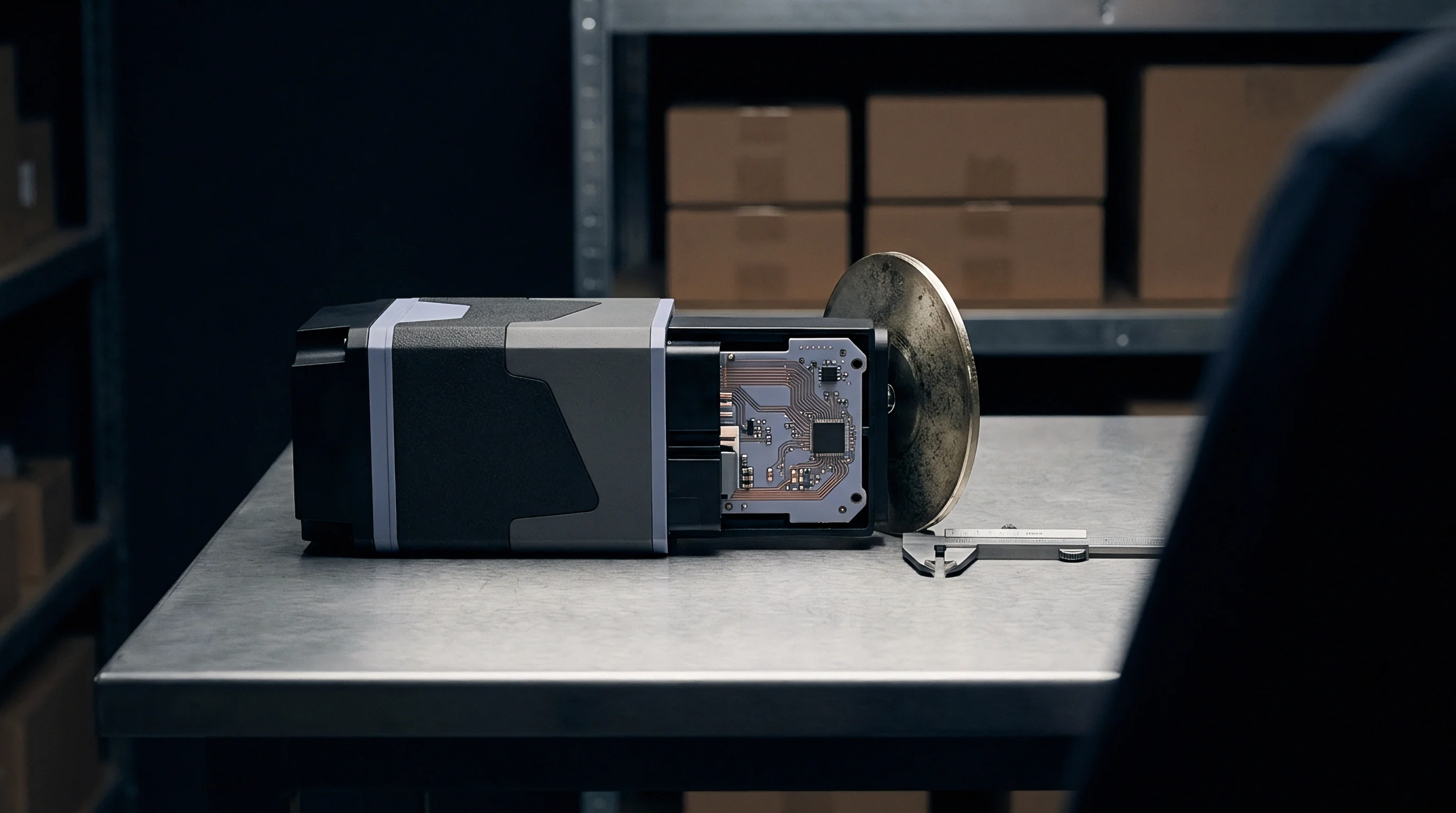
Trace
Discrepancy investigations begin with direct inspection of physical host enclosures and internal circuit boards. Compliance officers compare the markings etched onto the exterior casing against the technical construction file submitted during customs entry. When an enclosure displays an FCC ID or CE mark belonging strictly to an unapproved sub-component, examiners log an equipment identity violation.

How Do Partner Government Agency Holds Escalate?
Automated targeting systems alert inspectors when entry paperwork lists an integrated host under an exempt equipment class while bill-of-lading descriptions mention Bluetooth, Wi-Fi, or cellular connectivity. Customs officers issue formal notices demanding proof of authorization within fixed statutory windows.
Importers encounter severe operational bottlenecks when host designs alter module integration characteristics. Installing an approved modular transceiver inside a metallic enclosure changes radiated field patterns. Replacing a trace antenna with an external dipole invalidates original modular grant conditions.
Sourcing agents frequently discover that factory substitutions introduced uncertified antenna structures during production runs.
The gap between modular authorization and host-level verification creates systemic import liabilities. A modular grant covers the bare transceiver under defined test configurations. The finished host product remains subject to unintentional radiator testing under FCC Part 15B or EN 301 489 standards.
Omitting unintentional radiator test reports from the customs entry packet results in immediate cargo detention.
Field examiners systematically log specific non-compliance categories during physical container inspections:
- Altered Antenna Gain Parameters invalidate modular grants when measured passive peak gain exceeds the original certified envelope.
- Co-located Uncertified Transmitters violate simultaneous transmission evaluation rules, necessitating a Class II Permissive Change before clearance.
- Omitted Host Exterior Labelling prevents inspectors from confirming the internal presence of an approved modular assembly without disassembly.
- Discrepant Operating Frequency Bands occur when factory firmware activates unapproved spectrum channels for the destination market.
Suppliers routinely insist that module certificates protect the complete host assembly under all shipping circumstances.


Bond
Administrative mechanisms provide structured remedies for detained host electronics within customs custody. Importers must respond to CBP Form 28 Requests for Information or CBP Form 29 Notices of Action within thirty calendar days. Failure to deliver acceptable technical documentation prompts customs authorities to issue a formal redelivery demand backed by single-entry or continuous customs bonds.

What Triggers Host Level Redelivery Notices?
Border authorities issue redelivery orders when technical reviews confirm that imported lots entered commerce without required regulatory declarations. Importers must return non-compliant inventory to customs custody or face liquidated damages claims equaling up to three times the declared commercial entry value.
Under Title 19 of the Code of Federal Regulations, failure to redeliver non-compliant wireless goods forfeits the full entry bond.
Rectifying declaration deficiencies requires specific procedural movements through secure transit corridors:
- Submission of a bonded movement entry to transfer cargo from the pier to a Class 3 or Class 4 bonded warehouse facility.
- Execution of a formal petition for authorization to manipulate merchandise under direct customs supervision.
- Application of compliant external host labels indicating internal module installation details.
- Flashing compliant regional firmware builds to disable unauthorized operational frequency ranges.
- Submission of an amended entry package supported by accredited laboratory verification reports.
| Deficiency Mechanism | Remediation Procedure | Custodial Status | Resolution Timeline |
|---|---|---|---|
| Missing External Host Label | Physical label application under customs manipulation permit | Bonded Warehouse Class 3 | 10 to 15 business days |
| Uncertified Host Radiator | Bonded diversion to accredited test chamber for evaluation | Temporary Importation Bond | 20 to 35 business days |
| Invalid Modular Integration | Filing of Class II Permissive Change with regulatory agency | Foreign Trade Zone | 45 to 60 business days |
| Unresolvable Frequency Drift | Supervised destruction or mandatory re-exportation | Direct Customs Custody | 15 to 20 business days |
Commercial contracts govern liability allocation during administrative detentions. Importers protect balance sheets by inserting standard terms that shift bonded storage, relabeling, and demurrage liabilities onto the manufacturer when shipment holds stem from uncertified hardware modifications.

Probe
Chamber data resolves disputed radio frequency parameters when documentary evidence fails customs scrutiny. Laboratory technicians evaluate detained units inside anechoic environments to generate formal test reports confirming compliance with host-level emissions thresholds. Radiated spurious emissions testing between 30 MHz and 40 GHz verifies that host enclosures suppress harmonic radiation generated by internal digital switching buses.
Evaluation engineers mount the complete host enclosure on an automated turntable inside a three-meter or ten-meter hemi-anechoic chamber. As the turntable completes a full 360-degree rotation, dual-polarized measurement antennas traverse heights between one and four meters to capture peak emission vectors. Signal analyzers capture conducted and radiated spectrum traces, applying quasi-peak and average detectors specified under ANSI C63.4 and CISPR 32.
Laboratory measurement uncertainty bounds determine whether an emissions spike represents an actionable regulatory violation.
Clearing a customs detention requires an accredited laboratory test package containing distinct engineering exhibits:
- Radiated Spurious Emissions Profiles demonstrate that housing integration does not amplify modular transmitter harmonics beyond regulatory limits.
- Specific Absorption Rate Certificates establish radio frequency human exposure compliance for portable host devices used within twenty centimeters of the body.
- Unintentional Radiator Test Reports confirm that digital processing circuitry meets Part 15 Subpart B and EN 55032 electromagnetic compatibility standards.
- Antenna Pattern Measurement Plots prove that newly fitted enclosure antennas match certified directional gain specifications.
The timeline for chamber testing introduces severe logistical friction. Accredited laboratories maintain testing queues spanning two to six weeks. Test chamber fees range from 1,800 to 3,500 dollars per day.
A typical host verification run demands three days of chamber availability to execute radiated spurious checks, conducted emissions scans, and radio frequency exposure measurements.
Importers encounter profound technical dilemmas when testing reveals that internal PCB traces act as parasitic radiators. An engineering team must choose between developing board-level shielding retrofits inside a bonded warehouse or surrendering the entire production run for commercial destruction.

Freight
Financial exposure accumulates continuously while cargo remains held in port staging yards. Marine container terminals charge demurrage on ocean boxes sitting past standard free-time allowances. Free-time periods rarely exceed four to five business days at major ocean gateways.
Terminal demurrage fees climb from 150 dollars per container per day during the initial week to over 450 dollars per day as dwell times extend.
| Cost Driver | Daily Accrual Rate | 30-Day Dwell Total | Impact per Host Unit |
|---|---|---|---|
| Ocean Terminal Demurrage | $325.00 | $9,750.00 | $1.95 |
| Chassis Usage Surcharge | $45.00 | $1,350.00 | $0.27 |
| Bonded Warehouse Storage | $110.00 | $3,300.00 | $0.66 |
| Customs Broker Intervention | Fixed Event Fee | $2,400.00 | $0.48 |
| Accredited Test Chamber Retest | Fixed Event Fee | $7,500.00 | $1.50 |
| Bonded Manipulation Labor | Fixed Event Fee | $4,200.00 | $0.84 |
Carriers assess chassis detention charges simultaneously with terminal demurrage. Warehousing fees accrue when cargo moves into customs bonded storage to halt ocean container penalties. Customs brokers bill specialized hourly intervention rates to coordinate agency reviews, draft formal petitions, and prepare bonded manipulation permits.
Total landed cost increases dramatically during prolonged customs holds. For a shipment of five thousand host units, a thirty-day regulatory detention adds 28,500 dollars in direct administrative, logistics, and laboratory overhead. The landed cost per unit rises by 5.70 dollars, erasing gross operating margins on consumer and commercial electronics lines.
Proactive importers insulate supply chains by conducting comprehensive technical construction file audits before dispatching freight from manufacturing plants. Pre-shipment label verification, firmware locking, and accredited host testing eliminate regulatory deficiencies before electronic manifests transmit to border protection databases.
Uncertified modifications discovered at the border erase profit margins faster than manufacturing defects discovered on the production line.