Harmonized Regulatory Risk Mitigation for Dual Sourced Module Architectures across Global Jurisdictions
Dual sourcing radio modules demands strict PCB trace impedance matching, rigorous Class II permissive change tracking, and dual technical documentation archives.


Foil
Printed circuit board layouts designed for dual-sourced wireless modules depend on strict trace impedance control. Secondary vendors deliver radio integrated circuits with identical functional specifications, yet silicon fabrication variations alter output impedance and harmonic profiles. RF shielding enclosures maintain physical boundary isolation.
Structural alterations to the metallic enclosure shift localized ground coupling, altering radiated emission patterns across high-frequency bands.
Antenna feed line geometry dictates RF performance when swapping primary and secondary radio assemblies. A coplanar waveguide designed for Module Vendor A presents specific parasitic capacitance and inductance values. PCB traces shift frequency.
Dropping Module Vendor B onto that identical board geometry changes the return loss profile unless matching network components adjust accordingly. Ground planes alter gain.

Ground Plane Geometry and Microstrip Matching
Isolation between the digital host processor and the cellular radio transceivers prevents localized noise injection into receiver front-ends. PCB layout engineers implement continuous ground reference planes directly below RF microstrip lines. Ground cutouts under antenna feed pads disrupt current return paths, raising radiated emissions in the 2.4 GHz and 5 GHz ISM bands.
Microstrip trace width tolerances alter system impedance. A 50-ohm transmission line fabricated on standard FR-4 substrate exhibits impedance shifts up to 7 percent across manufacturing batches. Parasitic capacitance shifts tuning.
When dual sourcing Wi-Fi transceivers, matching networks require empirical tuning inside a calibrated chamber to ensure both module architectures maintain equivalent return loss figures without redesigning host copper layers.
A balanced coplanar waveguide requires ground clearance three times the trace width to prevent edge-coupling power losses.
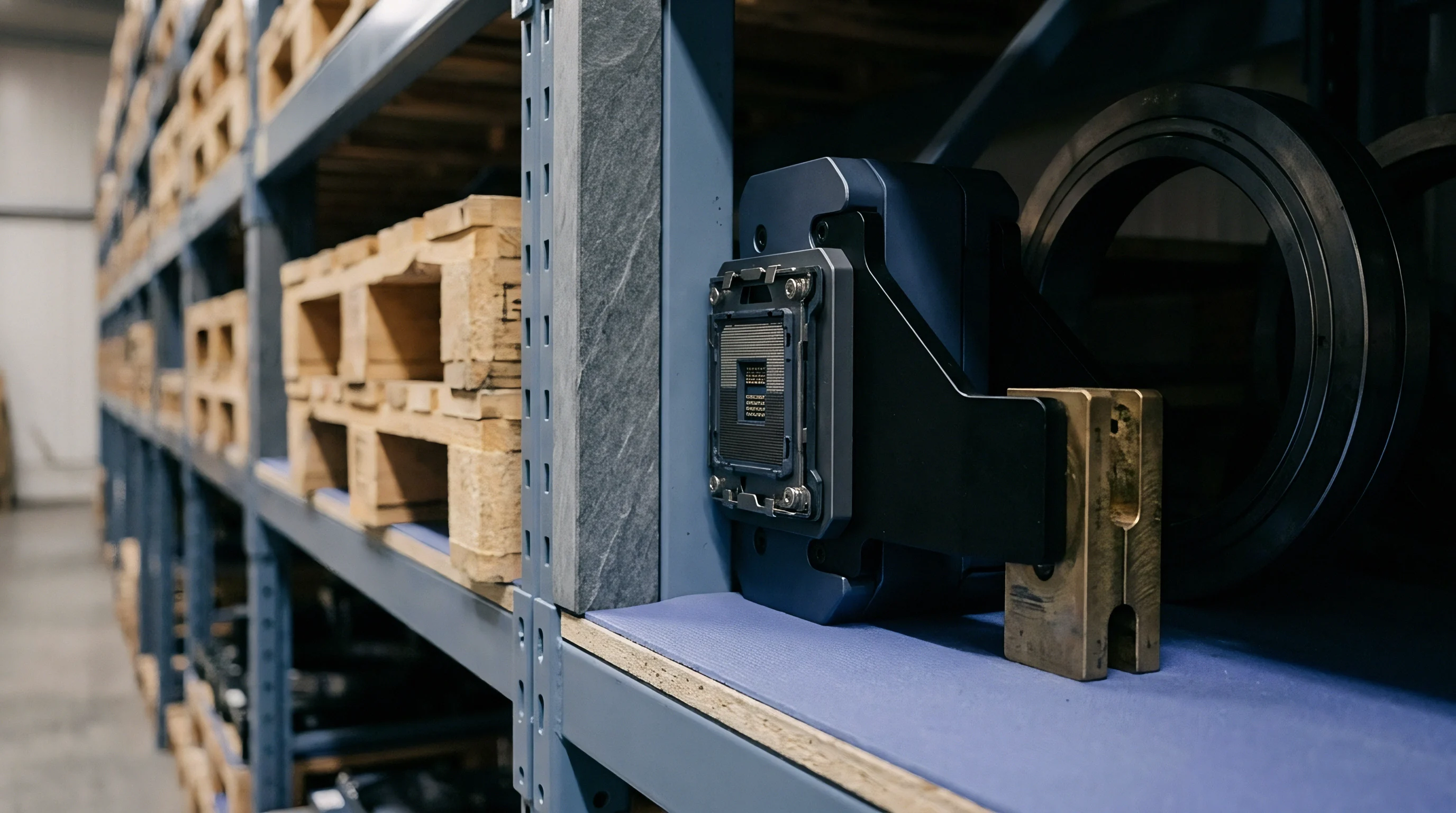
Shielding Enclosure Thermal and RF Discontinuity
Board-level shielding cans suppress near-field electromagnetic interference. Dual-sourced modules frequently feature contrasting thermal dissipation profiles and component heights, altering internal air gaps beneath the shielding frame. Reduced clearance between the module shield and internal inductors increases capacitive coupling, pushing spurious emissions over regulatory limits.
Enclosure seam gaps act as slot antennas at high frequencies. When radiated signals encounter physical breaks in the shield perimeter, localized currents emit field power proportional to the slot length. Hardware integration teams evaluate the mechanical contact pressure along the shield frame to maintain low surface transfer impedance across operating temperature ranges.
Modifications to the internal mechanical layout degrade harmonic suppression. Sub-GHz transmitter harmonics distort high-order cellular bands when internal grounding clips lose contact pressure during thermal expansion cycles. Hardware failures occur when structural changes alter ground return paths, forcing total re-evaluation of board electromagnetic compatibility.

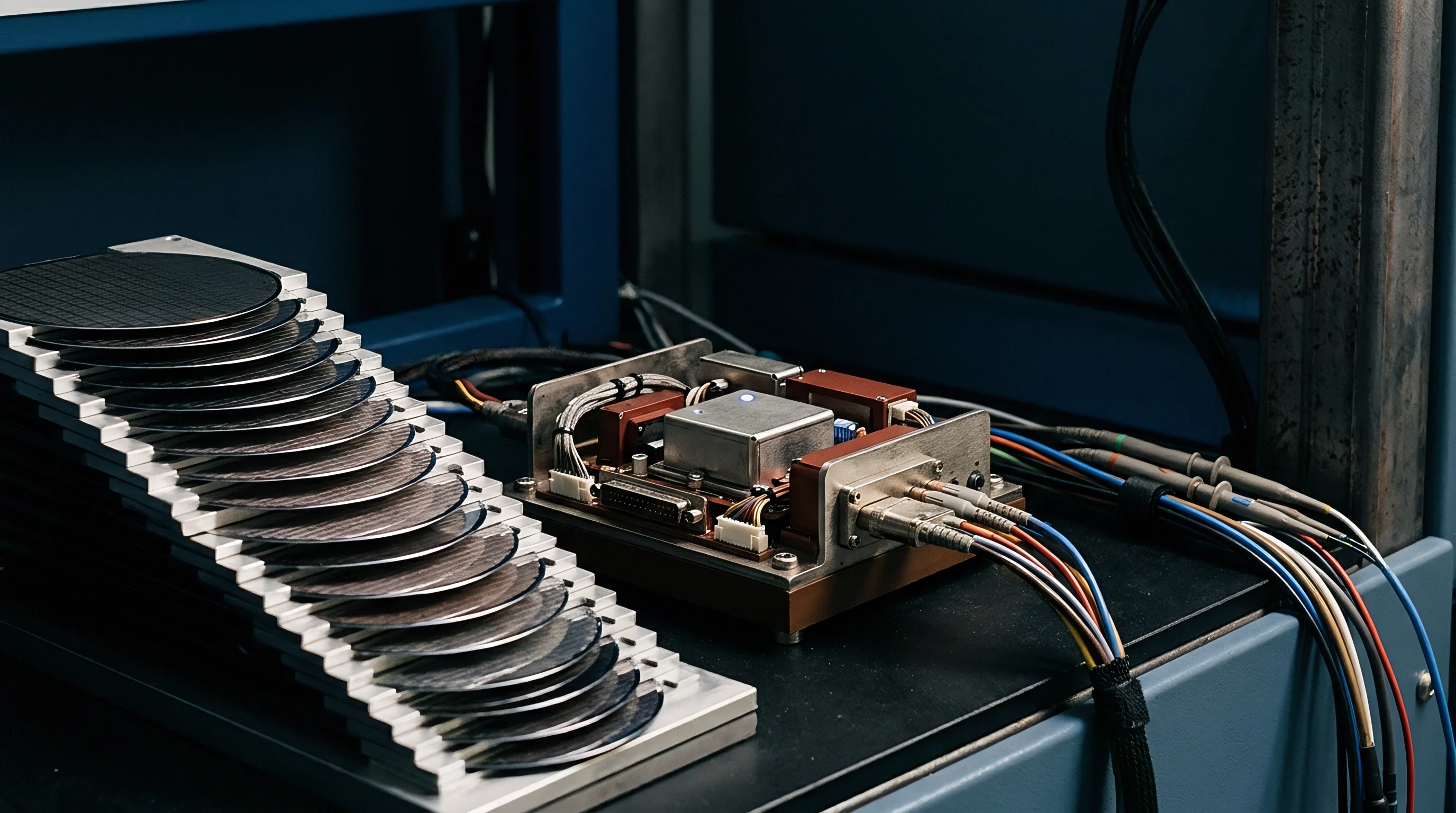
Equivalence
Regulatory bodies classify radio module swaps according to energy distribution and hardware alterations. Federal Communications Commission rules in the United States establish explicit boundaries between permissive change classes. A Class I Permissive Change allows minor hardware updates that preserve transmitter power, spectral mask profiles, and radiated emission figures.
Dropping an alternate pin-compatible module into a host product demands strict verification to confirm emission levels stay within previously granted margins.
European Telecommunications Standards Institute frameworks under the Radio Equipment Directive 2014/53/EU follow a risk-assessment model. Manufacturers execute self-declarations or involve a Notified Body based on technical documentation completeness. Substituting a wireless module requires updating the risk assessment dossier under Article 3.2 radio spectrum efficiency rules.
Modular approvals carry explicit boundaries.
Asian regulatory regimes treat module substitution with rigid procedural thresholds. Japan Ministry of Internal Affairs and Communications rules require Giteki construction design certification updates when RF silicon or internal matching components change. China State Radio Regulatory Commission mandates new equipment approvals if internal transmitter circuitry diverges from original submission schematics.

Regulatory Classification Pathways across Primary Jurisdictions
Navigating cross-border approval updates demands mapping hardware variances against regional filing triggers. The table below outlines how primary radio regulatory agencies treat alternate module substitutions in host devices.
| Jurisdiction | Authority | Minor Swap Filing Route | Major Swap Filing Route | Local Testing Mandatory |
|---|---|---|---|---|
| United States | FCC | Class I Permissive Change | Class II Permissive Change | No (for Class I) |
| European Union | EU RED | Internal Production Control | Notified Body Examination | No (if self-assessed) |
| China | SRRC | Modular Technical Modification | Full CMIIT Equipment Grant | Yes |
| Japan | MIC / Giteki | Minor Technical Revision | New Construction Certification | Yes (for major changes) |
| South Korea | MSIT / KC | Conformity Registration Update | Full Technical Testing Grant | Yes |

Permissive Change Boundaries in Federal Communications Commission Filings
Host manufacturers integrating pre-certified modules leverage original grantee filings to reduce testing overhead. A Class II Permissive Change becomes necessary when an alternate module alters degradation metrics, or when antenna gains exceed previously filed grants. FCC KDB 996369 D02 specifies host integration rules, demanding side-by-side radiated emission comparisons to validate equivalency.
Co-located transmitters exacerbate intermodulation risks. Operating a Bluetooth transceiver concurrently with a 5G Sub-6 GHz module generates intermodulation products inside non-linear host components. Regulatory compliance requires sweeping intermodulation frequencies to demonstrate margins remain intact under simultaneous transmission modes.
- Review original modular grant documents to extract maximum output power, antenna gain limits, and SAR exposure conditions.
- Measure fundamental output power and conducted spurious emissions of the alternate module on a test bench to confirm operational parity with the primary module.
- Mount the alternate module into the final host enclosure fitted with production-grade antenna assemblies.
- Perform radiated spurious emission scans in a fully anechoic chamber across all active transmit bands.
- Compare radiated emission levels against original Class I or Class II Permissive Change baseline figures.
- File updated documentation with a Telecommunications Certification Body or archive internal technical files based on measured margins.
ETSI EN 300 328 Clause 4.3.2.9 mandates transmitter spurious emission limits of minus 30 dBm across the 1 GHz to 12.75 GHz domain.
Antenna gains set field power. Swapping a primary chip antenna for a secondary trace antenna alters the total isotropic radiated power. Regional regulators enforce rules.
Exceeding peak directional gain limits invalidates original modular approvals, driving re-filing timelines out by several months.

Filing
Global approval strategies demand parallel submission sequences to prevent regional product launch delays. Coordinating cross-border filings for dual-sourced designs involves tracking lead times, sample requirements, and in-country agent dependencies. Launching hardware across multiple markets requires synchronized regulatory clearance to support unified manufacturing schedules.
In-country testing presents logistical barriers when importing non-approved radio prototypes. Customs agencies in South Korea, Brazil, and China inspect radio frequency equipment arriving at entry ports. Import permits issued by national spectrum authorities must accompany sample shipments to prevent customs seizures.

Can Alternate Module Integrations Reuse Primary Grant Exposure Evaluations?
Human exposure rules govern radio frequency device deployments near the user body. Specific Absorption Rate testing applies to portable devices operating within 20 centimeters of a person. Swapping wireless modules changes internal power distribution and radio frequency field density near the host enclosure.
Permissive changes allow portable host products to reference existing Specific Absorption Rate data under specific conditions. FCC KDB 447498 D01 permits RF exposure evaluation waivers only when peak output power stays at or below original grant levels and antenna position remains identical. If the alternate module features higher peak power, portable applications mandate full Specific Absorption Rate re-measurement in liquid-filled tissue phantoms.
European markets under standard EN 50566 evaluate electromagnetic field exposure compliance through technical file updates. When module substitution alters output duty cycles or modulation structures, engineers calculate compliance distance boundaries anew. Incomplete SAR documentation delays CE marking application.

In Country Testing Constraints and Sample Logistics
National certification bodies enforce strict physical sample counts for local type approval testing. South Korea National Radio Research Agency requires three modified samples with continuous wave and modulated test firmware burned directly into flash memory. Spurious emissions breach limits.
South Korea National Radio Research Agency certification requires 3 modified samples with accessible test firmware control within 14 calendar days of chamber entry.
Managing alternate vendor configurations across national approval queues introduces specific technical operational failure points:
- Firmware Interface Mismatch prevents test chamber software from locking the alternate module into continuous transmit modes during automated spectral sweeps.
- Uncertified Antenna Assemblies void existing modular test reports, forcing complete spurious radiated emission testing cycles in local laboratories.
- Power Supply Voltage Drift causes carrier frequency instability beyond allocated channel boundaries during extreme environment testing under KC standards.
- Missing Import Authorization Certificates lead to indefinite customs holds at regional import terminals, stalling in-country testing slots.
- Incorrect Label Vector Graphics result in formal rejection during final administrative review by national regulatory agencies.
Alternate vendors change layouts. Laboratory schedules slip when test software fails to set transceivers into mandatory test modes. Retesting costs money.
Local agents repeatedly report that supplier-provided test utilities fail to operate on production-line microcontroller architectures.


Assay
Verification campaigns evaluate peak transmitter output and harmonic generation inside localized enclosures. Evaluating dual-sourced radio modules requires comparative electromagnetic compatibility testing across identical host platforms. Test plans must isolate module-driven noise from host-generated digital bus emissions.
Conducted RF measurements establish basic transceiver output power and frequency stability over temperature extremes. Radiated measurements inside a semi-anechoic chamber capture real-world interactions between the module, host power plane, and peripheral cables. Identifying harmonic spikes early prevents costly re-spins of host printed circuit boards.

Radiated Spurious Emission Comparisons in Anechoic Chambers
Anechoic chamber testing isolates transmitter performance from external ambient spectrum noise. The product turns on a motorized turntable, rotating through 360 degrees while a broadband receiving antenna scans from 1 meter to 4 meters in height. Antenna polarization flips between horizontal and vertical orientations to capture maximum field intensity.
Comparing alternate modules demands identical test configurations. Consider a host device operating a primary LTE Cat-1 module from Vendor A and an alternate pin-compatible module from Vendor B. The test engineer fixes the host software build, power supply voltage, and antenna mechanical position.
Assessing a 4000-unit production run provides a concrete operational scenario. Assume Vendor A modules pass 2.4 GHz harmonic scans with a 6 dB margin below FCC Part 15.247 limits. Vendor B modules, featuring a different internal power amplifier layout, yield a narrower 1.2 dB margin at the third harmonic (7.2 GHz).
While both technically pass initial bench scans, thermal testing at 50 degrees Celsius drives Vendor B amplifier non-linearity, pushing third-harmonic radiation 1.8 dB above the regulatory ceiling.
Remediating Vendor B performance demands adding a high-frequency ferrite clamp and adjusting matching network capacitor values by 0.5 picofarads. The modifications absorb 3.5 chamber testing hours at $450 per hour, plus $2,400 in engineering time. Incorporating these component changes into the Vendor B bill of materials adds $0.18 per unit, raising the overall landed assembly cost across the production batch.
| Test Parameter | Frequency Range | FCC / ISED Threshold | Vendor A Margin | Vendor B Margin |
|---|---|---|---|---|
| Fundamental Power | 2412 – 2462 MHz | 30 dBm Peak Conducted | +4.2 dB | +3.8 dB |
| 2nd Harmonic Emission | 4824 – 4924 MHz | -41.2 dBm / MHz EIRP | +8.5 dB | +5.1 dB |
| 3rd Harmonic Emission | 7236 – 7386 MHz | -41.2 dBm / MHz EIRP | +6.0 dB | -1.8 dB (FAIL) |
| Unintentional Radiated Noise | 30 – 1000 MHz | FCC Class B Quasi-Peak | +12.1 dB | +10.4 dB |
| Occupied Bandwidth | 2400 – 2483.5 MHz | 500 kHz Minimum 6 dB BW | Pass | Pass |

Differential Operating Analysis for Co-Located Radios
Co-located wireless modules in compact host enclosures generate intermodulation signals that degrade receiver sensitivity. Operating Wi-Fi and Bluetooth radios simultaneously requires rigorous desense testing. Noise floors rise when transmit energy leaks into adjacent antenna structures.
Decision criteria for secondary radio sourcing require systematic evaluation before committing to volume purchases:
- Conducted Power Parity within 0.5 dB across all operational channel frequencies.
- Out of Band Emission Margins exceeding 3.0 dB under maximum temperature and voltage stress conditions.
- Intermodulation Product Suppression preventing receiver desensitize cycles on co-located cellular bands.
- Pinout Alignment Verification confirming high-speed digital lines match host PCB land patterns without jumper wires.
- Firmware Command Standardization allowing identical host driver code to control both primary and secondary transceivers.
Radiated spurious emissions fluctuate up to 4 dB when internal cable routing alters antenna ground loop paths.
Certificates define antenna limits. Margin variations directly influence manufacturing yield. A narrow compliance margin forces tighter component tolerances on the production line, raising unit scrap rates during end-of-line quality checks.


Landed
Customs officers review documentation. Incomplete declarations halt shipments. Securing cross-border market entry requires aligning physical product marking, digital compliance declarations, and customs documentation across every target territory.
Customs inspectors verify physical compliance marks against national databases before clear entry permissions issue. Non-compliant labelling results in shipment detentions, bonded warehouse fees, and mandatory re-labelling at border facilities. Product compliance officers implement rigorous e-labelling and physical marking checks to ensure host products clear port authorities without delays.

Electronic Labeling and Physical Mark Registration
Electronic labelling frameworks under FCC KDB 784748 and EU directives allow host devices with integrated displays to render regulatory marks digitally. Implementing electronic labelling reduces physical enclosure printing costs and accommodates multi-region regulatory text. The physical packaging, however, must still carry primary import identification numbers.
Physical marking requirements vary widely across global markets. Japan Giteki requires the mark symbol alongside the specific technical conformity logo and unique certificate number on the outer housing. South Korea KC marking demands the mark graphic, registration number, and localized warning statements printed in Korean script.
Dual-sourced modules complicate physical labeling when registration numbers differ between primary and secondary radio vendors. If the host device leverages modular approvals directly, the enclosure outer surface must display both potential module registration IDs, or utilize an e-label menu accessible within three user interactions.

Host Declaration Management and Customs Audits
Host manufacturers issue EU Declarations of Conformity under their own legal identity, listing applied harmonized standards and module integration details. Maintaining a dual-sourced architecture means the technical dossier must archive test reports for both module variants. Audits by national market surveillance authorities mandate presenting full technical construction files within ten working days.
Customs audits rely on automated verification databases. China Customs cross-checks CMIIT ID codes printed on imported wireless products against SRRC public grant records. Discrepancies between physical module IDs inside the housing and declared paperwork trigger immediate administrative holds.
Maintaining regulatory equivalence across dual-sourced module architectures hinges on disciplined test verification, precise permissive change tracking, and proactive documentation archiving. Unresolved compliance variances discovered late in the supply chain freeze finished goods inventory, eroding product margins through delayed market entry.
How far should a host manufacturer go in maintaining separate regional modular filings before the administrative overhead outweighs the unit-cost savings of secondary sourcing?