Resolving Subsystem Vendor Intellectual Property Non Disclosure Conflicts in Cross Border Technical Construction Files
Direct regulatory submittals split confidential subsystem trace layouts from host construction files to preserve vendor proprietary assets during type approvals.


Conflict
Integrating a third-party cellular or Wi-Fi module into a commercial host platform triggers strict technical construction file mandates across every major regulatory jurisdiction. Host manufacturers accept full legal responsibility for product compliance, requiring unrestricted access to schematics, internal layout files, register settings, and bill-of-materials documentation. Subsystem vendors design proprietary radio frequency silicon, customized power amplifier matching networks, and embedded firmware routines that represent valuable intellectual property.
Passing these assets to host integration partners exposes trade secrets to commercial disclosure, reverse engineering, or competitive leaks during overseas manufacturing contracts.
Global regulatory agencies mandate complete technical disclosure to issue equipment authorizations. Under the European Union Radio Equipment Directive 2014/53/EU Article 10.10, the technical file holds detailed circuit diagrams, structural block layouts, operational descriptions, and component lists. Federal Communications Commission rules in the United States enforce parallel requirements under Title 47 CFR Part 2 Section 2.1033.
When a subsystem vendor sells a radio module as an unapproved component or surface-mount system-on-chip, the host manufacturer builds the final compliance dossier. Subsystem vendors guard layout files. Host integrators demand complete technical disclosures to satisfy import authorities.
This friction creates legal gridlock that halts market entry timelines, locks shipments at border control stations, and leaves cross-border procurement orders unfulfilled.
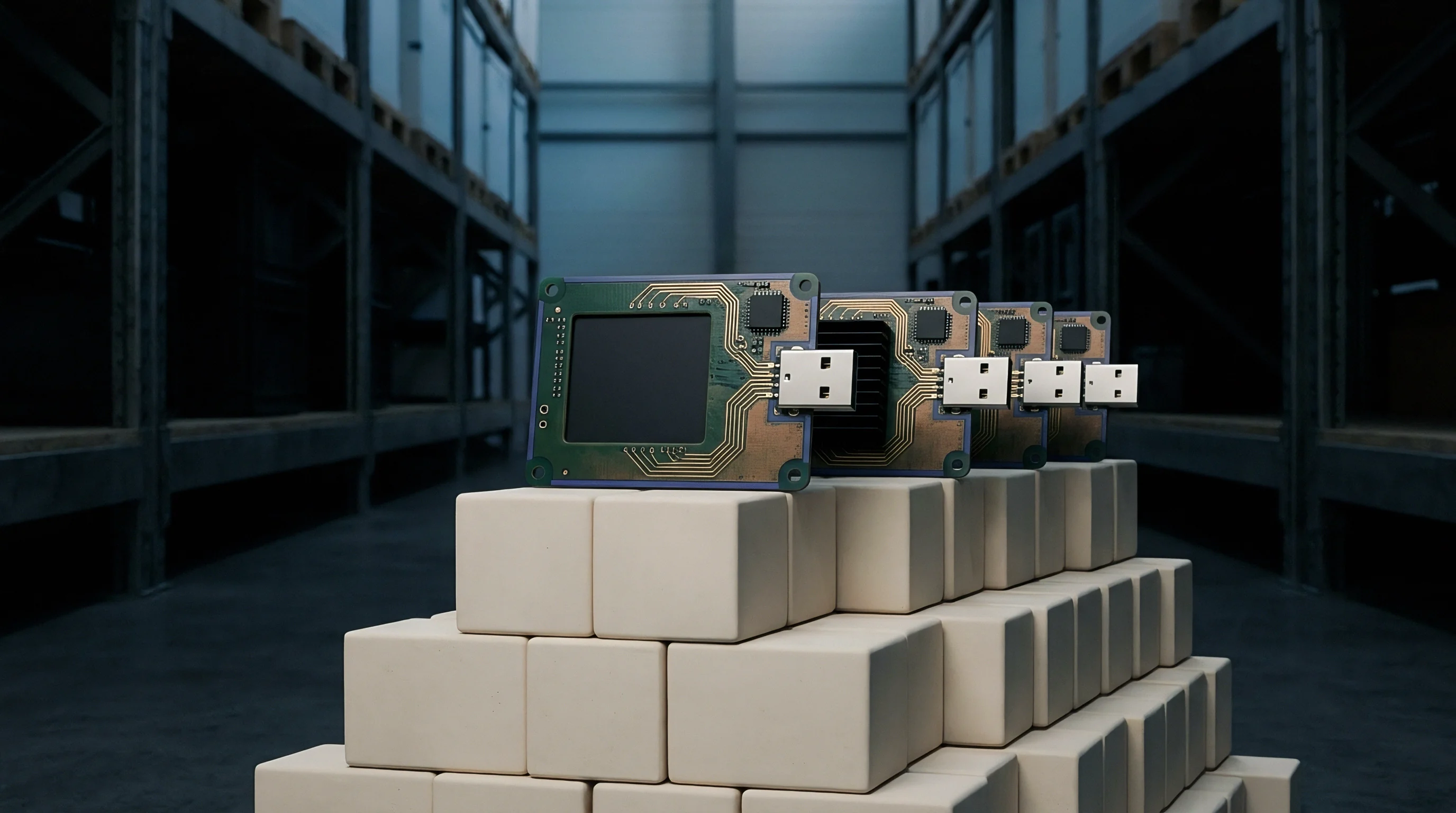
Regulatory Construction File Mandates across Global Jurisdictions
European market clearance requires a technical construction file containing full schematic details, component manufacturing references, and internal trace layout patterns. Notified Bodies examining products under RED Annex IV review complete hardware schematics to verify compliance with harmonized standards like ETSI EN 300 328 for 2.4 GHz systems or ETSI EN 301 893 for 5 GHz devices. The regulatory authority checks every high-frequency signal path, decoupling network, and ground plane stitching structure.
Omitting high-frequency trace geometries or component part numbers yields an incomplete dossier, preventing the issuance of an EU-Type Examination Certificate.
United States equipment authorization through Telecommunication Certification Bodies demands comparable hardware visibility. Federal Communications Commission filings mandate block diagrams detailing oscillator frequencies, tuning ranges, signal paths, and operational descriptions explaining modulations, power settings, and software control mechanisms. In East Asian markets, State Radio Regulatory Commission procedures in China and Radio Law certification under the Ministry of Internal Affairs and Communications in Japan mandate exact submittal of underlying circuit designs.
Customs holds the shipment. Without direct submittals or certified module grants, the host platform remains illegal to import, distribute, or sell.
| Regulatory Jurisdiction | Governing Standard Or Rule | Mandatory Subsystem Dossier Contents | Public Access Risk Level |
|---|---|---|---|
| United States (FCC) | 47 CFR 2.1033 | Schematics, block diagrams, operational descriptions, internal photographs, bill of materials | High without explicit 47 CFR 0.459 confidentiality requests |
| European Union (RED) | 2014/53/EU Annex III & IV | Circuit diagrams, trace layouts, manufacturing drawings, operational description, component specs | Medium held in manufacturer TCF, subject to authority audit |
| China (SRRC) | Radio Regulation Rules | Exact circuit schematics, board assembly files, frequency matrix, operational description | High retained by domestic test centers and regulatory agency |
| Japan (MIC) | Radio Law Article 38 | System schematics, antenna pattern files, trace layout dimensions, gain tables | Medium archived by registered certification body |

Hardware Boundary Friction between Subsystem Vendors and Host Integrators
System-on-chip radio vendors construct proprietary impedance matching circuits and internal power tables that yield high RF efficiency. Exposing these component values and layout geometries to external engineering teams grants host integrators the capability to duplicate the radio board design on future hardware iterations without purchasing the original subsystem module. Vendor legal teams default to restrictive non-disclosure agreements that forbid revealing internal schematics, component values, or gerber layout files to third-party host integrators.
Host integrators face strict post-market compliance liabilities. If a modified host device creates harmful interference or exceeds radiated spurious emissions limits established under CISPR 32, national market surveillance entities audit the host integrator rather than the component supplier. Host engineers cannot assess radiated emissions failure risks or design effective shielding enclosures without understanding internal switching frequencies, decoupling strategies, and trace routing on the subsystem board.
Commercial contract negotiations freeze when module vendors offer only high-level connection diagrams while host integrators refuse to issue purchase orders without complete hardware documentation.
- Proprietary Schematic Exposure reveals internal integrated circuit pinouts, internal trace routing layers, passive component values, and custom passive matching networks to direct integration partners.
- Firmware Parameter Secrecy shields factory calibration settings, power look-up matrices, adaptive frequency hopping algorithms, and proprietary dynamic frequency selection execution mechanisms from host inspection.
- Bill Of Materials Disclosure exposes exact supplier sourcing options, component pricing structures, raw wafer supplier references, and specialized inductor manufacturing sources to competitive buyer teams.
- Trace Layout Protection prevents host integrators from copying microstrip line dimensions, coplanar waveguide ground clearances, layer stackups, and high-frequency antenna feed geometry.
Subsystem suppliers frequently insist that their proprietary module files remain entirely sealed inside factory vaults, offering only basic block diagrams and pinout pin-definition drawings to host integrators.


Redaction
Accredited test laboratories require physical circuit schematics and detailed component placements to verify RF exposure paths, occupied bandwidth parameters, and spurious emission modes. Test reports generated under ISO/IEC 17025 accreditation must explicitly tie measured electromagnetic compatibility performance to the exact physical sample under test. Obscuring essential circuit connections on submittal schematics causes accredited test houses to reject the test sample or issue conditional reports that regulatory agencies immediately return for corrections.
Engineering teams attempt to resolve trade secret exposure by applying digital masks or obscuring sensitive component sections before submitting technical construction files. Partial masking passes regulatory screening only when the redacted elements do not govern fundamental radio frequency generation, modulation mechanics, harmonic filtering, or spurious emission suppression. Blacking out entire passive filter networks or integrated circuit block identifiers invalidates the technical dossier.
The laboratory verifies emissions. Unredacted schematics leak core trade secrets. Regulatory reviewers identify structural omissions instantly, halting certification queues until complete technical files arrive.
Unapproved physical component modifications on a subsystem board alter radiated spurious emissions above 1 GHz by more than 8 dB under CISPR 32 testing conditions.

Laboratory Diagnostic Access versus Commercial Secrecy Thresholds
Chamber testing requires precise physical insight into board layout structures to troubleshoot radiated emission spikes during pre-scan evaluations. When an unshielded clock line or power converter harmonic exceeds the radiated limits set by ETSI EN 301 489-17 or FCC Part 15 Class B, chamber engineers must isolate the radiating structure on the physical board. Masked layout drawings prevent chamber personnel from applying localized ferrite shielding, modifying decoupling capacitors, or grounding trace runs.
This ignorance extends chamber residence time, expanding test facility costs exponentially.
Operating frequency selection software forced by module firmware must align strictly with reported operational descriptions. Test engineers verify that software controls lock RF power outputs to certified levels across all supported channel bandwidths. Obscuring firmware control protocols or register access codes in technical documentation prevents test technicians from forcing continuous transmission modes required for testing occupied bandwidth under FCC 47 CFR 2.1049.
A product unable to enter raw test modes cannot complete accredited testing, leaving the technical file lacking required measurement reports.

Acceptable Block Diagram Abstractions and Bill of Materials Anonymization
Federal Communications Commission guidelines under KDB 726920 establish clear boundaries between acceptable structural abstraction and unacceptable document omission. Functional block diagrams must indicate all intermediate and carrier frequencies, master clock oscillators, RF power amplifier stages, and antenna matching arrangements. Component values and passive part numbers on these diagrams may use functional abstraction designations, provided the primary schematic submitted under long-term confidentiality exhibits exact component values.
Bill of materials files submitted for certification allow strategic anonymization of non-critical support parts while preserving full transparency for RF-critical components. Passives operating in low-frequency digital logic lines, generic power indicator LEDs, and mechanical connectors can drop manufacturer part numbers without regulatory penalty. Capacitors, inductors, filters, and semiconductor devices sitting within the high-frequency RF path, power amplifier output filters, or antenna tuning networks retain full part number and manufacturer identification within the confidential exhibit submittal.
Stripping all part numbers and trace details from a submittal dossier results in direct filing rejection by the Telecommunication Certification Body, forfeiting non-refundable agency review fees while resetting the regulatory approval calendar by four to eight weeks.

Dossier
Bypassing host integrator inspection while fulfilling statutory filing duties requires a formal split between public certification records and restricted engineering submittals. Telecommunication Certification Bodies and Notified Bodies maintain secure file upload portals that allow subsystem vendors to upload sensitive schematics, gerber files, and operational descriptions directly into the regulatory vault. The host integrator submits host platform assembly drawings, overall block diagrams, and system test reports without holding custody of the underlying module intellectual property.
This dual-dossier structure relies on specialized regulatory mechanisms recognized by major global enforcement authorities. The host platform dossier holds the complete end-product compliance evidence, citing the subsystem vendor’s official approval reference or private confidential exhibit code. Subsystem vendors maintain direct legal control over their technical filings.
The regulatory body cross-references the restricted submittal against the host application during official review. This segregation allows full regulatory oversight while preventing host engineering teams from inspecting proprietary internal module schematics.

Long Term Confidentiality Mechanisms under Federal Communications Commission Rules
United States equipment authorization procedures under 47 CFR 0.457 and 47 CFR 0.459 grant formal legal protections to proprietary technical submittals. When submitting filings to a Telecommunication Certification Body, subsystem vendors submit explicit long-term confidentiality letters requesting that schematics, block diagrams, operational descriptions, and internal photographs remain permanently withheld from public inspection on the Federal Communications Commission public database.
Internal photographs usually enter the public domain once a grant issues. To secure long-term confidentiality for internal photographs, the subsystem vendor must prove that the module assembly uses epoxy encapsulation, ultrasonic welding, or specialized tamper-resistant potting compounds that prohibit physical user inspection without destroying the device. The vendor can also demonstrate that the module sells exclusively to commercial business partners under binding non-disclosure contracts rather than directly to retail consumers over retail counters.
Federal Communications Commission rules under 47 CFR 0.459 mandate permanent non-disclosure of schematics and operational descriptions when formal confidentiality letters accompany direct TCB filings.

Split Technical File Structure under European Union Radio Equipment Directive
European regulatory procedures under RED 2014/53/EU allow host integrators to compile an EU Declaration of Conformity by integrating a pre-assessed radio subsystem. Under RED Article 10.2, the host manufacturer retains responsibility for end-product compliance but can draw upon the module vendor’s technical file. The module vendor submits proprietary schematics, trace layout files, and component lists directly to an accredited European Notified Body under an EU-Type Examination procedure under Annex IV.
The Notified Body issues an EU-Type Examination Certificate directly to the module vendor. The module vendor then provides the host integrator with a formal Certificate of Conformity, operational integration instructions, and an abbreviated technical summary. The host integrator inserts these documents into the host technical construction file alongside host-level immunity and safety test reports.
The host technical construction file satisfies RED Annex III requirements while keeping the subsystem vendor’s primary circuit schematics fully locked inside the Notified Body archive.

Where Does Confidentiality Fail under Notified Body Inquiries?
National market surveillance authorities, such as BNetzA in Germany or ANFR in France, possess statutory rights under RED Article 34 to request the full technical construction file during post-market audits. If a market surveillance authority identifies a compliance anomaly in a commercial host product, it issues a formal document production demand to the host manufacturer named on the EU Declaration of Conformity. The host manufacturer has ten business days to produce the complete technical dossier.
Because the host manufacturer does not hold the subsystem vendor’s secret schematic files, the host must contact the module vendor to supply the missing engineering records to the investigating authority. If the module vendor fails to deliver the restricted schematics directly to the national market surveillance authority within the statutory window, the authority declares the host product non-compliant. The agency revokes market authorization, issues border stop-shipment directives, and imposes financial penalties directly on the host manufacturer.
Non-disclosure agreements between private commercial parties cannot overrule statutory document production orders issued by national radio regulators.
| Filing Document Type | Public Access Default Status | FCC Long Term Confidentiality Route | RED Technical Construction File Treatment |
|---|---|---|---|
| Schematic Diagrams | Public after grant release | Permanently confidential via 47 CFR 0.459 submittal | Held in restricted vendor dossier or Notified Body vault |
| Block Diagrams | Public after grant release | Permanently confidential via 47 CFR 0.459 submittal | Included in host TCF or restricted vendor filing |
| Operational Description | Public after grant release | Permanently confidential via 47 CFR 0.459 submittal | Held in restricted vendor dossier |
| Internal Photos | Public after grant release | Requires sealed housing proof or non-consumer sales NDA | Held in restricted vendor dossier or host TCF |
| User Integration Manual | Public after grant release | Public, operational integration limits must be open | Publicly accessible in host compliance records |
Federal Communications Commission KDB Publication 726920 D01 mandates that integration instructions provided to host manufacturers must contain all necessary operational boundaries without disclosing proprietary internal circuit schematics.


Conduit
Cross border market access introduces mandatory local representative entities who hold legal custody of technical documentation within foreign municipal jurisdictions. Navigating certifications in markets outside the European Union and the United States forces foreign subsystem vendors to submit physical test samples, hardware schematics, and operational code to domestic regulatory bodies. These local agencies often reject direct foreign submittals, requiring a resident corporate entity to act as the legal holder of the regulatory grant.
Local representatives accept statutory liability for device compliance within domestic borders. This legal standing gives foreign agents broad legal rights to demand internal technical construction files, including full circuit schematics, internal gerber files, and board fabrication details. Placing secret hardware documentation with external third-party local agents exposes subsystem vendors to intellectual theft, regulatory leaks, or unauthorized disclosure to domestic commercial competitors operating in the target jurisdiction.

Local Representative Legal Exposure in East Asian Type Approval Regimes
China State Radio Regulatory Commission certification requires direct submittal of technical parameters, functional schematics, and operating radio parameters to accredited domestic testing centers. Domestic radio oversight rules dictate that local corporate entities or authorized Chinese branches manage filing submittals. The domestic applicant holds legal ownership of the SRRC type approval certificate, granting that entity legal authority over the technical documentation tied to the grant.
Subsystem vendors guard layout files. Foreign module vendors must use contractual agency frameworks to prevent local agents from claiming ownership over submitted intellectual property.
Japan Ministry of Internal Affairs and Communications type approvals under the Radio Law follow parallel structural boundaries. Foreign manufacturers may hold Japanese certification grants directly through a designated local representative under Article 38-24 of the Radio Law. However, the designated local representative must maintain direct access to technical documentation to answer MIC surveillance inquiries.
Establishing explicit technical asset custodianship contracts ensures that domestic agents act strictly as administrative channels without acquiring property rights over submitted technical files.

In Country Testing and Local Agent Non Disclosure Frameworks
Securing equipment approval in markets like Brazil under ANATEL rules or South Korea under National Radio Research Agency procedures mandates local chamber testing. Foreign subsystem vendors must ship unreleased hardware samples and pre-production silicon across international borders to local test laboratories. Testing protocols require local lab technicians to flash debug firmware, manipulate internal transmission channels, and access board-level test points.
Proprietary test interfaces and firmware commands face exposure during these laboratory evaluations.
Tripartite non-disclosure agreements executed between the foreign module vendor, the host integrator, and the licensed local agent establish strict operational controls over confidential files. These contracts restrict local agent usage of technical files solely to regulatory certification tasks, forbidding document transfer to secondary commercial parties or host sales divisions. The agent assumes liability.
Local representative entities must execute binding agreements to store all technical submittals on secure, encrypted servers located within restricted regulatory departments, preventing corporate leaks.
- Execute a binding tripartite non-disclosure agreement naming the foreign subsystem vendor, the host integrator, and the licensed local in-country representative prior to releasing any technical documentation.
- Obtain a specialized grantee code from the local regulatory authority registered directly to the foreign subsystem vendor entity rather than the domestic sales agent.
- Upload circuit schematics, operational descriptions, and gerber files to a secure encrypted vault with access restricted exclusively to the lead regulatory agent engineer.
- Deliver pre-configured test samples running locked test firmware directly to the accredited local test chamber, omitting raw source code or uncompiled board design files.
- Issue restricted integration guidelines to the local host manufacturer containing external boundary conditions, decoupling instructions, and pinout diagrams while withholding internal silicon layout topologies.
- Retrieve or remotely wipe proprietary diagnostic firmware tools from local laboratory test fixtures immediately upon completion of accredited chamber measurements.
In-country local representatives holding regulatory grants acquire statutory custodial rights over submittal technical files under foreign radio laws unless restricted by explicit intellectual property agreements.
What contractual mechanisms prevent a foreign local agent from retaining technical construction file custody after the commercial distribution contract terminates?


Clause
Commercial procurement agreements anchor the procedural mechanics of regulatory submittals directly to purchase order release gates and financial remedies. Generic non-disclosure agreements fail to resolve technical file conflicts because standard trade secret clauses omit specific regulatory filing workflows, TCB direct submittal mechanics, and market surveillance document production schedules. Sourcing practice contracts must include precise regulatory submittal addendums that define how confidential documentation moves between component vendors, host integrators, accredited labs, and national authorities.
Master supply agreements must align technical asset access with component shipment milestones. Host integrators protect their production schedules by writing compliance covenants into supply contracts, penalizing module suppliers who refuse to supply necessary technical file exhibits to certification bodies. Module vendors safeguard their intellectual assets by establishing strict contractual definitions of what constitutes acceptable technical file submittals, prohibiting host integrators from demanding full internal schematics when split-dossier filing options exist under governing regional rules.

Technical Information Escrow Structures for Proprietary Radio Modules
When subsystem vendors refuse to upload secret schematics to host databases, third-party technology escrow agreements provide a legally balanced compromise. The subsystem vendor places detailed schematics, gerber files, bill-of-materials references, and firmware source code into a secure electronic escrow account managed by an independent third-party escrow agent. The escrow contract names the host integrator as the beneficiary under tightly defined operational trigger conditions.
Escrow release conditions kick in under specific regulatory enforcement triggers. If the subsystem vendor dissolves as a corporate entity, fails to maintain regulatory grant validity, or refuses to respond to a formal market surveillance document demand from a regulatory authority within five business days, the escrow agent releases the locked technical construction file directly to the requesting regulatory body or host legal counsel. Escrow releases the file.
Under normal operating conditions, the host integrator cannot access or view the escrowed technical files, preserving vendor trade secrets throughout standard commercial supply cycles.
| Submittal Filing Architecture | Initial Filing Expense Overhead | Average Time To Market Schedule | Vendor IP Exposure Risk Profile |
|---|---|---|---|
| Direct Full Technical Disclosure To Host | Standard base test fees ($12,000 – $18,000) | Fastest baseline schedule (6 – 8 weeks) | Unprotected, complete layout details transferred to host |
| Split Dossier TCB / Notified Body Upload | Low administrative markup ($14,000 – $22,000) | Standard evaluation schedule (7 – 9 weeks) | High protection, locked inside official agency vaults |
| Third Party Intellectual Property Escrow | High setup and annual vault fees ($22,000 – $35,000) | Extended contract setup schedule (10 – 14 weeks) | Maximum commercial protection backed by release triggers |
| Pre-Approved Full Modular Grant Integration | Minimal host integration testing ($5,000 – $10,000) | Accelerated market entry (2 – 4 weeks) | Zero exposure, vendor manages all internal module files |

Retest Financial Risk Allocation and Technical Dossier Maintenance Covenants
Subsystem vendors routinely modify internal module components, silicon spin steps, or passive board layouts across multi-year manufacturing runs to resolve component shortages or lower unit production costs. Under Federal Communications Commission rules, internal component modifications trigger Permissive Change classifications defined under 47 CFR 2.1043. A Class I Permissive Change permits minor modifications without agency filings, whereas a Class II Permissive Change mandates accredited chamber re-testing and formal TCB approval.
Failure to define retest financial liabilities in procurement contracts yields expensive commercial friction. If a module vendor executes an unannounced component swap that alters host radiated emissions, the host integrator must pay for emergency chamber testing, file new permissive changes, or halt production entirely. Procurement contracts must include mandatory change notification covenants requiring module vendors to give ninety days advance written notice before changing RF-critical components.
The contract must mandate that the subsystem vendor covers all accredited test house re-testing costs and agency filing fees caused by vendor-initiated hardware modifications.
- Direct Agency Submission Mandates compel subsystem vendors to submit confidential exhibits directly to designated Telecommunication Certification Bodies or Notified Bodies within ten business days of host contract execution.
- Permissive Change Financial Covenants assign all chamber re-testing fees, agency review expenses, and host engineering labor costs to the subsystem vendor when vendor-initiated hardware alterations invalidate existing grants.
- Regulatory Audit Support Terms obligate subsystem vendors to deliver complete technical construction file documentation to investigating market surveillance authorities within seven days of official notice.
- Escrow Release Trigger Definitions establish objective legal criteria allowing independent escrow agents to release technical files directly to regulatory bodies during vendor insolvency or audit default events.
Section 14.3 of the Standard Subsystem Sourcing Addendum establishes that vendor failure to supply certified regulatory exhibits within fourteen calendar days constitutes a material contract breach authorizing immediate order cancellation.
Contractual guarantees executed without clear technical definition and firm escrow enforcement mechanisms fail to protect host market access during regulatory market audits.


Remedy
Resolving intellectual exposure while securing market entry requires a synchronized execution plan spanning product specification, TCB submission, and market surveillance readiness. Sourcing practice teams must establish operational protocols that separate the host integration file from the module internal manufacturing file long before physical samples enter accredited test chambers. The compliance workflow requires clear boundaries between public parameters, host operational instructions, and confidential silicon schematics.
Engineering managers must map every submittal document to its correct filing target during the product design phase. Choosing full modular approvals, limited modular approvals, or direct component integration dictates the legal and procedural path required. When using uncertified system-on-chip radio subsystems, host procurement managers must secure direct submittal agreements with the silicon vendor during price negotiations, rather than attempting to renegotiate technical access terms during final compliance testing.

Unified Dual Dossier Operating Workflow
Executing a split-dossier submittal begins with establishing a designated Telecommunication Certification Body or Notified Body capable of managing restricted direct vendor uploads. The subsystem vendor secures a unique grantee code or confidential file reference from the agency portal. The vendor then uploads circuit schematics, operational descriptions, block diagrams, and gerber files directly into the restricted database path, attaching formal long-term confidentiality request letters under 47 CFR 0.459 or RED Annex IV rules.
The host integrator builds a parallel host technical dossier containing non-confidential system block diagrams, power supply wiring layouts, host PCB trace interconnect drawings, user integration manuals, and accredited chamber test reports. The host compliance team cites the subsystem vendor’s confidential filing reference code within the host application dossier. The certification body links the two submittals inside its secure archive, evaluating full end-system compliance without exposing the module vendor’s secret layout files to host engineers.
Grants expire upon modification. Certification drives launch timing. The split-dossier strategy secures market authorization while keeping vendor IP locked.

Market Surveillance Response Audits and Post Grant Governance
Maintaining regulatory access over multi-year product lifecycles demands persistent dossier maintenance under post-market surveillance programs. European Union rules under RED Article 10.10 require manufacturers to store complete technical construction files for ten years after the last unit enters market distribution channels. Both host integrators and subsystem vendors must retain secure digital archives of all original submittals, test reports, and permission grant certificates.
When national surveillance authorities issue surprise compliance verification requests, the host integrator immediately transmits the non-confidential host dossier to the investigating agency while providing formal notice to the subsystem vendor. The subsystem vendor then transmits its archived confidential file directly to the surveillance officer handling the file, referencing the host product registration code. This dual-transmission protocol satisfies statutory government transparency requirements within required response windows, defending host market access without compromising subsystem trade secrets.
- Establish Secure Direct Upload Channels with accredited Telecommunication Certification Bodies and Notified Bodies before executing physical chamber testing campaigns.
- Execute Tripartite Non Disclosure Agreements covering in-country local representatives, domestic test laboratories, and third-party escrow administrators.
- Maintain Ten Year Dual File Archives detailing exact software builds, internal hardware revision levels, and original regulatory submittal exhibits for post-market surveillance defense.
- Incorporate Permissive Change Financial Terms into initial component purchase orders to protect host integrators against unannounced vendor hardware revisions.
Establishing clear technical construction file boundaries prior to hardware freeze resolves the friction between component trade secret protection and global market clearance mandates. Sourcing teams that integrate direct TCB submittal channels and third-party escrow options into initial procurement contracts eliminate border stop-shipment hazards, optimize launch dates, and enforce regulatory compliance across all target distribution jurisdictions.