Technical Documentation Updates under European Standard Changes
Updating European technical files requires monitoring standard cessation dates, re-testing hardware gaps, and renewing declarations before market entry stops.


Presumption
Publication in the Official Journal of the European Union sets the regulatory clock for hardware compliance. When a harmonised standard receives citation in the Official Journal, it enters service with a defined date of cessation regarding the superseded edition. Manufacturers distributing products across European member states under the Radio Equipment Directive maintain continuous responsibility for tracking these transition dates.
Technical files maintain legal validity only while cited standards demonstrate alignment with active essential requirements. Time drives compliance. The transition period generally spans eighteen to thirty-six months.
During this window, legacy shipments move across borders under the outgoing standard, but fresh production runs facing the end of the transition window need immediate technical file revisions.
Annex VI of Directive 2014/30/EU renders a declaration of conformity invalid once the referenced harmonised standard loses its publication status in the official journal.
Legal conformity requires dynamic documentation tracking. A product placed on the market one day after a standard’s date of cessation without updated documentation violates European market access laws. Importers and distributors verify that technical records reflect current standard citations before accepting cargo into European warehouses.

Official Journal Transition Cycles
European standardization bodies periodically update test methods, emission limits, and operational specifications to reflect spectrum congestion and hardware developments. The publication date in the Official Journal marks the beginning of the overlapping implementation period. Market access relies on the presumption of conformity granted under Article 16 of the Radio Equipment Directive.
When that presumption expires for a specific standard edition, the technical construction file supporting the product loses its automatic proof of compliance. Importers retain technical documentation for ten years. Regulatory enforcement actions target the entity placing the product on the market if the file references withdrawn standards.

Triggering Events for Technical Re-Evaluation
Re-evaluating a product file involves distinct operational milestones across the product lifecycle. Standards decay quickly. Changes to technical parameters cannot be managed through administrative file updates alone.
- Harmonised standard cessation occurs when the transition window published in the Official Journal reaches its terminal date.
- Essential requirement revisions alter the underlying legal threshold, such as cybersecurity additions under RED Article 3.3.
- Component obsolescence forces schematic changes that modify transmitter frequency stability or spurious emission profiles.
- Enclosure alterations change internal metallic reflection paths and alter radiated immunity performance.
Article 10(6) of Directive 2014/30/EU binds the importer to verify that the technical documentation remains accessible to enforcement bodies for ten full years after product placement.


Delta
Evaluating differences between standard versions demands raw measurement analysis rather than reliance on high-level administrative summaries. Standard updates often change test setups, receiver bandwidths, or detector types. Transitioning from older wireless standards to updated revisions introduces structural changes in how test laboratories record data.
Testing takes time. For instance, revisions to broadband data transmission standards under ETSI EN 300 328 alter how duty cycles and receiver blocking are evaluated. A simple statement of equivalence from a component vendor fails to satisfy market surveillance authorities when the underlying test methods differ fundamentally.
| Standard Designation | Legacy Specification | Updated Specification | Retest Trigger Condition |
|---|---|---|---|
| ETSI EN 300 328 | v2.1.1 (Receiver Category 2/3) | v2.2.2 (Revised Blocking Limits) | Transmitter power output exceeding 10 dBm EIRP |
| ETSI EN 301 893 | v2.1.1 (Dynamic Frequency Selection) | v2.1.2 (Preamble Detection Thresholds) | 5 GHz operations sharing bands with meteorological radar |
| ETSI EN 301 489-17 | v3.1.1 (Basic EMC Conditions) | v3.2.4 (Complex Modulation Immunity) | Transceiver co-location with cellular modules |
| EN 62368-1 | Edition 2 (Hazard-Based Safety) | Edition 3 (Outdoor Application Additions) | Power supply circuit redesign or enclosure material swap |
Testing laboratories isolate specific parameter changes to minimize chamber time. When receiver blocking criteria change, engineers re-evaluate the radio under maximum path loss simulation. Receivers demand bandwidth.
Conducted power levels may remain within historic tolerances while radiated spurious emissions shift due to updated test firmware or altered modulation modes.
A receiver blocking threshold shift of 2 dB under EN 300 328 v2.2.2 alters test pass margins for devices operating adjacent to LTE Band 7 allocations.

Receiver Selectivity and Blocking Re-Tests
Modern radio standards place stringent demands on receiver performance to prevent inter-service interference. Legacy standards permitted broad receiver performance self-declarations, whereas updated standards mandate rigorous measurement of receiver selectivity, adjacent channel rejection, and blocking. Testing requires injecting an unwanted interfering signal at specified frequency offsets while observing the bit error rate or frame error rate of the device under test.
If the device fails to maintain communications above the defined degradation threshold, the hardware fails the update. Hardware changes cost money.
Consider a 2.4 GHz industrial controller tested under an older edition of EN 300 328. Assume the device operates at 17 dBm EIRP using a direct sequence spread spectrum modulation. Under the updated standard, the receiver blocking test subjects the device to an interfering signal at 2400 MHz and 2500 MHz at a power level of -34 dBm.
If the original receiver design incorporated a low-cost front-end filter with poor attenuation at the band edges, the interfering signal drives the low-noise amplifier into saturation. The laboratory records a packet loss rate exceeding the 1 percent limit. Resolving this gap demands adding a high-rejection surface acoustic wave filter to the RF front-end, followed by full re-testing of transmitter output power and spurious emissions.

Spurious Emission Limit Realignment
Radiated spurious emission scans require scanning the spectrum up to the fifth harmonic of the highest internal clock frequency. Revisions to harmonised standards frequently align emission limits with updated International Radio Consultative Committee recommendations. This shifts peak detector limits and changes scan speed specifications inside the anechoic chamber.
A device that passed radiated limits five years ago may fail current sweeps if clock distribution traces on the printed circuit board generate unshielded narrowband harmonics.
A change in receiver test conditions forces fresh laboratory scans whenever the host housing changes material density.


Shield
Integrating an approved radio module inside a finished product does not grant permanent immunity from standard updates. When the underlying radio standard applied to the module undergoes revisions, the host manufacturer inherits technical debt. Silicon stays static.
Component suppliers rarely issue retro-active test reports for end-of-life modules when standards change. The host integrator maintains legal responsibility for end-product compliance under Article 19 of the Radio Equipment Directive.
Modular grants transfer radio performance data but leave host enclosure coupling and power line conducted emissions to the final manufacturer.
Enclosures alter emissions. Placing a certified radio module behind plastic or metal panels changes the antenna radiation pattern and near-field coupling characteristics. When standard changes introduce stricter spurious emission limits or altered immunity sweeps, historic modular test reports lose their protective value.

Host Integration and Module Expiration
Host manufacturers often rely on modular approvals to avoid full chamber test cycles. This strategy breaks down when the module manufacturer declines to update their technical documentation following standard withdrawal. If a module’s declaration of conformity references an expired standard, the host manufacturer can no longer incorporate that declaration by reference into the host product’s technical file.
The host manufacturer either conducts full radio testing on the complete assembly or replaces the module with an updated unit.
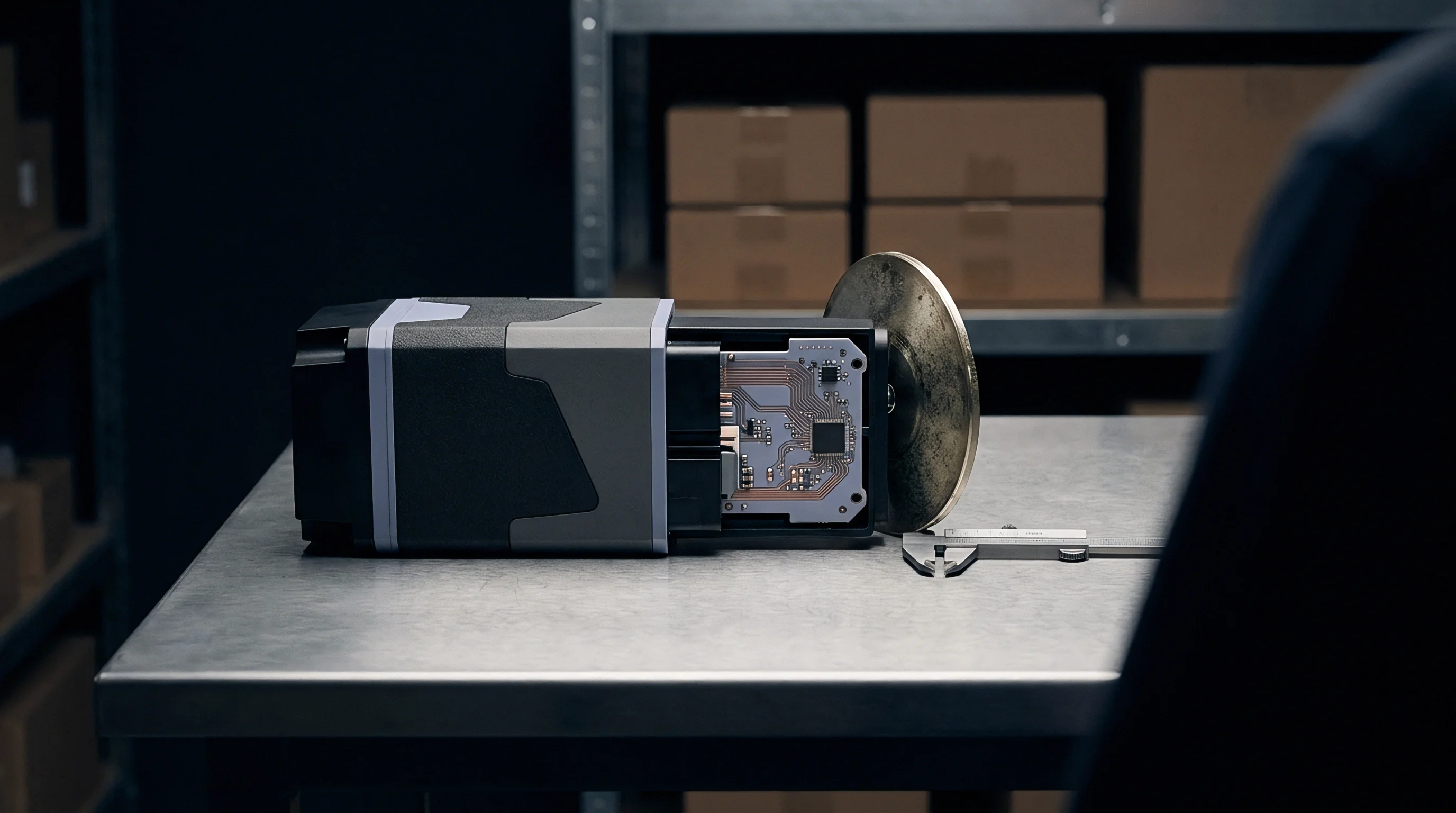
Co-Located Transceiver Field Coupling
Combining multiple transceivers within a single chassis creates complex intermodulation profiles. Standard revisions for co-located radios enforce strict evaluations of simultaneous transmission modes. Signals leak easily.
Signals from a Wi-Fi transceiver interact with a co-located Bluetooth low energy module, generating intermodulation products that fall into restricted frequency bands.
- Module audit checks the current validity of supplier declarations against active Official Journal listings.
- Gap isolation identifies whether standard changes affect shared circuitry, power regulation, or host antennas.
- Chamber pre-scan evaluates radiated spurious emissions on the complete host assembly in worst-case operating modes.
- Dossier annexation attaches supplementary test reports to the primary technical file while updating the host declaration.
Module vendors frequently claim that host products retain full compliance under expired certificates because the physical silicon remained unchanged.


Dossier
Technical files house the evidence required to prove product compliance throughout market distribution. Under Article 10 and Annex III of the Radio Equipment Directive, the manufacturer builds a file containing conceptual designs, manufacturing drawings, operational descriptions, and precise test records. Updating this file demands systematic version control.
Reports prove claims. Simply inserting a new test report into an unorganized folder exposes the manufacturer to regulatory sanctions during market surveillance audits.

Risk Assessment Documentation Requirements
The Radio Equipment Directive mandates an explicit risk assessment within the technical documentation. When harmonised standards change, the manufacturer updates this risk assessment to address new hazards or technical gaps identified by the standard updates. The risk analysis documents why specific re-tests were conducted while others were deemed unnecessary based on engineering rationales.
Audits happen without warning. An unsigned or outdated risk analysis invalidates the technical construction file during regulatory reviews.
| Standard Scope | Legacy Documentation State | Required Dossier Update Action | Certification Path Options |
|---|---|---|---|
| EMC (EN 301 489 series) | Test report against withdrawn edition | Execute immunity delta gap testing; issue updated DoC | Internal production control (Module A) |
| Radio (EN 300 328) | Modular certificate citing old standard | Conduct host-level spurious scans; annex module report | EU Type Examination (Module B) if incomplete |
| Safety (EN 62368-1) | Report based on legacy EN 60950-1 | Perform complete hazard evaluation to EN 62368-1 | Accredited laboratory test report addition |
| Cybersecurity (Art 3.3) | No historical test coverage | Perform vulnerability scan and software architecture audit | Notified Body assessment or harmonised standard |

When Is Notified Body Intervention Mandatory?
Applying harmonised standards cited in the Official Journal permits manufacturers to follow internal production control under Annex II of the Radio Equipment Directive. However, when harmonised standards are unavailable, incomplete, or only partially applied during a standard transition, involvement of an EU Notified Body becomes mandatory under Annex III (Module B). The Notified Body evaluates the technical documentation and issues an EU Type Examination Certificate confirming that the apparatus meets essential requirements.
Delays destroy margin. Relying on a Notified Body adds lead time and costs to the filing schedule.
The exact boundary where software-controlled radio parameters cross into full Notified Body re-examination remains open to regional market interpretation.


Customs
National market surveillance authorities within the European Union inspect physical product shipments and technical documentation at port facilities and retail distribution centers. When standard transition windows close, non-compliant declarations create immediate commercial stops. Enforcement actions utilize shared European databases like the Information and Communication System for Market Surveillance to flag non-compliant products across all member state borders simultaneously.
Paperwork opens borders.
Border seizures halt landed inventory before cargo leaves port warehousing.
Distributors and importers verify that technical documentation remains complete before executing customs entries. If an enforcement officer requests a technical file, the economic operator presents the file within the timeframe specified by national law, typically twenty-four to forty-eight hours. Failure to produce valid documentation leads to immediate customs holds, sales bans, and mandated inventory destruction.

Market Surveillance Audit Paths
Surveillance authorities select products for audit based on random sampling, customs risk flags, or competitor notifications. Inspection officers review the declaration of conformity first, cross-referencing cited standards against current Official Journal publications.
- Outdated standard citations on the declaration of conformity trigger immediate customs holds and documentation requests.
- Unsigned risk analyses lead surveillance officers to reject technical files during routine warehouse audits.
- Missing antenna gain records invalidate modular compliance assumptions during radiated emission checks.
- Discrepancies in serial numbers between test reports and commercial packaging void test coverage claims.
Resolving border holds caused by outdated compliance documentation requires re-testing sample lots at local accredited laboratories while cargo incurs storage fees. Updating technical files proactively avoids supply chain disruptions and protects distribution channels across European markets.
Failure to maintain updated technical documentation leads to compulsory market withdrawals, cargo re-exportation orders, and total loss of seasonal retail slots.