Meaning
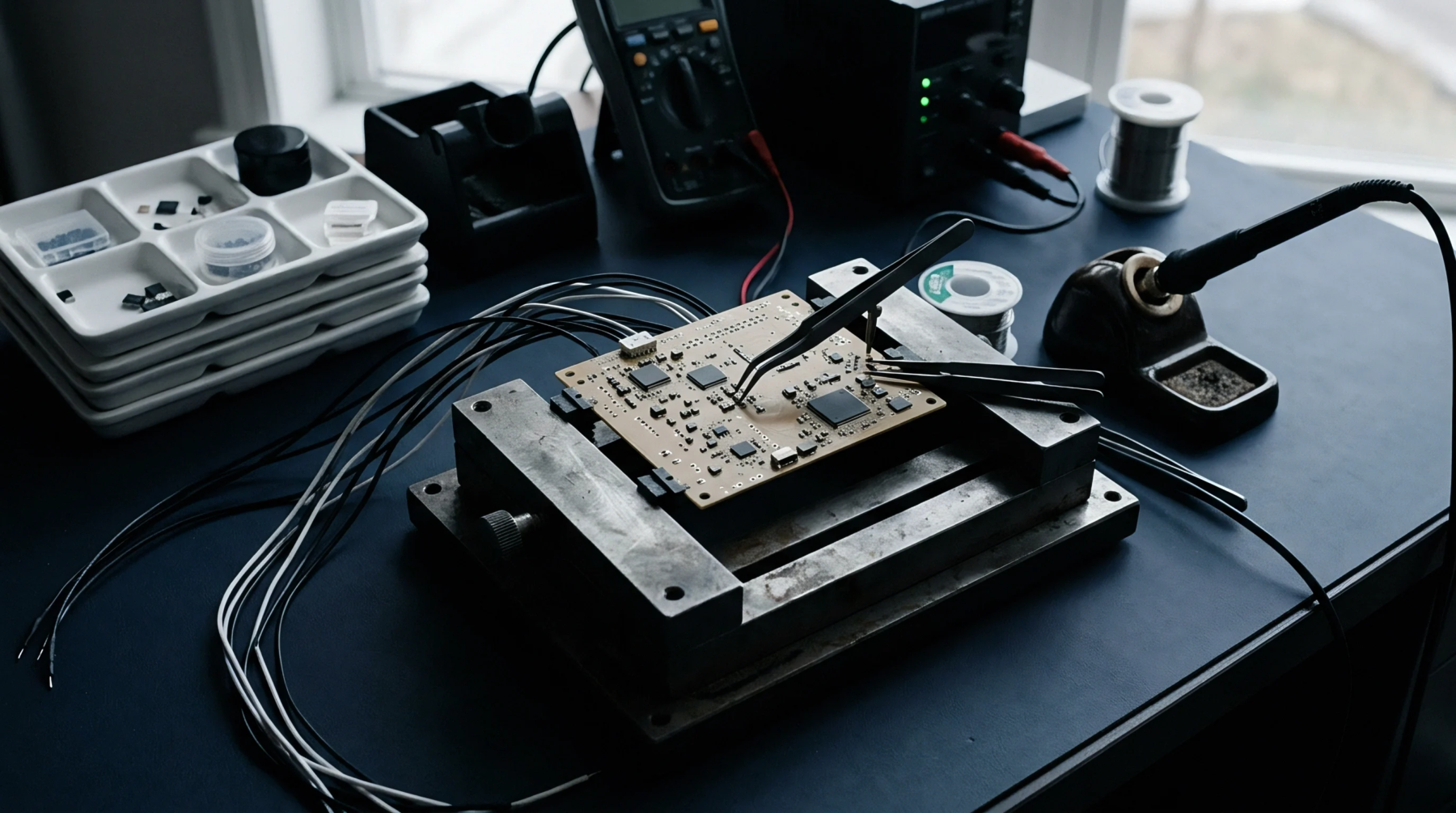
Specialized servicing routines preserve the mechanical alignment and electrical continuity of spring-loaded pogo pin bed-of-nails fixtures used in circuit board testing. ICT test jig maintenance involves cleaning contact probes, replacing bent pins, verifying actuation alignment, and checking ribbon cable integrity within automatic test equipment interfaces. Regular servicing prevents false failures and protects populated printed circuit assemblies from mechanical strain during automated testing.
Scheduled intervention maintains test coverage reliability across high-volume manufacturing lines.
Pin Alignment
High-density circuit boards feature sub-millimeter test pads that require exact probe targeting. Executing ICT test jig maintenance ensures that pneumatic press plates lower boards squarely onto spring pins without side-loading the contacts. Debris accumulation on probe tips increases contact resistance, triggering spurious open-circuit flags during structural testing.
Technicians clean probe arrays using solvent-free ultrasonic baths or specialized brush sets.
Signal Integrity
Worn spring mechanisms in test probes cause inconsistent contact force, introducing variable resistance into measurement loops. Systemic ICT test jig maintenance includes measuring pin resistance against threshold limits and replacing modules that fall below baseline spring tension. Damaged ground return pins corrupt analog voltage measurements and RF calibration steps.
Maintaining pristine contact surfaces preserves measurement accuracy.
Service Lifecycle
Operational tracking tracks total insertion counts for every fixture on the shop floor. Proactive ICT test jig maintenance schedules pin replacement prior to mechanical fatigue thresholds. Timely refurbishing minimizes unexpected production downtime.