Resolving Third Party Escrow Verification Limits in Continuous Embedded Software Maintenance Contracts
Contractually binding automated build containers and physical hardware in the loop execution resolves embedded escrow limits during active software maintenance.


Friction
A sealed optical disc in a climate-controlled vault is useless when a baseband supplier revisions its boot ROM halfway through a production run. Most escrow deposits capture a static moment: a Git snapshot, precompiled binaries, an SBOM, and build scripts that ran on an engineer’s laptop eighteen months prior. Once the vendor fails or walks away from support, clean-room builds stall at the link stage.
Compiler licenses have expired, signing keys sit locked inside retired HSMs, and modern host kernels reject the build scripts. The buyer has code on disk, but nothing that can be flashed to hardware.
Continuous embedded maintenance quietly undermines static legal protections. Traditional agreements tie deposits to annual dates or major release tags, but embedded contracts govern living code bases: weekly bug fixes, security branches, and quiet silicon stepping changes. A cellular or Bluetooth module never runs in isolation.
It relies on real-time baseband tasks, board support packages, and workarounds written for a silicon stepping that the foundry phased out six months after launch.
A standard software deposit containing untestable binaries gives the buyer an illusion of technical autonomy.
Escrow agents usually stop at inventorying tarballs, checking SHA hashes, and confirming archives unpack without errors. That proves the files arrived intact, but nothing about whether they run. Building embedded firmware requires exact cross-compilers, third-party vendor libraries, rigid pathing, and programming utilities.
Without a reproducible build verified against real hardware, an escrow certificate attests to storage mechanics, not recoverability.
Deposit Shortfalls in Embedded Deliverables
Commercial hardware designs reveal wide custody gaps between high-level application code and low-level firmware. When a module vendor sells turnkey firmware maintenance, the purchase order treats it as routine software upkeep covering patches and bug fixes. The vendor agrees to deposit updated source branches.
In practice, however, what reaches the vault often leaves out the board support package adaptations, vendor-specific abstraction layers, calibration lookup tables, or the proprietary compiler binary itself.
Standard agreements rarely address physical hardware. Vendors deposit source trees and object code, treating evaluation boards and programming fixtures as capital equipment that falls outside the legal definition of intellectual property. The buyer later learns that verifying the build demands socketed test silicon, RF isolation chambers, and sequenced power supplies just to program and calibrate the transceiver.
Without hardware in the loop, verification tests syntax and misses real-world operation entirely.
Static Archives against Live Firmware Updates
Continuous deployment runs counter to point-in-time legal covenants. Firmware engineers push biweekly releases to patch heap leaks, cellular registration drops, or buffer overruns. Once updates move straight from automated pipelines to over-the-air servers, an escrow snapshot falls behind within weeks.
The vault holds version 1.2.0, the assembly line flashes version 1.4.2, and field units run version 1.4.8.
Contractors face stranded capital, unserviceable field hardware, and stalled factory lines whenever software custody arrangements break down midway through a product lifecycle.


Bench
Physical bring-up equipment exposes omissions that automated build scripts ignore. Hooking a target board to a hardware debugger quickly reveals whether an escrow archive serves as a viable manufacturing handoff or merely a partial source drop. Genuine embedded validation demands physical silicon, interface adapters, serial wire debug harnesses, and bench instruments to verify that binaries compiled from the archive boot and run as intended on production hardware.
Validating embedded software requires four escalating tiers of verification, moving from surface-level file checks to full bench execution:
- Catalog Integrity Check validates mathematical file hashes against an invoice manifest, confirming that the compressed archives open without structural corruption while ignoring build toolchains.
- Clean-Room Compilation executes build scripts inside an isolated virtual machine or container environment to prove that the deposited source files generate matching binary object code without external internet access.
- Firmware Flashing Test writes the newly compiled binary images into the non-volatile flash memory of a physical target microcontroller, validating flash loader addresses and device security bit configurations.
- Hardware In The Loop Execution connects flashed modules to peripheral test fixtures, executing automated test suites that confirm transceiver calibration, radio sensitivity, and peripheral communications under physical load.
Toolchain mismatches typically surface only when the target board fails to boot from vaulted source. Recreating a functional binary requires identical compiler versions, assembler flags, linker scripts, and environment paths. Moving from GCC 10.2 to 10.3 alone can alter stack alignment enough to trigger immediate fault handlers inside RTOS interrupt service routines.
Invoking ISO/IEC 14764 maintenance definitions without hardware test bench specifications leaves the licensee unable to validate incoming patch archives against actual silicon.
Most escrow verification agencies lack the RF chambers, calibrated signal generators, and pogo-pin programming fixtures needed for hardware-in-the-loop qualification. When an agreement calls for technical verification, buyers routinely pay thousands of dollars for a technician to run an automated script confirming a Docker container exits without an error code. Whether the resulting image drives the RF power amplifier within legal limits goes unexamined.

Test Racks and Physical Hardware Attestation
Automated test fixtures bridge the gap between file archives and factory floors. A complete deposit must document the exact production test setup alongside the code: programmers, sequenced power supplies, automated spectrum analyzers for RF compliance, and custom interface harnesses connecting target pins to host controllers.
Clean-room compilation quickly exposes missing packages. If the deposit lacks Gerber files, schematics, and parts lists for the test fixture, the buyer cannot reconstruct the evaluation bench. The software remains unverifiable because the test rig exists only in the vendor’s lab.
Levels of Escrow Examination
Choosing an escrow verification level involves balancing inspection frequency against engineering overhead. Comprehensive bench tests require dedicated hardware custody and substantial engineering time.
| Tier Level | Target Deliverables | Scope of Execution | Defect Detection Boundary |
|---|---|---|---|
| Tier 1: Inventory | Raw source trees, release notes | File inventory, SHA-256 hash match, archive integrity decompression | Identifies missing archives or corrupted media; ignores buildability |
| Tier 2: Clean Compile | Makefiles, container configurations, dependencies | Compilation in isolated environment without external dependency access | Catches missing headers, absent source files, and broken build scripts |
| Tier 3: Device Flash | Board support packages, memory maps, binary images | Deployment of compiled binaries to physical silicon via JTAG or SWD | Exposes incorrect memory offsets, missing bootloaders, and flash corruption |
| Tier 4: Functional HIL | Test scripts, peripheral mocks, calibration tables | Automated hardware-in-the-loop execution across thermal and communication cycles | Detects timing regressions, broken peripheral drivers, and RF power drift |
Code unproven on production silicon remains purely theoretical cargo.


Pipeline
Automated delivery pipelines create an inherent conflict between fast firmware iteration and traditional escrow bailment. In active maintenance setups, engineers push code daily, triggering continuous integration runners that package releases, run unit tests, and build signed binaries. Pausing these workflows for an annual escrow deposit guarantees the vaulted source is obsolete before the paperwork clears.
Will Containerized Build Environments Prevent Target Drift?
Containers isolate software toolchains cleanly, but they do not solve hardware-level dependencies. A hermetic container locks down the Linux distribution, GNU C compiler, CMake version, and shared libraries, ensuring identical object code across different host systems. What it cannot virtualize are internal microcontroller registers, radio calibration values, or hardware-enforced signing sequences.
Rebuilding a multi-band cellular module firmware image across twenty-four maintenance cycles produces binary divergence in twelve percent of builds when compiler micro-versions are unpinned.
Integrating escrow into active development means replacing manual tarball uploads with automated webhooks. Building an automated delivery pipeline requires three stages:
- Reproducible Build Isolation enforces deterministic compilation flags such that identical source commits generate bit-for-bit identical binary images across disparate server environments.
- Automated Hermetic Ingestion transfers the container recipe, locked dependency manifests, source revisions, and compiled binary artifacts directly to an escrow staging repository upon successful release tagging.
- Cryptographic Attestation validates that the binary artifact output generated by the escrow build runner matches the digital signature deployed to production devices in the field.
Deterministic builds prevent quiet patch drift. When automated pipelines push signed firmware to client modules over the air, signing certificates can expire unnoticed unless the escrow deposit includes the public key infrastructure chain and authorization tools needed to sign fresh builds. If an archive contains raw code but lacks keys or hardware signing tokens, target bootloaders will reject the resulting image outright.

Cryptographic Signatures and Continuous Build Ingestion
Secure boot implementations require clear separation between live commercial signing keys and escrowed authorities. Module vendors guard master private keys closely to prevent unauthorized firmware cloning. Under continuous maintenance, the vendor must either deposit a subordinate signing key accepted by the bootloader or supply the key provisioning configuration that lets the licensee flash alternative development roots of trust onto target hardware.
When a buyer ingests updates without an automated verification runner, repository drift compounds unnoticed. A missing vendor patch in a low-level peripheral driver can remain undetected until the original design team disbands, leaving the licensee with an archive that compiles without errors but fails to run.
Continuous delivery directly into an escrow deposit creates immediate friction when proprietary compiler and toolchain licenses cannot be redistributed to third parties.


Dispute
Commercial negotiations over maintenance scope break down when pricing the gap between simple source escrow and full embedded validation. Vendors price escrow support as a nominal annual administrative line item, anticipating standard cloud storage. When the buyer insists on clean-room compilation, physical flashing tests, and continuous synchronization with biweekly firmware drops, the required effort changes completely.
The vendor has to assign senior engineers to maintain secondary build configurations, calibrate external test setups, and support third-party auditors through verification runs.
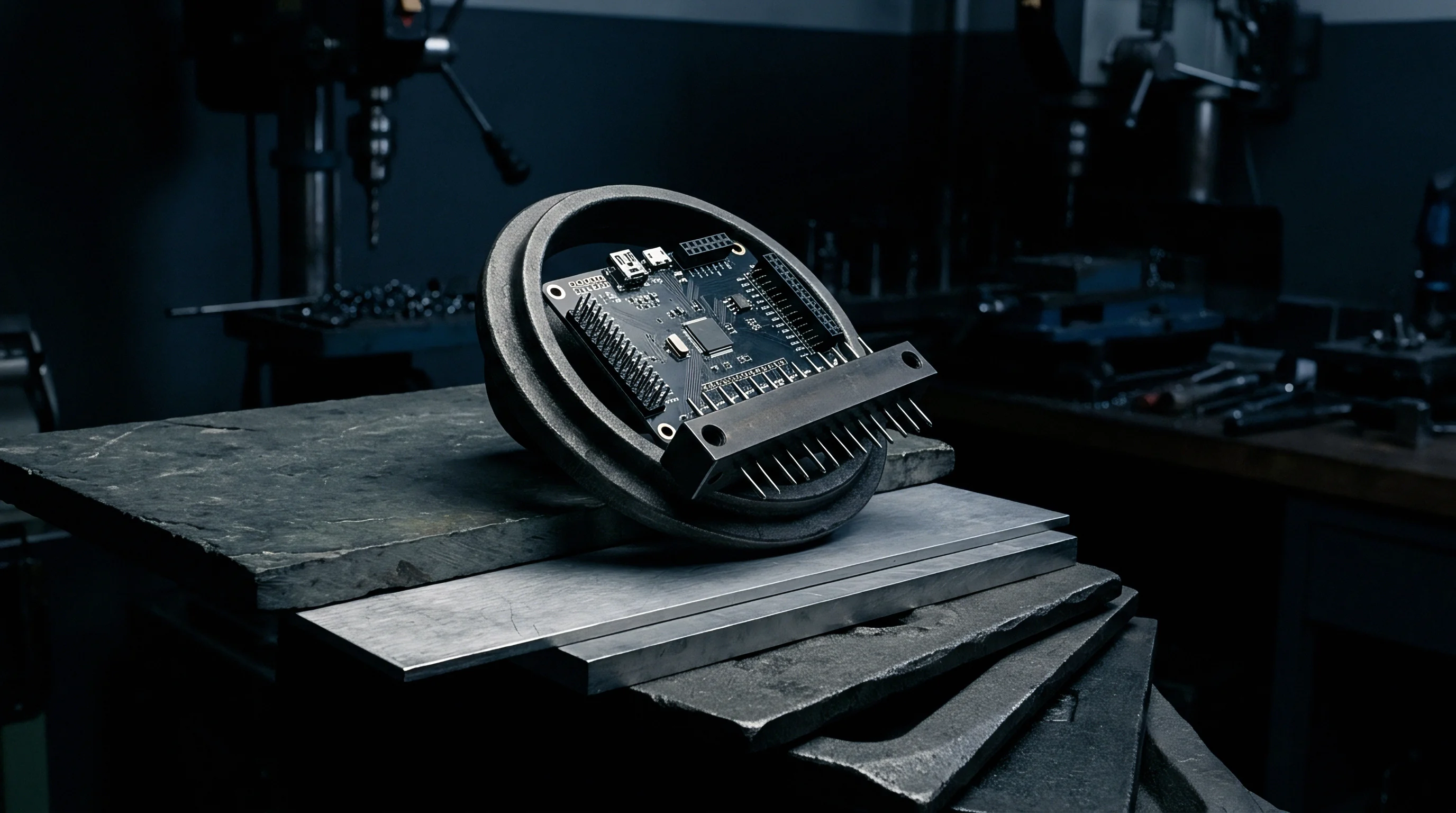
Commercial Allocation of Maintenance Verification Scope
Allocating non-recurring engineering costs and recurring verification labor requires explicit contractual terms in the maintenance statement of work. Most software agreements assign defect correction to the vendor and standard escrow fees to the buyer. If the contract fails to specify the testing tier, the escrow agent defaults to Tier 1 inventory indexing, leaving the licensee unprotected on embedded hardware.
Escrow agents that never power target silicon certify file presence rather than operational independence.
The cost of embedded escrow verification increases directly with technical rigor. Typical commercial contracts exhibit clear pricing tiers:
| Maintenance Tier | Verification Cadence | Setup Non-Recurring Cost | Annual Maintenance Fee | Target Hardware Requirement |
|---|---|---|---|---|
| Basic Storage | Annual or major release | $1,500 to $3,000 | $2,000 to $4,000 | None; digital archive only |
| Automated Clean Build | Quarterly or tagged patch | $8,000 to $15,000 | $6,000 to $12,000 | Virtual build server container |
| Silicon Flash Attestation | Bi-annual or minor release | $18,000 to $30,000 | $14,000 to $25,000 | Target boards and programming harnesses |
| Continuous HIL Testing | Continuous per release branch | $45,000 to $85,000 | $35,000 to $65,000 | Full automated RF and peripheral test rack |
| Costs reflect typical market ranges for commercial module engineering transfers across industrial and connectivity applications. | ||||
When software maintenance disputes reach formal arbitration, the outcome hinges on how precisely the statement of work defined the verification standard. Broad promises to deposit all necessary materials to rebuild firmware fail in practice, because the definition of necessary materials remains subjective until tied to concrete build containers, toolchain licenses, and bench test procedures.

Should Maintenance Agreements Include Hardware in the Loop?
Writing hardware-in-the-loop requirements into the core software contract realigns technical risk between the parties. Licensees requiring continuous embedded maintenance need explicit contractual deliverables tied to every firmware drop:
- Hermetic Build Container Definitions specify exact container recipes, base image digests, and toolchain configurations that execute independently of external vendor networks.
- Physical Test Bench Schematics encompass complete electrical wiring diagrams, breakout board Gerbers, and hardware bills of materials necessary to build an identical flashing and test fixture.
- Cryptographic Provisioning Material includes valid subordinate signing keys, bootloader key authorization routines, and provisioning scripts to authenticate custom builds on target silicon.
- Automated Functional Test Scripts provide executable test harnesses, expected test vectors, and tolerance pass criteria used during vendor factory signoff.
Inserting IEEE 829 test package attestation with bitwise artifact validation shifts the commercial burden of build recreation directly back to the original developer.


Release
Release conditions dictate the exact moment an escrow archive converts into an operational manufacturing transfer package. In continuous maintenance arrangements, standard legal triggers like bankruptcy filings, insolvency declarations, or assignments for the benefit of creditors materialize too late. A struggling module vendor rarely enters immediate bankruptcy.
Instead, management cuts engineering staff, stops answering tickets, lets tool licenses lapse, and freezes security patches while remaining legally solvent.
Trigger Mechanics under Maintenance Termination
Embedded maintenance covenants need abandonment triggers tied to objective service level breaches rather than formal insolvency. If a vendor fails to patch critical vulnerabilities within thirty calendar days, misses scheduled deposits for two straight cycles, or drops support for known silicon errata, the contract should allow the licensee to claim the deposit immediately.
Acting on an operational trigger requires a streamlined release process. Standard agreements allow vendors to delay releases through procedural objections, tying deposits up in arbitration for six to twelve months. With embedded hardware, a year without firmware access halts manufacturing lines, creates regulatory exposure under new cybersecurity mandates, and forces an unplanned board redesign.
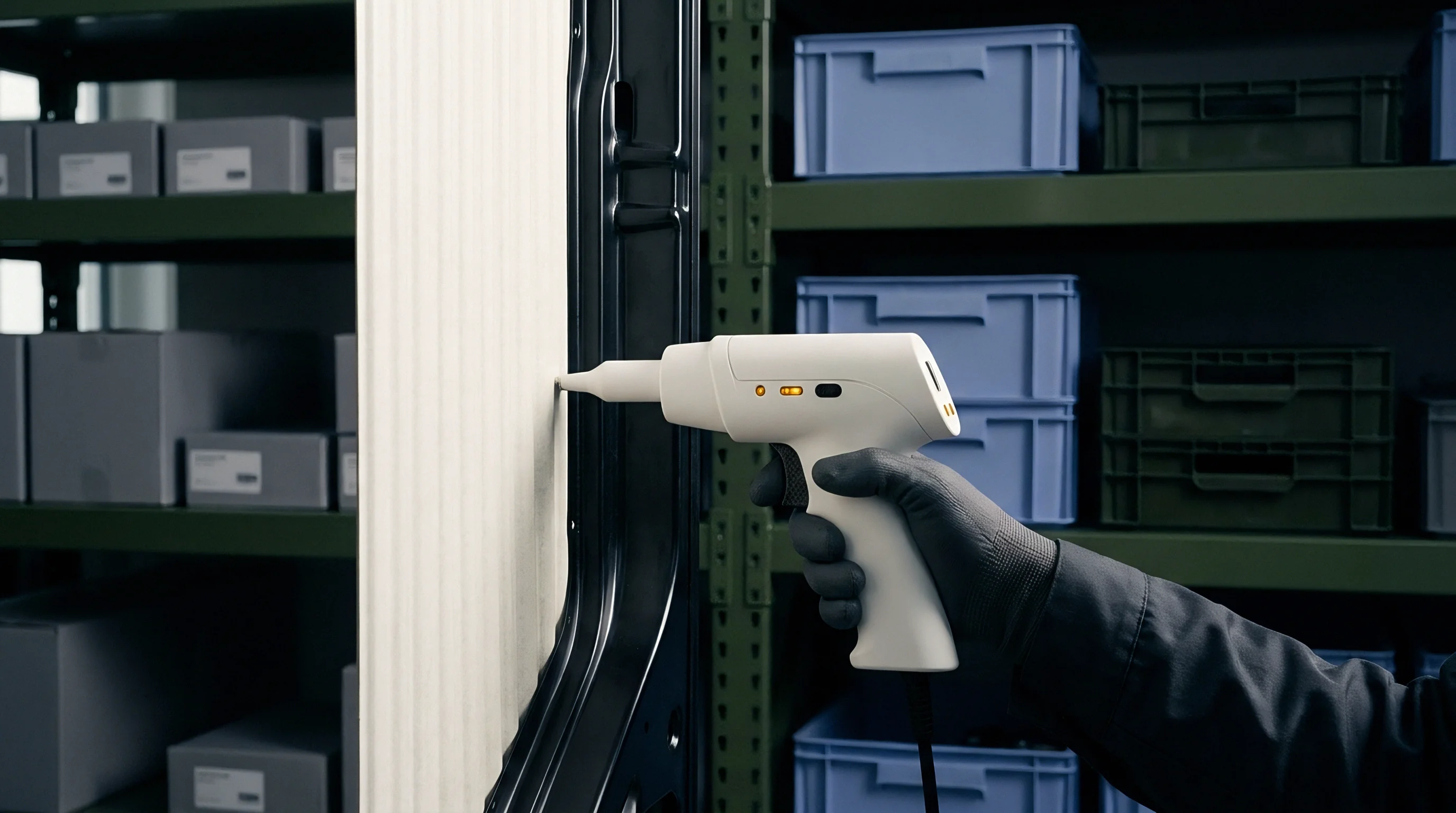
Design Transfer Realities after Vendor Abandonment
Obtaining the escrow deposit is only the first step in post-release recovery. Once the licensee holds the source trees, compilers, container images, and test specifications, internal engineers must assume the maintenance workload previously handled by the vendor. Standing up that capability requires considerable engineering time to reproduce the build environment, audit the code, and make clean modifications.
The true cost of exercising an escrow release lies in downstream engineering autonomy. If the deposit was verified only to Tier 1 or Tier 2, the buyer encounters uncommitted libraries, undocumented dependencies, and uncalibrated radio tables during factory bring-up. The licensee holds the files, yet cannot ship a certifiable firmware build to the factory without months of reverse-engineering.
Whether commercial escrow agents will ever invest in physical target boards and automated test racks remains unsettled across cross-border manufacturing.