Meaning
Electromagnetic resonance develops within conductive enclosures when the internal physical dimensions match multiples of the half-wavelength of operating frequencies. The generation of internal cavity modes creates high-intensity localized fields that couple into sensitive circuits and cause unexpected system failures. This susceptibility arises when board-level clock frequencies or transceivers match the natural resonant frequencies of the metal housing.
The resonance effect disappears if the mechanical enclosure dimensions are kept well below the wavelength of the highest active frequency in the system.
Resonance Mechanism
Conductive walls act as boundaries where electric fields must drop to zero, creating standing waves inside the enclosure. These standing waves concentrate radio frequency energy in specific spots, which increases the likelihood of cross-talk between isolated board sections. The Q-factor of the resulting cavity dictates how sharp and intense these resonant peaks become.
Enclosure Diagnostic
Identifying these resonant frequencies involves computing the cavity dimensions or using near-field sniffer probes during product testing. An unexpected dip in transmission power or a sudden spike in emissions often indicates that the product enclosure is acting as a resonator. Network analyzers can trace these resonant dips by measuring the insertion loss across the cavity.
Damping Strategy
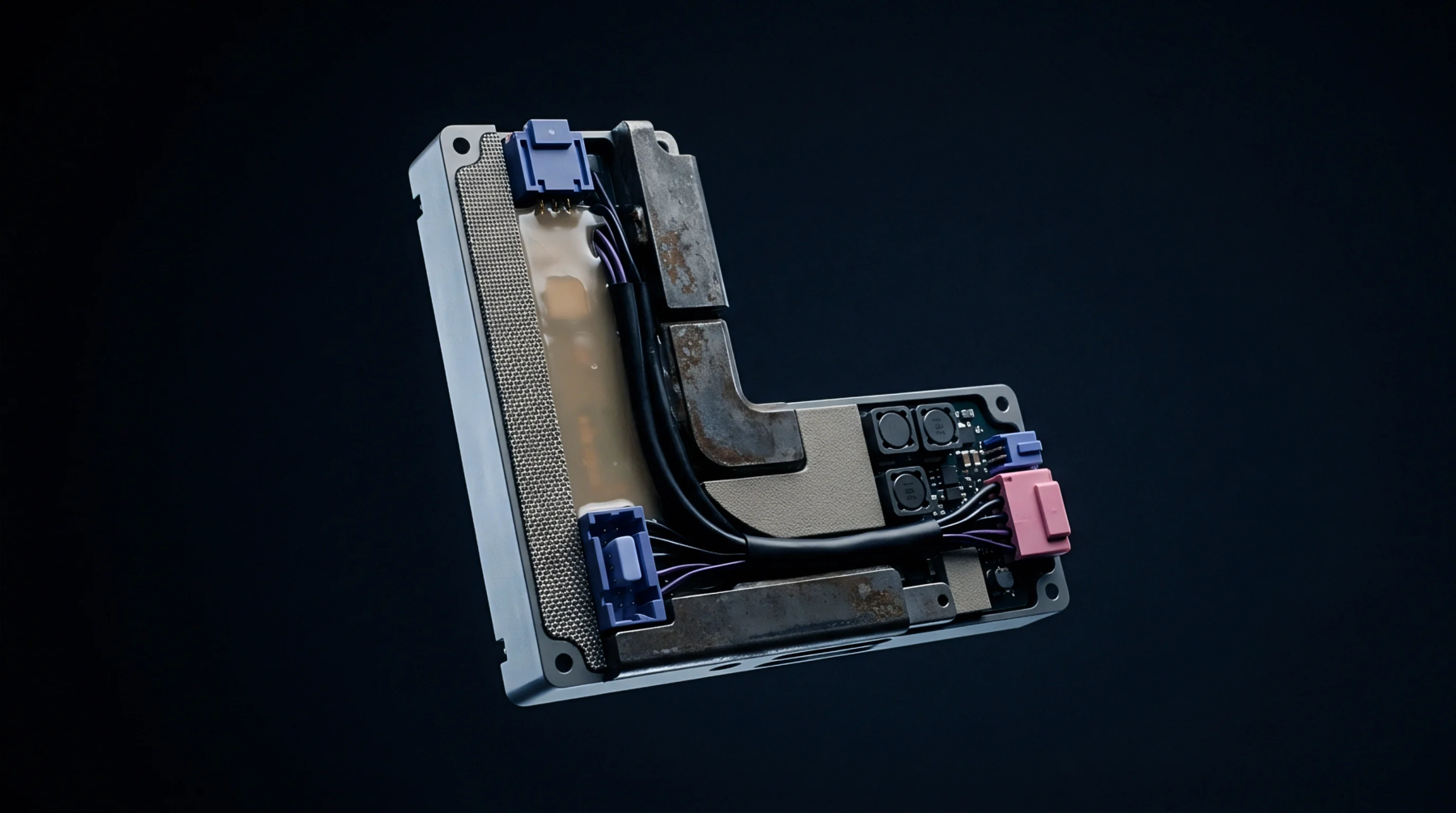
Suppressing these resonant modes requires either altering the physical dimensions of the enclosure or introducing RF-absorbent materials. Engineers place elastomer gaskets or carbon-loaded foam sheets on the inside of the metal shield to absorb the circulating currents. This converts the trapped electromagnetic energy into heat, lowering the Q-factor of the cavity and preventing unwanted feedback loops.