Meaning
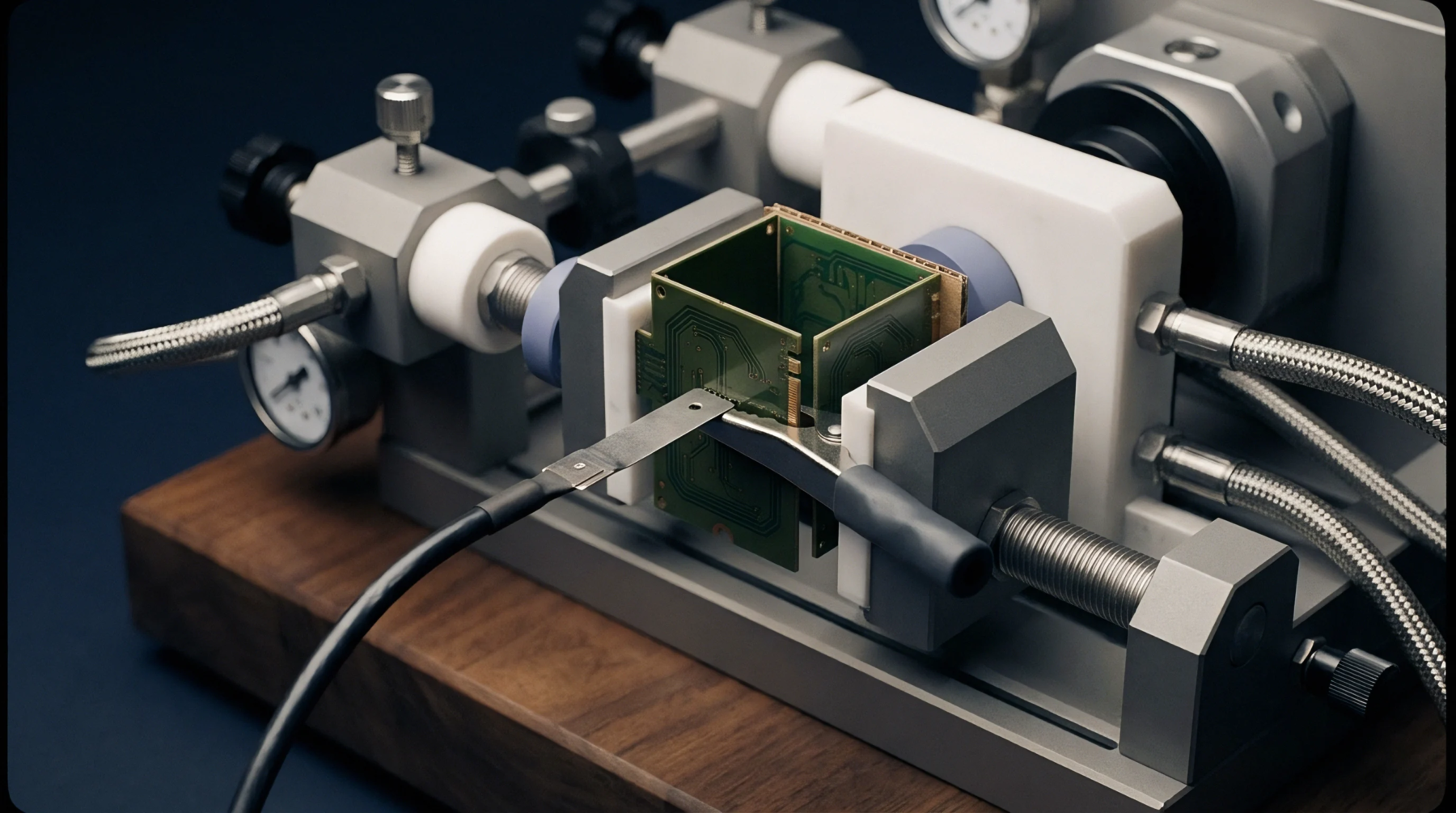
Mechanical conflicts arising from differences in thermal expansion between the metal leadframe and the plastic encapsulation material define the internal stress of an electronic package. This package leadframe mismatch can lead to delamination and wirebond fractures during reflow soldering. Packaging engineers must select materials with closely matched thermal coefficients to prevent these mechanical failures.
Thermal Stress
Temperature changes during soldering cycles create severe stress at the boundary between the metal and the plastic. The metal frame expands faster than the surrounding plastic, creating a shear force. This force can detach the molding compound from the metal surfaces, allowing moisture to enter.
Moisture accumulation can cause the package to burst during subsequent heating.
Wirebond Failure
Internal wire connections are stretched or compressed by the mechanical movement of the leadframe relative to the silicon die. This repeated movement can cause fatigue and eventual fracture at the bond stitch or ball. Failures of these connections lead to intermittent electrical behavior or complete open circuits.
Design revisions to wire routing can reduce the mechanical strain on the bonds.
Material Selection
Advanced epoxy molding compounds are formulated with inorganic fillers to adjust their thermal expansion properties. Adjusting the filler concentration allows packaging designers to tune the expansion rate of the plastic to match the metal frame. This matching ensures the mechanical reliability of the component under thermal cycling conditions.
Reliable packages protect the internal circuitry across the full operating temperature range.