Meaning
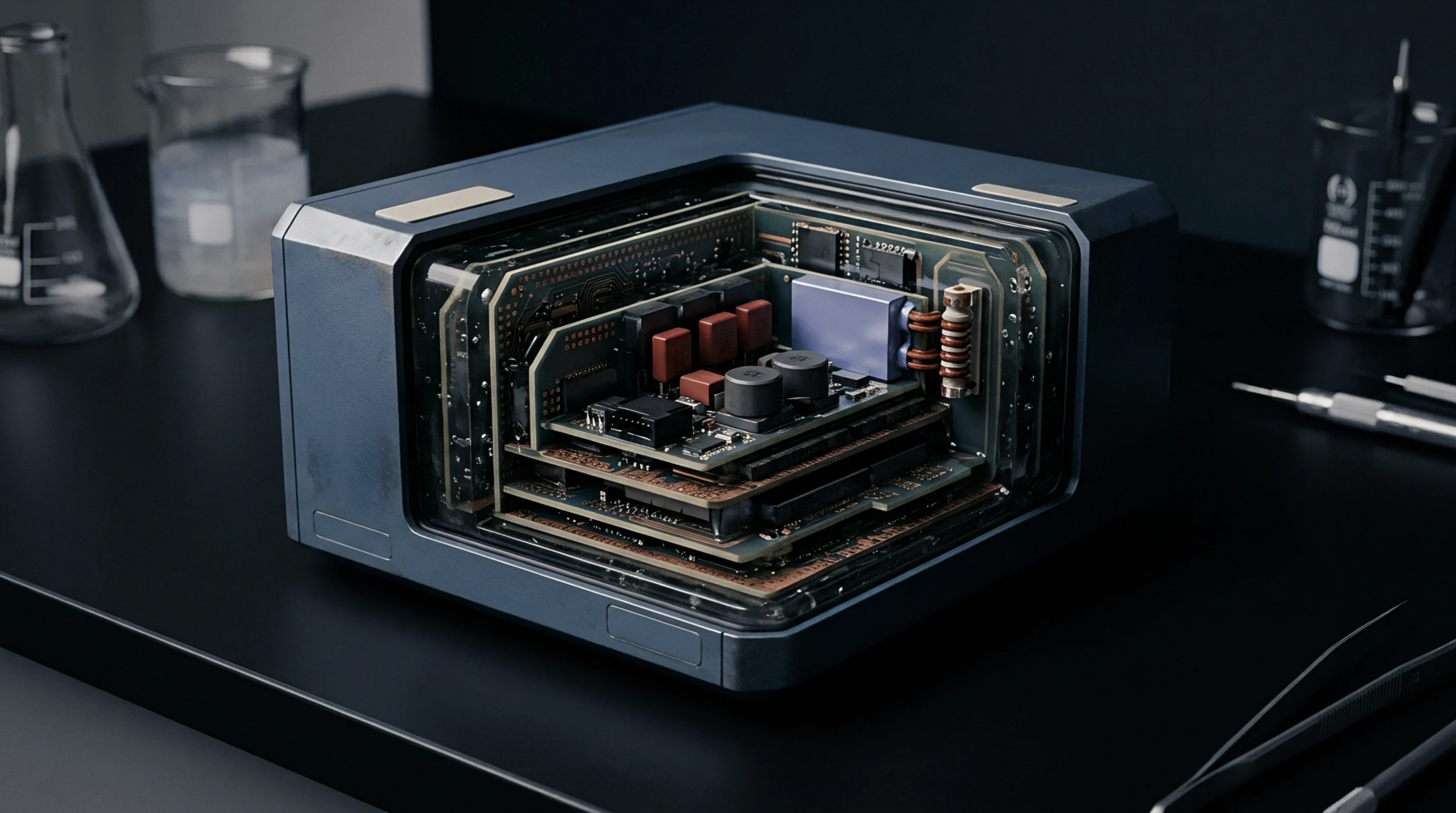
Mechanical aggregation of modular transceivers, power amplifiers, and baseband processors into a single aluminum enclosure defines radio stack integration. This assembly consolidates discrete RF subassemblies onto a shared backplane, replacing individual cabling harnesses with internal stripline routing to minimize insertion loss. Thermal management boundaries dictate the physical layout, because high-power transmission stages generate localized heat flux that can desensitize adjacent low-noise receivers unless conduction paths transfer the energy directly to chassis walls.
The assembly must maintain operational integrity under random vibration profiles specified by MIL-STD-810H, preventing harmonic distortion caused by microphonic displacement of internal coaxial jumpers.
Thermal Budget
Conduction plates must dissipate excess thermal energy from power amplifier modules without exceeding semiconductor junction limits of one hundred twenty-five degrees Celsius. Active cooling fans introduce electromagnetic interference through their commutators, forcing designers to rely on passive heatsink fins machined directly into the outer housing extrusion. Internal temperature sensors monitor local hot spots and throttle transmitter duty cycles when ambient conditions exceed safe operating limits.
Interface Margin
Voltage standing wave ratio measurements verify that internal RF interconnects maintain fifty-ohm characteristic impedance across the entire operating frequency band. Impedance mismatches reflect radio frequency energy backward into the transmitter output stage, causing thermal runaway in the final amplifier transistors. Shielding gaskets made from beryllium copper finger stock prevent high-frequency leakage between adjacent compartments, ensuring cabinet emissions remain below regulatory limits set by the Federal Communications Commission.
Production Handover
Final acceptance testing requires a complete functional sweep of the assembled chassis on an automated test station before delivery to the integration floor. Technicians verify receiver sensitivity, transmitter power output, and intermodulation distortion against baseline design specifications established during the preliminary design review. Passing this test sequence authorizes the enclosure for installation into a larger vehicular or airborne rack assembly.