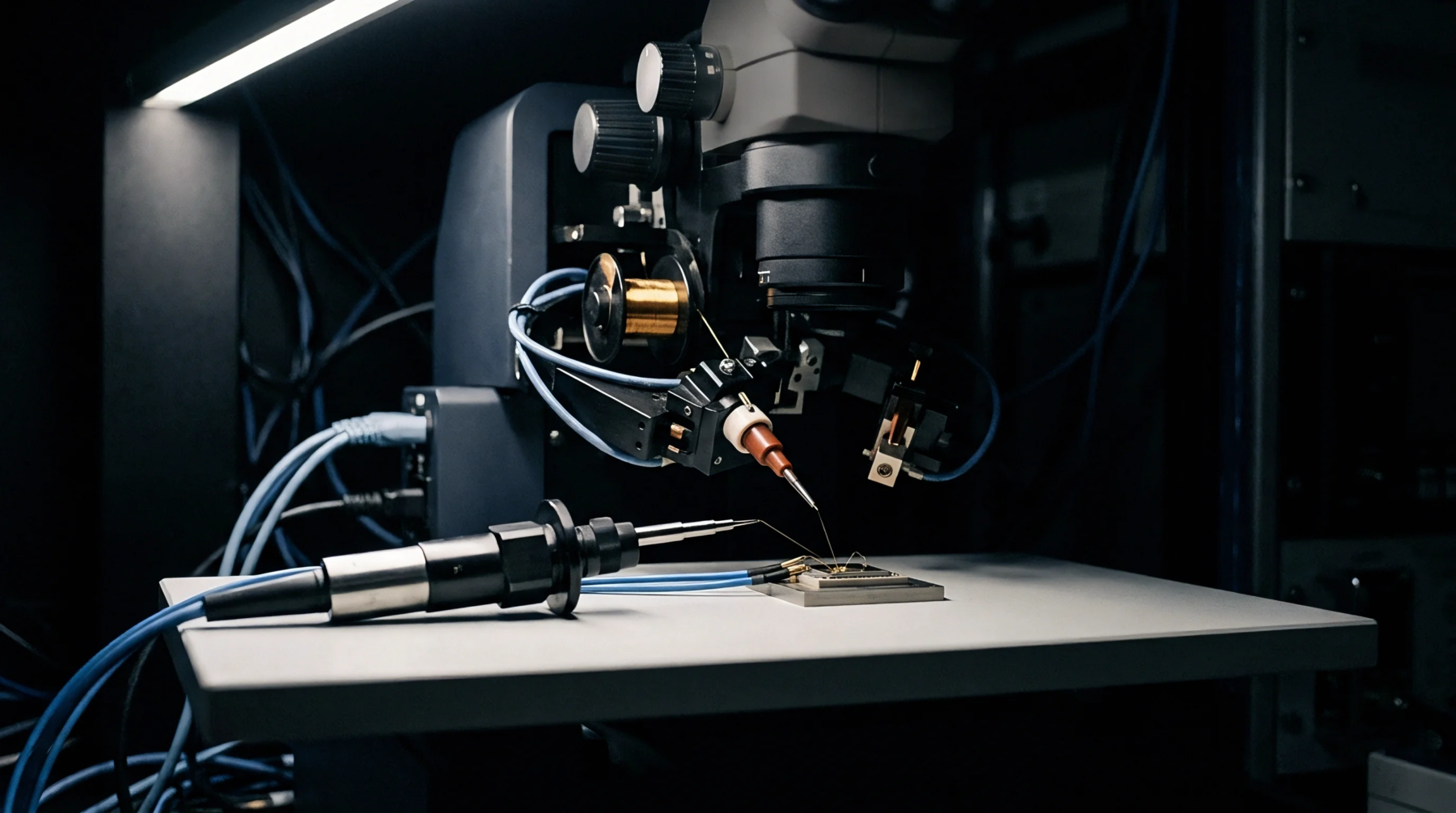
Meaning
Calibration processes that correct for systematic spatial variations across a measurement surface or sensor array are essential for maintaining uniform sensitivity in advanced instrumentation. Applying spatial gradient compensation allows testing systems to correct for temperature or magnetic field gradients that naturally develop across a testing chamber or wafer surface. This technique models the gradient as a continuous mathematical function to adjust raw readings based on their coordinates.
It ensures that measurements taken at different locations are directly comparable.
Gradient Calculation
Mapping the spatial distribution of the systematic error is the first step in adjusting the sensor output. During spatial gradient compensation, a reference sensor is moved across the chamber to measure the temperature or magnetic profile. This profile is used to calculate the directional derivative of the error.
Correction Algorithm
Microcontrollers or host computers apply correction factors to each sensor reading in real time using the calculated gradient function. Executing spatial gradient compensation involves adding or subtracting the calculated local error from each measurement point based on its physical coordinates. This step removes the systematic bias from the output data.
Calibration Dataset
Long-term drift in the system setup requires periodic recalibration of the gradient map. Generating a fresh calibration dataset ensures that spatial gradient compensation remains accurate as the hardware ages. This maintenance preserves measurement consistency.