Meaning
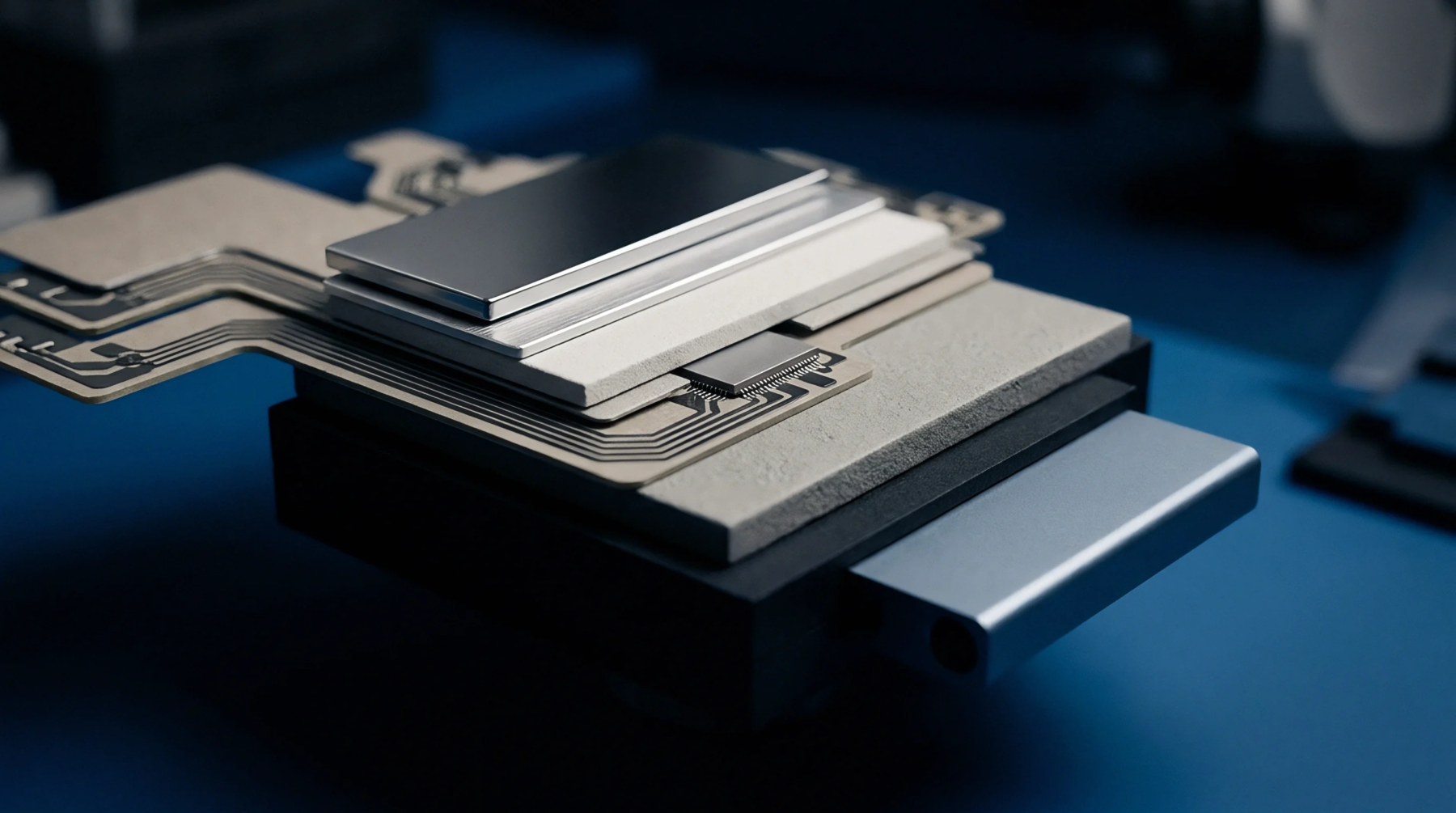
Engineering documentation defining the vertical arrangement of conductive and insulating layers within a printed circuit board governs the substrate stack up specifications. Manufacturers rely on these data to ensure electrical performance and structural integrity during the lamination process. Precise ordering of copper foils and dielectric cores determines impedance control, signal routing density, and thermal management capabilities.
Correct adherence to the specified sequence prevents warpage and delamination during subsequent reflow cycles.
Assembly Geometry
Proper stack up alignment enables stable impedance profiles for high speed signal paths across the entire board surface. Designers define layer thickness to maintain target characteristic impedance values based on dielectric constant and conductor width. Deviations from the prescribed height cause mismatching and signal reflection that degrades data transmission.
Controlling total thickness facilitates consistent mechanical clearance for connectors and surface mount components.
Process Verification
Fabricators perform cross section analysis to confirm that the finished product matches the layout intent. Automated optical inspection verifies that inner layer registration stays within tolerance during the etching and bonding steps. Measurements confirm that the copper weight and prepreg resin content match the original design requirement.
Deviations identified during these checks force a revaluation of the manufacturing recipe to meet signal integrity targets.
Thermal Reliability
Stable stack up designs distribute heat across the entire structure to minimize internal stress on the metallic traces and vias. Balanced layer distribution prevents asymmetric expansion that cracks drill barrels under repeated thermal cycling. Industry standards mandate specific symmetry requirements to ensure that the expansion coefficient remains uniform in all directions.
Long term reliability depends upon the physical stability of these materials when exposed to standard operational environments.