Meaning
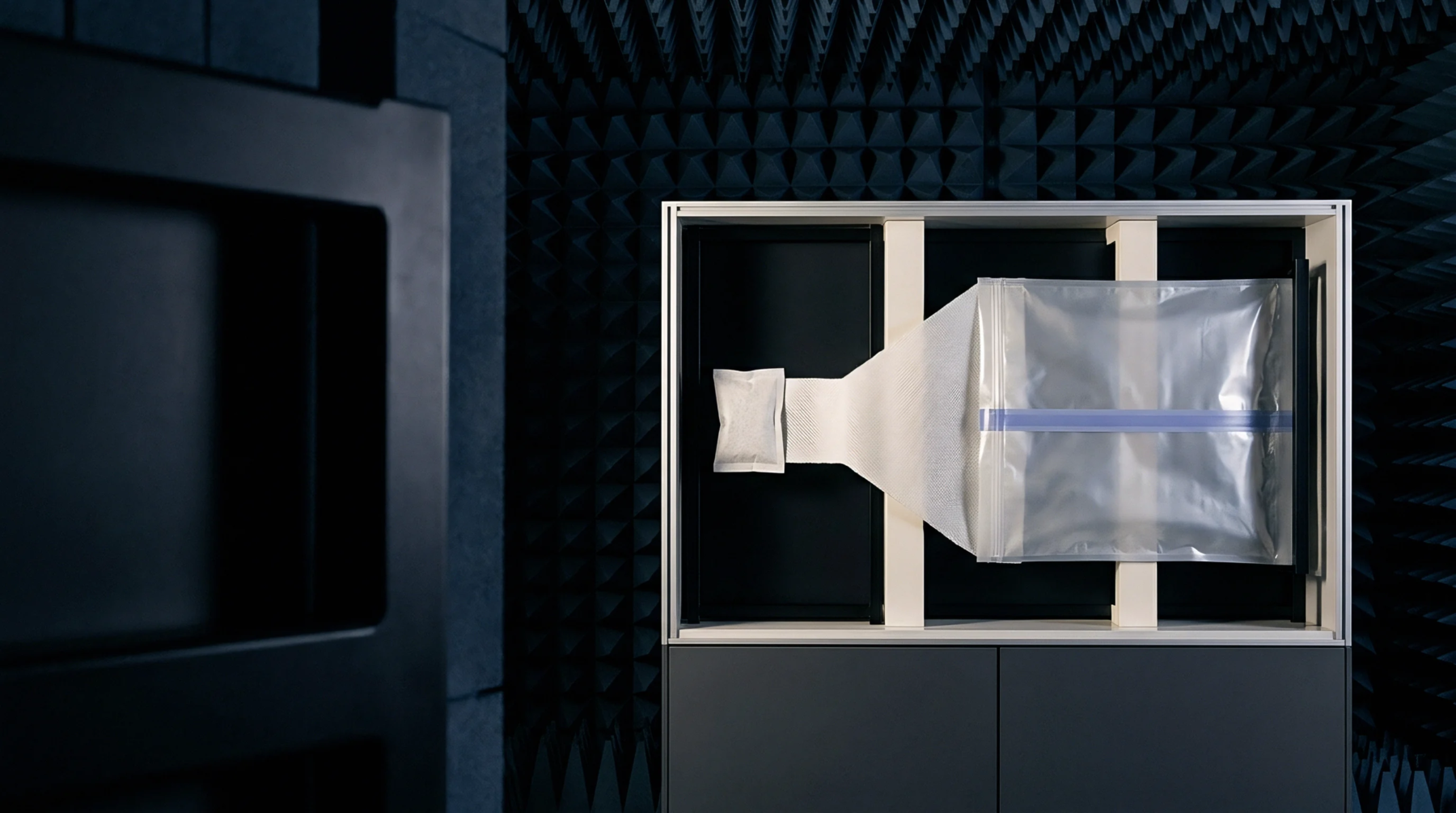
Electromagnetic compatibility evaluation occurs within a bounded metallic enclosure designed to provide a controlled radio frequency field environment for electronic devices. Tem cell testing involves placing a circuit or module inside a tapered waveguide structure where a uniform transverse electromagnetic field generates a repeatable stress condition. This method operates by creating a closed transmission line that avoids the radiative losses found in open field configurations.
Engineers rely on this setup to characterize the immunity or emission levels of hardware before full compliance audits.
Spatial Constraints
Dimensions of the tapered metallic housing determine the highest frequency at which the setup functions reliably. Higher frequencies excite non-transverse modes that distort the desired uniform field distribution and render data inaccurate. Designers must match the internal volume to the physical size of the product under evaluation to prevent impedance shifts.
Smaller cells allow for higher bandwidth but limit the scale of hardware that can fit inside the structure without causing significant field perturbations.
Shielding Effectiveness
Metallic walls prevent external signals from corrupting the internal test field while containing emissions produced by the device. Maintaining high integrity at each joint remains the primary requirement for repeatable outcomes. Corrosion or loose fasteners along the seam degrade this protection and introduce leakage that alters the measured field intensity.
Properly maintained units sustain a consistent environment that produces identical results regardless of external ambient noise.
Measurement Accuracy
Calibration requires the use of a known isotropic probe to map the field strength inside the volume before the insertion of the target component. Sensors record the voltage potential at specific coordinates to ensure the field intensity remains uniform across the entire footprint. Variation in these readings forces the operator to apply correction factors to the final data set to account for local field gradients.
Accuracy relies on the absence of conductive materials near the aperture during active transmission cycles.