Meaning
The change in the amount of electromagnetic energy dissipated as heat within an insulating material as its temperature rises affects high-power electronics. Measuring temperature dependent dielectric loss allows substrate manufacturers to evaluate how circuit boards will behave under continuous load or in harsh environments. This property determines the thermal stability of transmission lines in high-frequency applications.
Runaway Hazard
When a board experiences high-frequency signals, the material dissipates a portion of that energy as heat. If this heat generation increases the dielectric loss of the material, a self-reinforcing heating cycle begins. This temperature dependent dielectric loss can lead to thermal runaway and permanent damage to the circuit board.
Material Selection
Designers of high-power RF modules must choose substrate materials that have a flat loss profile across their entire operating temperature range. Ceramics and specialized thermoset resins are often preferred over standard epoxy laminates for these demanding designs. While these materials are more expensive, they prevent the gain variations and impedance shifts that occur with cheaper alternatives.
Testing Procedure
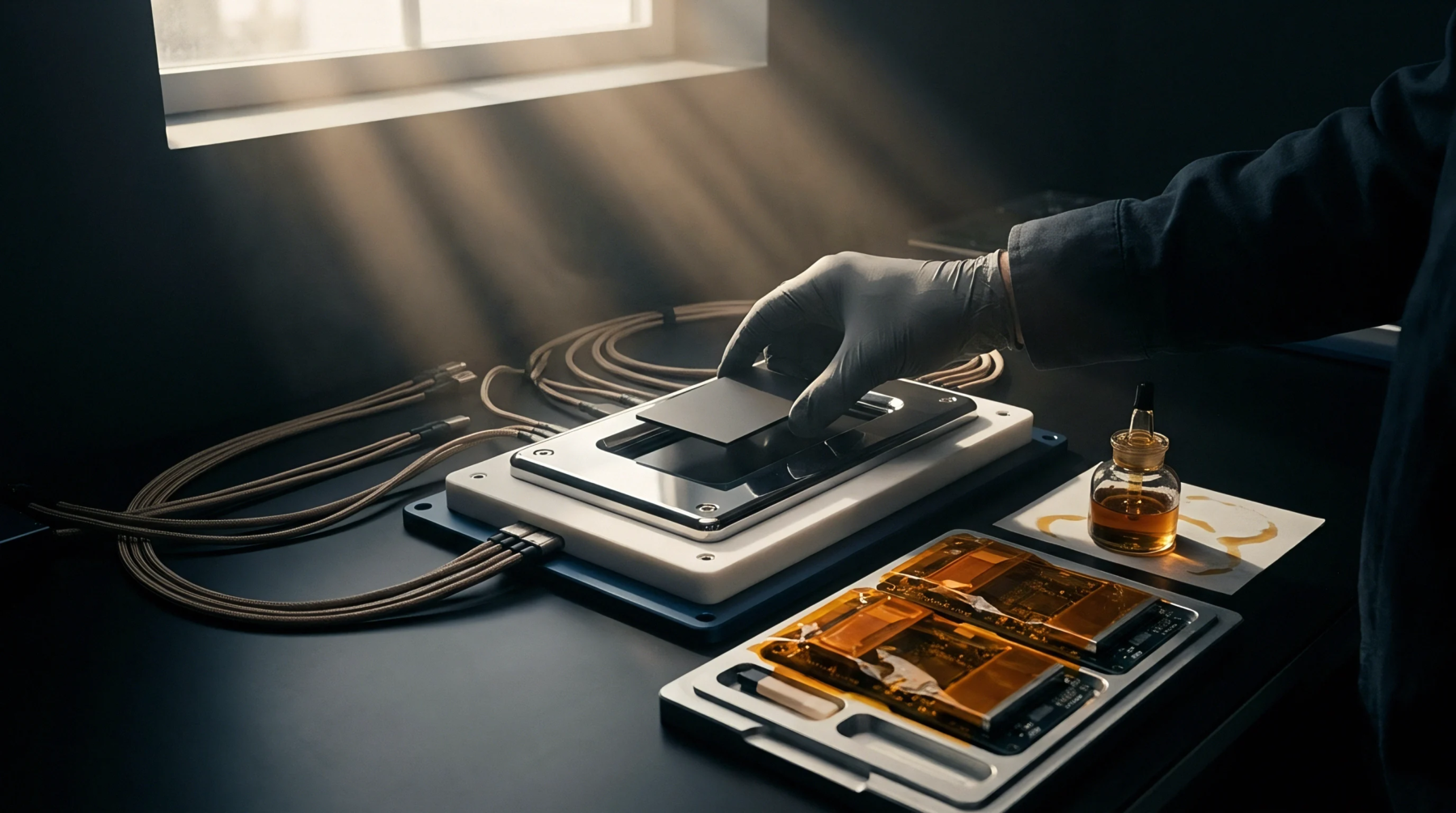
Characterizing this behavior requires heating the material sample in a controlled environmental chamber while measuring its complex permittivity with a cavity resonator. Technicians record the dissipation factor at regular temperature increments to plot the thermal response of the material. These curves are then loaded into electronic design software to enable more accurate thermal and electromagnetic simulations.
This detailed analysis ensures that the finished RF assembly will operate reliably under all specified climate conditions and helps to prevent premature field failures.