Meaning
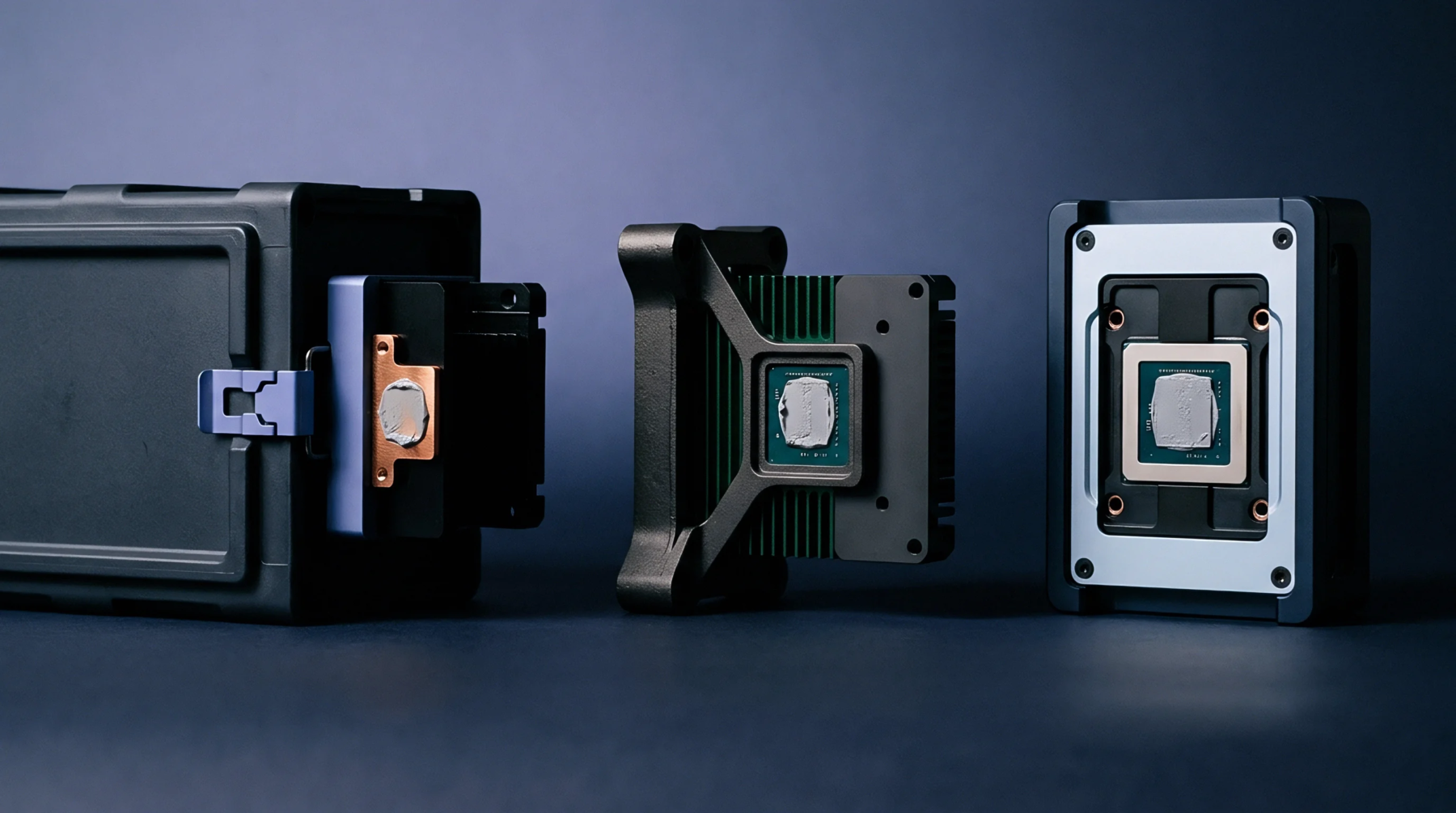
Dynamic evaluation of transient temperature rises across semiconductor junctions under pulsed electrical loads quantifies the composite thermal resistance and heat capacity of an assembled device. Test engineers perform thermal impedance screening during end-of-line manufacturing to detect voiding in die-attach adhesives, poor thermal paste application, and misaligned heat spreaders. The test stops applying to steady-state thermal resistance calculations, ambient housing airflow convection measurements, or non-energized thermal imaging scans.
Transient Response
Applying brief, high-power electrical pulses to internal semiconductor structures generates transient heat that diffuses across structural interfaces. Die-attach voids disrupt conductive heat dissipation pathways, causing junction temperatures to spike rapidly during the initial pulse duration. Thermal impedance screening monitors temperature-sensitive electrical parameters, such as forward diode voltage drops, to track cooling curves after removing power.
The thermal path through the substrate reveals structural flaws long before heat reaches external metal heat sinks.
Defect Detection
Mechanical assembly defects inside power amplifier modules degrade long-term field reliability if left unaddressed. Insufficient solder coverage beneath power packages creates localized hot spots that induce premature transistor breakdown. Production test stations compare measured transient thermal response curves against golden unit baseline responses.
Units exhibiting thermal impedance values above control limits drop into automated reject bins for destructive shear testing and acoustic microscopy analysis.
Production Integration
High-throughput test handlers integrate transient thermal measurements directly into final device functional test routines. Automated test programs pulse integrated circuit pins, capture voltage metrics, and calculate transient impedance within millisecond time frames. Factory quality systems reject parts displaying abnormal thermal time constants, ensuring packaged electronics withstand design limits.
Rigorous thermal screening prevents premature field failures across high-power wireless hardware.