Automated Telemetry Log Validation for Multi Tier Hardware Warranty Dispute Resolution
Automated telemetry validation resolves multi-tier hardware warranty disputes by cryptographically binding chip-level event logs to contractual operating bounds.
Provenance
Modern enterprise hardware assemblies combine integrated circuits from tier 1 semiconductor foundries, board level power stages from tier 2 sub-assembly vendors, and chassis enclosures integrated by tier 3 original design manufacturers. When a multi-layer board fails in the field, each supplier attempts to shift financial liability down or up the supply chain. Standard field returns rely on static error codes stored in system event logs.
These static codes confirm that a fault occurred, yet they fail to capture the operational history leading up to the failure. Silicon degraded quickly.
Automated telemetry validation establishes chronological truth by binding operational register states directly to hardware silicon identity. Hardware root of trust modules, such as dedicated secure elements or trusted platform modules, sign local telemetry payloads at fixed sample intervals. Data integrity rules supreme.
Cryptographic signatures generated on-chip verify that telemetry streams originate from the specific physical board under review rather than a simulated log file.
Non-volatile log storage configured at 512 kilobytes retains 1000 operational hours of rolling register data under standard ambient sampling rates.

Immutable Logging Architecture across Component Layers
On-chip non-volatile storage allocation determines how much historical context survives a catastrophic hardware failure. System designs allocate non-volatile memory sections specifically for write-once diagnostic registers. When local power converters detect an over-voltage or over-temperature condition, high-speed microcontroller interrupt routines flush internal sensor queues into flash memory within 50 microseconds.
Unsigned records carry no weight. Secure boot keys authenticate these emergency log dumps prior to main rail decay.
Multi-tier warranty tracking requires each vendor to register their component key signatures during factory assembly. The tier 1 silicon supplier writes a unique hardware identifier into write-protected electronic fuses during wafer probe testing. The tier 2 board builder appends sub-assembly calibration matrices during board level functional testing.
The tier 3 integrator signs the final assembly manifest during end-of-line burn-in. Dispute resolution software evaluates this chain of signatures to verify that local sensor calibration tables were not altered by third-party firmware update packages during field service.
- Hardware Identifier Fusing anchors die level telemetry to factory wafer coordinates before package sealing occurs.
- Sub Assembly Signature Binding seals board level thermal and voltage calibration profiles during functional bench test runs.
- Cryptographic Roll Count Verification prevents malicious replay of historical telemetry logs collected during prior operational periods.
- Write Once Event Allocation reserves dedicated physical memory partitions for catastrophic power outage diagnostics.
Tier 1 silicon vendors frequently assert that unexpected thermal throttling events stem from board level power delivery ripple rather than internal die degradation.


Schema
Standardizing telemetry structures across disparate vendor sub-assemblies requires strict payload definitions. Without a common data schema, automated log validation engines fail when parsing mixed records from microcontrollers, system management controllers, and host operating systems. The schema standardizes sampling intervals, register offset addresses, physical unit conversions, and valid operating thresholds into a machine-readable document.

Which Telemetry Payload Fields Sanitize Disputed Thermal Claims?
Thermal throttling disputes regularly emerge when host processors operate near maximum junction temperatures. The telemetry payload isolates ambient air temperature, thermal interface material health metrics, and raw die thermistor readings. The table below outlines standard payload fields, offset registers, and acceptable operational tolerances required for automated log ingestion.
| Payload Field | Register Offset | Sampling Rate | Nominal Range | Dispute Tolerance |
|---|---|---|---|---|
| Die Junction Temp | 0x00A4 | 100 ms | -40 to 105 °C | ± 1.5 °C |
| Core Voltage Rail | 0x00B0 | 10 ms | 0.7 to 1.35 V | ± 0.02 V |
| Input Current Sense | 0x00C2 | 10 ms | 0.0 to 45.0 A | ± 0.25 A |
| Clock Frequency | 0x00D8 | 100 ms | 800 to 4200 MHz | ± 5.0 MHz |
| PCIe Link Retrains | 0x0104 | 1000 ms | 0 to 5 Count | 0 Count |
| Tolerances represent standard laboratory calibration thresholds under IPC-9592B testing guidelines. | ||||

Sensor Envelope Definitions and Parsing Rules
Parsing engines enforce strict upper and lower limits on every incoming register value. Operational bounds are coded directly into JSON or Protocol Buffer schema templates. A sensor value exceeding published thermal or voltage boundaries triggers an automated telemetry anomaly tag.
The register locked up.
Validation scripts evaluate incoming telemetry against environmental limits defined in the initial procurement contract. If a board operates inside approved thermal and voltage envelopes while experiencing a functional failure, the failure falls squarely under tier 2 assembly warranty obligations. Conversely, if telemetry logs prove that the end customer exposed the board to supply voltages exceeding maximum rating limits for longer than 200 milliseconds, warranty coverage is voided automatically across all tiers.
Sensor sampling rates defined too far below the thermal response time of the power stage render temperature logs ineffective during accelerated degradation disputes.


Gauge
Physical stress metrics captured by onboard telemetry sensors quantify the exact operating conditions experienced by hardware during its service lifecycle. Micro-cracks in solder joints, electromigration in silicon interconnects, and dielectric breakdown in ceramic capacitors occur as cumulative functions of stress over time. Automated dispute systems convert raw time-series telemetry logs into cumulative damage calculations.
Telemetry Signatures for Silicon and Board Stress
Hardware failure analysis relies on identifying specific telemetry patterns prior to device failure. Power stages run hot. Thermal cycling causes differential expansion between silicon dies and substrate materials, leading to bond wire detachment.
High voltage spikes accelerate electromigration within fine-pitch interconnect structures, manifesting as sudden frequency instabilities or uncorrectable bit errors in onboard memory controller registers.
| Failure Mode | Primary Telemetry Metric | Pre-Failure Signature | Liable Party |
|---|---|---|---|
| Solder Fatigue | Thermal Cycle Delta | Gradual resistance increase across sense lines | Tier 2 Board Integrator |
| Die Electromigration | Core Voltage / Frequency | Frequency drop at static voltage levels | Tier 1 Silicon Manufacturer |
| Capacitor Breakdown | Input Voltage Ripple | High-frequency voltage noise growth | Tier 2 Component Sourcing |
| Over-Environment Damage | Ambient Thermal / Humidity | Sustained operation above rated temperature | End User / Host System |

Worked Calculation of Non Volatile Memory Wear
Non-volatile NAND flash memory degrades through cumulative write and erase operations. Multi-tier disputes often center on whether memory failure stemmed from premature cell degradation or excessive application writes. The mathematical model below quantifies cell endurance consumption using standard telemetry write counts.
Assume a enterprise storage board deployed with 128 gigabytes of non-volatile raw flash memory. The manufacturer rates memory cells for 3,000 endurance program-erase cycles before failure probability exceeds acceptable thresholds. Raw memory telemetry records total physical bytes written to the flash array alongside the write amplification factor managed by the local controller firmware.
Total physical bytes allowed before reaching rated endurance limits are computed directly:
128 gigabytes 1,000,000,000 bytes/gigabyte 3,000 cycles = 3.84 10^14 total bytes.
Local telemetry log parsing reveals the following accumulated metrics over 18 months of field operation:
Host bytes written: 8.50 10^13 bytes.
Telemetry reported write amplification factor: 2.85.
Total physical flash bytes written = 8.50 10^13 bytes 2.85 = 2.4225 10^14 bytes.
Fraction of total endurance consumed = (2.4225 10^14 bytes) / (3.84 10^14 bytes) = 0.6308 (63.08 percent).
The calculation proves that memory wear remains at 63.08 percent of rated endurance. If the storage board experiences memory controller uncorrectable bit errors while total endurance consumption remains below 100 percent, the failure originates from silicon defects or firmware management errors rather than excessive end-user drive wear. The supply chain demands proof.
Industry field data suggests write amplification factors vary between 1.5 and 4.2 based on host workload randomness; a buyer relying on a generic assumption of 2.0 without reading exact telemetry counters risks absorbing valid warranty rejections. A precise audit of the telemetry stream settles the claim without expensive laboratory physical decapsulation.
Thermal stress metrics compiled over 5000 operational hours dictate whether component degradation stems from manufacturing defects or environmental excess.
Vibration fatigue in high-density server racks creates micro-fretting corrosion on high-speed connector pins, much like marine transportation causes mechanical fretting in uncrated industrial machinery during transoceanic shipping. The sensor reported maximum drive. Thermal limits shift over time.
Failing to isolate write amplification factors from host filesystem activity forces system integrators to absorb memory replacement expenses generated by third-party application software.

Audit
Processing incoming hardware returns demands an automated, tamper-proof verification pipeline. Manual analysis of log files introduces human bias, delays settlement execution, and increases engineering labor expenses. Automated ingestion engines process binary log files, re-evaluate cryptographic hashes, run schema checks, and output unambiguous warranty liability allocations within seconds of log submission.
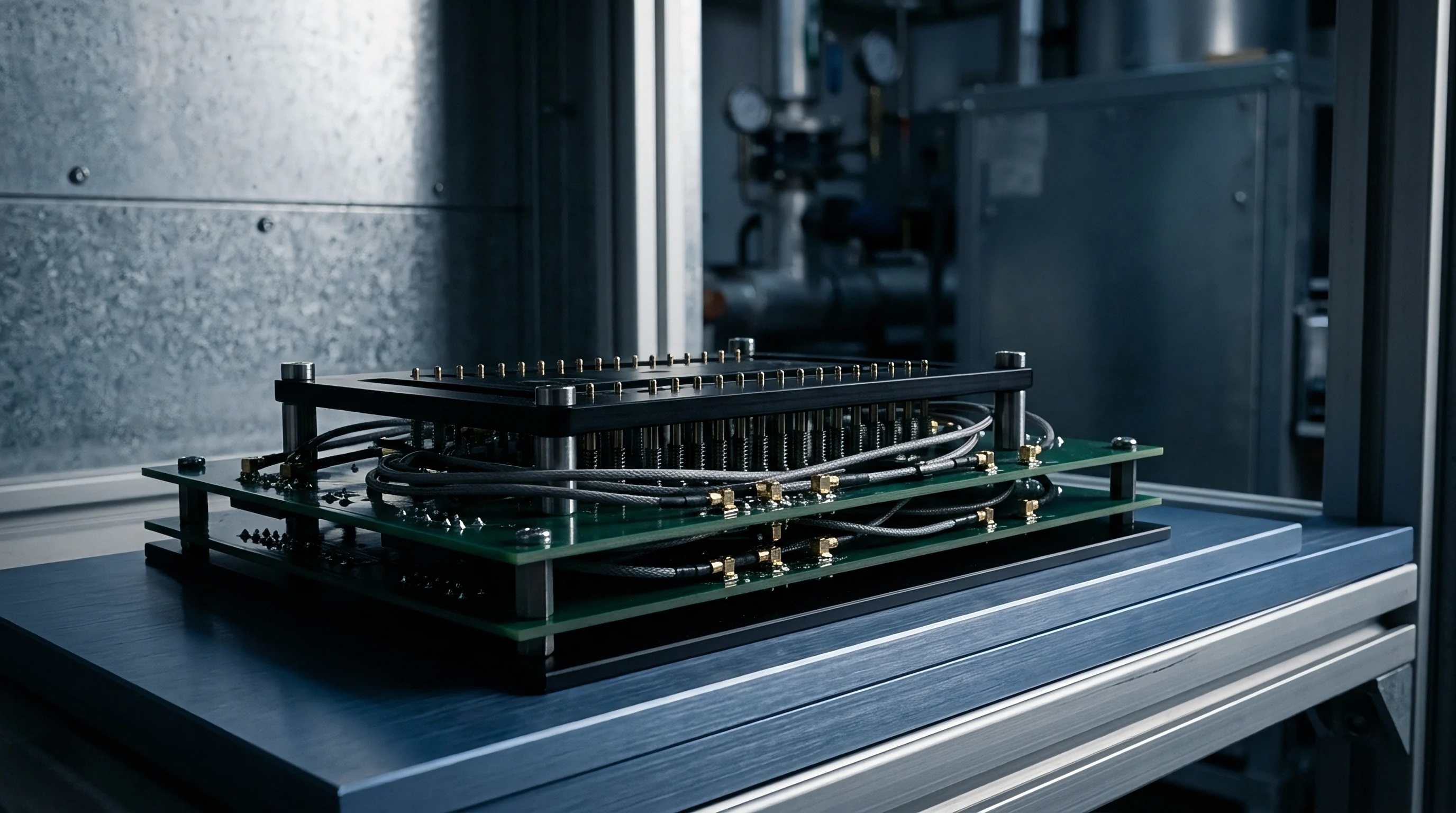
Ingestion Pipelines and Cryptographic Verification
Log submission begins when an enterprise field engineer extracts binary diagnostic dumps from a failed board. The field engineer uploads the binary file to an automated verification portal. Clear evidence closes claims fast.
The portal extracts public cryptographic keys matching the hardware serial number stored in the master assembly register.
The ingestion pipeline processes log verification through a sequential, deterministic series of algorithmic validation steps:
- Calculates SHA-256 cryptographic hashes across raw binary telemetry files to verify payload integrity during transit.
- Decrypts log headers using the public key linked to the specific physical hardware root of trust chip.
- Validates embedded monotonic roll counters to verify the telemetry sequence contains no missing or injected frames.
- Executes schema validation parsers to confirm that all register offsets, sample timestamps, and sensor values match published specifications.
Sequential Processing of Dispute Ingestion Logs
When log payloads pass preliminary security checks, parsing algorithms reconstruct physical operating timelines. The software identifies sensor readings that crossed published operational thresholds. Peak transient values for voltage spikes, temperature excursions, and clock frequency drops are indexed against time timestamps.
Factory defaults set the baseline. The audit log holds.
The engine matches extracted failure signatures against a deterministic rule engine stored in the master supply contract repository. The checksum failed instantly. If telemetry exhibits voltage rail dropouts prior to thermal spikes, the system classifies the root cause as a power converter failure, assigning liability to the tier 2 power stage vendor.
If thermal spikes precede clock frequency degradation while supply voltage remains perfectly stable, liability shifts to the tier 1 processor vendor for silicon thermal gate fatigue.
Whether hardware vendors will accept open-source cryptographic telemetry parsers without demanding proprietary decryption keys remains an active negotiation across multi-tier supply contracts.


Ledger
Dispute resolution ultimately resolves into financial accounting adjustments across component suppliers, module integrators, and end buyers. Automated telemetry validation converts complex physical stress data into direct monetary liability allocations. By linking engineering telemetry directly to commercial contract terms, companies eliminate months of back-and-forth technical arguments and legal disputes.

Commercial Liability Allocation across Tiered Suppliers
Master supply agreements stipulate precise financial remedies based on hardware root cause classifications. When automated telemetry validation completes, results stream directly into financial accounting platforms. Warranty reserves are reallocated dynamically across vendor accounts based on verified failure root causes.
| Validated Root Cause | Tier 1 Silicon Share | Tier 2 Board Share | Tier 3 Integrator Share | RMA Labor Chargeback |
|---|---|---|---|---|
| Silicon Gate Defect | 100 % | 0 % | 0 % | Fully Charged to Tier 1 |
| Power Converter Failure | 0 % | 100 % | 0 % | Fully Charged to Tier 2 |
| Manufacturing Assembly Solder Void | 0 % | 0 % | 100 % | Absorbed by Tier 3 |
| User Environmental Abuse | 0 % | 0 % | 0 % | Billed to End Customer |

Warranty Cost Recovery Mechanics
Financial recovery workflows rely on pre-agreed chargeback structures embedded within multi-tier commercial terms. When a dispute validation script assigns a failure to a specific supplier, an automated debit memo generates against outstanding component procurement invoices. Margin lost triggers a dispute.
Contractual agreements assigning dispute outcomes to automated cryptographic log validation reduce return-material-authorization processing overhead by 80 percent.
- Direct Debit Invoicing automatically deducts verified warranty claim costs from outstanding vendor procurement accounts payable balances.
- Scrap Credit Reconciliation credits board integrators for unrecoverable passive components damaged by primary silicon catastrophic short circuits.
- Engineering Analysis Surcharges assess financial penalties against suppliers who challenge verified telemetry data without presenting valid counter-evidence.
- Freight Allocation Adjustments assign international logistics and customs duties directly to the party proven liable for hardware field failure.
Section 8.3 of the Master Services Agreement transfers all failure analysis labor charges back to the module integrator whenever telemetry proves environmental operating limits were exceeded.


Slip
Final claim settlement requires transparent execution protocols that execute automatically once telemetry validation scripts conclude. Modern hardware procurement contracts incorporate smart settlement terms or automated escrow release clauses. By removing human negotiation delays from routine warranty claims, hardware manufacturers preserve critical supply chain relationships while maintaining rigorous quality control.

Automated Settlement Execution Protocols
When telemetry parsers confirm a valid warranty claim, financial software executes pre-configured settlement slips. These electronic slips record the raw telemetry hash, the rule engine output, the assigned liability split, and the resulting financial debit or credit voucher. Failure signatures match the trace.
Automated settlement execution eliminates manual invoice adjustments and aligns warranty accounting directly with verified hardware telemetry records.
A buyer operating under a multi-tier sourcing agreement specifies cryptographic telemetry logging requirements during initial request-for-quotation phases. Incorporating standardized telemetry schema specifications, secure element hardware requirements, and automated dispute rules directly into purchase orders ensures total commercial protection throughout the hardware production lifecycle.