Harmonized Tariff Classification Frameworks for Importing Printed Circuit Board Assemblies
Populated circuit board classification requires determining principal function under Section XVI notes rather than declaring bare substrate heading 8534.
Filing
Customs valuation teams and trade compliance officers inspect incoming printed circuit assemblies against the General Rules of Interpretation before clearing an entry summary at the port. An assembly’s physical configuration dictates its legal classification under the Harmonized Tariff Schedule of the United States. Importers often confuse bare substrates with populated circuit assemblies, creating immediate vulnerability during audits, as the entry summary determines liability and places the burden of proof squarely on the importer.
Finding the correct eight-digit or ten-digit tariff subheading requires measuring the assembly against General Rule of Interpretation 1. Once an imported printed circuit board carries active components like diodes, transistors, or integrated circuits, heading 8534 no longer applies. Instead, the goods shift into product-specific headings in Chapter 84 or Chapter 85 based on what the finished assembly actually does.
Table 1 outlines the operational thresholds dividing major tariff lines for imported electronic assemblies.
Classification under tariff line 8517.62.00 yields a zero percent base rate across member states, while diversion into 8543.70.99 triggers a 2.6 percent general duty before supplemental tariffs apply.
The landed duty rate depends on the statutory rate in column 1 of the tariff schedule, adjusted for trade remedies like Section 301 duties on Chinese-origin goods. Sourcing an assembly from Shenzhen rather than Penang changes the commercial outcome because subheadings under 8504, 8517, and 8543 carry twenty-five percent ad valorem duties under Section 301 List 3 or List 4A. Any misclassification that avoids that twenty-five percent penalty creates civil liability under 19 U.S.C. 1592, where negligence penalties can reach twice the unpaid duty or twenty percent of the entered value.
| HTS Heading | Physical Assembly Condition | Active Silicon Presence | Statutory General Rate | Section 301 Treatment |
|---|---|---|---|---|
| 8534.00.00 | Bare etched substrate with conductive traces only | Excluded | Free | List 2 (25 percent) |
| 8504.90.75 | Populated power converter subassembly with inductors and switches | Mandatory | Free | List 3 (25 percent) |
| 8517.62.00 | Data transmission board with transceiver and microcontroller | Mandatory | Free | List 3 (25 percent) |
| 8517.79.00 | Subassembly dedicated solely to telecommunication apparatus | Optional | Free | List 3 (25 percent) |
| 8529.90.99 | Subassembly for radar, radio reception, or television broadcast | Optional | Free | List 3 (25 percent) |
| 8537.10.91 | Motor control board equipped with switches and relays under 1000V | Optional | 2.7 percent | List 3 (25 percent) |
| 8542.31.00 | Hybrid integrated circuit on ceramic carrier meeting Note 12 | Encapsulated | Free | List 3 (25 percent) |
| 8543.70.99 | Electrical apparatus board executing independent unlisted functions | Mandatory | 2.6 percent | List 3 (25 percent) |
Classification follows a statutory hierarchy. Importers check bills of materials and schematics against specific exclusion notes in Chapter 85 before defending a chosen classification, under which bare copper boards enter duty-free at a zero base rate while populated modules move to heading 8517.
- Component Level Sourcing Dossier separates discrete semiconductor values from bare laminate fabrication line items across commercial invoices.
- Schematic Block Functional Diagram establishes whether the assembly operates autonomously or remains dependent on a host motherboard.
- Firmware State Declaration specifies whether onboard flash memories arrive blank, carry hardware bring-up code, or hold operational application stacks.
- End-Use Machine Specification identifies the precise apparatus of Chapter 84, 85, or 90 to which the subassembly connects mechanically and electrically.
Selecting the wrong code brings retroactive duty assessments, interest penalties on unpaid deposits, and mandatory secondary cargo inspections at the port of entry.
Trace
Bare substrates made of woven glass reinforced epoxy laminates fall under Harmonized Tariff Schedule heading 8534 as long as the copper traces remain unpopulated. Heading 8534 strictly covers printed circuits formed by printing, plating, or etching conductive elements, contacts, or inductances onto an insulating base; adding passive surface-mount resistors, discrete capacitors, or active silicon voids this classification, leaving only unpopulated boards under 8534.
Customs officers examine imported boards under magnification to see if solder bridges, test pins, or surface passives were added during overseas assembly. Even a single surface-mounted bypass capacitor or pull-up resistor pushes the board out of heading 8534 into composite goods or parts provisions under Section XVI Note 2. Once an assembly includes active components like op-amps or microcontrollers, its legal identity shifts permanently from a circuit carrier into an electrical machine subassembly.
Populating a single discrete active semiconductor pulls an unpopulated printed circuit board permanently outside heading 8534.
The boundary between heading 8534 and populated subassembly headings turns on whether components are printed or mounted separately. Etched inductors or distributed-element transmission lines formed on the inner copper layers of an FR4 multilayer board are fine under heading 8534, but discrete surface-mount inductors soldered to exterior pads violate heading exclusions.
- Incomplete Surface Mount Assembly arises when pick-and-place lines populate bypass passives while leaving primary system-on-chip positions unpopulated.
- Soldered Test Point Header configurations get classified as connectors under heading 8536 when pins arrive pre-soldered to copper test lands.
- Unregistered Secondary Stiffener plates mounted to flexible polyimide circuits cause border inspectors to reclassify bare circuits as mechanical assemblies.
- Pre-Programmed EEPROM Population leads entry officers to categorize an otherwise unpopulated development board as a memory module under 8542.
Printed circuit tolerance standards under IPC-6012 Class 3 require a minimum internal-layer annular ring of 0.050 millimeters. That figure comes from metallurgical micro-section testing on standard twelve-layer production coupons evaluated in 2023. Dropping the dielectric prepreg thickness from 100 micrometers to 50 micrometers or switching to low-loss hydrocarbon substrates alters high-frequency capacitance, invalidating test data if a plant substitutes uncertified core materials without running fresh coupons.
Unmounted surface-mount passives shipped inside the same antistatic bag enter as separate loose parts rather than an incomplete board assembly.
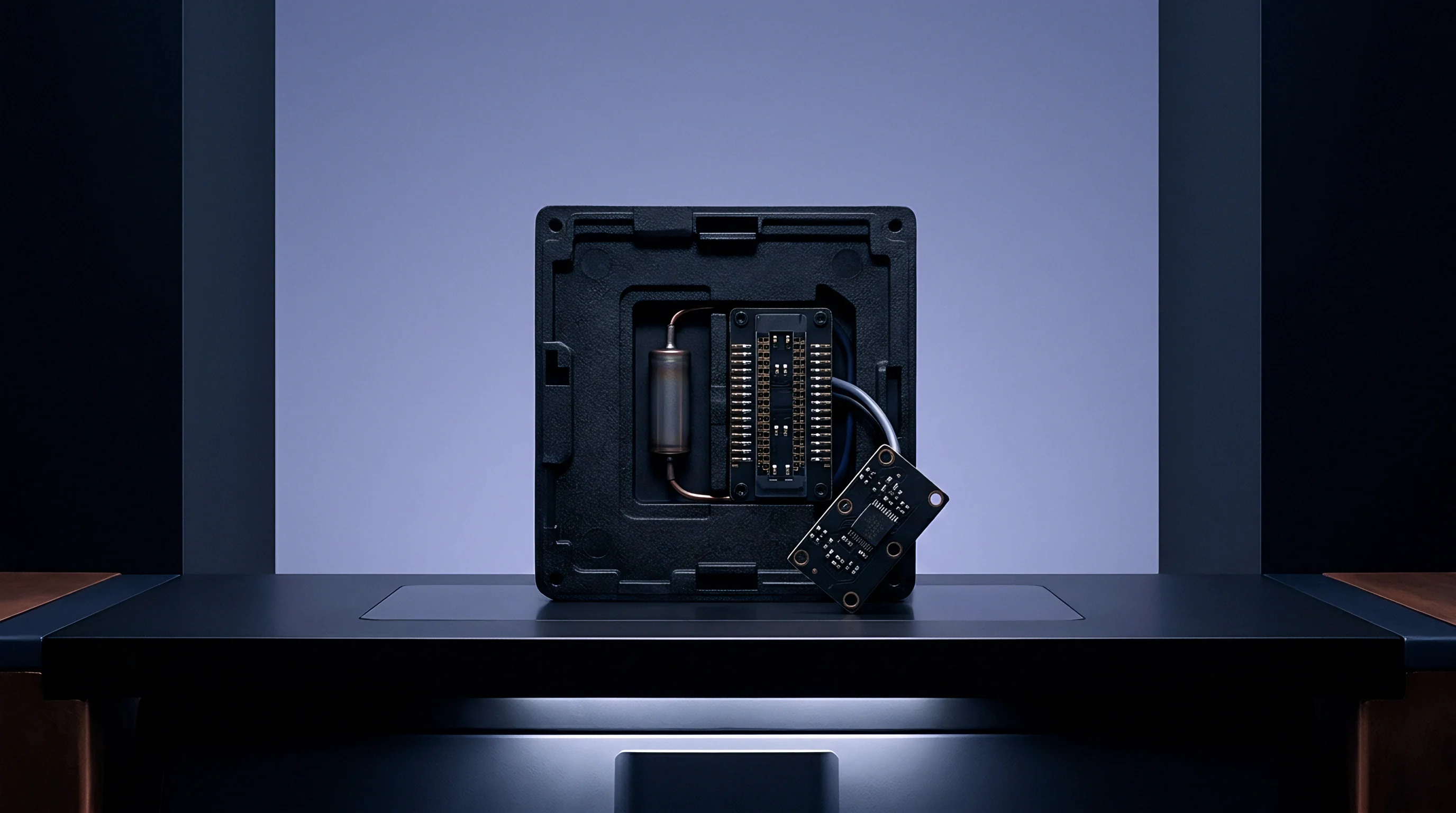
Function
Classification disputes pick up whenever an imported circuit assembly performs multiple operational roles at once. A high-speed daughterboard carrying both an Ethernet physical layer transceiver and motor-driving H-bridge circuits presents competing identities at entry. Under General Rule of Interpretation 3(b), composite goods made of different components are classified by the component that gives the assembly its essential character.
Determining essential character means weighing commercial invoice values, physical surface area, processing load, and intended marketing focus. On a board combining dual-band Wi-Fi with an industrial power controller, the radio transceiver silicon often makes up seventy percent of component costs while occupying under twenty percent of the board footprint. Importers check which subsystem drives the primary commercial use before declaring a tariff line.
Boards executing wireless communication through onboard baseband processors follow the communication path over host system control.
Container vessel delays in international maritime shipping create additional regulatory risk. Rerouted vessels sometimes discharge containers in secondary jurisdictions, exposing cargo to local tariff reviews before it reaches the destination port. In those transfer yards, customs officers inspect physical board features closely.
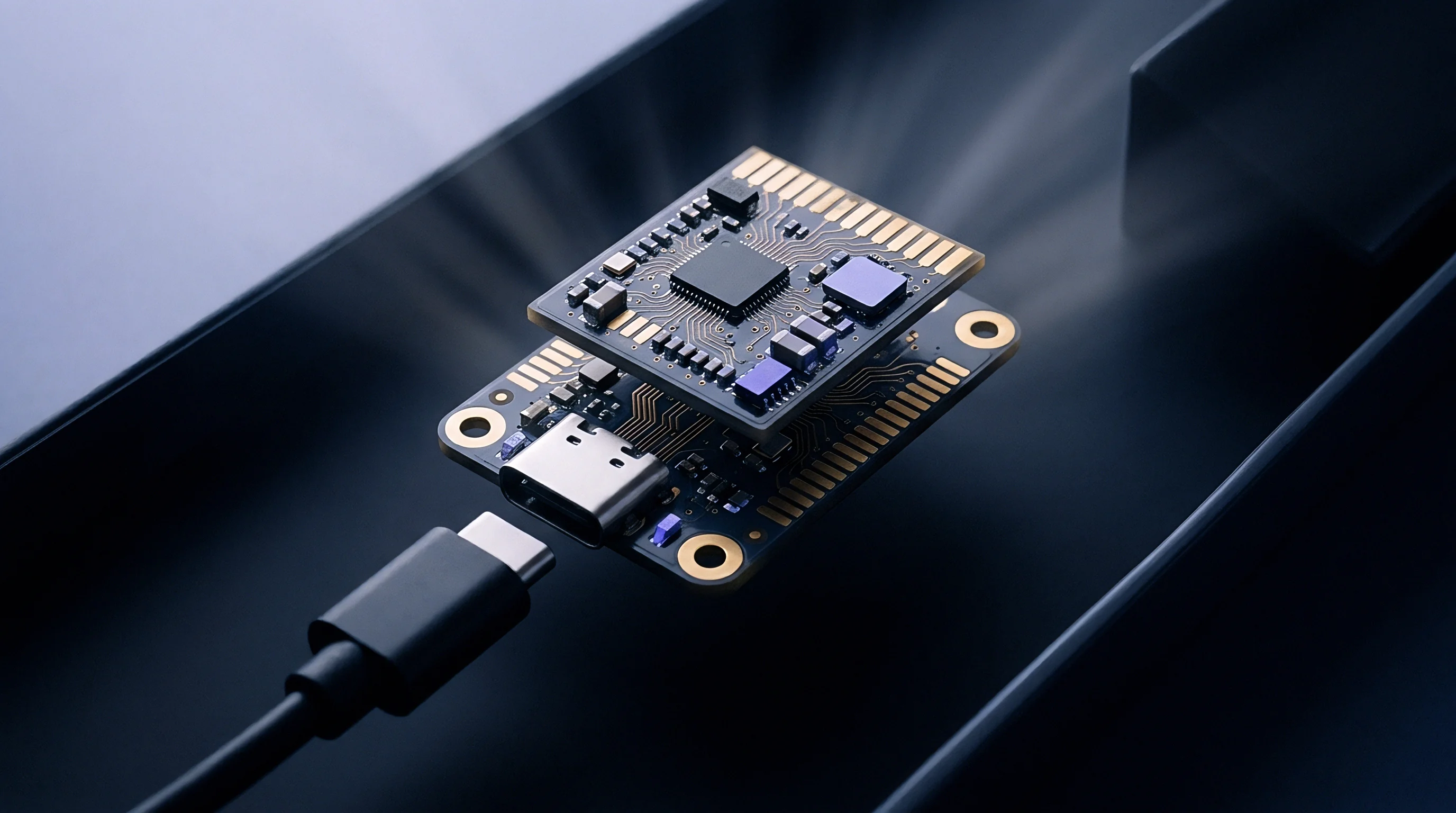
Can Populated Solder Pads Alter Subheading Treatment?
Soldering components transforms an inert board into an active subsystem. Customs authorities look at whether the populated board has an independent function under heading 8543 or serves only as a dedicated subassembly under Section XVI Note 2(b). If an assembly works solely or principally with an automatic data processing machine under heading 8471, it belongs in 8473.30.
If it handles wireless communications on its own, heading 8517 takes precedence over parts headings under Note 2(a) of Section XVI.
- The engineering team isolates every discrete integrated circuit on the schematic and cross-references its manufacturer part number against published device specifications.
- The software build team validates whether the flashed firmware converts the assembly into an active communications node prior to international export.
- Trade compliance officers calculate the component cost ratio between data processing silicon and analog control components across the bill of materials.
- The import manager files an advance ruling request under 19 CFR Part 177 whenever the board design supports multiple commercial host configurations.
Classification turns on the main operational function that drives the purchase order, not on minor diagnostic circuits placed along the board edge.
Dispute
Section 592 penalties under the Tariff Act penalize importers who misstate subheadings to avoid Section 301 duties. A common point of friction is choosing between heading 8517 and heading 8543. Subheading 8517.62.00 covers equipment for transmitting, receiving, or regenerating data, voice, or images at a zero percent general duty rate.
Subheading 8543.70.99 covers electrical equipment with individual functions not covered elsewhere, carrying a 2.6 percent general duty, while Section 301 adds another twenty-five percent.
Table 2 illustrates the financial impact of classification choices for an annual run of 100,000 wireless control assemblies imported from overseas surface-mount facilities. Shifting from dedicated communications gear to general electrical machinery alters duty calculations by tens of thousands of dollars even before civil penalties enter the picture. Customs audit teams review entry paperwork to recover back duties.
| Declared Tariff Line | Total Declared Customs Value | Statutory Base Duty | Section 301 Trade Remedy Rate | Total Customs Duty Assessment |
|---|---|---|---|---|
| 8517.62.00 | $5,000,000 | $0 | 25.0 percent ($1,250,000) | $1,250,000 |
| 8543.70.99 | $5,000,000 | 2.6 percent ($130,000) | 25.0 percent ($1,250,000) | $1,380,000 |
| 8473.30.11 | $5,000,000 | $0 | 0.0 percent ($0) | $0 |
| 8537.10.91 | $5,000,000 | 2.7 percent ($135,000) | 25.0 percent ($1,250,000) | $1,385,000 |
Invocation of General Rule of Interpretation 2(a) treats an incomplete circuit assembly as the finished article whenever the board already displays the essential functional character of the terminal apparatus.
Customs audit literature indicates that roughly thirty-two percent of contested electronic subassembly entries face involuntary reclassification during secondary review. That figure remains somewhat uncertain because Customs and Border Protection aggregates settlement records that include confidential commercial terms. Given that uncertainty, prudent buyers obtain binding classification rulings under 19 CFR Part 177 before placing volume production orders.
Does Firmware Presence Shift Base Subheading Status?
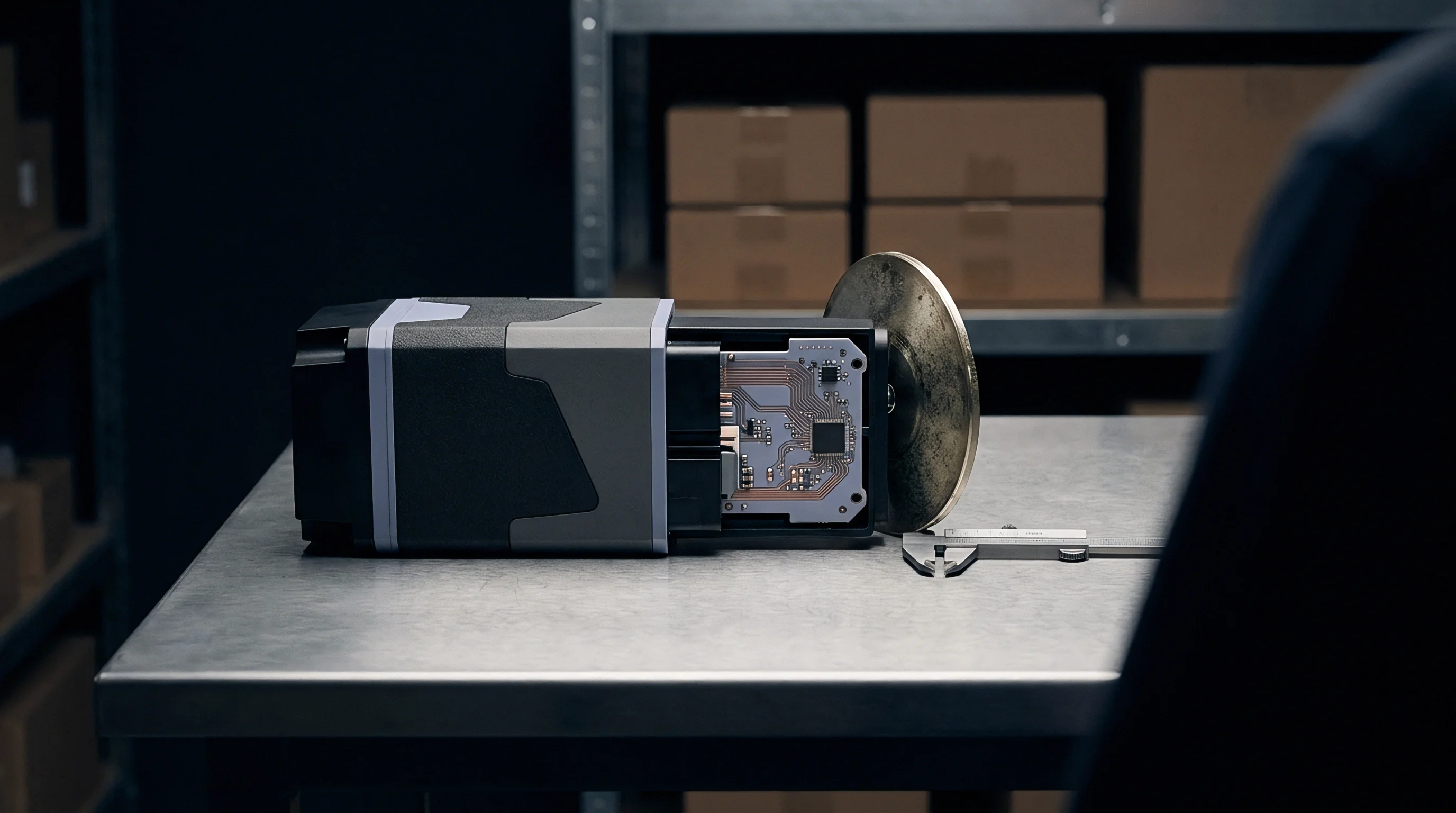
Customs inspects circuit boards as presented at the port of entry. Populated boards imported without firmware cannot execute communication tasks until flash memory is programmed domestically. Nevertheless, multiple binding rulings confirm that unprogrammed assemblies with network-capable physical layer silicon retain the essential character of communications equipment under General Rule of Interpretation 2(a), so missing application software does not drop the board into an unlisted subassembly line.
Turnkey procurement contracts frequently include a compliance clause that assigns financial liability for tariff reclassifications and penalties to the assembly contractor.
Dossier
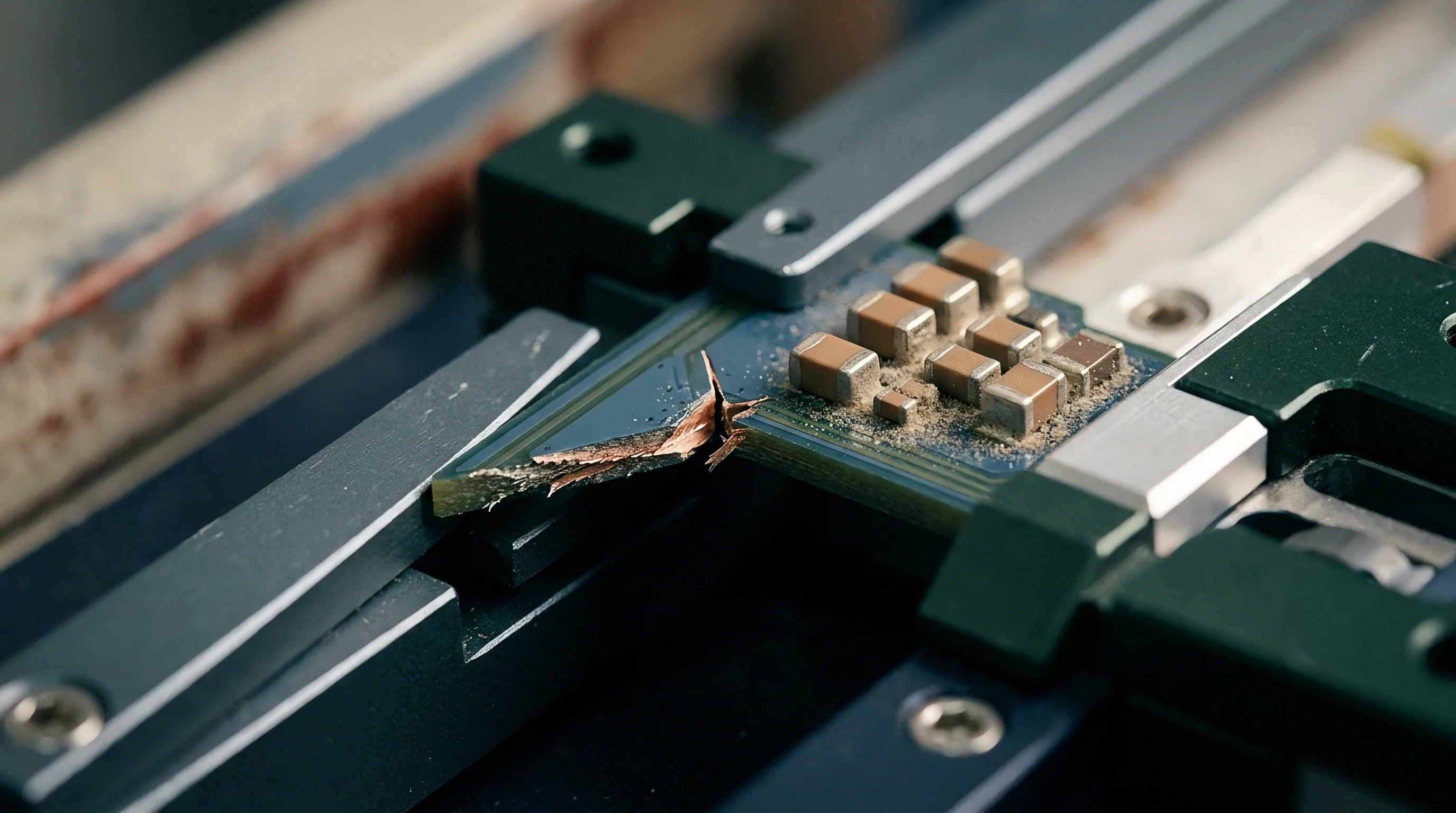
Defending a tariff line requires full visibility into the bill of materials, schematics, and component functions. Sourcing teams build these technical packages before the first production lot leaves the factory. If an assembly gets flagged for a cargo hold, compliance attorneys need immediate access to datasheets for every active integrated circuit on the board.
The engineering package has to clarify whether an assembly functions on its own, as a modular add-on card, or as part of a larger host machine. Top-level assembly drawings and exploded views demonstrate that the board fits only into a specific host product, while claiming a parts heading under Section XVI Note 2(b) requires showing the board has no alternate commercial uses in other industries.
A full documentation package contains fabrication drawings, Gerber files, placement centroids, and component origin declarations. Sourcing specialists verify that component origins match the declared certificate of origin, especially when integrated circuits undergo wafer fabrication and packaging in different countries, because mismatches between board markings and commercial invoices spark immediate cargo holds.
Customs laboratories take an average of twenty-eight business days to complete chemical and optical board analyses. That timeframe comes from official testing schedules published by customs scientific laboratories during the 2022 fiscal audit cycle, though lab backlogs or micro-computed tomography scans for high-density ball grid array packages can lengthen the review.
Whether customs authorities treat reconfigurable field-programmable gate array assemblies as digital data processors or general electrical machinery remains unclarified when the configuration bitstream wipes upon loss of power.