Harmonized Standards Gap Analysis for Cross Border Radio Approvals
Cross-border radio approvals require isolating regional gaps between European receiver-centric standards and North American transmitter-focused filing grants.

Rig
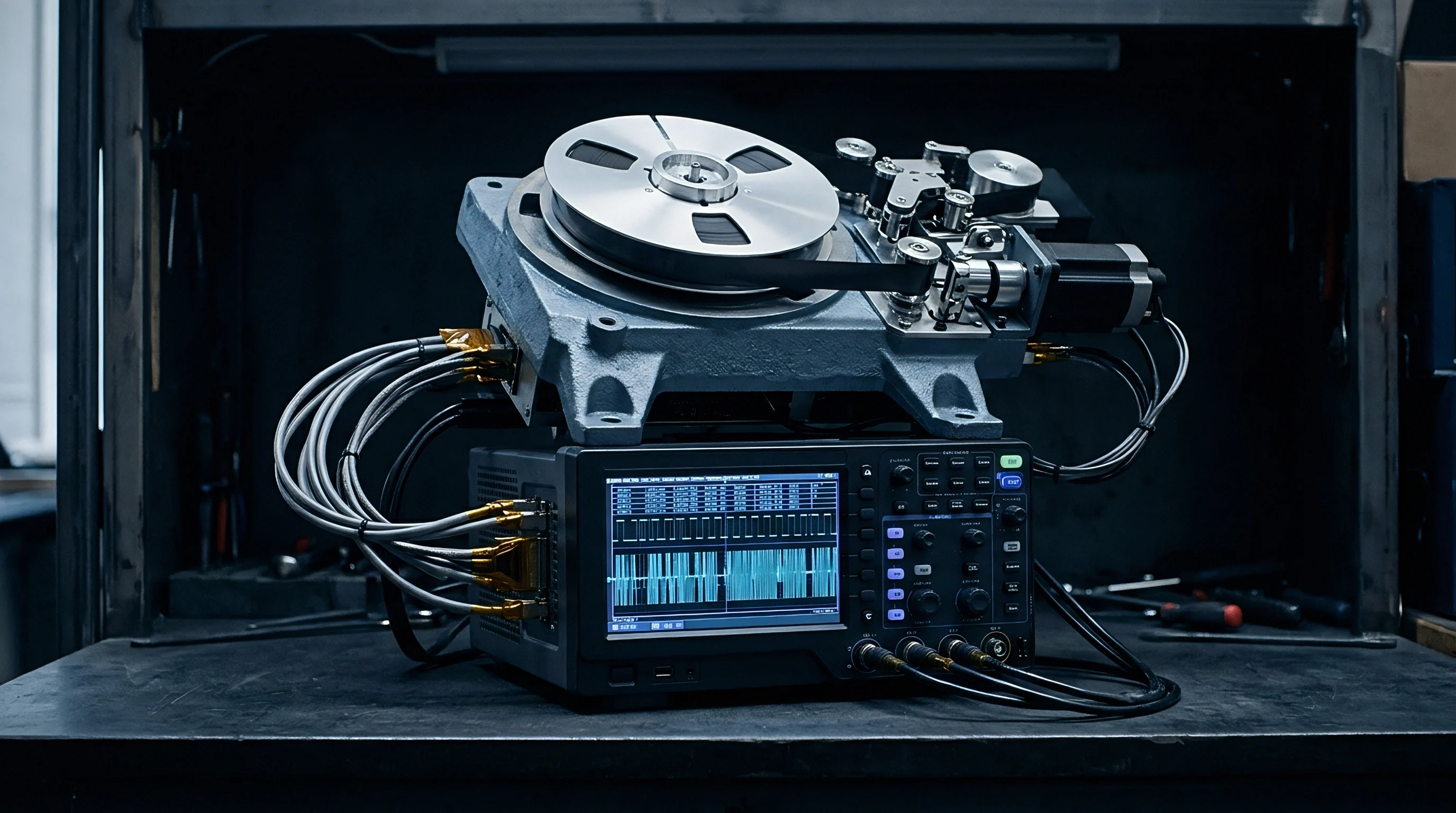
Inside a semi-anechoic enclosure, a spectrum analyzer sweeps from thirty megahertz to six gigahertz while the turntable indexes five degrees per step. The automated mast shifts the receiving horn between one and four meters, tracking horizontal polarization peaks before running the vertical scan. Radio hardware that satisfies European Union requirements under ETSI EN 300 328 does not inherently clear United States Federal Communications Commission approvals under FCC Part 15C or Canadian Innovation, Science and Economic Development specifications under RSS-247.
Securing multi-market approvals comes down to the discrepancies between European Radio Equipment Directive harmonized standards and regional type approval frameworks. In the European Union, applying harmonized standards in full allows self-declaration supported by an internal technical documentation dossier; the Federal Communications Commission instead requires review by a Telecommunication Certification Body, accredited laboratory reports, and an indelible grant identifier on the outer housing. Test software locks the duty cycle throughout the run.

Turntable Execution and Conducted Coupling Differences
Conducted RF evaluations run coaxial lines directly to test receivers, eliminating antenna beam variations to measure transmitter output power and power spectral density. Testing under ETSI EN 300 328 v2.2.2 measures equivalent isotropically radiated power using wideband burst power sensors with response times under one microsecond. Federal Communications Commission rules in Title 47 Part 15.247 specify conducted peak output power, with an alternative maximum conducted output power standard based on instrument averaging.
That distinction changes test margins immediately. A transmitter tuned to nine milliwatts conducted power sits safely below the European twenty milliwatt threshold. Pairing that circuit with an eight-decibel isotropic gain directional antenna, however, raises European radiated power to fifty-six milliwatts, crossing the two-hundred milliwatt limit cited for wideband modulation and invoking strict duty-cycle logging obligations.
Antenna gain dictates the filing path.
Reference bandwidth settings on the same spectrum analyzer diverge significantly between regional test regimes. European standards call for a one-megahertz resolution bandwidth during out-of-band domain scans, dropping to one hundred kilohertz for spurious emissions below one gigahertz. Federal Communications Commission rules specify a one-hundred-kilohertz measurement bandwidth for conducted band-edge checks, then require one megahertz with a three-megahertz video bandwidth for peak radiated sweeps above one gigahertz.
For average measurements, American rules permit linear average detectors or duty-cycle correction factors calculated across a one-hundred-millisecond window; European procedures call for an RMS detector without duty-cycle adjustments during active burst sequences.
A laboratory report generated for one regulatory jurisdiction leaves border clearance exposed whenever detector dwell times and antenna polarization heights follow divergent national scopes.
Radiated spurious emissions also demand distinct chamber setups. European Union harmonized standards evaluate the entire apparatus inside an anechoic room from thirty megahertz up to twice the operating frequency, setting spurious limits at minus thirty-six decibels relative to one milliwatt up to one gigahertz, and minus thirty decibels relative to one milliwatt above one gigahertz in transmit mode. American Part 15 rules measure field strength at a three-meter test distance, imposing a fifty-four decibels microvolt per meter ceiling above one gigahertz for the restricted bands defined in Part 15.205.
Unrestricted bands permit twenty decibels of attenuation below the fundamental carrier. High harmonics often leak through shielding cans while turntables index at one revolution per minute.


Mask
Spectral masks dictate how sharply transmitted power must fall off to shield neighboring spectrum allocations. While the 2.4 GHz industrial, scientific, and medical band spans 2400 to 2483.5 MHz globally, regional boundary rules differ substantially. Under European harmonized standards, transmitter out-of-band emissions follow an envelope bounded between 2400 MHz and 2483.5 MHz, dropping below minus ten decibels relative to one milliwatt per megahertz just outside the band edges.
United States rules under Section 15.205 place a strict restricted band right against that upper 2483.5 MHz boundary. Transmitters operating on channel 11, 12, or 13 clear EN 300 328 out-of-band thresholds without incident, but that same upper skirt violates the American seventy-four decibel microvolt per meter peak limit on channel 11 unless firmware cuts output power by four to six decibels. Firmware settings ultimately dictate whether field strength passes muster.

Occupied Bandwidth and Spectral Power Thresholds
Definitions of spectral occupancy and energy concentration differ fundamentally between authorities. European requirements define occupied bandwidth at ninety-nine percent of total integrated power, using that figure to cap power spectral density at ten milliwatts per megahertz for frequency-hopping spread spectrum and twenty milliwatts per megahertz for wideband digital systems. Under Part 15.247(a)(2), the Federal Communications Commission instead evaluates six-decibel bandwidth for digital modulation, requiring at least five hundred kilohertz while capping conducted power spectral density at eight decibels relative to one milliwatt in any three-kilohertz band.
A signal with a wide, shallow envelope stays well within European density limits but can saturate the American three-kilohertz measurement window when unshielded traces radiate across the board.

How Do Radiated Spurious Limits Diverge across Borders?
Harmonized measurement techniques fail to prevent substantial divergence in radiated emission thresholds once radio products cross customs barriers. Regional authorities apply independent mathematical limits, reference distances, and detector functions to identical operating frequencies:
- Band Edge Inversion occurs when products compliant with European ten-decibel out-of-band limits breach the American fifty-four decibel microvolt per meter average field strength ceiling at 2483.5 MHz due to restricted band definitions.
- Detector Mismatch Rejection arises because European receiver measurements rely on continuous RMS burst integration while American and Taiwanese regulators require quasi-peak detectors below one gigahertz and separate peak-and-average passes above one gigahertz.
- Harmonic Floor Divergence surfaces in Asian markets where Chinese State Radio Regulatory Commission rules set receiver spurious limits at minus fifty-seven decibels relative to one milliwatt up to one gigahertz, well below ETSI allowances.
- Idle Mode Spurious Leakage presents persistent compliance gaps when products evaluated solely in transmit states under Federal Communications Commission rules fail European standby emission limits of minus forty-seven decibels relative to one milliwatt.
Japanese Ministry of Internal Affairs and Communications Ordinance No. 88 Article 2 Paragraph 1 Item 19 fixes frequency error limits within fifty parts per million, paired with antenna power tolerances bounded between plus twenty percent and minus eighty percent of declared value. Under document number 2021-129, Chinese State Radio Regulatory Commission regulations tighten absolute frequency tolerances to twenty parts per million for 2.4 GHz equipment, cutting allowable drift by more than half relative to the Japanese standard while the spectrum analyzer sweeps thirty megahertz.
Conducted spurious measurements evaluated across thirty megahertz to twelve gigahertz exhibit an eighty-decibel dynamic range requirement that exceeds typical pre-compliance bench instruments.
| Regulatory Body and Jurisdiction | Applicable Standard | Maximum Radiated Power Limit | Power Spectral Density Ceiling | Upper Band Edge Threshold at 2483.5 MHz |
|---|---|---|---|---|
| European Union (CE Marking) | ETSI EN 300 328 v2.2.2 | 20 dBm (100 mW) EIRP | 10 dBm/MHz (wideband) | -10 dBm/MHz (out-of-band domain) |
| United States (FCC Grant) | Title 47 CFR Part 15.247 | 36 dBm (4 W) EIRP max | 8 dBm in 3 kHz conducted | 54 dBµV/m at 3m (restricted band average) |
| China (SRRC Type Approval) | MIIT Notice No. 129 | 20 dBm (100 mW) EIRP | 10 dBm/MHz EIRP | -80 dBm/Hz conducted EIRP equivalent |
| Japan (MIC Radio Certification) | Ordinance No. 88 Item 19 | 10 mW/MHz EIRP | 10 mW/MHz (non-FHSS) | 2.5 µW/MHz or lower adjacent band spill |
| South Korea (KC Mark) | KS X 3123 / MSIT Notice | 20 dBm (100 mW) EIRP | 10 dBm/MHz EIRP | -30 dBm or 54 dBµV/m local threshold |
Tuning an output filter solely against European band skirts leaves virtually no operating margin when submitting samples to North American test houses.

Traverse
Dropping a certified RF transceiver module into an end-product enclosure resets legal compliance balances across international borders. Integrators often assume an FCC modular grant carries over to the complete host system in all export destinations, but regulatory treatment diverges immediately. Federal Communications Commission KDB 996369 D04 permits host manufacturers to leverage the module’s conducted test reports, requiring only radiated spurious spot checks and electromagnetic compatibility verification on the composite host assembly.
The European Radio Equipment Directive 2014/53/EU operates under a different structure: Article 3 makes the finished product manufacturer legally responsible for all essential requirements, including spectrum efficiency, electromagnetic compatibility, electrical safety, and incoming cybersecurity mandates, regardless of existing module grants.

Receiver Immunity and Host Radiated Integration
Receiver performance marks the clearest divide between North American and European regulatory frameworks. Title 47 Part 15 concentrates on suppressing interference to adjacent spectrum, leaving receiver resilience, selectivity, and sensitivity unregulated. Article 3.2 of the European Radio Equipment Directive, by contrast, treats receiver performance as an essential element of spectrum efficiency.
Under ETSI EN 300 328 clause 5.4.11, wideband data devices must undergo receiver blocking tests where continuous-wave interferers are injected at offsets ranging from thirty megahertz to several gigahertz off-channel while technicians evaluate packet error rates and throughput. If clock harmonics from nearby display interfaces or memory buses leak into the RF front end, the device can fail European blocking tests despite holding an unblemished FCC grant.
Receiver front-end tolerances mirror the mechanics of temperature-compensated quartz crystals in early chronometers, where small thermal drifts threw resonance frequencies off balance and degraded timing accuracy across long voyages. Clock jitter along high-speed traces spreads phase noise across wide frequency bands, pulling down the low-noise amplifier’s sensitivity. Just as balance-wheel drift spoiled navigational positions at sea, an unshielded switch-mode power converter bleeds radiated switching noise into the antenna matching network, destroying receiver sensitivity during European harmonized testing.

Why Does Receiver Blocking Trigger Retesting under RED?
Modular test data generated by silicon vendors rarely translates directly into host compliance because circuit board routing, enclosure plastics, and nearby processors compromise receiver resilience. The sequence for validating host integration across regulatory borders follows an uncompromising engineering path:
- Antenna Coupling Assessment evaluates trace layout geometry and verified impedance matches, confirming gain characteristics do not exceed module grant limits.
- Baseband Noise Characterization measures radiated emissions from host processors, microcontrollers, and switched-mode power conversion circuits with the radio module disabled.
- Conducted Spot Checking verifies transmitter fundamental output power and spurious harmonics against the original modular grant filing records.
- Radiated Spurious Emission Scanning rotates the composite host product through three hundred sixty degrees across horizontal and vertical antenna polarizations to locate co-location intermodulation products.
- Receiver Blocking Verification stresses the integrated host receiver with out-of-band continuous-wave interference at minus thirty-four decibels relative to one milliwatt to confirm packet reception stays above eighty percent.
An industrial asset tracker demonstrates the practical gap between jurisdictions. Consider a unit housing a 2.4 GHz Nordic Semiconductor nRF52840 transceiver operating with Bluetooth Low Energy physical layer framing at one megabit per second, paired with a printed circuit board meandered inverted-F antenna showing a measured peak gain of plus 2.5 dBi. Under FCC Part 15.247(b)(3), maximum allowed conducted output power is one watt (30 dBm), permitting antenna gain up to 6 dBi without derating.
Operating at plus 8 dBm conducted power, the radio produces an effective isotropic radiated power of 10.5 dBm, clearing American output limits with a nineteen-decibel margin. Radiated second and third harmonics at 4.8 GHz and 7.2 GHz measure 48.5 dBµV/m at three meters, well below the 54 dBµV/m restricted-band average ceiling. On paper and in the chamber, the device clears American modular integration criteria easily.
That same asset tracker fails European deployment without physical hardware modifications. ETSI EN 300 328 clause 5.4.11 assigns it to Receiver Category 2, which governs non-frequency-hopping systems with equivalent isotropic radiated power between ten and twenty decibels relative to one milliwatt. The receiver blocking test injects an out-of-band continuous-wave signal at 2380 MHz and 2503.5 MHz at minus thirty-four decibels relative to one milliwatt conducted, or an equivalent field strength of sixty-nine decibels microvolt per meter.
During laboratory scans, an unshielded DC-DC buck converter on the host board switching at 1.2 MHz throws harmonic spurs across the 2.4 GHz band, driving the receiver packet error rate to forty-two percent against the allowable ten percent limit. The European Declaration of Conformity cannot be signed. Correcting the issue requires PCB respins, inductor shielding, and firmware revisions that limit receiver sensitivity windows, delaying deployment schedules by fourteen weeks.
Under Article 10.8 of Directive 2014/53/EU, host manufacturers must include explicit frequency band and maximum radio-frequency power data inside user manuals before commercial distribution begins.
| Regulatory Scheme | Receiver Blocking Requirement | Receiver Selectivity Mandate | Co-Location Radiated Testing | Modular Grant Reusability |
|---|---|---|---|---|
| EU Radio Equipment Directive | Mandatory (ETSI EN 300 328 Cl. 5.4.11) | Mandatory under RED Art 3.2 | Mandatory composite host testing | Host manufacturer holds legal liability |
| US Federal Communications Commission | None (unregulated under Part 15) | None under general Part 15C | Mandatory spot checks (KDB 996369) | Direct pass-through via Part 15 modular rules |
| ISED Canada | None under RSS-247 | None under RSS-GEN | Mandatory co-location assessment | Pass-through allowed via RSS-HAC/GEN |
| China SRRC | Mandatory for cellular and micro-power | Mandatory channel filter limits | Mandatory for multi-radio hosts | Strict limits on modular host exemptions |
| Japan MIC | None for standard 2.4 GHz ISM devices | Evaluated indirectly via spurious | Mandatory combined carrier checks | Permitted via Article 2 certified modules |
Procurement teams structuring commercial terms should ensure purchase orders incorporate ETSI EN 301 489-17 and ETSI EN 300 328 compliance warranties, passing retesting costs back to design contractors whenever integrated modular hosts fail European receiver verification.

Toll
Regulatory approval expenses compound across borders through chamber time allocations, accreditation constraints, sample destruction allowances, and local representative retention fees. Multiplying a domestic laboratory quote across target markets overlooks regional certification hurdles. While the European Union accepts test reports from ISO/IEC 17025 accredited facilities located anywhere globally, regulators in China, South Korea, and Brazil disallow foreign test data for primary type approvals, mandating physical hardware importation and local testing inside state-approved chambers.
Chamber time books out weeks ahead.
Local Sample Allocations and in Country Chamber Tariffs
Hardware sample requirements add another layer of expense. Preparing an enterprise Internet of Things gateway for multi-region release requires separate sample builds for destructive and non-destructive evaluations. For European compliance, two standard production units suffice: one running operational firmware for radiated emissions, and a second unit fitted with external RF coaxial pigtails for conducted bench testing.
South Korean National Radio Research Agency procedures demand three dedicated production units equipped with special test mode software capable of locking continuous transmit and continuous receive channels without external computer control. Chinese SRRC testing requires up to five complete units, dividing hardware across two conducted samples, two radiated samples, and an auxiliary control board configured with specialized command interfaces, alongside local agent signatures on the application filings.
Chamber rates vary sharply across jurisdictions. In North America, accredited testing for an FCC Part 15.247 filing runs between six thousand and ten thousand dollars, with TCB review fees adding fifteen hundred dollars per application. In contrast, Chinese SRRC testing mandates testing at authorized domestic test centers, carrying baseline tariffs between eight thousand and fourteen thousand dollars, compounded by mandatory local agency representation fees that add three to five thousand dollars.
South Korean KC testing charges an average of seven thousand dollars for basic radio verification, but electromagnetic compatibility and electrical safety under KC 62368-1 add another five to eight thousand dollars to the invoice.
Accreditation Mutual Recognition Agreement Limits
Mutual Recognition Agreements establish formal acceptance of test results between trade partners, yet their scope excludes many high-volume destination markets. Phase I Mutual Recognition Agreements allow domestic authorities to accept test reports from accredited foreign laboratories, while Phase II agreements allow foreign bodies to certify products directly. The United States and European Union share a functional Phase II agreement, allowing American TCBs to issue European Notified Body opinions and European Notified Bodies to issue FCC grants.
Similar arrangements cover Taiwan, Japan, and Singapore. However, major emerging manufacturing and consumption markets, including India, Brazil, and China, do not recognize foreign Mutual Recognition Agreements for radio equipment. Products destined for Brazil must undergo complete in-country testing at an ANATEL-designated laboratory, accompanied by mandatory sample custody transfer to a local registration holder while filing queues compound across peak quarters.
A cross-border filing strategy that staggers regional applications over twelve months risks standard expiration when transitioning between legacy and newly harmonized standard versions.
Managing the commercial paperwork across disconnected testing jurisdictions requires assembling an airtight documentation dossier containing items that many early-stage hardware operations neglect to compile during initial prototyping:
- Operational Description Manifest containing detailed modulation schemes, peak bitrates, duty cycle bounds, and hardware clock tree schematics.
- Antenna Specification Report providing three-dimensional radiation patterns, peak gain tables across operating frequencies, and physical layout dimensions.
- Schematic and Block Diagrams detailing every active semiconductor component, crystal oscillator frequency, and power regulation topology.
- Local Agent Appointment Letters providing legal power of attorney to registered domestic corporate entities inside China, South Korea, and Brazil.
- Specialized Test Firmware Instructions documenting exact terminal commands to lock carrier frequencies, toggle modulation types, and adjust power output levels during chamber execution.
| Market and Mark | Mandatory Local Testing | Typical Chamber and Agency Cost | Sample Hardware Allocation | Approval Lead Time Range |
|---|---|---|---|---|
| European Union (CE) | No (Global ISO 17025 allowed) | $8,000 to $12,000 | 2 units (1 conducted, 1 radiated) | 3 to 5 weeks |
| United States (FCC) | No (Global FCC-recognized lab) | $7,500 to $11,500 | 2 units (1 conducted, 1 radiated) | 4 to 6 weeks |
| China (SRRC) | Yes (In-country testing only) | $11,000 to $18,000 | 5 units (conducted, radiated, spares) | 8 to 12 weeks |
| South Korea (KC) | Yes (RRA-designated local labs) | $12,000 to $19,000 | 3 units (configured with test firmware) | 6 to 9 weeks |
| Japan (Giteki / MIC) | No (Registered foreign CAB allowed) | $6,500 to $10,500 | 2 units (conducted and radiated) | 4 to 7 weeks |
| Methods note: Cost ranges aggregate baseline radio frequency, electromagnetic compatibility, local agency retention, and standard certification body filing fees for a dual-band 2.4/5 GHz industrial radio product as published across accredited commercial testing facilities. | ||||
Failing to budget for mandatory in-country retesting and local administrative fees results in finished goods accumulating warehouse storage charges at national ports while customs officials await clearance paperwork that cannot be issued retroactively.

Residue
Standards maintenance cycles create lingering discrepancies between regulatory bodies that operate on independent review schedules. A product may satisfy an existing release of ETSI EN 300 328, but the European Commission regularly refreshes harmonized standard references in the Official Journal of the European Union. Once the citation date passes, products built to superseded standards lose their presumption of conformity.
A manufacturer must then either commission updated test reports or retain a European Notified Body under Article 17 of the Radio Equipment Directive to issue an EU-Type Examination Certificate based on risk assessment evaluations. In the United States, the Federal Communications Commission updates rules through formal notice-and-comment rulemaking via federal dockets, leaving existing grants intact while tightening restrictions on subsequent permissive changes. The carrier rejects the unapproved module.

Cybersecurity Mandates under Radio Equipment Directive Revisions
The regulatory boundary governing radio equipment has expanded beyond radio frequency emissions and electrical safety. Under Commission Delegated Regulation (EU) 2022/30, the European Commission activated Articles 3.3(d), 3.3(e), and 3.3(f) of the Radio Equipment Directive, making network protection, personal data privacy, and fraud prevention mandatory for connected radio devices. Compliance with draft standard EN 18031-1 and EN 18031-2 demands rigorous technical evaluation of password mechanics, software update authentication, cryptographic storage, and interface access controls.
An asset tracking device that sails through FCC radio approvals and historical CE radio scans will face market rejection in Europe if its debug ports remain active or its firmware update mechanism lacks cryptographic signatures. Hardware security architecture now impacts market clearance dates.
National post-market surveillance introduces severe commercial liability when factory production drifts away from laboratory test configurations. In the European Union, market surveillance authorities purchase retail units from commercial channels to execute random verification scans inside accredited chambers. If a production batch demonstrates a two-decibel increase in harmonic emissions due to passive component substitutions or printed circuit board dielectric variations, authorities issue rapid alert notifications under the Safety Gate platform, triggering mandatory product recalls across all member states.
In the United States, the FCC Enforcement Bureau issues notices of apparent liability and substantial monetary forfeitures to distributors marketing devices whose internal layout diverges from filed grant exhibits without an approved Class II Permissive Change. The risk sits entirely with the legal entity placing the product on the market.

Post Market Surveillance and Border Confiscation Realities
Regulatory authorities monitor customs import databases using automated tariff classification matching against certified equipment registration directories. When a cross-border consignment arrives at a port of entry without matching approval numbers registered in local agency databases, customs agents confiscate the shipment immediately. In South Korea, importing uncertified radio products violates the Radio Waves Act, exposing company executives to criminal penalties and corporate fines.
In the United States, importing uncertified devices breaches Title 47 Section 302a, prompting immediate port seizures by United States Customs and Border Protection. Commercial marketplace platforms deploy automated scraping bots to delist product listings lacking valid FCC IDs or CE Declarations of Conformity, halting revenue streams without prior human intervention. The compliance dossier forms the operational spine of international trade.
How national authorities will reconcile automated continuous firmware updates and artificial intelligence radio frequency management with static, point-in-time laboratory type certification grants remains an unresolved question across the international regulatory trade landscape.