Designing Stateful Backoff Algorithms for Multi-Band Roaming Modules
Stateful backoff algorithms preserve battery capacity and prevent SIM blocking by persisting retry counters across reboots and enforcing dynamic timer scaling.


Hysteresis
Multi-band IoT endpoints moving across regional borders encounter sudden shifts in received signal strength, frame error rates, and network availability. When a radio module loses connection to a primary serving cell or gateway, immediate reattachment scans consume high peak currents and generate unnecessary signaling overhead. Implementing dynamic delay logic before triggering multi-band scan sequences prevents roaming modules from thrashing between transient network connections.
Cellular transceivers operating on LTE-M or NB-IoT networks depend on stable measurement metrics before committing to candidate cell evaluation. Signal dropping below acceptable thresholds often indicates localized path fading rather than total loss of coverage. Rapid ping-ponging between overlapping carrier bands creates severe power penalties and exposes the endpoint to carrier-side registration blocks.

Signal Thresholds and Failure Detection
When RF parameters like Reference Signal Received Power drop below minus 118 dBm coupled with a Reference Signal Received Quality under minus 15 dB, the connection monitor marks the primary carrier link as degraded. Rather than immediately dropping the radio connection, the state machine initiates a sliding observation window. The system monitors preamble reception failures over consecutive frame intervals to distinguish brief shadowing from true link loss.
Signal quality metrics vary significantly across carrier frequencies. Sub-gigahertz cellular bands penetrate physical barriers effectively but suffer from channel congestion in dense urban environments. Higher frequency bands offer greater channel capacity but experience rapid free-space path loss when the device moves behind structural obstacles.
Tracking historical link stability across active frequency bands provides essential context for retry calculations.
A fall in Reference Signal Received Power below minus 122 dBm at 900 MHz forces cellular transceivers to draw up to 280 milliamperes during search routines.
Modern radio firmware classifies link failures into distinct functional categories. Transient signal dips require brief delay periods before attempting in-band re-synchronization. Permanent network rejections demand long backoff delays combined with cross-band scan execution.
- Unbounded Signal Flapping Rapid oscillation between edge cell towers depletes stored energy reserves while increasing frame rejection rates across active data sessions.
- Volatile Memory Clears Resetting device state tables upon unexpected power cuts forces the radio module into redundant full-band carrier searches.
- Blind Frequency Scanning Initiating multi-band radio channel searches without evaluating historical signal parameters wastes critical battery capacity.
- Timer Reset On Brownouts Incomplete power cycles that restore factory default timers eliminate accumulated backoff delays and trigger rapid reattach loops.
Selecting incorrect hysteresis thresholds leads directly to runaway energy drain during prolonged network outages. Improper threshold calibration converts minor coverage shadows into prolonged offline events while exhausting battery capacity within weeks of field deployment.


Pulse
Active radio scanning sequences consume disproportionate amounts of energy compared to standard idle monitoring modes. Measuring energy profiles during multi-band search routines exposes the operational cost of continuous reattachment attempts in energy-constrained designs.
Cellular and sub-GHz roaming modules exhibit distinct current profiles during phase transitions. Initial frequency synthesizer stabilization draws a baseline current, receiver circuitry activation increases supply rail load, and full RF transmitter output during attach request frames represents the highest power phase in the execution cycle.

Current Profiling across Scan Sequences
Measurement tools connected to the supply rail capture current draws oscillating between 3 microamperes during deep sleep and 320 milliamperes during channel attachment. A full band search across twenty-four LTE frequency allocations holds the transceiver in active receiver mode for up to forty-five seconds. This extended search phase drains more energy than thousands of routine status reporting transmissions.
Managing peak current loads is critical when operating from high-internal-resistance power sources. Primary lithium cells experience severe transient voltage drops when forced to supply sustained current bursts. Designing stateful backoff routines that stagger search bursts protects battery terminal voltage from falling below module reset thresholds.
| Operational State | Frequency Band | Average Current | Duration | Energy Spent |
|---|---|---|---|---|
| Deep Sleep PSM | All Bands | 3.2 uA | Continuous | 0.011 mW |
| In-Band Resync | 800 / 900 MHz | 45.0 mA | 1.2 s | 178.2 mJ |
| Full LTE Band Scan | Multi-Band 700-2100 MHz | 110.0 mA | 38.0 s | 13.83 J |
| NB-IoT Attach Burst | 850 MHz Band 5 | 240.0 mA | 450.0 ms | 356.4 mJ |
| LoRaWAN Join Request | 868 / 915 MHz | 125.0 mA | 2.1 s | 866.2 mJ |
| Measurements taken at 3.3V supply rail voltage under room temperature conditions using calibrated current shunt profiling equipment. | ||||

Battery Chemistry Constraints under Cyclic Loads
Primary lithium thionyl chloride cells exhibit severe voltage passivation when subjected to repetitive heavy current drains without adequate rest periods. Passivation layers form on the lithium anode during extended storage periods. High current demands from unthrottled radio reattach attempts cause immediate supply rail voltage collapse, triggering unexpected system resets.
System microcontrollers must save radio state counters into non-volatile storage before initiating active network searches. Recovering from low-voltage reset events without losing backoff state context prevents infinite reattach loops, keeping volatile memory states from causing repeated full scans.
- Read backoff counter values from non-volatile flash memory during firmware initialization.
- Verify checksum integrity across saved network status registers to prevent corrupted boot cycles.
- Increment the persistent reattach counter prior to enabling the RF synthesizer.
- Compare the persistent counter against the maximum retry threshold to select the active sleep duration.
- Write updated timer values back to flash storage before entering low-power sleep modes.
Carrier acceptance specifications impose strict maximum reattach frequency limits, revoking SIM network privileges whenever devices exceed ten registration attempts per hour.
Vendor technical documentation frequently attributes excessive field energy drain to anomalous carrier tower behavior rather than unthrottled firmware reattachment loops.


Band
Regional spectrum allocations enforce divergent regulatory operational ceilings that govern transmission durations and frequency selection patterns. Roamers encounter varied regional channel masks. Multi-band roaming algorithms account for local regulatory limits alongside carrier-specific operational parameters.
Operating a roaming module across international boundaries requires dynamic adaptation of transmission parameters. A configuration valid within North American ISM allocations violates regulatory policies when executed within European sub-GHz spectrum allocations. Backoff engines adjust retry rates based on active regional spectrum rules.

Regulatory Duty Cycle Restrictions
European standards under ETSI EN 300 220 mandate strict airtime caps of one percent or zero point one percent across specific sub-gigahertz allocations. Transceivers exceeding these transmission ceilings face regulatory non-compliance and cause spectrum degradation for adjacent endpoints. Backoff state machines track total hourly airtime to ensure local radio compliance.
Cellular networks utilize operator-defined timer values to restrict module signaling frequency. Carrier reject codes return explicit backoff timers that dictate how long a device must refrain from sending subsequent attachment frames. Ignoring carrier backoff parameters results in network blocklisting.
| Region / Standard | Frequency Allocation | Regulatory Limit | Network Reject Timer | Enforcement Action |
|---|---|---|---|---|
| Europe ETSI | 868.0 – 868.6 MHz | 1.0% Duty Cycle | Not Applicable | Transmission Halt |
| Europe ETSI | 869.4 – 869.65 MHz | 10.0% Duty Cycle | Not Applicable | Transmission Halt |
| North America FCC | 902.0 – 928.0 MHz | Dwell Time Limits | Not Applicable | Channel Hopping Mandatory |
| 3GPP LTE-M Roaming | Global Cellular Bands | Operator Defined | T3346 (1 to 18600 s) | SIM Registration Denial |
| 3GPP NB-IoT Roaming | Global Cellular Bands | Operator Defined | T3245 (Up to 48 hours) | PLMN Blacklisting |

Cross-Frequency Roaming Rules
Devices transitioning between North American 915 MHz frequency hopping channels and European 868 MHz channel groups reconfigure synthesizer parameters dynamically based on location data. Satellite position fixes or network cell identifiers provide location context to select appropriate frequency masks, even as noise floors shift across regional allocations.
Scanning unfamiliar frequency spectrum requires systematic prioritization. Broad spectrum sweeps consume maximum energy and yield low connection success rates when moving through dead zones. Hierarchical channel scanning focuses first on last-known-good carrier channels before expanding to regional default frequencies.
- Geographic Location Verification Validating regulatory boundaries using country codes or GPS data prevents broadcasting on unauthorized carrier frequencies.
- Channel Mask Enforcement Applying regional transmission masks restricts transceiver activation to legally permitted frequency channels.
- Carrier Rejection Response Processing network reject cause values ensures compliance with operator-mandated backoff timer intervals.
- Fallback Spectrum Selection Switching execution to alternative radio technologies occurs only after exhausting primary band retry allocations.
Cross-band scanning sequences function most efficiently when prioritizing narrow spectrum windows before attempting full frequency searches across unknown regional allocations.
3GPP Technical Specification 24.301 Clause 5.3.7 mandates the execution of timer T3346 upon receiving network reject cause sixteen, blocking further attach requests until the carrier-specified backoff period expires.


Throttling
Algorithmic control of retransmission intervals prevents cellular network congestion while mitigating rapid battery depletion. Implementing stateful mathematical scaling formulas allows endpoints to maintain long-term battery viability despite recurring coverage blackouts.
Exponential backoff algorithms scale sleep durations sequentially following each failed transmission attempt, avoiding the rapid energy drain of unthrottled retries. Incorporating pseudo-random jitter into calculation routines decorrelates retry attempts across large device fleets, preventing simultaneous signaling surges on local cell sites.

Stateful Backoff Formulations and Jitter
Calculating subsequent retry intervals involves multiplying a base delay duration by an exponential factor modified by a randomized variance parameter. Formula execution computes sleep duration based on the active attempt counter value. The delay equation incorporates an upper boundary cap to maintain reasonable periodic reattachment attempts.
A standard mathematical representation for stateful exponential backoff with jitter uses a deterministic upper limit. Let base delay be represented by T_base, attempt count by n, maximum delay cap by T_max, and a random uniform variable between zero and one by R.
T_sleep = Min( T_max, T_base ( 2 ^ n ) ) + ( R T_jitter )
Applying this formulation ensures that initial retries occur relatively quickly to resolve transient link drops. Subsequent failures scale sleep delays rapidly, reaching maximum sleep intervals within six to eight attempts.
| Attempt Count | Base Delay | Jitter Range | Calculated Sleep Range | Flash Write Cycles |
|---|---|---|---|---|
| 1 | 15 s | +/- 3 s | 12 – 18 s | 1 Write |
| 2 | 30 s | +/- 6 s | 24 – 36 s | 1 Write |
| 3 | 60 s | +/- 12 s | 48 – 72 s | 1 Write |
| 4 | 120 s | +/- 24 s | 96 – 144 s | 1 Write |
| 5 | 240 s | +/- 48 s | 192 – 288 s | 1 Write |
| 6 (Cap) | 3600 s | +/- 300 s | 3300 – 3900 s | 1 Write |

Non-Volatile Flash Memory State Management
Preserving retry counters in non-volatile storage prevents power brownout conditions from resetting sleep calculation timers, though flash write cycles require active budgeting. Wear levelling algorithms protect flash sectors from degrading under frequent counter increment operations.
Device microcontrollers write state structure snapshots into allocated flash pages before entering ultra-low-power sleep states. Restoring state structures upon system wake-up ensures backoff continuity across unexpected system resets or severe voltage dips, avoiding field failures that stem from firmware loops.
- Unrandomized Reattach Clumping Synchronized registration requests from thousands of co-located endpoints overwhelm local cell site random access channels.
- Brownout Loop Resets Voltage collapses during RF transmission clear volatile RAM, causing devices to restart scanning from initial fast backoff phases.
- Flash Endurance Exhaustion Writing backoff state counters to unmanaged flash blocks leads to permanent memory corruption within operational lifetimes.
- Ignore Carrier Reject Cause Overriding network reject timers triggers automated carrier security policies that permanently disable SIM credentials.
Unbounded reattach attempts cause cellular network infrastructure to classify roaming endpoints as malicious denial of service traffic.
The optimal balance between instant connectivity recovery and absolute energy conservation remains unresolved across unpredictable roaming environments.

Qualification
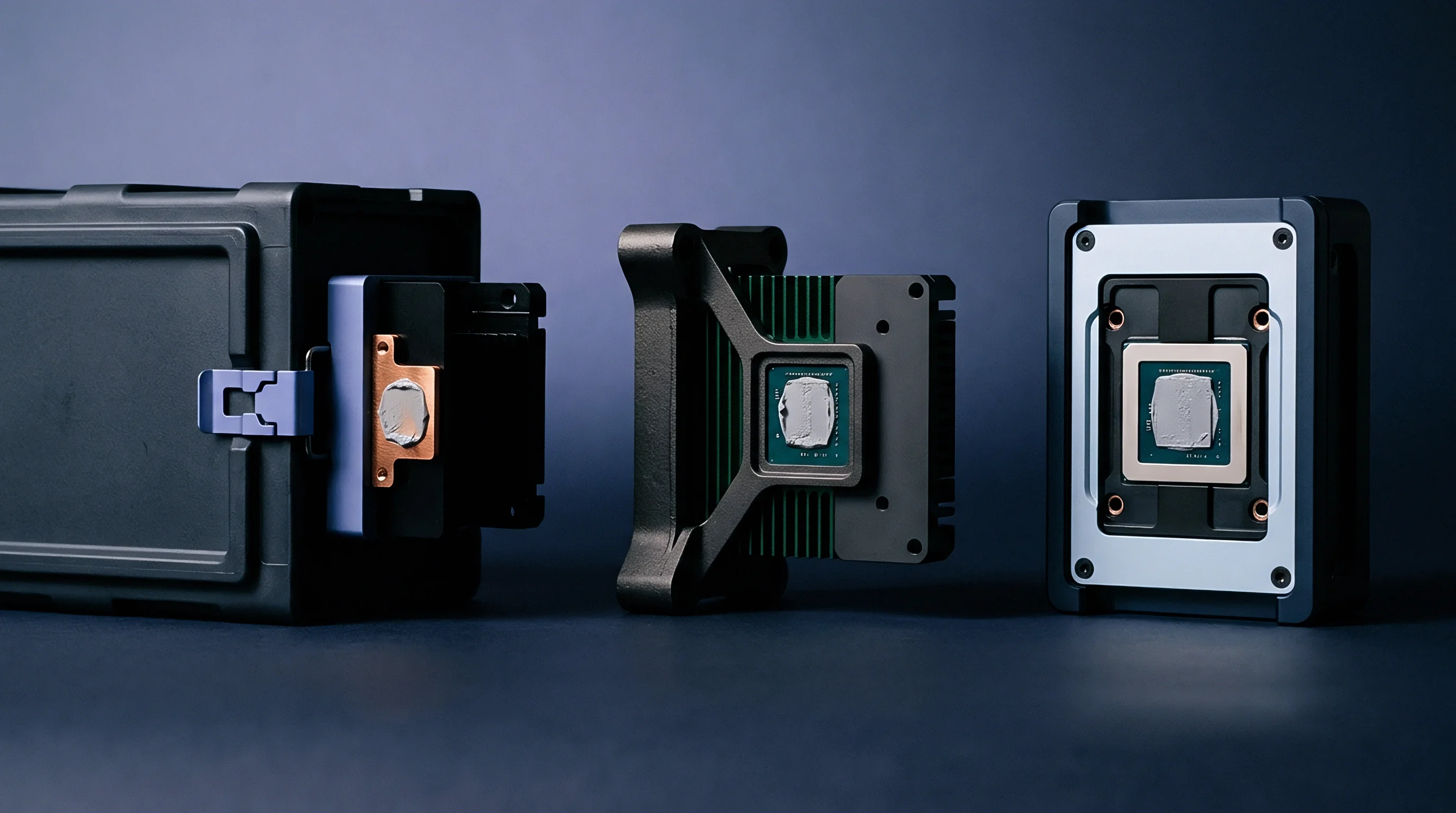
Rigorous bench testing validates firmware execution under simulated cellular network drops and weak RF conditions. Automated testing exposes state machine flaws before deploying hardware into production. Verification tools monitor supply rail current alongside RF output frames to audit backoff algorithm compliance.
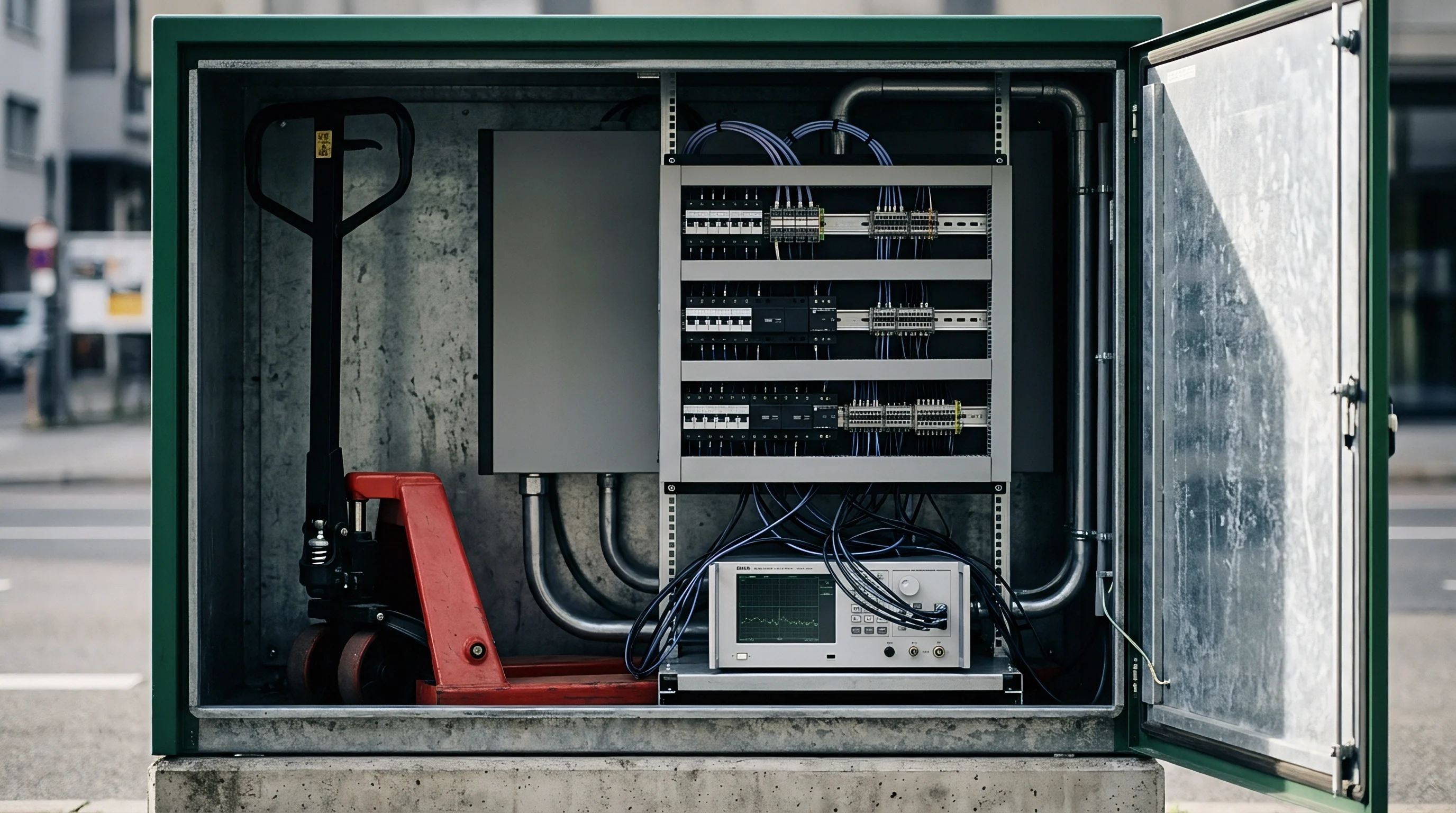
Simulating global roaming environments requires controllable RF attenuation chambers and programmable network emulators. Testing confirms that modules respect carrier backoff codes and execute state persistence routines cleanly under battery stress conditions, exposing hidden scanning cycles that bench measurements uncover.
Automated Test Bench Environments
Programmable RF attenuators combined with simulated cellular base station software enable repeatable evaluation of reattachment state machines. Test scripts introduce signal degradation curves that force endpoints to transition through link monitoring, backoff calculation, and channel roaming phases. Real-time current probes monitor power draw throughout testing.
Evaluating state persistence involves cycling main power during active backoff sleep intervals. Test automation power supplies force sudden supply voltage drops during high-current transmit bursts to confirm that robust firmware restores counter states upon power resumption without resetting backoff timers.

How Does Firmware Prevent Permanent Carrier Lockout?
Cellular module microcode intercepts network reject cause codes thirty-three and seven, updating local persistent storage to prevent immediate reattach loops on forbidden mobile networks that could otherwise cause permanent lockout. Firmware maintains a persistent forbidden network index in flash memory, bypassing those networks during subsequent roaming scan iterations.
Verification dossiers document state machine compliance across various fault conditions. Module evaluation records include power profiles, registration logs, and memory endurance calculations. Complete test documentation ensures that endpoints pass network operator certification audits.
Testing roaming firmware across simulated worst-case attenuation curves proves far more reliable than relying on brief static bench tests prior to mass production deployment.