Electrochemical Buffer Degradation under Multi-Second Cellular Repetition Pulse Trains in Subterranean Environments
Multi-second cellular pulse trains deplete hybrid buffer capacitors and induce concentration polarization in subterranean primary cells, collapsing terminal voltage.
Pulse
Sub-grade utility telemetry and structural monitoring hardware rely on cellular modems configured for maximum transmit power to pierce dense ground cover. Deployments beneath municipal concrete slabs, inside reinforced utility vaults, or deep within subterranean access tunnels operate at the limit of cellular link budgets. To establish a reliable uplink under these conditions, cellular standards such as LTE Cat-M1 and NB-IoT implement extended coverage enhancement modes.
These modes depend on physical layer repetitions, where the radio modem transmits identical data subframes repeatedly so the base station receiver can accumulate signal energy through coherent combining. While standard open-air cellular transmissions consist of brief bursts lasting tens of milliseconds, subterranean coverage enhancement modes extend continuous radio frequency transmission across multi-second windows, causing cell potential to drop rapidly.
During maximum coverage enhancement operations, a cellular module does not pulse briefly and return to sleep. Instead, it locks the power amplifier into maximum output, typically twenty-three dBm, for two to fifteen continuous seconds per uplink sequence. This operational profile fundamentally alters the load placed on the node’s primary power source.
In conventional IoT design, energy storage is sized around brief peak currents, assuming the total energy per burst remains negligible and internal battery chemistry has ample time to recover between events. In subterranean deployments, multi-second transmit trains push battery discharge dynamics out of transient pulse behavior and into continuous high-current discharge regimes.

Uplink Burst Demands in Subterranean Infrastructure
Transmitting sensor data from underground chambers presents propagation obstacles that standard cellular handshakes cannot resolve through short transmissions. When maximum coupling loss exceeds one hundred and fifty-six decibels, modem hardware invokes 3GPP coverage enhancement features, forcing the physical uplink shared channel to execute up to two thousand and forty-eight repetitions for a single payload frame. Transmit power settings default to their maximum ceilings, driving module current draw to between two hundred and fifty milliamperes and five hundred milliamperes depending on the specific cellular transceiver silicon and front-end module efficiency.
The temporal profile of this current draw is critical to primary cell survival. A standard NB-IoT transmission under optimal coverage consumes power in brief bursts of thirty to fifty milliseconds, allowing onboard decoupling capacitors and primary battery buffers to supply peak current without severe internal chemical polarization. Under maximum repetition regimes, this demand becomes a continuous high-rate discharge plateau.
Total energy expended during a single subterranean transmission cycle routinely exceeds twenty to fifty Joules, compared to fractional Joules in line-of-sight conditions. This sustained extraction rapidly drains the reactive buffer capacity of hybrid capacitor systems, forcing the primary battery chemistry to sustain high current rates directly.
| Standard / Modulation Mode | Target Link Margin (dB) | Repetition Count (NPUSCH/PUSCH) | Burst Duration (ms) | Peak Current Draw (mA) |
|---|---|---|---|---|
| LTE Cat-M1 (Coverage Enhancement Mode A) | 144.0 | 16 | 160 | 290 |
| LTE Cat-M1 (Coverage Enhancement Mode B) | 156.0 | 256 | 2560 | 340 |
| NB-IoT Standalone (Tone Allocation 1) | 150.0 | 64 | 1280 | 260 |
| NB-IoT Extreme Attenuation (Tone Allocation 1) | 164.0 | 2048 | 14336 | 380 |

Frame Repetition Mechanics and Current Draw Trajectories
Extended radio operation alters the electrical load experienced by primary power cells in deep monitoring nodes. The current profile during a multi-second repetition sequence exhibits distinct phases: initial baseband processing and frequency synthesizer phase locking draw a moderate thirty to sixty milliamperes over tens of milliseconds, but as the radio front-end engages the power amplifier, consumption jumps to peak levels and buffer capacitors quickly deplete. If the node relies on a hybrid layer capacitor in parallel with a primary cell, the capacitor supplies most of this initial surge current for the first hundred to three hundred milliseconds, causing a slight initial drop in terminal voltage.
As continuous transmission extends past half a second, stored charge within the hybrid capacitor depletes significantly, and its terminal voltage falls to match the loaded operating potential of the primary cell. At this juncture, the primary battery electrochemistry assumes the full burden of supplying three hundred or more milliamperes to the power amplifier. This continuous draw generates rapid concentration gradients within the battery electrolyte, increasing internal ohmic resistance and inducing concentration polarization.
The combined effect is a sloped voltage degradation trajectory across the rest of the multi-second burst, threatening a system brownout long before the radio completes frame transmission.
- Early capacitor exhaustion occurs within the initial 200 milliseconds of transmission, transferring the full modem power demand directly to the primary cell electrochemistry.
- Terminal voltage collapse happens when concentration gradients at the cathode cause instantaneous supply potential drops below modem operational cutoffs.
- Thermal gradient escalation accelerates internal electrolyte decomposition during prolonged discharge events in unventilated underground enclosures.
- Unrecovered polarization accumulation reduces available operational margin when subsequent transmission cycles execute prior to full electrochemical relaxation.
A 23 dBm transmission sustained for 8.192 seconds under 2048 coverage enhancement repetitions draws 380 milliamperes continuous current from the primary supply rail at 4 degrees Celsius.
Understanding this transition from transient pulse response to sustained electrochemical load is essential for accurate battery sizing. Standard energy accounting models that simply multiply average power consumption by active time fail to predict failures in subterranean nodes. The governing failure mode is not cumulative capacity consumption, but instantaneous terminal voltage collapse from sustained high-current extraction ~ a problem obscured by battery vendor datasheets whose published capacities rely on low-rate continuous discharge rather than extended high-current pulse sequences.
Kinetics
Electrochemical energy storage units in remote terminal devices undergo dramatic internal ion shifts when subjected to sustained electrical loads. Primary battery cells, particularly Lithium Thionyl Chloride and Lithium Manganese Dioxide chemistries, depend on diffusion mechanisms to transport electroactive species between electrodes. Under quiescent conditions or brief pulse loads, diffusion rates within the porous carbon cathode match or exceed the reaction rate at the electrode interface.
The cell maintains a stable thermodynamic potential, and internal ohmic losses remain dominated by simple electrolyte solution resistance.
When a multi-second cellular repetition sequence extracts current at rates exceeding two hundred milliamperes, electrochemical charge transfer at the cathode interface outpaces the diffusion of active species from the bulk electrolyte. Ion depletion zones develop immediately adjacent to the porous electrode structure. This phenomenon, known as concentration polarization, imposes a secondary overpotential that drops the cell’s usable terminal voltage.
In subterranean installations, where ambient ground temperatures often linger between four and ten degrees Celsius, lower thermal energy depresses electrolyte diffusion coefficients even further, worsening concentration polarization under identical pulse train profiles.

Interfacial Charge Transfer and Concentration Polarization
Continuous electron transport across primary cell terminals demands a matching rate of chemical reactions within the active battery mass. In Lithium Thionyl Chloride cells, reduction of thionyl chloride at the porous carbon cathode yields lithium chloride precipitate, sulfur dioxide, and elemental sulfur. Under low current demands, lithium chloride precipitates in an orderly, porous film that permits continued electrolyte transport.
During multi-second pulse trains, however, high localized current densities force rapid, dense precipitation of insoluble salt crystals within the cathode pores, choking off ionic transport routes.
Primary cells exhibit distinct polarization curves during multi-second cellular repetition cycles. Rapid consumption of thionyl chloride molecules within the immediate reaction zone creates a sharp concentration gradient between the interior cathode pores and the bulk solution. As the active species concentration at the reaction sites approaches zero, cathode overpotential spikes according to the Nernst relationship.
This localized reactant starvation acts as dynamic internal resistance growth, causing terminal voltage to slope downward continuously throughout the transmission. The longer the repetition train continues, the greater the localized species depletion, and the lower the minimum instantaneous voltage recorded at the modem power supply pin.

Diffusion Bottlenecks within Porous Cathode Matrices
Carbon mass structures inside thionyl chloride cells feature microscopic pathways through which reactant ions travel to maintain potential. Pore geometry, surface area, and tortuosity dictate how efficiently electrolyte re-supplies active species to reaction sites during high-rate discharge. Manufacturing variations in cathode density yield non-uniform current distribution across the cathode volume, leading to localized hotspots of extreme concentration polarization during extended cellular transmissions.
High-frequency impedance spectroscopy characterizes electrode diffusion limits within these structures. The physical constraint is governed by Fickian diffusion dynamics through porous media, where the effective diffusion coefficient of lithium ions and thionyl chloride complexes within the constrained pore matrix is significantly lower than in bulk liquid. When a radio modem demands continuous pulse currents for ten to fifteen seconds, the diffusion layer thickness expands beyond the average cathode pore radius.
Reactant replenishment cannot keep pace with electron delivery, causing cell internal potential to drop precipitously. Once the pulse terminates, the concentration gradient takes seconds or minutes to relax as bulk fluid motion and thermal diffusion restore reactant equilibrium at the cathode surface.
- Mount the primary cell and hybrid capacitor assembly into a temperature-controlled environmental chamber calibrated to target subterranean ambient conditions.
- Attach active broad-band current transducers to the primary battery leads and capacitor balance terminals.
- Initiate a simulated coverage enhancement transmit cycle of twelve seconds duration at maximum power amplifier output.
- Log closed-circuit voltage continuously at a sampling rate of ten kilohertz throughout the transmission cycle.
- Record the relaxation curve voltage recovery profile over a ten-minute post-transmission period to extract diffusion time constants.
Primary cells operating under sustained heavy current draw experience voltage recovery times that scale exponentially with the duration of the preceding transmission sequence.
The accumulation of diffusion-limited overpotentials represents a continuous degradation mechanism for long-term subterranean nodes. Each multi-second repetition train forces the cell deep into a concentration-polarized state, promoting uneven cathode fouling and accelerating electrolyte decomposition. If the interval between cellular transmissions is shorter than the electrochemical relaxation time constant, the battery enters subsequent cycles with pre-existing concentration gradients.
Under these conditions, voltage degradation compounds with each pulse sequence, terminating in premature node resets. Sustaining high-power cellular transmissions beyond the electrochemical balance window damages overall battery longevity far more than increasing the total count of brief transmissions.

Vault
Below-grade municipal utility chambers present severe RF signal attenuation challenges that force wireless modems into extreme operational configurations. Soil moisture content, depth beneath surface level, metal access covers, and rebar-reinforced concrete walls combine to create harsh path loss environments. Signal attenuation through wet soil can exceed five to fifteen decibels per meter depending on operating frequency and clay concentration.
Consequently, a cellular monitoring node installed inside a two-meter deep concrete vault frequently faces total path losses ranging from one hundred and fifty to one hundred and sixty-five decibels between the embedded module antenna and the nearest outdoor base station sector tower.
To overcome these massive propagation deficits, cellular link budgets must leverage maximum transmit power and extreme physical layer coding repetition. Operating at high path loss boundaries triggers a secondary systemic issue: antenna detuning and near-field energy absorption. Damp vault surfaces and conductive piping located within the reactive near-field region of compact embedded antennas alter the input impedance of the radiating element.
This mismatch reflects a portion of the radio frequency energy back into the power amplifier, reducing effective radiated power and forcing the base station to request even higher repetition counts to achieve successful frame decoding.

Why Does Link Degradation Force Multi-Second Radio Repetition?
Attenuation through solid earth, wet concrete lids, and metal access covers reduces signal strength to levels near the thermal noise floor. Cellular protocols mitigate low signal-to-noise ratios through coding gain achieved via repetitions. Under 3GPP LTE Cat-M1, Coverage Enhancement Mode B permits up to two hundred and fifty-six repetitions of the physical uplink shared channel, while under NB-IoT, repetitions can reach two thousand and forty-eight subframes.
Each added repetition lengthens the temporal window during which the module power amplifier must remain continuously energized at maximum power.
Link quality fluctuates in response to surface conditions such as parked vehicles over access hatches, rainwater accumulation on concrete covers, or seasonal ground moisture shifts. A subterranean node operating comfortably in Coverage Enhancement Mode A during dry summer conditions may automatically drop into maximum Coverage Enhancement Mode B during wet winter months. When the modem escalates its coverage enhancement tier, transmission duration jumps from milliseconds to multi-second pulse trains.
The primary battery supply, which performed acceptably under brief transmissions, is suddenly subjected to continuous multi-second discharge events that trigger severe concentration polarization and voltage collapse.
| Environment | Frequency Band (MHz) | Observed Path Loss (dB) | Radiated Power Class (dBm) | Coverage Enhancement Repetition | Total Burst Duration (s) |
|---|---|---|---|---|---|
| Shallow Vault (Dry Sand) | 900 (Band 8) | 142.5 | 23 | 8 | 0.080 |
| Deep Vault (Concrete + Rebar) | 800 (Band 20) | 154.2 | 23 | 128 | 1.280 |
| Submerged Utility Manhole | 700 (Band 28) | 161.8 | 23 | 512 | 5.120 |
| Deep Tunnel Shaft (Saturated Clay) | 450 (Band 31 / 72) | 165.0 | 23 | 2048 | 14.336 |

Sub-Grade Path Loss and Antenna Detuning Dynamics
High dielectric constants in damp underground environments shift the resonant frequencies of internal radiators away from nominal carrier bands. Compact PCB trace antennas or surface-mounted ceramic patch elements designed for free-space matching exhibit severe impedance mismatch when installed near wet subterranean surfaces, driving voltage standing wave ratios from an ideal 1.5:1 up to 4:1 or higher. This mismatch causes two distinct failure vectors for the electrochemical buffer system: thermal heating in the module front-end and reduced effective radiated power.
When standing wave ratios elevate, the module’s internal power amplifier consumes additional supply current to deliver target output power to the antenna feedpoint. Front-end efficiency drops from typical values of thirty-five percent down to fifteen or twenty percent, converting the extra energy directly into heat and raising internal node temperature. Simultaneously, reduced radiated power degrades the uplink signal-to-noise ratio at the cell tower.
The base station responds by commanding the modem to increase physical layer repetitions. The battery system is thus hit by a double penalty: higher instantaneous current draw due to amplifier inefficiency, sustained across significantly longer time windows due to increased protocol repetition counts.
- Dielectric loading shift detunes compact internal antennas when proximity to saturated soil alters the surrounding reactive near-field radiation pattern.
- Multipath cancellation fading creates severe localized nulls within reinforced concrete structures that necessitate maximum coverage enhancement modes.
- Feeder line attenuation introduces signal losses when remote antennas require extended coaxial cabling to reach surface access hatches.
- Groundwater accumulation obstruction submerges radiating elements periodically, causing temporary total link blockage and triggering aggressive search patterns.
Compliance with ETSI EN 300 220 duty cycle limits does not prevent accelerated cell depletion when modems enter maximum repetition modes under severe attenuation.
A twelve-second continuous transmission sequence at 4 degrees Celsius produces an instantaneous voltage drop of 640 millivolts. This behavior confirms that signal path degradation directly influences internal battery chemistry state by forcing extended continuous high-rate discharge regimes. Standard outdoor field tests fail to replicate these stress conditions because open-air propagation rarely forces modems into maximum physical layer repetition limits.
Selecting battery configurations without accounting for maximum repetition pulse durations guarantees premature field device failure long before targeted operational lifespans conclude.

Passivation
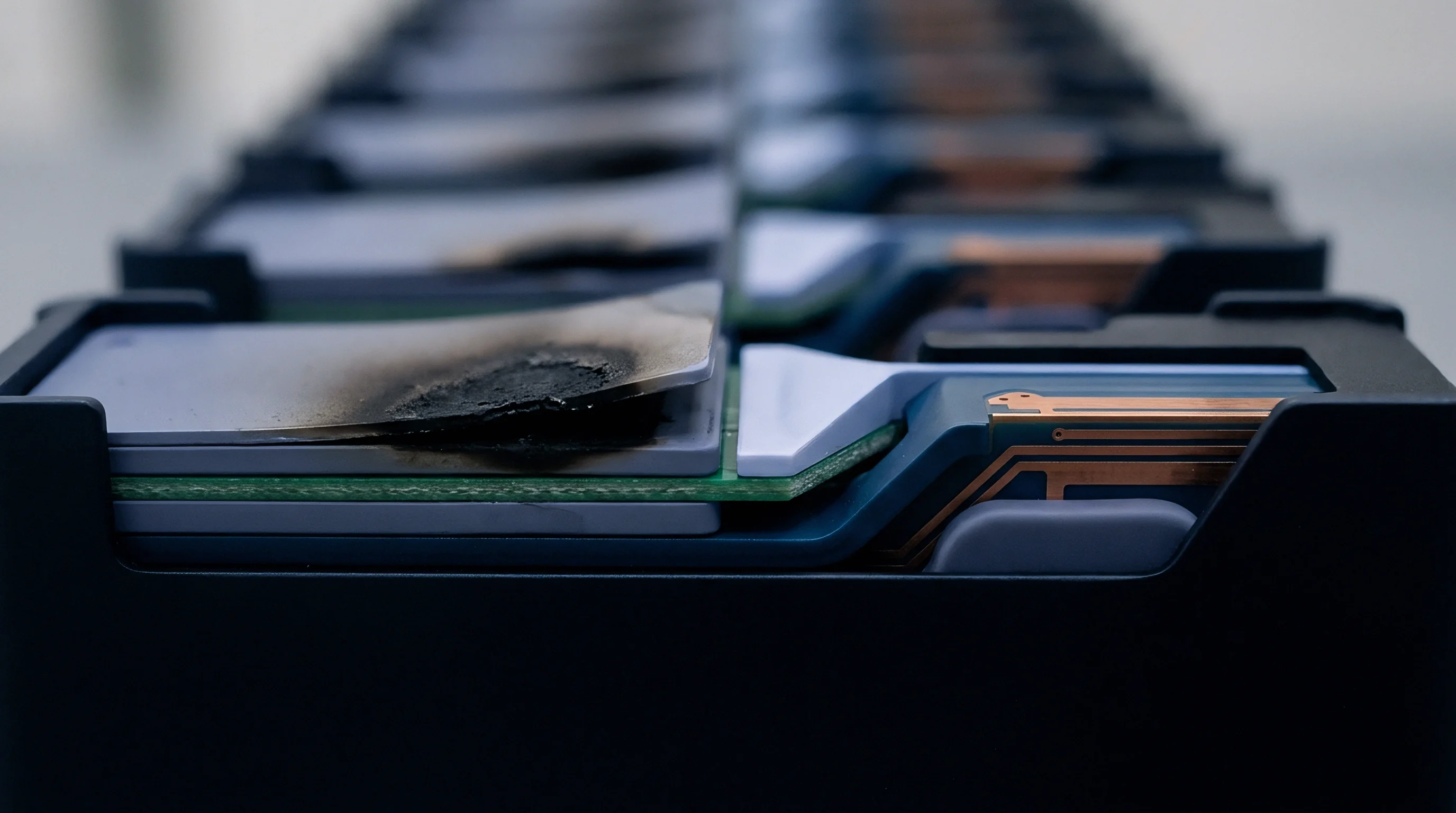
Storage of primary lithium thionyl chloride cells results in a protective crystalline film over the metallic anode surface. This passivation layer, composed of lithium chloride crystals formed by direct reaction between metallic lithium and the thionyl chloride solvent, is critical to preventing self-discharge and enabling multi-year shelf life. However, the presence of this insulating film introduces an initial internal resistance penalty when the cell is called upon to deliver electrical current.
Under standard low-power operation, small current pulses micro-fissure the passivation layer gradually, allowing voltage to stabilize with minimal lag.
Under multi-second cellular repetition pulse trains, passivation behavior introduces severe operating risks. When a passivated cell experiences a sudden multi-hundred milliampere load demand, the thick lithium chloride layer cannot pass ions fast enough to meet current demand. Terminal voltage drops instantly into a deep potential well, known as voltage lag.
If this voltage drop crosses below the operating threshold of the cellular modem or baseband microcontroller, typically 2.8 Volts, the device undergoes an immediate brownout reset before the pulse sequence can break down the passivation layer to restore normal operating potential.
Lithium Chloride Film Dynamics and Voltage Lag
Solid electrolyte interphase layers control initial chemical stability while presenting electrical resistance to sudden current demands. The morphology of the lithium chloride film changes based on storage temperature, idle time, and previous discharge history. Extended idle periods in subterranean vaults accelerate passivation growth, creating dense, highly resistive crystalline structures across the anode surface that elevate internal resistance over time.
When a cellular modem initiates a transmission after months of quiescence, the initial current draw creates an immediate high-ohmic drop across the passivation film. If the device employs a parallel pulse buffer capacitor, such as a hybrid layer capacitor or double-layer supercapacitor, the buffer supplies the initial current spike, preventing instantaneous voltage lag from tripping system resets. Under multi-second repetition trains, however, the buffer capacitor drains rapidly, leaving the primary cell to sustain high current across a partially passivated interface.
Although sustained current eventually strips the lithium chloride film, system supply rails will collapse if the initial voltage drop is too severe before depassivation completes.
| Ambient Temp (°C) | Initial HLC ESR (mΩ) | Post-1000 Cycle ESR (mΩ) | Cell Voltage Lag Dip (V) | System Brownout Risk Level |
|---|---|---|---|---|
| 25.0 | 110 | 145 | 3.22 | Negligible |
| 10.0 | 180 | 290 | 2.95 | Moderate |
| 4.0 | 240 | 460 | 2.78 | Critical |
| -10.0 | 410 | 890 | 2.41 | Immediate Failure |

Hybrid Buffer Recovery Time and Thermal Constraints
Coupling pulse capacitors in parallel with primary cells mitigates instantaneous voltage dips during initial transmission stages. Hybrid layer capacitors combine lithium-ion battery intercalating electrodes with capacitive double-layer structures, offering high capacitance alongside low equivalent series resistance. Under multi-second pulse trains, however, the equivalent series resistance of the hybrid capacitor itself becomes a critical bottleneck, particularly at low temperatures.
Subterranean vault environments remain continuously cold, suppressing ion mobility within the hybrid capacitor electrolyte. As equivalent series resistance rises with decreasing temperature, the capacitor’s ability to deliver high current drops, shifting the current load back to the primary cell earlier in the repetition cycle. Furthermore, after a multi-second pulse train fully depletes the hybrid capacitor, the primary cell must recharge the capacitor while simultaneously supporting quiescent system loads.
If the primary cell is passivated or polarized, this recharging current prolongs the post-transmission voltage recovery phase, leaving the system vulnerable to brownout resets if a secondary transmission occurs shortly thereafter.
- Storage passivation growth forms thick crystalline microstructures during extended idle periods that severe pulse loads break down unevenly.
- Capacitor leakage current drains primary cell reserves steadily when operating at elevated underground vault temperatures during summer cycles.
- Electrochemical hysteresis delay prevents rapid output potential recovery, exposing system electronics to brownout resets on immediate re-transmission.
- Temperature coefficient mismatch degrades pulse buffer energy delivery speed faster than primary cell diffusion speeds at freezing subterranean boundaries.
Low subterranean ambient temperatures suppress lithium ion mobility while simultaneously increasing electrolyte viscosity inside primary cell structures.
Design specifications for sub-grade telemetry nodes operating under extended coverage enhancement modes rely on hybrid capacitor coupling. However, these specifications must account for the degradation of both the primary cell and the pulse buffer over time. Repeated high-current multi-second discharge events cause mechanical stress within the hybrid capacitor electrode matrix, driving permanent equivalent series resistance growth over thousands of duty cycles.
The exact threshold where repetitive micro-fissuring of anode film layers leads to irreversible lithium dendritic growth under continuous cellular duty cycles remains under active investigation.


Valuation
Procurement specifications for long-term subterranean monitoring hardware demand rigorous verification of power supply longevity under worst-case link conditions. Standard battery lifespan calculators provided by module vendors typically multiply average sleep current and estimated transmit current by anticipated operational duty cycles. These superficial models yield wildly optimistic service life estimates, often promising ten to fifteen years of operation on a single cell.
When deployed underground, where coverage enhancement repetitions transform brief pulses into multi-second continuous high-current events, actual field lifespans frequently collapse to less than thirty-six months.
The financial impact of inaccurate battery estimation in subterranean applications is severe. Replacing a battery in a municipal utility vault requires field technician dispatch, traffic management setup, confined space entry permits, and manual vault hatch removal. The landed maintenance cost of replacing a failed power cell routinely exceeds the original capital cost of the entire wireless telemetry hardware unit by orders of magnitude.
Mitigating this risk requires moving from basic energy capacity matching to comprehensive electrochemical stability validation across full operational pulse train profiles.
Component Selection Criteria for High-Repetition Applications
Engineering low-power cellular terminals demands careful balancing of battery active chemistries against specialized pulse capacitor architectures. Standard bobbin-type Lithium Thionyl Chloride cells offer maximum volumetric energy density but suffer from high internal resistance and severe passivation tendencies. Spiral-wound Lithium Thionyl Chloride cells deliver significantly lower internal resistance and higher continuous current capabilities, but sacrifice total chemical capacity and exhibit higher self-discharge rates.
Selecting the correct primary supply requires evaluating the precise maximum repetition duration forced by the target installation environment.
For deep subterranean environments where link budgets consistently demand maximum coverage enhancement modes, hybrid power systems combining bobbin-type primary cells with high-capacity hybrid layer capacitors represent the standard architecture. However, engineers must size the hybrid capacitor not merely to support peak millisecond surges, but to buffer the first several seconds of extended coverage enhancement sequences. Capacitance must scale upward from standard ten to twenty Farad components to fifty or one hundred Farad ratings to prevent early primary cell concentration polarization during multi-second transmissions.

Commercial Specification Frameworks and Risk Mitigation
Purchasing contracts for remote utility terminals incorporate strict energy budget clauses to prevent unexpected field replacements. Hardware suppliers must deliver qualification dossiers demonstrating node voltage stability under accelerated stress testing. Qualification protocols require subjecting complete terminal hardware to continuous transmit sequences under maximum repetition modes inside environmental test chambers set to minimum expected ground temperatures.
A robust procurement dossier includes bench test verification where terminal supply voltage is continuously logged across fifty consecutive worst-case transmission cycles spaced at minimum allowable network reporting intervals. Standard qualification metrics dictate that terminal supply voltage must not cross below three thousand millivolts at any point during a fifteen-second continuous transmission sequence at four degrees Celsius. Failing to establish strict empirical test requirements in sourcing agreements leaves buyers fully exposed to early field replacements when network conditions shift and modems enter continuous repetition modes.
Standard procurement schedules now mandate that battery suppliers guarantee minimum voltage stability under full twenty-four dBm maximum repetition sequences or bear direct financial liability for field replacement labor.