Equivalent Series Resistance Degradation Dynamics in Hybrid Layer Capacitors under Extended High Temperature Field Storage
Extended high-temperature storage increases hybrid layer capacitor ESR, inducing severe voltage sag during LPWAN transmit bursts and risking brownout resets.


Oxide
Unconditioned warehousing subjects primary lithium hybrid power packs to harsh environmental exposure. When telematics devices, industrial gas meters, and remote telemetry units sit inside unconditioned warehouses or outdoor staging areas, ambient temperatures frequently reach sixty to eighty-five degrees Celsius. Hybrid layer capacitors paired with primary lithium thionyl chloride cells rely on an internal carbon-lithium composite electrode to deliver high peak currents, but heat alters internal chemical equilibrium across passive electrode boundaries.
Solid electrolyte interphase layers thicken continuously under unpowered thermal exposure, causing equivalent series resistance to rise from a fresh baseline of sixty milliohms up to several ohms. Equivalent series resistance escalation during silent storage directly threatens radio transceivers that depend on rapid current delivery.
Sustained high temperatures drive lithium ion diffusion from organic liquid electrolyte into the active carbon structure. Passive film growth occurs primarily at the cathode-electrolyte interface where solvent oxidation products accumulate. Without an applied electric field to balance ionic migration, unpowered field storage accelerates secondary surface reactions, decomposing solvent molecules into insoluble lithium salts that lodge within micro-porous carbon matrix channels.
As non-conductive reaction products occupy active intercalation sites, effective conductive surface area shrinks and ohmic losses climb, compounding internal impedance over extended storage durations.
Electrolyte decomposition across the hybrid carbon-lithium matrix accelerates when ambient temperatures exceed fifty degrees Celsius during unpowered warehouse storage.
Long exposure at high temperatures degrades organic carbonate solvents within the hybrid capacitor structure. Volatile organic compounds vaporize slowly, building micro-pressures inside hermetically sealed metal casings that compress separator material and disrupt the uniform inter-electrode spacing required for low-impedance charge transfer. Microscopic void spaces form within the liquid electrolyte matrix as ionic transport channels constrict.
Together, solid film accumulation and electrolyte drying produce a sustained rise in high-frequency internal resistance, leaving field devices deployed after multi-month storage to face severe voltage drops across this expanded resistive barrier during initial current pulses.
Whether micro-cracking during initial high-rate current pulses permanently restores high-frequency conductivity or merely induces localized heating that accelerates secondary film growth remains unproven across decade-long storage models.
Drift
Impedance escalation in hybrid energy storage hardware obeys predictable thermal kinetic models over extended field exposure, where storage duration and ambient thermal levels jointly dictate resistance drift. Activation energy calculations show how thermal stress accelerates structural changes within non-aqueous electrolyte systems, requiring equivalent series resistance evaluation to account for ionic mobility changes alongside solid interface growth. Chemical rate constants elevate exponentially as thermal exposure increases within sealed capacitor enclosures, though Arrhenius models accurately quantify internal impedance drift only when input parameters reflect true field storage temperatures rather than controlled room condition baselines.

Arrhenius Acceleration Parameters and Temperature Superposition
The thermal acceleration factor follows an empirical Arrhenius relationship governed by an activation energy ranging between zero point six five and zero point eight five electron-volts. While a hybrid capacitor stored at twenty-five degrees Celsius undergoes minimal interfacial growth over five years, transporting that same component to an unconditioned vehicle engine bay or rooftop enclosure where storage temperatures reach seventy-five degrees Celsius accelerates degradation by a factor of fifteen.
| Storage Temperature (°C) | Equivalent Duration (Months) | Activation Energy (eV) | Mean ESR Multiplier | Peak Observed ESR (mΩ) |
|---|---|---|---|---|
| 25 | 24 | 0.72 | 1.15x | 105 |
| 50 | 24 | 0.72 | 1.85x | 210 |
| 70 | 24 | 0.72 | 3.40x | 425 |
| 85 | 24 | 0.72 | 6.20x | 890 |
Thermal time-temperature superposition principles allow engineers to map short-term elevated temperature test data onto extended field storage timelines. Storing a hybrid layer capacitor at eighty-five degrees Celsius for five hundred hours produces an interface film equivalent to thirty-six months of room temperature storage. However, time-temperature modeling breaks down when storage temperatures exceed the thermal breakdown threshold of organic electrolyte salts; above eighty degrees Celsius, secondary degradation pathways emerge that do not exist at ambient temperatures.
A hybrid capacitor unit stored at seventy degrees Celsius for eighteen months exhibits an average ESR multiplier of three point two times initial factory baseline under zero bias voltage.
Parasitic Passivation Mechanisms in Non-Aqueous Electrolyte Solutions
Surface reactions between organic carbon compounds and dissolved lithium ions generate resistive interfacial boundaries. Unpowered storage permits undisturbed crystal growth across active surface sites, consolidating fine micro-crystalline deposits into dense polymeric layers. Although the growth rate slows over time as the film begins acting as a partial diffusion barrier, total impedance continues climbing due to salt precipitation inside matrix pores.
- Lithium Salt Precipitation across high-surface-area activated carbon pore structures restricts ionic migration pathways within the hybrid layer matrix.
- Solvent Decomposition Products accumulate at the active interface, creating high-impedance boundary layers that elevate bulk series resistance.
- Electrode Delamination Stress induced by differential thermal expansion between the metal collector and active carbon composite disrupts conductive contacts.
- Gas Generation Dynamics within sealed cylindrical housings increase internal pressure, reducing effective contact surface area across internal layer stacks.
Elevated field storage ESR often drops back toward nominal values within milliseconds of an initial high-current discharge pulse.

Sag
Terminal voltage drop during high-current radio pulses dictates field node survival. Long-range wireless communication modules utilizing cellular network standards such as LTE-M or NB-IoT require transmission current spikes up to two amperes, while LoRaWAN and sub-gigahertz transceivers demand current pulses reaching five hundred milliamperes during high-power preamble bursts. When a primary lithium thionyl chloride battery operates alongside a high-ESR hybrid layer capacitor, the capacitor must supply immediate transient pulse currents.
High equivalent series resistance generates an immediate internal voltage drop under load, risking brownout resets mid-transmission if terminal voltage falls below cellular modem thresholds.
Transceiver Supply Voltage Transients during Peak Transmission Bursts
Modern wireless transceivers demand immediate current steps reaching several amperes during signal preambles, producing an instantaneous ohmic voltage drop equal to peak pulse current multiplied by total loop resistance. When field storage increases hybrid capacitor equivalent series resistance from eighty milliohms to one point five ohms, a two-ampere transmit burst induces a three-volt drop across the capacitor terminals alone.
Consider the operational impact on a smart water meter equipped with an NB-IoT modem operating at twenty-three decibel-milliwatts transmit power. The system uses a primary lithium cell rated at three point six volts paired with a zero point four farad hybrid layer capacitor. Fresh out of the factory, the capacitor exhibits an equivalent series resistance of ninety milliohms.
During a two-ampere transmission burst lasting ten milliseconds, the voltage drop across the capacitor equals zero point one eight volts, keeping the supply rail at three point forty-two volts ~ well above the modem brownout limit of two point eight volts.
If that same device sits inside a steel rooftop enclosure for twenty-four months where summer ambient temperatures reach seventy degrees Celsius, extended unpowered thermal storage increases hybrid capacitor equivalent series resistance to one point six ohms. When the modem attempts its first network join sequence, the two-ampere current request causes an immediate voltage drop of three point two volts across internal impedance. The rail voltage collapses to zero point four volts, triggering an immediate microcontroller reset that aborts the network join and traps the node in an infinite, battery-draining reset loop.

Do Accelerated Thermal Tests Predict Unpowered ESR Drift?
Standard industrial aging trials often fail to capture long-term passive film restructuring under zero-bias conditions, as static thermal storage tests without periodic pulse monitoring conceal progressive passivation dynamics. Measuring terminal voltage responses under simulated field transmit pulses provides direct verification of capacitor health.
- Measure open-circuit terminal voltage across the primary battery and hybrid capacitor node prior to radio activation.
- Apply a calibrated load pulse of two amperes for thirty milliseconds while logging transient voltage sampling at one hundred kilohertz.
- Extract the immediate ohmic drop slope to calculate effective high-frequency equivalent series resistance before capacitive discharge dominates.
- Compare measured pulse voltage sag against the transceiver minimum operating cutoff limit of two point eight volts.
- Trigger an intentional depassivation pulse train if terminal voltage falls within two hundred millivolts of brownout threshold.
Under ETSI EN 300 220 compliance specifications, a wireless transmitter that drops terminal voltage below operational thresholds during preamble transmission forfeits its allocated RF spectrum access slot.
Designing power sub-assemblies without accounting for temperature-induced ESR escalation leads to premature field node brownout resets, truncated battery life, and complete loss of uplink connectivity across distant LPWAN sites.
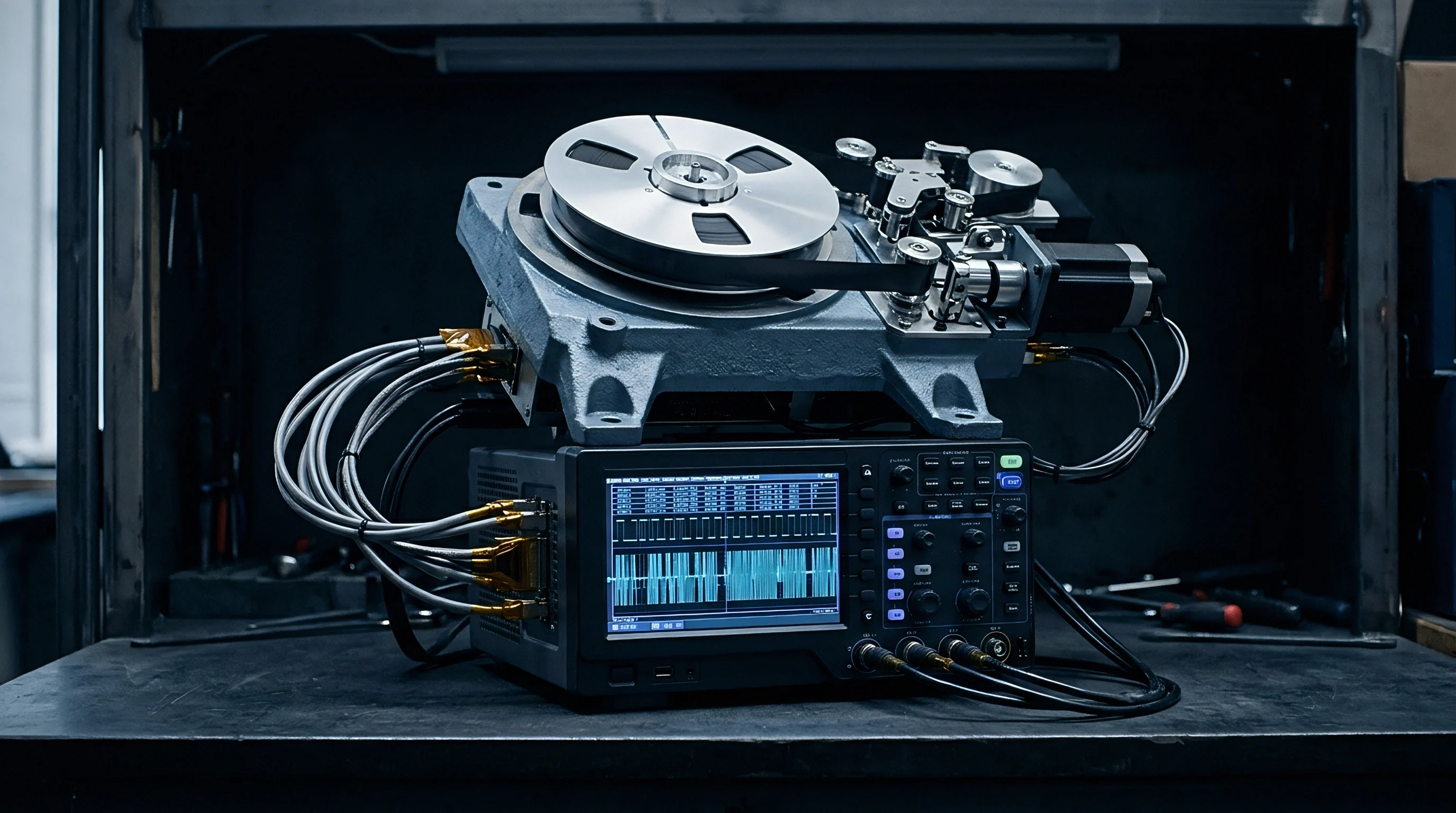

Screening
Validating component durability prior to high-volume manufacturing protects deployed telematics hardware against early battery degradation. Sourcing hybrid layer capacitors requires rigorous incoming inspection procedures focused on thermal storage endurance, because standard capacitance meters evaluate energy storage capacity at low frequencies and completely miss high-frequency equivalent series resistance spikes that cause voltage collapse under pulse loads. Dynamic pulse characterization combined with thermal stress exposure isolates sub-standard component lots before PCB assembly.
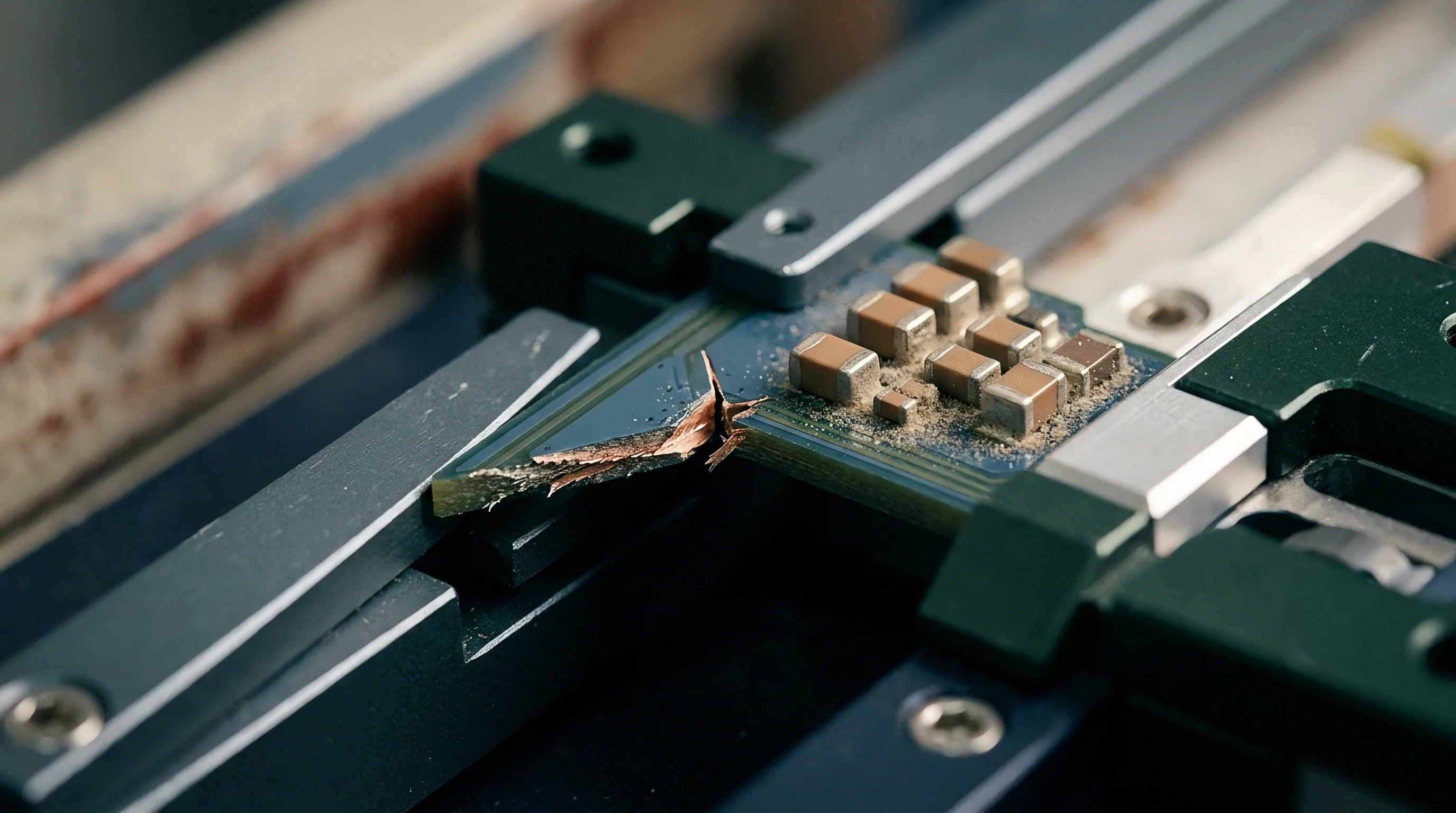
Accelerated Life Testing Methodology for Hybrid Capacitors
Simulating multi-year field storage requires precise control over environmental stress chambers and monitoring instruments. Qualification trials subject sample lots to elevated thermal exposure while periodically tracking complex impedance spectra, allowing spectroscopy to distinguish between electrolyte conductivity loss and interfacial layer growth.
| Test Protocol | Storage Temp (°C) | Duration (Hours) | Pre-Conditioning Load | Max Allowed ESR (mΩ) |
|---|---|---|---|---|
| High Thermal Storage | 85 | 1000 | None (Zero Bias) | 250 |
| Intermediate Thermal Aging | 70 | 2000 | None (Zero Bias) | 200 |
| Cyclic Thermal Shock | -40 to +85 | 500 Cycles | Periodic Pulse | 300 |
| Humid Storage Exposure | 60 / 90% RH | 1000 | None (Zero Bias) | 220 |
| Method Note: Equivalent series resistance measured at 1 kHz using four-wire Kelvin sensing contacts following a 2-hour thermal stabilization period at 25°C. | ||||
Component qualification protocols specify clear acceptance boundaries based on operational environment demands, triggering immediate rejection for batches where equivalent series resistance drift exceeds two hundred percent of baseline during thermal storage.
Depassivation Pulse Profiles and Energy Overhead Calculations
Clearing high-impedance surface layers requires controlled current discharge sequences administered before active radio operations, burning off thin passive films through localized microscopic thermal conditioning. Field devices program automated depassivation routines during long sleep intervals, though this operation expends primary battery energy solely to maintain low internal impedance inside the capacitor buffer.
- Thermal Storage Stress Limit defines maximum allowable unpowered exposure temperature without irreversible dielectric structural damage.
- Maximum Allowable Impedance Delta specifies the upper ESR multiplier threshold before a batch undergoes rejection at incoming inspection.
- Depassivation Energy Budget quantifies the microampere-hour battery capacity expended solely to burn off elevated surface impedance layers.
- Peak Current Capability Ratio establishes the minimum delivered pulse current required at sub-zero operating temperatures following thermal storage.
Field nodes deployed in high-heat environments require automated periodic depassivation pulses to maintain internal layer conductivity during prolonged silent storage periods.
A pulse buffering system that relies on manual post-storage depassivation always consumes more total cell capacity over its operating lifespan than one designed with a conservative baseline ESR allowance.

Contract
Procurement documentation defines strict electrical performance limits following extended environmental exposure, eliminating ambiguity regarding storage condition claims. While supplier datasheets frequently highlight initial nominal ESR measured at twenty-five degrees Celsius immediately after production, field reality demands guaranteed maximum ESR values following two years of storage at elevated temperatures. Procurement teams write explicit thermal aging clauses into master supply agreements to guard against high field failure rates.

Commercial Specification Boundaries and High-Temperature Storage Guarantees
Datasheet parameters provided by energy cell manufacturers typically reflect fresh factory conditions rather than field-aged states. Sourcing contracts enforce rigorous parameter boundaries that bind suppliers to field-relevant metrics, specifying maximum allowable equivalent series resistance after one thousand hours of storage at seventy degrees Celsius and requiring full four-wire Kelvin impedance logs for every delivered component reel.
Guaranteed performance metrics establish clear financial penalties if field failures exceed agreed thresholds, requiring component suppliers to provide replacement lots and absorb recall expenditures when shipped units breach maximum impedance limits under certified storage conditions. Clear technical terms prevent disputes over whether node failures resulted from battery exhaustion or capacitor impedance growth.
Batch Acceptance Criteria and Warranty Clauses for Field Modules
Quality control receiving protocols verify that incoming shipments meet maximum allowed equivalent series resistance limits using standard statistical sampling plans. Laboratory technicians test sample units under high-rate discharge pulses following accelerated thermal conditioning, triggering immediate lot rejection if sample mean impedance exceeds specified upper limits.
Incorporating standard procurement clause IEC 62133-2 Section 7.3.8 into module purchase agreements shifts financial liability for storage-induced ESR failures directly to the component manufacturer if impedance doubles within twenty-four months under documented ambient conditions.