Decoupling Hardware Abstraction Layer Code from Turnkey Module Contracts
Decoupling HAL code requires isolating vendor driver calls behind abstract C interfaces, securing raw source files, and contracting explicit API acceptance tests.


Coupling
High-density wireless and processing modules frequently ship with silicon-vendor driver libraries directly bound to physical register addresses. When turnkey integrators write application software directly on top of vendor SDKs, peripheral driver calls interlock with core product logic. Direct register access ties the software to specific microcontroller part numbers, silicon steppings, and pin mappings, so changing the underlying chip forces a complete rework of upper-level application software.

Microcontroller Register Binding in Direct Vendor Implementations
Turnkey module manufacturers typically construct firmware by assembling vendor SDKs around embedded microcontroller cores. These libraries rely heavily on macro expansion and memory-mapped register writes directly inside peripheral functions. An I2C sensor routine within a turnkey BLE module, for instance, might set bus clock dividers, toggle hardware control bits, and read receive buffers in a single inline C block.
As a result, the application firmware assumes peripheral registers exist at hardcoded memory addresses like 0x40003000, binding the product firmware to that specific processor architecture.
Memory-mapped register writes bypass formal driver interfaces. When a vendor uses inline assembly or vendor-specific compiler pragmas to optimize serial communication speeds, firmware portability drops to zero. Even moving to a newer processor stepping from the same chip vendor can break register bit assignments, leaving application software unable to compile against a different microcontroller without manual edits across hundreds of source files.

Silicon Driver Dependencies inside Monolithic Turnkey Firmware
When peripheral configuration functions write directly to hardware memory addresses, upper-level software application layers become tethered to specific board revisions. Turnkey contracts that treat firmware as a monolithic binary hide these underlying hardware bindings from the purchasing buyer. The buyer receives a compiled binary image that executes reliably on the vendor evaluation board but cannot run on alternate hardware variants.
Monolithic build architectures merge interrupt service routines, power management state machines, and hardware timer configurations into the application payload.
A minor change in a chip manufacturer’s silicon mask set can invalidate hardcoded delay loops or alter peripheral interrupt clear sequences inside turnkey driver code. Without isolated driver abstractions, resolving silicon errata requires modifying application source code rather than updating an isolated driver file. Integrators spend engineering hours tracking down unexpected bus lockups caused by raw register writes hidden inside turnkey software packages.
Exposing abstract interfaces can add CPU cycle overhead and cross proprietary intellectual property protection boundaries.


Isolation
Architectural separation between underlying silicon hardware and application firmware requires structured abstraction layers. Implementing clean application programming interfaces between peripheral drivers and upper-level logic hides physical memory maps, clock control registers, and pin multiplexing logic behind standard C function calls. This design pattern protects application development investments when underlying module hardware changes due to component obsolescence, price adjustments, or dual-sourcing initiatives.

Architectural Interfaces for Peripheral Driver Abstraction
Hardware abstraction layers wrap physical register reads and writes inside predictable C function signatures. Rather than accessing a UART control register directly to transmit data, application code invokes a generic serial send command that accepts a channel handle, buffer pointer, and byte count. The underlying implementation of that generic function contains the chip-specific register writes, so replacing the underlying processor requires replacing only the driver implementation files while upper application code remains completely untouched.
Standardized APIs enforce static data structures for peripheral configuration. A generic SPI driver initialization structure defines clock polarity, phase, and baud rate using standard enumerated types rather than vendor-specific bitmasks. The abstraction layer maps these generic enumeration values to physical register bit fields at compile time or initialization runtime, ensuring that application code remains independent of peripheral hardware architecture.
A software abstraction layer written in standard ANSI C increases flash memory footprint by four to seven percent while insulating upper application code from underlying silicon revisions.

Standardized Memory Boundaries and Register Abstraction Wrappers
Defining clean memory maps prevents application code from directly accessing physical addresses. Utilizing standardized hardware interface frameworks, such as CMSIS-Driver for ARM Cortex-M microcontrollers or POSIX I/O abstractions for embedded Linux systems, provides structured wrapper patterns for peripheral interaction that establish distinct boundaries between device driver implementation and application execution environment.
Embedded microcontrollers operating with tight static RAM limits require lightweight function wrappers rather than complex object-oriented abstraction hierarchies. Implementing function pointer tables in flash memory enables dynamic driver selection without incurring runtime memory overhead, mapping generic hardware functions to chip-specific execution blocks during boot sequence initialization.
The table below evaluates four primary peripheral isolation strategies applied in embedded module firmware architectures:
| Isolation Strategy | Register Access Mechanism | Flash Overhead | Latency Overhead | Portability Index |
|---|---|---|---|---|
| Direct SDK Macros | Inline register writes via memory addresses | 0% (Baseline) | 0 Clock Cycles | Low (Single Chip) |
| Static Driver Wrappers | ANSI C wrapper functions with enum parameters | 2% to 4% | 4 to 8 Clock Cycles | Medium (Family Level) |
| Function Pointer Vtables | Flash-resident function pointer arrays | 4% to 7% | 12 to 18 Clock Cycles | High (Vendor Agnostic) |
| POSIX / OS File API | Device driver open, read, write, ioctl calls | 12% to 18% | 45 to 120 Clock Cycles | Maximum (OS Dependent) |
In tightly constrained embedded products, direct register binding introduces significant long-term commercial risks. The list below identifies structural failure points in turnkey firmware that lack isolated hardware abstraction layers:
- Hardcoded Interrupt Vectors Peripheral interrupt service routines directly invoke application callback routines without using event queues or intermediate software dispatchers.
- Proprietary Type Definitions Driver signatures rely on non-standard vendor integer definitions and platform-specific compiler typedefs that fail to compile under alternate toolchains.
- Direct Clock Tree Manipulation Power management logic within application state machines explicitly modifies processor clock divider registers during sleep transitions.
- Embedded Configuration Bitmasks Hardware configuration parameters sit hardcoded inside business logic source files rather than isolated header files or non-volatile configuration memory blocks.
Section 4.2 of the IEEE 1451.2 smart transducer interface specification mandates independent driver entry points, forcing vendors to supply uncompiled source wrappers for every low-level register write.

Friction
Transferring firmware builds between manufacturing facilities often reveals hidden dependencies within vendor driver trees. Turnkey module contracts frequently promise firmware source code, but buyers discover that delivered repositories rely on closed-source binary blobs or static libraries locked to single compiler toolchains. Hardware isolation fails when the build environment depends on proprietary vendor development environments that cannot run in continuous integration pipelines or alternate developer workstations.
Where Does Vendor BSP Code Break Hardware Portability?
Board support packages bundled with turnkey modules often contain hardcoded interrupt handlers tied to specific pin layouts. When a product layout changes to accommodate a secondary source module with a different pinout, the turnkey board support package breaks. Microcontroller vendors structure their board support code to highlight specific chip capabilities rather than portable software design, making reconfigurability require manually refactoring initialization sequences that assume fixed hardware allocations.
Suppliers deliver static library files containing proprietary radio stacks or sensor processing algorithms that expose C header files with low-level register assumptions. If the application requires changing a system tick timer or altering a direct memory access channel assignment, the static binary fails to link due to resource conflicts with newly allocated microcontroller peripherals.
Including mandatory C source deliverables in the statement of work prevents turnkey suppliers from delivering compiled static library files that obscure underlying microcontroller peripheral registers.
Compiler Toolchain Lock-In and Closed Source Binary Blobs
Module vendors frequently supply precompiled object files for proprietary radio stacks or power management engines. These binary blobs tie the target build process to specific compiler toolchain versions, GCC forks, or commercial compiler suites. Upgrading the primary product application to a newer compiler version or switching build platforms yields link-time symbol errors inside vendor binary blobs, limiting code maintainability and preventing long-term security auditing.
The verification procedure detailed below outlines the precise execution sequence required to validate hardware abstraction decoupling inside a candidate firmware repository:
- Compile the target firmware application using an alternate, neutral compiler toolchain to identify proprietary vendor pragmas and non-standard syntax extensions.
- Isolate all peripheral header files into a standalone hardware abstraction interface directory completely separated from vendor board support package source files.
- Replace vendor-specific driver call invocations inside application source files with abstract driver interface API signatures.
- Stub out low-level register access macros using zero-overhead macro definitions to verify complete application compile-time decoupling from underlying physical registers.
- Execute automated unit tests against abstract driver function interfaces using mock driver implementations running on a host development workstation host.
Build environments fail when internal dependency paths reference local directory trees on the vendor’s original build server. Unresolved external references during static linking indicate that low-level hardware drivers remain tightly coupled to application logic. Resolving build friction requires clean separation between underlying driver repositories and upper application source trees.
Industry testing leaves open whether proprietary wireless protocol stacks can ever fully operate over abstract hardware interfaces without sacrificing real-time timing constraints during high-throughput transmission.

Delivery
A complete engineering handover package contains all source files, build scripts, hardware schematics, and automated test suites. Turnkey module suppliers frequently attempt to fulfill software delivery obligations by supplying compiled hex images or partial source trees that depend on unreleased vendor tools. Decoupling hardware abstraction layer code from turnkey contracts mandates explicit contractual specification of source code file formats, directory trees, build scripts, and acceptance testing hardware jigs.
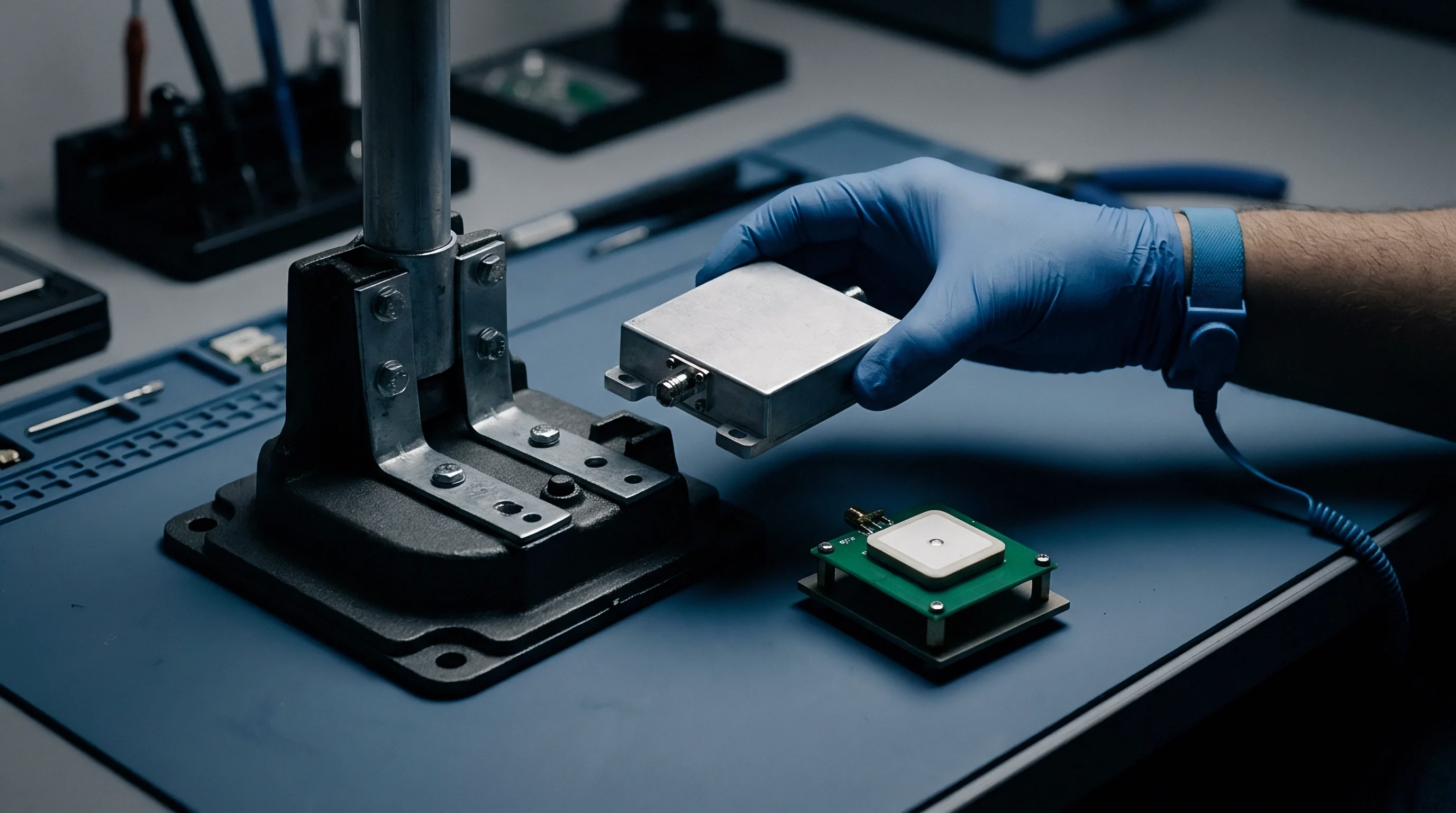
Source File Specifications within Design Transfer Packages
Receiving pure uncompiled code enables independent engineering teams to audit hardware interface logic. Deliverable specifications require full C source files written to ANSI C standards, clear of proprietary preprocessor macros that require closed-source vendor IDE environments. The design package must include CMake or Makefile build scripts capable of assembling the full binary image from clean source code in a standard command-line environment.
Turnkey module contracts must explicitly distinguish between three distinct software deliverables: raw vendor chip drivers, isolated hardware abstraction layer wrappers, and application logic. The technical deliverable matrix below illustrates the required scope division between basic turnkey module delivery and decoupled software architecture delivery:
| Deliverable Component | Standard Turnkey Package | Decoupled HAL Package | Acceptance Criteria |
|---|---|---|---|
| Driver Source Code | Precompiled static binary (.a /.lib) | Full C Source (.c /.h) | Clean compile under neutral GCC/Clang |
| Register Map Interface | Vendor SDK macros | Abstracted C API Wrappers | Zero vendor header includes in application |
| Build Automation | Proprietary IDE Project File | Standalone Makefile / CMake | Headless build execution in clean CI/CD |
| Test Fixtures | Manual functional test report | Automated Test Bench Scripts | 100% pass on abstract API mock tests |
| Documentation | Compiled PDF user manual | Doxygen commented API headers | Complete inline parameter descriptions |

Physical Test Jigs and Automated Build Verification
Hardware verification boards establish hardware operational compliance before software integration begins. The buyer requires physical test jigs capable of driving hardware abstraction APIs with synthetic electrical inputs and measuring output signals against timing specifications. Automated build verification scripts validate that newly compiled driver abstraction binaries match performance metrics established on original turnkey reference hardware.
Raw executable binaries delivered without build scripts and abstraction headers tie the buyer permanently to the vendor assembly line.
Physical design transfer deliverables must include complete hardware access artifacts. The checklist below defines mandatory delivery components for decoupled firmware packages:
- Abstract Header Files Standard C header files containing clean function declarations, data structures, and enumeration definitions free from low-level register macros.
- Standalone Build Scripts Fully documented build scripts capable of compiling driver libraries and linking application binaries without vendor IDE dependencies.
- Mock Driver Implementations Software mock drivers that simulate physical hardware interactions during host-based automated unit testing execution.
- Register Map Specifications Complete documentation of underlying memory addresses and bit fields mapped by the abstraction driver implementation files.
Omitting pure C source files from the technical transfer package forces the buyer to pay full non-recurring engineering charges again when replacing an end-of-life microcontroller.

Arithmetic
Extracting driver dependencies from turnkey module code adds upfront non-recurring engineering charges to initial development budgets. Contractual scope decisions balance initial software separation expenses against downstream bill-of-materials cost reductions and component supply risk mitigation. A detailed financial assessment evaluates engineering hours required to refactor vendor driver trees into clean abstraction layers against long-term operational savings achieved through hardware flexibility.

Scope Cost Metrics for Custom Hardware Abstraction Extraction
Engineering estimates allocate baseline hours for interface definition, driver refactoring, and integration testing. Developing a clean hardware abstraction layer for a standard wireless microcontroller module typically requires 160 to 280 engineering hours, depending on peripheral complexity. At typical engineering consultancy rates ranging from $120 to $190 per hour, upfront HAL decoupling non-recurring engineering costs total between $19,200 and $53,200.
Based on an estimated baseline cost of $36,000 for a medium-complexity wireless module HAL extraction, this non-recurring expenditure rests on the assumption of a two-year production run at 50,000 units annually. Unscheduled component redesigns caused by silicon end-of-life events typically cost upwards of $120,000 in total re-engineering, re-qualification, and production downtime costs. Investing in upfront decoupling represents a fractional cost relative to unmitigated hardware lock-in risks.
Software decoupling engineering costs represent a front-loaded expenditure that yields financial return during second-sourcing or silicon component replacement.

Amortization Break Even across Volume Production Runs
Unit cost reductions achieved through secondary component sourcing offset initial software separation investments. When a buyer holds decoupled firmware, switching from a single-source proprietary radio module to a standard white-label module yields savings of $0.85 to $2.10 per unit on bill-of-materials expenditures. The cost trade-off model below details the financial mechanics of HAL decoupling across three distinct production volume scenarios:
| Production Volume | Upfront NRE Cost | BOM Savings Per Unit | Amortized NRE / Unit | Net Financial Impact |
|---|---|---|---|---|
| 10,000 Units | $36,000 | $1.20 | $3.60 | Net Loss ($2.40 / unit) |
| 30,000 Units | $36,000 | $1.20 | $1.20 | Break-Even ($0.00 / unit) |
| 100,000 Units | $36,000 | $1.20 | $0.36 | Net Gain ($0.84 / unit) |
Evaluating scope allocation requires systematic review of commercial risk factors. The decision checklist below provides structured evaluation criteria for allocating engineering hours toward HAL decoupling during project contracting:
- Component Supply Multi-Sourcing Sourcing strategy demands alternate microcontroller suppliers to insulate production lines against single-factory supply disruptions.
- Product Life Cycle Expectations Operating lifetime expectations exceed three years, increasing probability of underlying microcontroller obsolescence or mask revisions.
- Application Intellectual Property Value Proprietary algorithm code represents core business value that must remain portable across future hardware generations.
- Firmware Maintenance Autonomy Product owner maintains internal software engineering capacity to repair driver bugs without relying on vendor service contracts.
Higher upfront non-recurring engineering fees for decoupled software architectures always cost less than re-engineering an entire application stack during an unscheduled silicon shortage.


Ownership
Contractual terms dictate whether software intellectual property belongs to the buyer or remains with the turnkey module integrator. Turnkey module contracts that default to standard vendor boilerplate terms frequently grant the buyer a simple runtime license to binary firmware while retaining underlying driver source code ownership with the integrator. Effective procurement contracts explicitly decouple driver layer intellectual property assignments from module purchase terms, guaranteeing source code ownership and modification rights to the buyer.

Contractual Allocation of Driver Layer Intellectual Property
Statements of work specify source code assignments, licensing boundaries, and derivative work rights. Contracts must explicitly define driver abstraction source code as work-for-hire assigned entirely to the purchasing entity upon payment of non-recurring engineering fees. If a turnkey vendor utilizes open-source driver components or proprietary internal libraries within the HAL implementation, the contract must require explicit dual-licensing terms or royalty-free perpetual licenses for modification and redistribution.
Without explicit source code assignment clauses, turnkey vendors retain legal rights to driver modification tools. The buyer becomes trapped in exclusive purchasing arrangements, unable to transfer module manufacturing to alternate electronics manufacturing service partners. Clear intellectual property ownership boundaries enable buyers to audit, modify, and re-license underlying firmware driver layers as required by evolving market requirements.

Maintenance Boundaries and Firmware Errata Patch Responsibilities
Long-term support agreements designate which engineering group repairs peripheral driver bugs discovered after mass production launch. Decoupling hardware abstraction layers establishes clear technical responsibility boundaries: the turnkey module integrator remains responsible for rectifying silicon driver errata and physical layer peripheral performance bugs within the underlying abstraction driver implementation, while the buyer assumes responsibility for upper-level application logic bugs.
Establishing explicit SLA resolution windows for driver errata patches prevents software maintenance disputes. Turnkey contracts must mandate that vendor driver patches conform strictly to existing abstract API signatures, ensuring that driver updates install seamlessly without requiring modifications or re-testing of upper application source code. Clear maintenance boundaries ensure long-term software stability across multi-year manufacturing runs.