Conformity Registration Procedures for Short Range Wireless Devices
Short range wireless device conformity requires matched test reports, accredited filings, clear modular boundaries, and precise housing labeling across target jurisdictions.

Jurisdiction
Radio spectrum allocation dictates where short-range wireless devices can transmit without triggering licensing requirements. Regulatory bodies divide the electromagnetic spectrum into designated Industrial, Scientific, and Medical bands, along with specific sub-gigahertz channels reserved for unlicensed operation. While operating in the 2.4 GHz band allows uniform physical radio hardware across global markets, compliance paths diverge by region ~ each target market still mandates local regulatory registration, technical filings, and specific output power constraints.
Market entry requires navigating two distinct administrative paths. The European Union relies on vendor self-declaration under the Radio Equipment Directive 2014/53/EU, where manufacturers assemble technical documentation, complete mandatory testing against harmonized standards, and sign a Declaration of Conformity before applying the CE mark. The United States and Canada mandate formal authorization through third-party Telecommunication Certification Bodies.
The Federal Communications Commission requires direct technical file review, accredited lab testing, and public grant issuance before hardware commercialization.

Regional Radio Spectrum Allocation Borders
Frequency boundaries vary across international borders, creating compliance traps for short-range radios. Sub-gigahertz devices operating in the 902 to 928 MHz band find clear clearance in North America under FCC Part 15.247. Importing that same hardware into Europe violates spectral allocations, where the European sub-gigahertz short-range device framework under ETSI EN 300 220 restricts operation to 863 through 870 MHz, or specific slots at 915 MHz with strict duty cycle caps.
Australia permits 915 to 928 MHz under the Radiocommunications Equipment Standard, but restricts transmit power based on spectral density.
Asian regulatory regimes enforce strict third-party oversight. Japan requires Radio Law type approval managed through Recognized Certification Bodies under Article 2 Paragraph 1 Item 19 for 2.4 GHz devices. China demands State Radio Regulatory Commission approval, enforcing rigid limits on occupied bandwidth and spurious emissions measured inside domestic test facilities.
South Korea mandates National Radio Research Agency registration under the KC scheme, rejecting overseas test data unless generated under formal Mutual Recognition Agreements.

Self Declaration Verses Third Party Certification
Choosing between self-declaration and third-party certification alters launch timelines and upfront compliance capital. Self-declaration under the CE mark grants immediate market access once internal technical files meet harmonized standards such as ETSI EN 300 328 for 2.4 GHz wideband systems. The manufacturer assumes full legal exposure for non-compliance discovered during market surveillance audits by national spectrum agencies.
Formal certification regimes shift scrutiny to the pre-market phase, delaying product release while external reviewers examine raw test traces.
| Target Jurisdiction | Regulatory Body | Approval Pathway | Local Representative | Lead Time Weeks |
|---|---|---|---|---|
| European Union | Telecommunications Conformity Assessment Bodies | Self Declaration CE DoC | Not Required | 2 to 4 |
| United States | Federal Communications Commission | TCB Grant Certification | US Agent Required | 3 to 6 |
| Japan | Ministry of Internal Affairs and Communications | RCB Giteki Certificate | Not Required | 4 to 6 |
| China | State Radio Regulatory Commission | SRRC Type Approval | Local Entity Required | 8 to 12 |
| South Korea | National Radio Research Agency | KC Conformity Registration | Local Entity Required | 6 to 10 |
CE compliance does not implicitly guarantee entry into Latin American or Southeast Asian markets without fresh filings.


Rig
Anechoic chambers and calibrated receiver setups evaluate whether a short-range wireless device operates within allocated emissions envelopes. Radiated emissions measurements demand semi-anechoic or fully anechoic environments lined with ferrite tiles and radio-frequency absorbers to prevent internal signal reflections. Testing uncovers unwanted spurious signals generated by the fundamental transmitter frequency, oscillator harmonics, high-speed digital traces, or power supply switching noise.
Laboratories run sweeps from 30 MHz up to the tenth harmonic of the highest fundamental frequency generated within the unit.
Sample preparation directly determines test validity. Laboratories request at least two distinct hardware units from the manufacturer. One sample retains its intact enclosure and integrated antenna for radiated testing on a motorized turntable.
The second sample features a modified printed circuit board exposing a 50-ohm coaxial SMA connector soldered directly to the transmitter output pad for conducted measurements. Conducted measurements eliminate antenna gain variables, allowing exact evaluation of raw power output, occupied bandwidth, and adjacent channel power ratios.
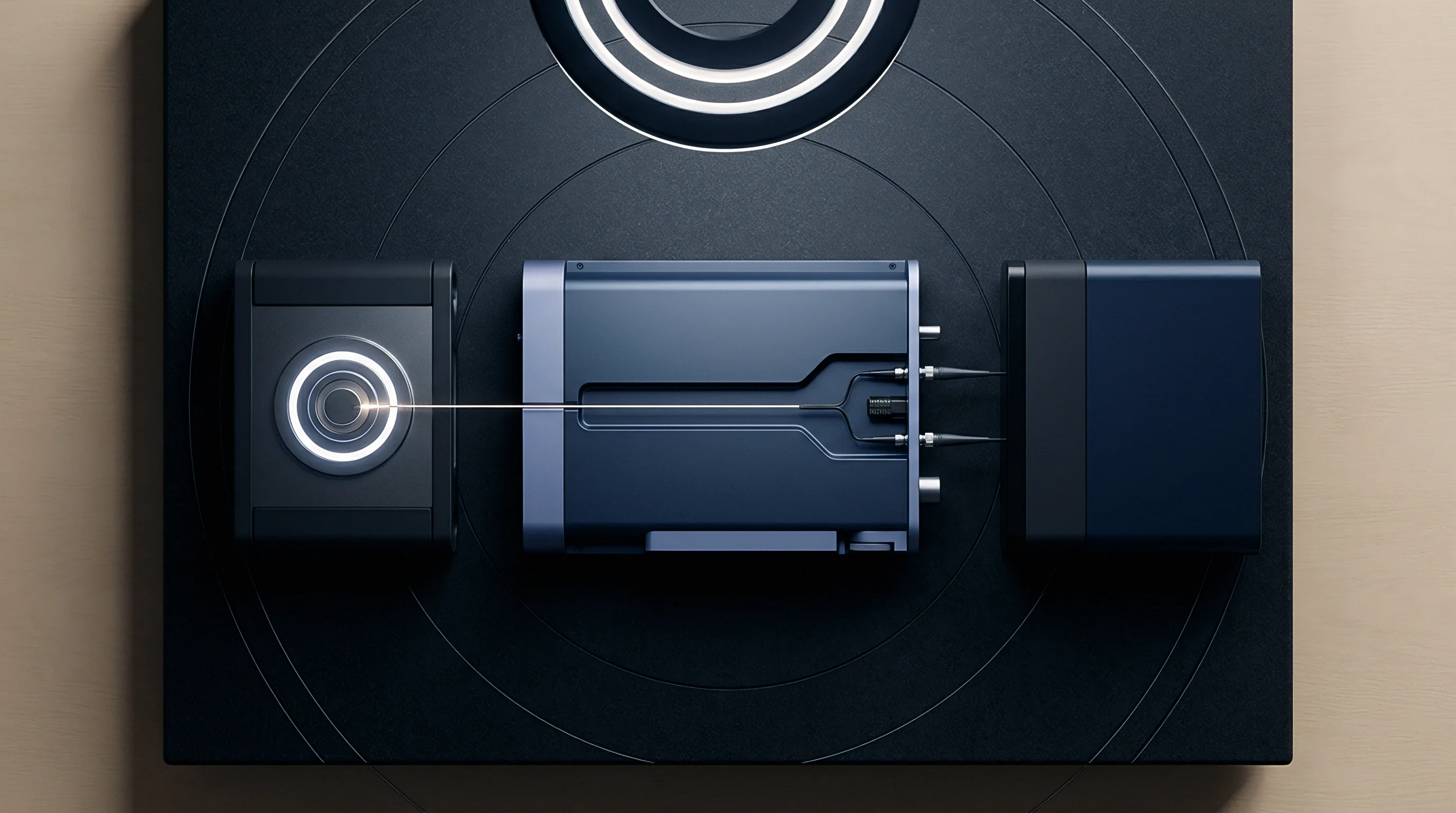
Conducted Power and Radiated Emission Testing
Conducted power evaluations measure absolute radio-frequency energy entering the antenna feed point. Engineers connect the modified SMA sample to a calibrated spectrum analyzer or power sensor through high-frequency coaxial cables, with software compensating for cable attenuation across the target frequency span. Under ETSI EN 300 328, wideband 2.4 GHz transmitters cannot exceed an Effective Isotropically Radiated Power of 100 mW (20 dBm) equivalent, combining conducted output power with maximum directional antenna gain.
A radio module verified only under continuous wave modes faces automatic test report rejection during modulation bandwidth verification.
Radiated testing evaluates the combined performance of transmitter, trace matching network, enclosure, and internal antenna. The unit sits on a non-conductive turntable three meters or ten meters away from a calibrated broadband receiving antenna, typically a biconical, log-periodic, or horn antenna. As the turntable rotates 360 degrees, the measurement antenna moves vertically from one to four meters above the ground plane to capture peak field strength values across both horizontal and vertical antenna polarizations.

Test Firmware Configurations for Test Benches
Specialized testing firmware controls the device during laboratory evaluation. Standard commercial firmware dynamically adjusts transmit power, enters sleep cycles, and uses packet hopping across channels, rendering compliance verification impossible. Test firmware locks the radio into continuous transmit mode at maximum output power without thermal throttling.
The software enables selection of individual channels, specifically low, middle, and high operating channels across the band.
- Firmware Installation flashes custom test code enabling continuous transmission, receiver sensitivity modes, and unmodulated carrier outputs.
- Conducted Calibration attaches direct SMA cables to spectrum analyzers, applying path-loss factors across all harmonic evaluation frequencies.
- Radiated Alignment fixes the unit onto a non-conductive turntable inside the anechoic chamber, setting receiver antenna heights to one meter.
- Turntable Rotation spins the hardware through full azimuth angles while tracking peak field strength readings on elevated horn antennas.
- Harmonic Sweeping scans radiated frequency bands from 30 MHz up to 26 GHz to capture unwanted emissions exceeding statutory limits.
Clause 5.4.4 of ETSI EN 300 328 forces full spectral density measurements across a 1 MHz bandwidth grid when host software routines omit duty cycle controls.


Dossier
Technical files assemble the evidence necessary to withstand post-market surveillance audits by national spectrum authorities. Regulatory documentation proves that hardware design, component selection, and radio parameters conform to published standards. Preparing a complete file prevents regulatory holds, shipment seizures at customs entries, and costly retrospective redesigns when compliance documentation comes under regulatory review.
System architects choose between full device certification and integrated modular approvals. Full certification treats the product as a single unit, requiring complete radio and electromagnetic compatibility testing for the final assembly. Modular approval leverages pre-certified radio circuits, transferring testing burdens from host device manufacturers to module vendors.
The module grant defines exact integration constraints, including trace impedance layouts, antenna types, minimum separation distances, and host power supply filtering standards.

Which Technical Documents Survive Market Surveillance Audits?
Surveillance audits demand complete, unredacted technical records. European administrative authorities execute random marketplace buys, inspecting the Technical Construction File against physical hardware pulled from commercial distribution channels. Deficient records trigger immediate product recall orders across member states.
A resilient Technical Construction File relies on clear engineering evidence. Missing block diagrams, outdated bill-of-materials listings, or test reports from unaccredited laboratories invalidate the filing package during regulatory scrutiny.
- Schematic Diagrams detail complete electronic circuitry, component values, and board layout designations for all radio components.
- Block Diagrams illustrate internal signal pathways, clock frequencies, intermediate frequencies, and amplifier gain stages clearly.
- Operational Descriptions document intentional radiation mechanics, modulation techniques, antenna specifications, and channel usage schedules.
- Test Reports supply raw measurement data, calibrated instrument calibration logs, and test setup photos signed by accredited lab engineers.
- User Manuals display required warning statements, statutory user instructions, RF exposure separation rules, and regulatory registration numbers.
Integrating an approved module with a trace antenna variation alters the grant conditions and forces a permissive change filing.
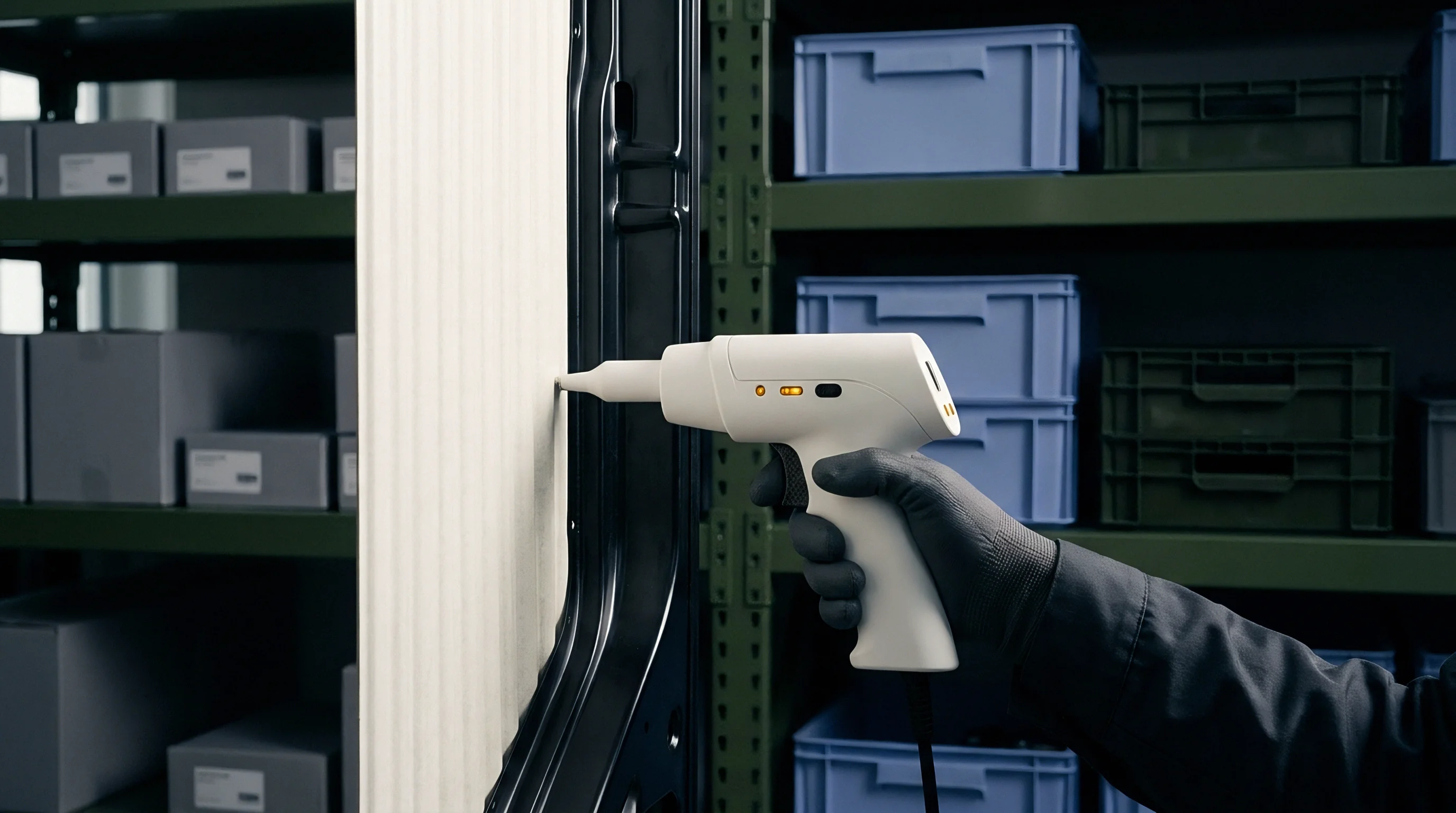
Modular Grant Limits and Host Integration Responsibilities
Integrating a pre-certified radio module simplifies compliance filings, but host manufacturers retain clear legal responsibilities. Federal Communications Commission rules under KDB 996369 define strict integration protocols for modular transmitters. Host devices must undergo unintentional radiator testing under FCC Part 15 Subpart B to verify that internal digital logic, display drivers, and power conversion circuits do not emit excessive spurious noise.
Modifying modular radio configurations voids existing grant validity. Changing the printed circuit board trace leading to an external antenna connector invalidates the original modular certification. Host manufacturers implementing trace antenna redesigns must submit a Class II Permissive Change filing, supported by fresh radiated emissions test reports covering the modified trace geometry.
Ignoring modular grant integration limits renders the end product an illegal transmitter, exposing the host distributor to financial penalties and mandatory product recalls from retail channels.


Margin
Measurement uncertainty in calibrated test chambers creates narrow corridors between pass thresholds and non-compliant noise spikes. Standard laboratory uncertainty budgets account for antenna factor calibrations, cable loss variations, receiver amplitude accuracy, and site attenuation imperfections. A typical radiated emissions test setup carries an expanded measurement uncertainty between 3.5 dB and 5.2 dB.
Operating a radio design within 2 dB of a statutory emission limit introduces substantial risk of test failure during secondary audits on alternate test sites.
Managing noise requires rigorous board-level isolation techniques. Unintentional emissions from high-speed digital buses, microcontrollers, and switching regulators frequently leak into short-range radio bands. Decoupling capacitors placed near radio power pins, multi-layer board ground planes, and metal shielding cans prevent internal noise from corrupting radio performance or breaching radiated spurious limits.

Band Edge Spurious and Harmonic Emission Guardbands
Transmitters operating near frequency band edges face strict spectral mask boundaries. A 2.4 GHz Bluetooth or Zigbee transmitter operating on Channel 11 (2480 MHz) sits adjacent to the restricted band beginning at 2483.5 MHz under FCC Part 15.205. Radiated emissions inside restricted bands cannot exceed 54 dBuV/m at three meters when measured with an average detector, or 74 dBuV/m with a peak detector.
| Regulatory Standard | Frequency Range | Spurious Limit Value | Detector Type | Resolution Bandwidth |
|---|---|---|---|---|
| ETSI EN 300 328 | 30 MHz to 1 GHz | -36 dBm (approx 60 dBuV/m) | Quasi-Peak | 100 kHz |
| ETSI EN 300 328 | 1 GHz to 12.75 GHz | -30 dBm (approx 65.2 dBuV/m) | Peak / Average | 1 MHz |
| FCC Part 15.209 | 30 MHz to 88 MHz | 40 dBuV/m at 3m | Quasi-Peak | 120 kHz |
| FCC Part 15.209 | 960 MHz to 10th Harmonic | 54 dBuV/m at 3m | Average | 1 MHz |
| MIC Japan Article 2 | Above 2.4 GHz Harmonics | 2.5 uW / MHz (-26 dBm) | Peak | 1 MHz |
Engineers calculate radiated field strength from effective isotropic power to assess compliance before entering anechoic chambers. ANSI C63.10 defines the mathematical conversion between field strength measured at a specific distance and equivalent radiated power.
E = (sqrt(30 EIRP)) / d
In this expression, E represents field strength in volts per meter, EIRP represents equivalent isotropically radiated power in watts, and d represents measurement distance in meters. Expressing field strength in decibels relative to one microvolt per meter simplifies calculation setups for 3-meter test ranges.
dBuV/m = EIRP_dBm + 104.77 – 20 log10(d)
At three meters distance, this formula simplifies to adding 95.2 dB to the EIRP expressed in dBm. A short-range transmitter producing an EIRP of 0 dBm (1 mW) yields a field strength of 95.2 dBuV/m at three meters. Identifying spurious emission spikes of -30 dBm requires the anechoic chamber receiver to measure signals below 65.2 dBuV/m.

Field Strength to Effective Power Conversions
Designing RF matching networks demands accounting for manufacturing tolerances in passive inductors and capacitors. Surface-mount component variances alter the resonant frequency of output filter networks, driving harmonic levels up by several decibels across mass-production lots.
- Harmonic Radiated Spurious emissions breach limits due to poor power amplifier decoupling or inadequate low-pass filter rejection.
- Unintentional Digital Radiation leaks through ground plane slots, unshielded ribbon cables, or unshielded plastic enclosures.
- Restricted Band Violations occur when steep band-edge roll-off filters fail under elevated operating temperatures.
- Antenna Matching Drift shifts resonant frequencies, causing impedance mismatches that increase spurious output.
At 2.4 GHz, a 3 dB loss in microstrip trace layout drops radiated RF power below transmitter specification thresholds.
How far should product teams back off nominal transmit power during initial firmware configuration to ensure total batch compliance across widely varying production component tolerances?


Marking
Physical labels applied to device enclosures signal regulatory compliance to customs inspectors and end users. Legible registration numbers, country marks, and explicit compliance statements must survive normal product operating conditions without peeling, fading, or becoming unreadable. Omitting mandatory regulatory graphics leads directly to customs hold orders, warehouse impoundment, or financial forfeitures during commercial import operations.
Customs impounds imported hardware when physical housing logos omit required country registration strings.
Regulatory frameworks specify distinct visual requirements. The European CE mark mandates precise dimensional proportions, maintaining a minimum vertical height of five millimeters unless hardware size constraints justify smaller applications. The Federal Communications Commission requires physical host labels displaying the unique FCC ID issued during grant approval, alongside explicit statements acknowledging non-interference operating conditions under Part 15 rules.
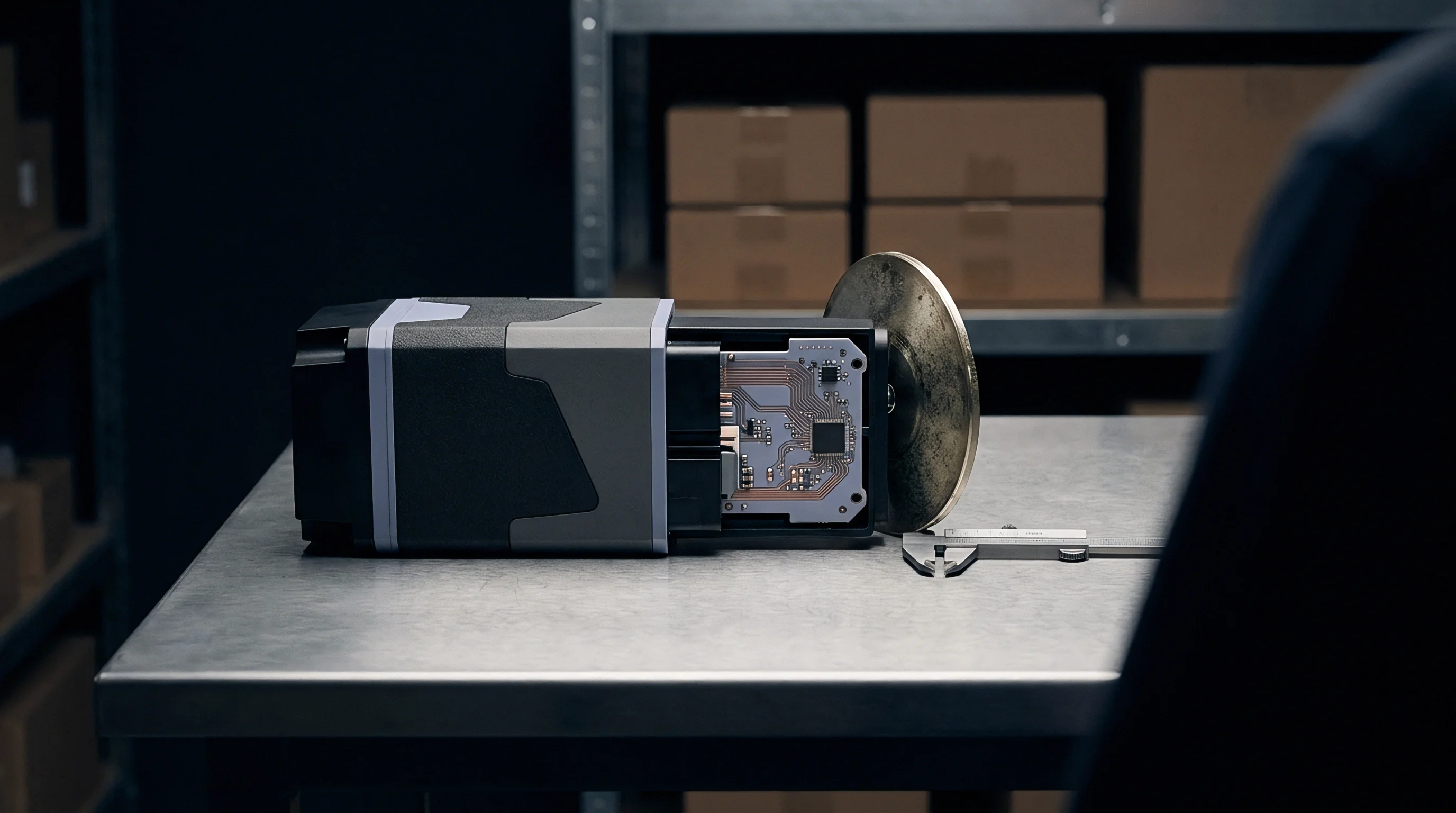
Physical Housing Labeling Rules and Regulatory Icons
Physical space constraints on compact short-range wireless devices create housing layout challenges. Products under handheld size limits often cannot accommodate full text statutory warnings. Regulatory codes allow placing full warning statements inside user manuals or product packaging when physical device surface area falls below palm-sized dimensions, provided the mandatory registration IDs remain clearly visible on the physical exterior.
Japan mandates displaying the Giteki mark alongside its assigned certification symbol and unique mark sequence number. South Korea enforces the KC logo accompanied by a registration string identifying the applicant, device type, basic model designation, and laboratory code. Failing to print these exact alphanumeric sequences in legible type faces voids physical market access permissions upon border inspection.
Digital Screen E Labeling Operational Rules
Electronic labeling offers relief for devices equipped with integrated digital displays. Guidelines such as FCC KDB 784748 permit displaying compliance marks, regulatory statements, and registration codes within device firmware menu trees, removing physical printing requirements from tiny external enclosures.
- Accessing compliance information requires no special security codes, unique credentials, or external accessories beyond built-in screen controls.
- Display menus present regulatory credentials within three user selection steps starting from the primary system settings menu screen.
- Product packaging and quick start guides explicitly instruct users how to locate stored compliance credentials inside system menus.
- Firmware builds lock regulatory display screens against end-user modification or unauthorized file overwrites.
Labeling rules follow physical housing dimensions, requiring external box markings whenever internal hardware labels remain obscured behind non-transparent protective covers.


Sequence
Filing timelines dictate product launch milestones across global markets. Coordinating compliance testing, agency submissions, and local representative sign-offs prevents release bottlenecks. Developing a logical regulatory sequence allows leveraging core test data across multiple target markets, reducing redundant test campaigns and preserving working capital.
| Target Jurisdiction | Primary Data Source | Estimated Chamber Cost | Statutory Agency Fees | Local Agent Costs | Turnaround Weeks |
|---|---|---|---|---|---|
| United States (FCC) | Direct Accredited Test Report | $8,000 to $15,000 | $1,200 to $2,500 | $500 to $1,200 | 4 to 6 |
| European Union (CE) | Direct Harmonized Test Report | $6,000 to $12,000 | $0 (Self-Declaration) | $0 to $800 | 2 to 4 |
| Japan (MIC) | FCC/CE Data Conversion + Gap | $3,000 to $6,000 | $1,500 to $3,000 | $0 | 4 to 6 |
| South Korea (KC) | In-Country Local Testing | $5,000 to $9,000 | $1,000 to $2,000 | $1,000 to $2,500 | 6 to 10 |
| Brazil (ANATEL) | In-Country Local Testing | $7,000 to $12,000 | $2,000 to $4,000 | $1,500 to $3,000 | 8 to 14 |

Staged Filing Workflows for Parallel Market Entries
Executing test programs in a structured order maximizes capital efficiency. Securing an accredited test report meeting both FCC Part 15 and ETSI EN standards creates a core data bundle. Test laboratories perform combined testing schedules in a single chamber reservation, capturing maximum power output, occupied bandwidth, and spurious emissions across both European and North American limit lines simultaneously.
This combined test report serves as base documentation for secondary market entries across Latin America, Southeast Asia, and the Middle East. Many national spectrum authorities accept existing FCC grants or CE test reports through administrative paperwork conversions, bypassing requirements for localized laboratory re-testing.
In Country Agent Representation and Renewal Schedules
International regulatory approvals frequently require localized legal entity representation. Jurisdictions such as South Korea, Brazil, China, and Mexico mandate that local registered entities hold regulatory certificates. Sourcing managers establish local representation through regional subsidiaries, authorized local distributors, or independent compliance agency holds.
Relying on local distributors to hold regulatory certificates creates commercial lock-in risks. If a commercial relationship dissolves, the distributor retains legal ownership of the regulatory approval, blocking the product owner from importing hardware through alternative sales channels. Structuring representation agreements through independent in-country agents keeps certificate ownership controlled by the hardware manufacturer.
Maintaining long-term market access demands monitoring certificate renewal dates, standard updates, and regulatory changes. Regulatory certificates expire or require updates when standard versions sunset, such as transitions between ETSI EN standard revisions. Retaining accredited laboratory reports, clear change tracking logs, and active local agent representation ensures uninterrupted global sales operations.