Meaning
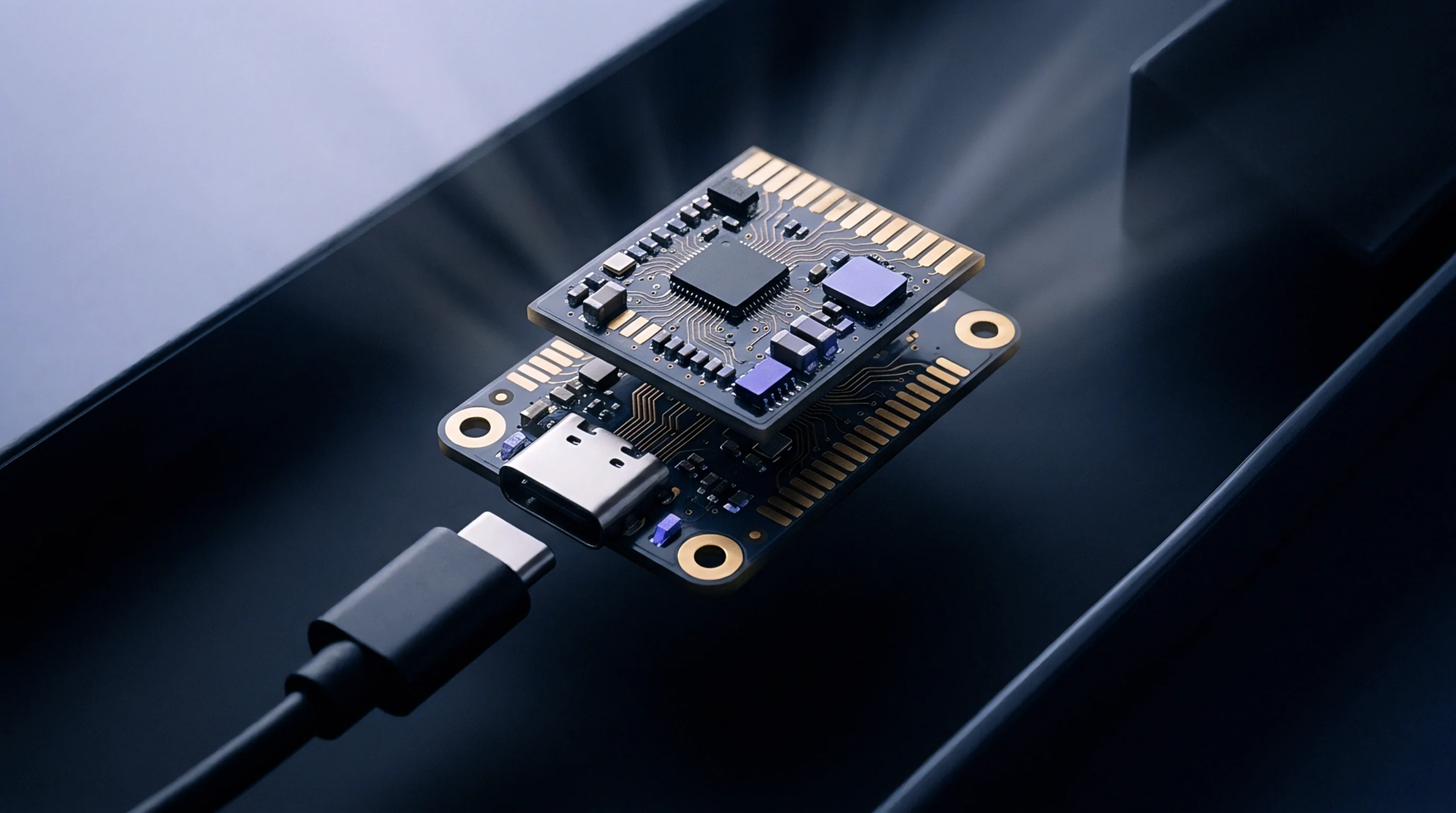
High-bandwidth measurement transducers incorporate active semiconductor buffers near the contact tip to minimize capacitive loading on high-speed printed circuit board traces. An active differential probe senses the voltage difference between two complementary signal lines while rejecting common-mode noise present on both conductors. Signal acquisition through active differential probe topologies prevents line degradation during compliance testing of gigabit serial buses.
Circuit Loading
Contacting a high-speed data line with passive instrumentation introduces capacitance that distorts signal edges and shrinks eye diagrams. Internal field-effect transistors inside an active differential probe isolate the circuit under test from probe cable impedance. Input capacitance stays below one picofarad across the operational frequency band, preserving signal risetimes.
Higher source impedances yield larger measurement errors if probe tip capacitance exceeds board layout tolerances.
Common Rejection
Ground potential differences between test points create common-mode voltages that mask true signal dynamics. Matching internal signal paths allows an active differential probe to suppress common-mode signals by over thirty decibels at low frequencies.
Verification Handover
High-speed bus qualification requires accurate waveform captures during silicon bring-up and prototype validation. Test engineers record eye height, jitter and transition times using an active differential probe connected to calibrated digital oscilloscopes. Compliance reports reference probe calibration certificates to ensure measurement traceability before volume manufacturing clearance.