Meaning
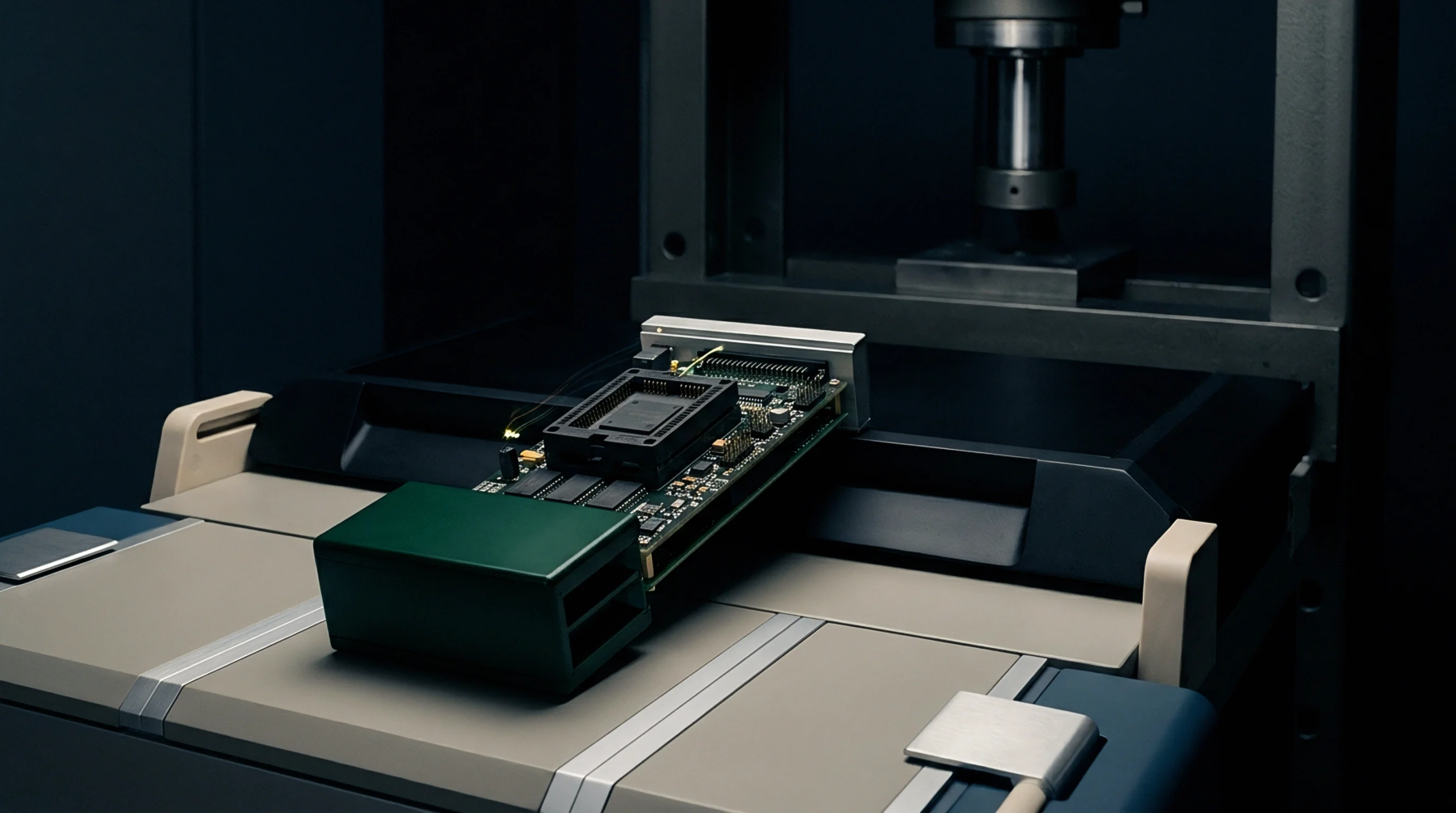
Automated test equipment that employs an array of spring-loaded pogo pins to establish electrical contact with multiple test points on a printed circuit board simultaneously. During production, a bed of nails tester holds the board in place using mechanical clamps or a vacuum system to compress the spring pins against designated copper pads. Simultaneous multi-point probing permits rapid measurement of trace continuity, voltage levels and component impedance without manual probing.
The physical layout of the test pins matches the specific board design, restricting its use to a single product family.
Contact Interface
Sharp pogo tips penetrate the oxidation layer on copper pads to ensure reliable electrical connection. Constant spring force maintains stable contact during the diagnostic cycle, preventing false failures caused by minor mechanical vibrations. In high-density assemblies, the minimum spacing between adjacent contact points limits the pin density, requiring trace routing that accommodates the physical width of the spring housings.
Production Integration
High-throughput assembly lines integrate these fixtures directly after the solder reflow process to capture defects early. Automated testing scripts apply power to the boards through the pins and measure the current draw to detect short circuits before the system starts up fully. If a board fails the initial power-up test, the software logs the specific failing pin coordinates to help technician repair work.
Maintenance Frequency
Regular cleaning of the sharp tips prevents solder residue buildup from introducing artificial resistance. After several thousand compression cycles, the spring-loaded pins suffer mechanical fatigue and must be replaced to prevent erroneous failure logs.